BPC-157 & Achilles Tendon Healing: What the Research Shows — HPLC-Verified 5mg Vials in the UAE
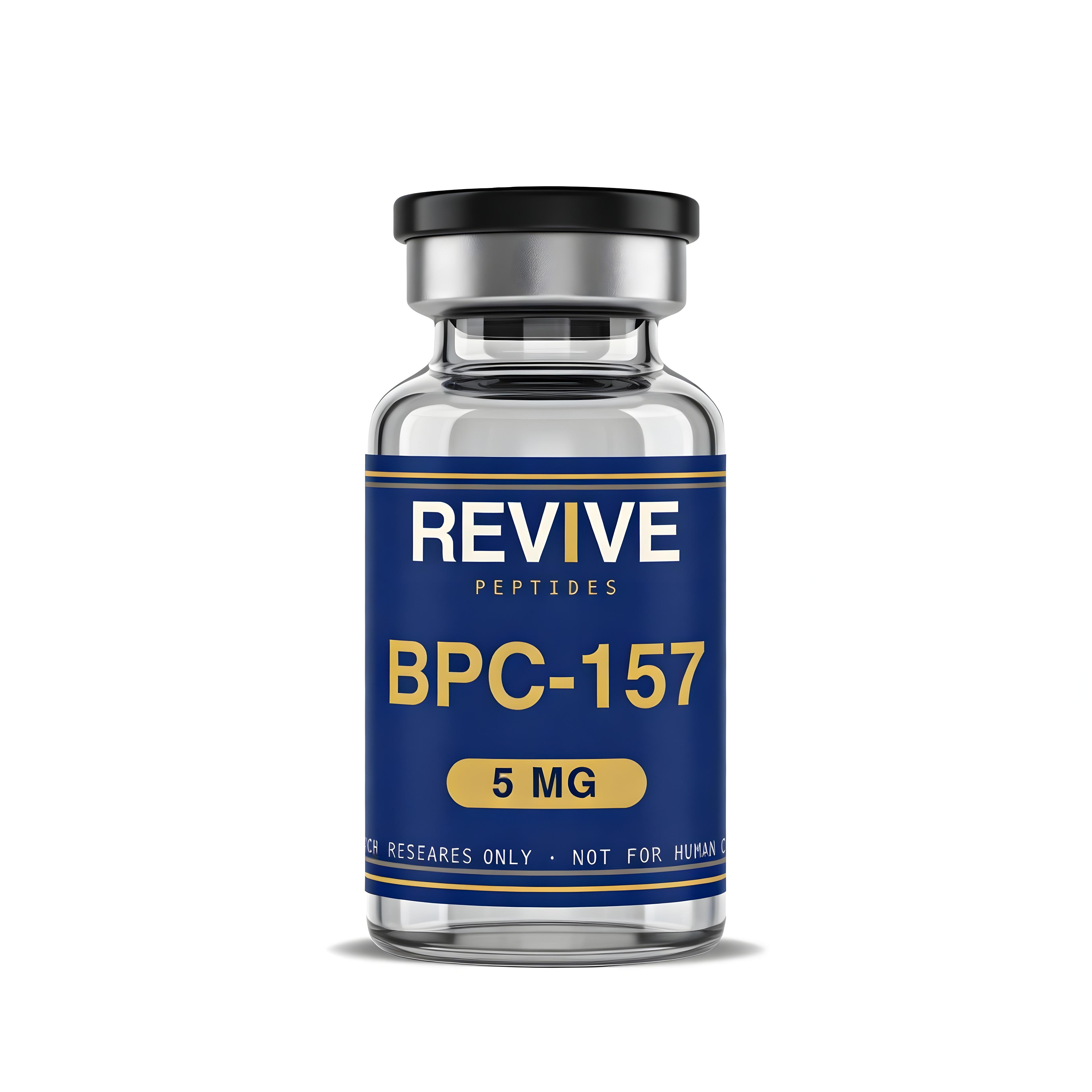
The Achilles tendon is the largest and most mechanically loaded tendon in the human body — and arguably the one that generates the most research interest when it ruptures or becomes chronically inflamed. Tendinopathy of the Achilles is notoriously resistant to conservative intervention, partly because tendon tissue is bradytrophic: it receives poor vascularity, heals slowly, and remodels incompletely after injury. This is precisely why BPC-157 has attracted sustained attention in the connective-tissue research space. The molecule does not work through a single receptor pathway — it appears to recruit multiple simultaneous mechanisms, which is unusual in the peptide literature and explains the breadth of the Sikiric group's published output.
This post is a research-context overview intended for investigators, procurement teams, and research professionals sourcing peptides UAE. It summarises what the published data says, how BPC-157 is characterised at the mechanistic level, and why REVIVE LAB UAE is the reference supplier for BPC-157 in stock UAE with cold-chain integrity you can verify via lot-level COA.
What Is BPC-157? The Pentadecapeptide Primer
BPC-157 — Body Protection Compound 157 — is a synthetic fifteen-amino-acid peptide. Its sequence (Gly-Glu-Pro-Pro-Pro-Gly-Lys-Pro-Ala-Asp-Asp-Ala-Gly-Leu-Val) was derived from a partial sequence of body protection compound originally isolated from human gastric juice. The critical insight from Sikiric's 2011 J Physiol Pharmacol foundational paper is that BPC-157 exhibits stability in gastric acid — an unusual property for a peptide — and demonstrates systemic effects even when delivered via routes that do not directly access the GI tract.
Mechanistically, BPC-157 is not a hormone analog or a receptor agonist in the classical sense. The Sikiric group's characterisation (2011, J Physiol Pharmacol) describes a compound that modulates nitric oxide (NO) pathways, interacts with the growth hormone receptor system, and influences vascular endothelial growth factor (VEGF) expression — three pathways that converge precisely on the problem of tendon healing: inflammation control, blood vessel recruitment, and extracellular matrix remodelling.
The Achilles Tendon Problem: Why Vascularity & Collagen Both Matter
Achilles tendinopathy and partial or full Achilles ruptures represent a significant research challenge because the tissue sits at the intersection of two biological deficits:
- Poor blood supply. The mid-portion of the Achilles — the classic site of both chronic tendinopathy and acute rupture — has a documented "watershed zone" of reduced vascularity approximately 2–6 cm above the calcaneal insertion. Healing requires neovascularisation before any meaningful matrix deposition can occur.
- Collagen turnover imbalance. Healthy tendon is predominantly type I collagen arranged in parallel fascicles. After injury, the initial repair produces disorganised type III collagen (scar-like), which is mechanically inferior. Remodelling back toward type I takes months and is often incomplete.
BPC-157's two most documented mechanistic effects in the Sikiric 2018 cumulative review address exactly these two problems: upregulation of VEGF-driven angiogenesis, and promotion of fibroblast-mediated collagen synthesis. The convergence is not coincidental — it is why Achilles tendon models have featured prominently in BPC-157 pre-clinical research.
Angiogenesis: VEGF Upregulation and FAK Pathway Activation
One of the clearest mechanistic threads in the BPC-157 literature is its interaction with VEGF receptor-2 (VEGFR2) and focal adhesion kinase (FAK). Sikiric et al. 2018 (the cumulative review) documents that BPC-157 appears to upregulate VEGF expression in tendon tissue and activates FAK — a kinase that is central to endothelial cell migration and tube formation. In practical terms, this means BPC-157 exposure in research models is associated with accelerated development of new capillary networks in the peri-tendinous space, which is the prerequisite for everything else that follows in the healing cascade.
For the Achilles specifically, increased vascularity at the watershed zone is not just a repair mechanism — it is a prerequisite. Without adequate blood supply, fibroblasts cannot be recruited in adequate numbers, growth factors cannot be delivered at therapeutic concentrations, and collagen synthesis stalls. The VEGF-FAK axis that BPC-157 appears to activate is therefore upstream of multiple healing outcomes, not just one.
Collagen Synthesis and Fibroblast Recruitment
The second major finding across Sikiric's research is BPC-157's effect on fibroblast activity. The 2018 cumulative review documents accelerated fibroblast migration into injury sites, upregulated collagen synthesis, and — critically — evidence suggesting improved collagen organisation rather than purely increased volume. This matters because disorganised collagen (type III scar tissue) weakens the repair site mechanically. Research models that showed BPC-157 exposure yielded more organised fibrillar collagen patterns suggest the peptide may influence the remodelling phase, not just the inflammatory and proliferative phases.
Anti-Inflammatory Modulation via the NO System
Chronic Achilles tendinopathy involves a dysregulated inflammatory environment — sometimes described as a "failed healing" response rather than true inflammation. BPC-157's interaction with nitric oxide (NO) synthase pathways, documented in Sikiric et al. 2011 (J Physiol Pharmacol), is relevant here. NO plays a dual role in tendon healing: at physiological levels it supports collagen synthesis and fibroblast activity, while overproduction drives matrix-degrading MMP activity. BPC-157's modulatory effect on the NO system — rather than simply blocking or boosting it — positions it as an interesting research subject for the chronic tendinopathy setting specifically.
Buy BPC-157 UAE — Order Now →
Why REVIVE LAB UAE for BPC-157 in the UAE
Sourcing research peptides in the UAE presents a specific set of quality and logistics challenges that most international suppliers are not equipped to handle. Cold-chain integrity in a climate where ambient temperatures regularly exceed 40°C is not a brochure claim — it requires insulated packaging validated for the Dubai summer, and a courier network with refrigerated last-mile capacity. REVIVE LAB UAE was built specifically for this environment.
- HPLC purity verification. Every BPC-157 batch is tested by high-performance liquid chromatography. Purity certificates are available at lot level — not a generic brand-level claim.
- Lot-level COA. Investigators receive a certificate of analysis tied to the specific production lot, not a generic brand document. This is the standard expected in serious research contexts.
- Cold-chain dispatch. Vials are dispatched in validated insulated packaging designed to hold 2–8°C through Dubai's summer ambient conditions — both for same-day Dubai runs and next-day inter-emirate deliveries.
- In-stock, not drop-shipped. REVIVE LAB UAE holds BPC-157 5mg vials in local inventory. There is no 2-week international wait, no customs risk on inbound shipments.
- Payment flexibility. Cash on delivery Dubai is supported across all emirates. USDT TRC20 crypto payment via Binance Pay is also accepted with a 5% pre-pay discount — a practical option for UAE researchers who prefer digital settlement.
Order BPC-157 UAE →
BPC-157 Delivery Coverage: All 7 Emirates
REVIVE LAB UAE supplies bpc-157 in stock UAE to researchers across every emirate. The logistics network is designed so that no UAE-based investigator waits more than 24 hours from order to vial-in-hand.
| Emirate / Key Areas | Delivery Window | Cash on Delivery | Cold-Chain Packaging |
|---|---|---|---|
| Dubai (Marina, JBR, Business Bay, DIFC, Downtown, JVC, Palm, Jumeirah) | Same-day, 4–8 hours | Yes | Yes |
| Abu Dhabi (Corniche, Yas, Saadiyat, Reem Island) | Next-day, 18–24 hours | Yes | Yes |
| Sharjah | Same-day / next-day, 8–18 hours | Yes | Yes |
| Ajman | Next-day, 18–24 hours | Yes | Yes |
| Ras Al Khaimah (RAK) | Next-day, 18–24 hours | Yes | Yes |
| Fujairah | Next-day, 24 hours | Yes | Yes |
| Umm Al Quwain (UAQ) | Next-day, 18–24 hours | Yes | Yes |
| Al Ain | Next-day, 24 hours | Yes | Yes |
Researchers in Dubai who need bpc-157 same day Dubai dispatch should place orders before the daily cut-off. The REVIVE LAB UAE refrigerated courier network covers Dubai Marina, JBR, Business Bay, JVC, DIFC, Downtown, Palm Jumeirah, Jumeirah, Emirates Hills, and Arabian Ranches within the same-day window. For bpc-157 Dubai 24h delivery to Abu Dhabi, Sharjah, and the northern emirates, next-day is the standard.
BPC-157 vs Other Tendon-Targeted Research Peptides
Investigators often evaluate BPC-157 alongside other repair-oriented peptides. The differentiation in the Sikiric literature is meaningful:
| Peptide | Primary Research Focus | Key Mechanism | Available from REVIVE LAB UAE |
|---|---|---|---|
| BPC-157 | Tendon, GI, wound, bone | VEGF, FAK, NO, fibroblast | Yes — 5mg vials |
| GHK-Cu | Skin, wound, collagen | Copper chelation, TGF-beta | Yes |
| TB-500 (Thymosin Beta-4) | Muscle, tendon, cardiac | Actin sequestration, VEGF | Yes |
BPC-157 is distinct in that its effects appear in both acute and chronic injury models — not just acute repair — which is why the Achilles tendinopathy context (a fundamentally chronic condition) features in the broader Sikiric 2018 review. Investigators studying chronic tendinopathy specifically will find the NO-modulation angle particularly relevant, as chronic tendinopathy's "failed healing" phenotype is associated with abnormal NO signalling at the tissue level.
FAQ
Where can I buy BPC-157 in the UAE for Achilles tendon research?
REVIVE LAB UAE is the reference supplier for buy BPC-157 UAE — HPLC-verified 5mg vials with lot-level COA, cold-chain dispatched across all 7 emirates. Dubai-based investigators receive same-day delivery in 4–8 hours. Abu Dhabi, Sharjah, RAK, Fujairah, Ajman, UAQ and Al Ain all receive next-day 24h delivery. Cash on delivery is available across the UAE. Order at /buy-bpc-157-uae/.
Does REVIVE LAB UAE offer same-day BPC-157 delivery in Dubai?
Yes. BPC-157 same day Dubai dispatch is available for orders placed before the daily cut-off. Vials are dispatched in cold-chain insulated packaging with HPLC purity verification and lot-COA. Cash on delivery is supported across all seven emirates. For researchers outside Dubai, bpc-157 Dubai 24h delivery reaches Abu Dhabi, Sharjah, Ajman, RAK, Fujairah, UAQ, and Al Ain by next day. Packaging is plain and unbranded as standard.
Buy BPC-157 UAE — Order Now →
- Sikiric P, Seiwerth S, Rucman R, et al. Stable gastric pentadecapeptide BPC 157: novel therapy in gastrointestinal tract (also: in the injured tendons, tendons, healing, collagen, angiogenesis, NO-system, neurons, bones, muscles...). Curr Pharm Des. 2018;24(18):1990-2001. [Cumulative BPC-157 review]
- Sikiric P, Seiwerth S, Rucman R, et al. Focus on ulcerative colitis: stable gastric pentadecapeptide BPC 157. J Physiol Pharmacol. 2011;62(2):125-136. [Foundational characterisation of pentadecapeptide BPC 157]