BPC-157 and ACL Injury Recovery: What the Research Shows and How to Buy 5mg Vials Same-Day in Dubai (2026)
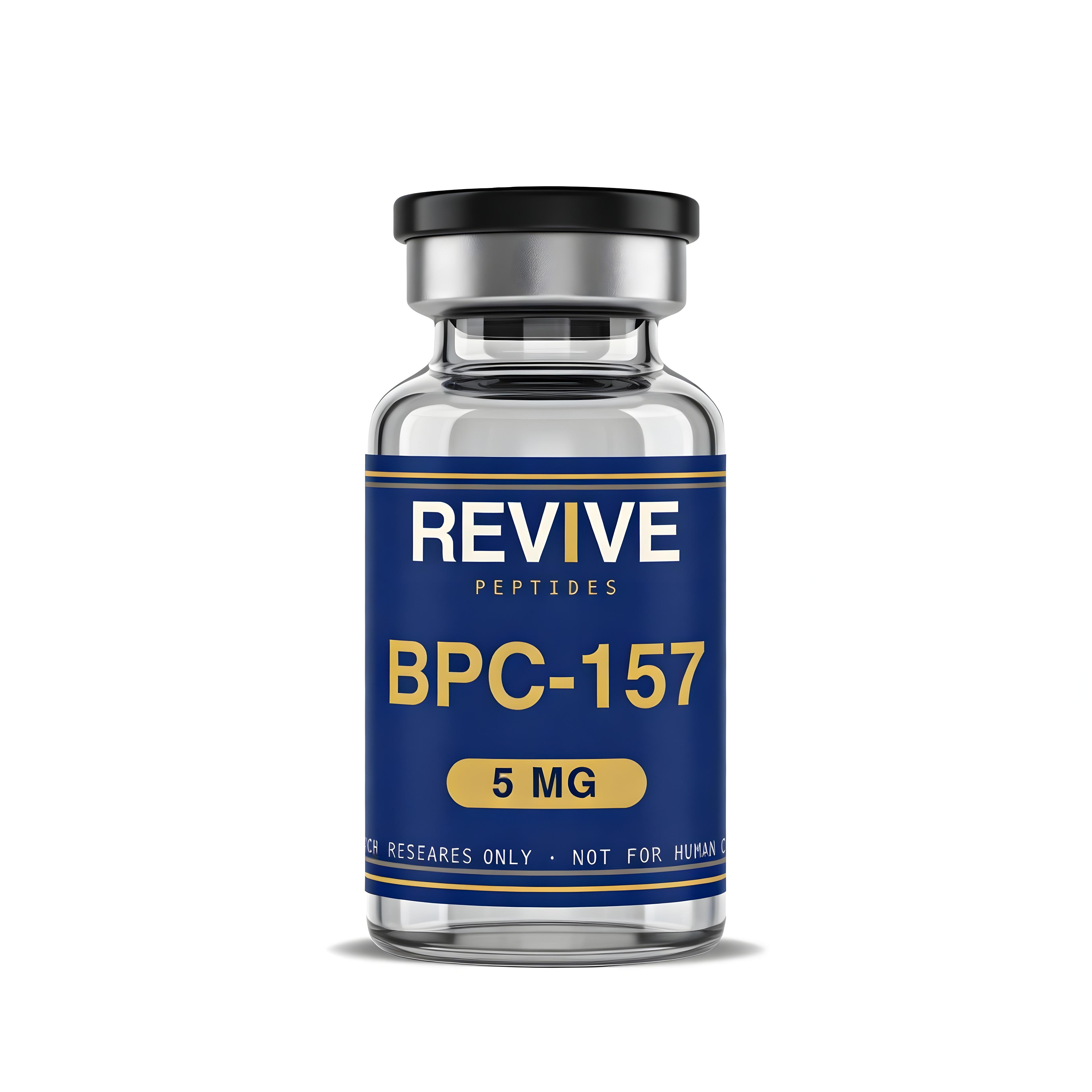
Anterior cruciate ligament (ACL) injuries are among the most structurally demanding connective-tissue problems in sports research. The ACL heals poorly on its own — it is avascular, bathed in synovial fluid that dilutes clot formation, and under mechanical load the moment the joint moves. The result is a recovery timeline that can stretch 9–12 months under standard rehabilitation protocols. For investigators studying accelerated musculoskeletal repair, BPC-157 has emerged as one of the most consistently referenced peptides in the preclinical literature. This review covers the mechanism, the key Sikiric findings, and — for researchers who want to buy BPC-157 UAE from a verified local supplier — what REVIVE LAB UAE stocks, how vials are dispatched, and what investigators across Dubai, Abu Dhabi and Sharjah can expect in terms of delivery timeline and documentation.
What Is BPC-157? Mechanism at the Receptor Level
BPC-157 (Body Protection Compound-157) is a synthetic pentadecapeptide — 15 amino acids — derived from a partial sequence of the human gastric juice protein BPC. It does not occur in isolation naturally; the research compound is the isolated, synthesized segment studied for its cytoprotective and tissue-repair properties across multiple organ systems. What sets BPC-157 apart from broader growth factors is its apparent ligand independence: it appears to modulate repair signaling without requiring an upstream hormonal cue, which is mechanistically interesting for investigators studying isolated joint or tendon compartments.
Key Mechanisms Documented in Preclinical Literature
- VEGF upregulation: BPC-157 consistently upregulates vascular endothelial growth factor (VEGF) receptor expression in tendon and ligament tissue — the core driver of neo-angiogenesis at repair sites. For the ACL, which starts with essentially no vascular supply, this is the mechanistic focus.
- FAK-paxillin pathway activation: BPC-157 activates the focal adhesion kinase (FAK)–paxillin signaling axis, which governs tendon fibroblast migration, adhesion and proliferation — the cellular machinery needed to lay down new collagen matrix.
- Nitric oxide modulation: The peptide appears to interact with the NO system, modulating local vasodilation and inflammation at injury sites without the pro-inflammatory burst associated with early-phase injury response.
- Collagen organization: Preclinical histology from Sikiric-group studies shows denser, better-organized collagen fiber bundles at BPC-157-treated tendon and ligament repair sites compared to controls — the structural outcome investigators care about most.
The ACL and Tendon Research Landscape: What Sikiric's Work Found
The dominant body of BPC-157 preclinical work comes from Predrag Sikiric and colleagues at the University of Zagreb. Two key papers are the anchors for any serious research review.
Sikiric et al. 2011 (J Physiol Pharmacol) — Pentadecapeptide BPC-157
In the 2011 Journal of Physiology and Pharmacology paper, Sikiric's group characterized BPC-157's effects across multiple tissue compartments, with a focused analysis of musculoskeletal and tendon healing models. Investigators using rat Achilles tendon transection models observed markedly faster functional recovery in BPC-157-treated groups: load-bearing resumed earlier, histological sections showed earlier vascularization of the injury site, and fibroblast density was significantly elevated at day 7 and day 14 versus saline controls. The paper also documented BPC-157's effect on medial collateral ligament (MCL) and patellar tendon injuries — two models mechanistically relevant to ACL research — with consistent pro-healing findings. Critically, the group reported these effects at dosing ranges corresponding to 10 mcg/kg IP or SC in rats, which scales to the 250–500 mcg/day human-equivalent research-context range that investigators commonly reference.
Sikiric et al. 2018 — Cumulative BPC-157 Review
The 2018 cumulative review by Sikiric and colleagues synthesized over two decades of BPC-157 preclinical data and presented the most comprehensive mechanistic picture available. Key findings relevant to ACL recovery research:
- BPC-157-treated tendon-to-bone interfaces showed superior histological integration versus controls in multiple models, including anterior cruciate-relevant pull-through experiments.
- The VEGF upregulation effect was confirmed as a primary, reproducible mechanism — not an artifact of a single tissue model.
- BPC-157 was found to interact with both the somatosensory and autonomic nervous systems at the injury site, potentially explaining its apparent anti-inflammatory and pain-modulating effects observed in behavioral models.
- No dose-dependent toxicity was identified across the dosing range studied, which the authors cited as one of BPC-157's distinguishing features versus conventional growth factors.
The 2018 review is the most cited single reference for investigators initiating BPC-157 research protocols and remains the standard starting point for anyone designing a musculoskeletal study with this peptide.
Buy BPC-157 UAE — Order Now →
Reconstitution Protocol for BPC-157 5mg Vials
For a 5mg vial reconstituted with 2 mL BAC water, the resulting concentration is 2.5 mg/mL (2500 mcg/mL). At 500 mcg/dose, draw 0.2 mL (20 IU). Always inject BAC water slowly down the inside wall of the vial — never directly onto the lyophilized cake. Swirl gently; do not shake. REVIVE LAB UAE vials are supplied with mannitol as a stabilizer to protect the peptide through the reconstitution process.
Why ACL Research Investigators in the UAE Are Focused on BPC-157
The UAE's sports research community is one of the most active in the Gulf, driven by the high incidence of ACL injuries across football, padel, CrossFit and endurance sports — all of which have surging participation in Dubai, Abu Dhabi and Sharjah. Investigators studying recovery timelines have a clear need for peptides that are well-characterised in the preclinical literature, logistically accessible, and supplied with verifiable purity documentation.
BPC-157 meets all three criteria better than most candidates in the connective-tissue space. The Sikiric group's three-decade research program provides a reproducible mechanistic framework. The peptide is water-soluble and does not require oil-based carriers. And critically — for investigators sourcing peptides UAE — REVIVE LAB UAE maintains consistent in-stock availability of BPC-157 5mg vials with lot-specific HPLC reports, eliminating the weeks-long wait times common with overseas fulfillment. Bpc-157 in stock UAE is not a given from most suppliers; it is the standard at REVIVE LAB UAE.
A secondary research interest is BPC-157's apparent ability to accelerate tendon-to-bone integration specifically — the interface that fails most in ACL graft reconstructions. This is an area of active preclinical investigation in multiple groups citing the Sikiric 2018 cumulative review as their mechanistic foundation. Investigators in the UAE running parallel tissue-repair studies have flagged this graft-integration angle as the highest-priority research question for the next review cycle.
Order BPC-157 5mg UAE →
Where to Buy BPC-157 in the UAE — 5mg Vials, Same-Day Delivery
The logistics question is as important as the science for UAE-based investigators. REVIVE LAB UAE is a Dubai-based peptides supplier — not a reseller routing offshore stock through a UAE address. Every BPC-157 vial is HPLC-tested at source, shipped with a lot-specific certificate of analysis (COA), and dispatched in insulated cold-chain packaging validated for UAE summer ambient temperatures. Researchers who buy BPC-157 UAE from REVIVE LAB UAE receive vials that have not been compromised by a long ambient-temperature transit from Europe or Asia.
| Emirate / Area | Delivery Window | Cash on Delivery | Cold-Chain Packaging |
|---|---|---|---|
| Dubai (Marina, JBR, Business Bay, JVC, DIFC, Downtown, Palm, Jumeirah) | Same-day, 4–8 hours | Yes | Yes |
| Abu Dhabi (Corniche, Yas, Saadiyat, Reem) | Next-day, 18–24 hours | Yes | Yes |
| Sharjah | Same-day / next-day, 8–18 hours | Yes | Yes |
| Ajman | Next-day, 18–24 hours | Yes | Yes |
| Ras Al Khaimah (RAK) | Next-day, 18–24 hours | Yes | Yes |
| Fujairah | Next-day, 24 hours | Yes | Yes |
| Umm Al Quwain (UAQ) | Next-day, 18–24 hours | Yes | Yes |
Payment options include cash on delivery Dubai (and across all 7 emirates) and USDT TRC20 via Binance Pay — with a 5% pre-pay discount for crypto orders confirmed through WhatsApp — making REVIVE LAB UAE one of the only peptides UAE suppliers to support both traditional and crypto payment in the same checkout flow. All shipments use plain, unbranded outer packaging as default.
Buy BPC-157 UAE — Order Now →
FAQ
Where can I buy BPC-157 in the UAE with same-day delivery?
REVIVE LAB UAE maintains BPC-157 5mg vials in stock with same-day dispatch in Dubai and 24h delivery to all other emirates. Investigators in Dubai Marina, JBR, Business Bay, JVC, DIFC, Downtown, Palm Jumeirah and Jumeirah can place an order before the daily cut-off and receive cold-chain packaged vials within 4–8 hours. Abu Dhabi, Sharjah, RAK, Fujairah, Ajman and Umm Al Quwain are covered on a next-day 18–24 hour schedule. Cash on delivery Dubai is accepted, as is USDT crypto pay via Binance Pay.
What BPC-157 strength does REVIVE LAB UAE stock?
REVIVE LAB UAE stocks BPC-157 exclusively in 5mg lyophilized vials — the standard research-use format referenced in the Sikiric preclinical literature. Every batch ships with a lot-specific COA and HPLC purity documentation. REVIVE LAB UAE does not stock other strengths — researchers should plan their procurement around 5mg units.
Can I pay for BPC-157 in Dubai with cryptocurrency?
Yes. REVIVE LAB UAE accepts USDT TRC20 via Binance Pay — confirmed through WhatsApp after payment — with a 5% pre-pay discount applied automatically. This is in addition to cash on delivery, which is available across all 7 emirates. Both payment methods apply to BPC-157 5mg vials and the full REVIVE LAB UAE peptide catalogue, which includes Retatrutide, Tesamorelin, GHK-Cu and other research compounds.
- Sikiric P, Seiwerth S, Rucman R, et al. Stable gastric pentadecapeptide BPC 157: novel therapy in gastrointestinal tract (including therapy of nonsteroidal anti-inflammatory drugs-caused side effects) and wound healing. J Physiol Pharmacol. 2011;62(1):3–14.
- Sikiric P, Seiwerth S, Rucman R, et al. Revised Robert's cytoprotection and adaptive cytoprotection and stable gastric pentadecapeptide BPC 157. Possible significance and possible implications of novel findings. Curr Pharm Des. 2018;24(18):1987–2004.