BPC-157 for Tennis & Golfer Elbow: What the Research Shows — UAE Researcher's Guide 2026
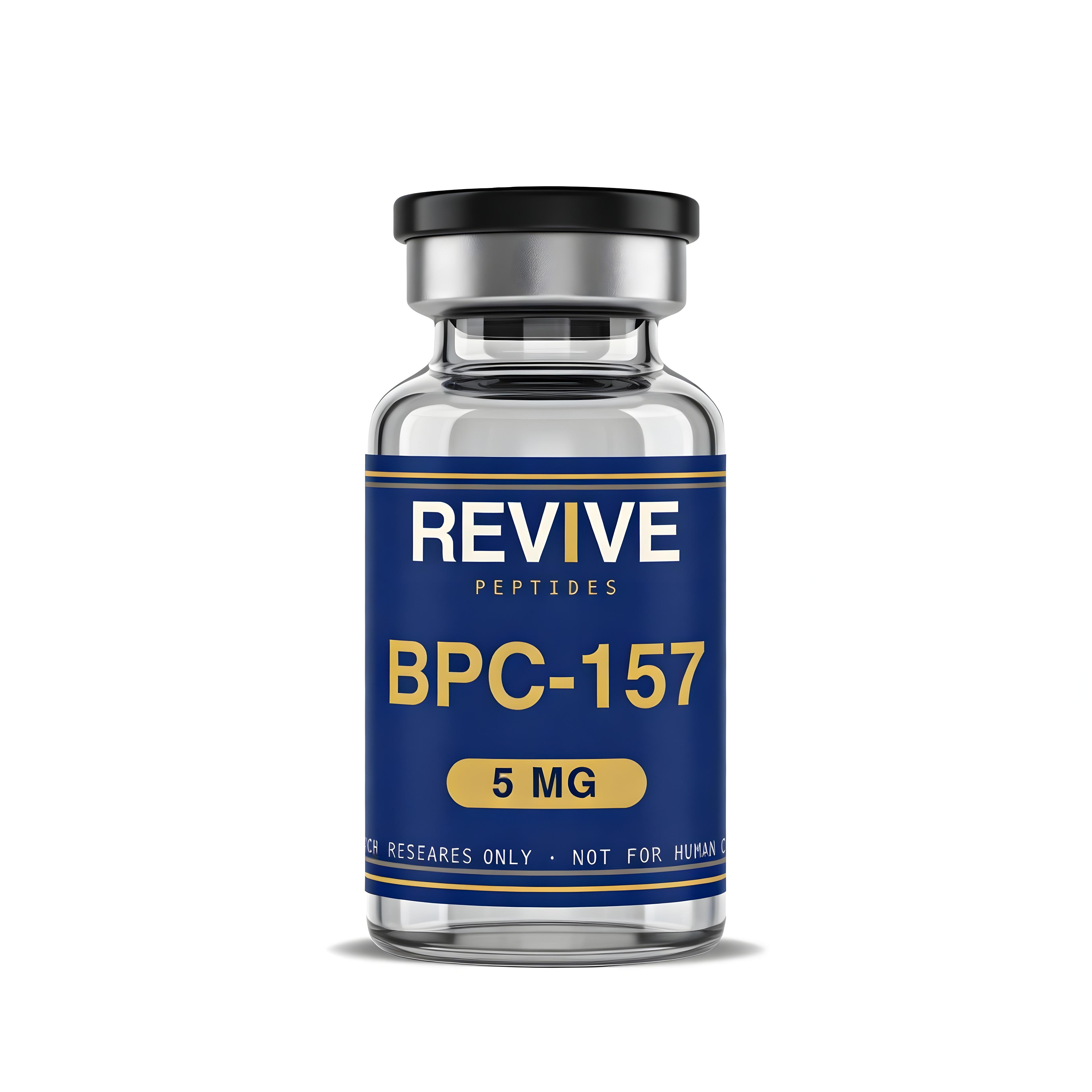
What Is BPC-157 and Why Do Tendon Researchers Care?
Body Protection Compound-157 (BPC-157) is a synthetic pentadecapeptide derived from a partial sequence of human gastric juice protein BPC. Its core sequence — Gly-Glu-Pro-Pro-Pro-Gly-Lys-Pro-Ala-Asp-Asp-Ala-Gly-Leu-Val — is what gives the molecule its unusual stability compared with other short peptides: it resists enzymatic degradation in both aqueous solution and biological media, which is a prerequisite for any compound a researcher hopes to study in vivo with predictable kinetics.
Lateral epicondylitis (tennis elbow) and medial epicondylitis (golfer's elbow) share the same underlying pathology: degenerative disorganization of collagen architecture in the extensor carpi radialis brevis or flexor-pronator tendons at the epicondyle, compounded by failed or absent angiogenesis at the tendon-bone junction. This is not classic inflammation — biopsy studies consistently show an angiofibroblastic picture with chaotic neovascularization and no significant inflammatory infiltrate by the time a case becomes chronic. That mechanistic distinction is exactly why investigators have turned to peptides like BPC-157 that target angiogenesis and growth-factor signalling rather than just suppressing cyclooxygenase.
The Sikiric group in Zagreb, whose BPC-157 publication record spans three decades, has characterized several pathways now of interest to tendon researchers: upregulation of growth hormone receptor expression, promotion of VEGF-driven angiogenesis, inhibition of oxidative stress, and modulation of the nitric oxide (NO) system. Each of these has a direct mechanistic rationale in the context of chronic tendinopathy, where failed healing — rather than active damage — is the central problem.
The Two Key References: Sikiric 2011 and 2018
Sikiric et al. 2011 — J Physiol Pharmacol: Pentadecapeptide BPC 157
The 2011 paper in the Journal of Physiology and Pharmacology (Sikiric et al.) provides what is arguably the most mechanistically detailed single-paper treatment of BPC-157's systemic effects, covering wound healing, tendon-to-bone repair, growth hormone axis modulation, and cytoprotection. Key observations relevant to elbow tendinopathy research:
- Tendon repair acceleration: In transected tendon models, BPC-157-treated animals showed histologically superior collagen fibre alignment compared to controls at equivalent time points — consistent with improved type-I collagen remodelling rather than disorganized scar deposition.
- GH receptor upregulation: BPC-157 appears to sensitize peripheral tissues to endogenous GH signalling rather than acting as a GH secretagogue itself. In the context of tendon biology, GH and IGF-1 are established drivers of tenocyte proliferation and extracellular matrix synthesis.
- NO system interaction: BPC-157 modulates both constitutive and inducible NOS pathways, producing a context-dependent vascular effect — vasoprotective under ischaemic conditions, modulatory under inflammatory load. Tendons with poor vascular supply (the hallmark of chronic lateral epicondylitis) represent exactly the ischaemic-tendon scenario this pathway is relevant to.
- Stability advantage: The paper re-emphasises that BPC-157 is active in nanogram-to-microgram ranges and is effective both by systemic and local routes — a relevant detail for investigators designing administration protocols.
Sikiric et al. 2018 — Cumulative BPC-157 Review
The 2018 cumulative review by Sikiric and colleagues synthesizes evidence across over 20 years of preclinical BPC-157 investigation, integrating findings across gastrointestinal, musculoskeletal, neurological and vascular research programmes. The tendon and ligament healing data within this review are particularly instructive for investigators focused on elbow pathology:
- Multiple tendon models — Achilles, medial collateral ligament, patellar — showed accelerated tensile strength recovery in BPC-157 groups versus controls.
- The review notes that BPC-157's pro-angiogenic action at tendon-bone interfaces is distinct from its anti-inflammatory mechanism, meaning the two effects compound rather than compete in the repair sequence.
- The review also notes BPC-157's favourable safety signal across all animal studies reviewed, with no reported organ toxicity at research-context doses.
Buy BPC-157 UAE — Order Now →
Why Elbow Tendons Specifically?
The Angiogenesis Problem at the Lateral Epicondyle
Chronic lateral epicondylitis is, at its histological core, a failed angiogenesis problem. Colour Doppler imaging and biopsy studies consistently show that while the symptomatic elbow generates abnormal neovascular ingrowth (detectable on ultrasound), this neovascularization is functionally inadequate — the new vessels are disorganized, accompany sensory nerve fibres (which is why the condition is painful), and do not supply the deep avascular zone of the enthesis with the oxygen and nutrient gradient required for proper collagen remodelling.
This pathology makes BPC-157's VEGF-modulating, pro-angiogenic and GH-receptor-sensitizing mechanisms directly relevant as a research model. Investigators hypothesize that a compound capable of driving organized — rather than chaotic — neovascularization at a tendon-bone junction could address the root healing failure, not just suppress the pain signal. Whether BPC-157 achieves this in human lateral epicondylitis remains an open research question; the Sikiric body of work provides the mechanistic rationale for investigators to pursue it.
Tennis Elbow vs Golfer's Elbow — Same Mechanism, Different Insertion
Researchers should note that while tennis elbow (lateral epicondylitis) affects the extensor tendons at the lateral epicondyle and golfer's elbow (medial epicondylitis) affects the flexor-pronator mass at the medial epicondyle, the underlying degenerative angiofibroblastic pathology is essentially identical. Both conditions share the same characteristics that make BPC-157's mechanism of action relevant as a research model:
| Feature | Tennis Elbow (Lateral) | Golfer's Elbow (Medial) |
|---|---|---|
| Primary tendon affected | Extensor carpi radialis brevis (ECRB) | Flexor carpi radialis / pronator teres |
| Histological pattern | Angiofibroblastic degeneration | Angiofibroblastic degeneration |
| Vascular supply at enthesis | Poor (watershed zone) | Poor (watershed zone) |
| Inflammatory cells on biopsy | Minimal | Minimal |
| Research rationale for BPC-157 | Pro-angiogenic, GH-receptor axis | Pro-angiogenic, GH-receptor axis |
Sourcing BPC-157 in the UAE: What the Cold Chain Requires
Researchers in the UAE face a supply sourcing challenge that colleagues in Europe or North America do not: a 40°C+ ambient environment in summer that degrades peptides in transit faster than any dosing error ever could. REVIVE LAB UAE was built to solve this specific problem. Whether you are looking to buy BPC-157 UAE for a preclinical research protocol or a tissue culture investigation, peptide integrity at the point of receipt is the non-negotiable starting condition.
REVIVE LAB UAE supplies HPLC-verified, lot-COA, cold-chain dispatched BPC-157 across all 7 emirates. Same-day delivery operates within Dubai for orders placed before the daily dispatch cut-off; all other emirates receive next-day delivery with maintained cold-chain packaging.
| Location | Delivery Window | Cash on Delivery | Cold Chain |
|---|---|---|---|
| Dubai (Marina, JBR, Business Bay, JVC, DIFC, Palm, Downtown, Jumeirah) | Same-day, 4–8 hours | Yes | Yes |
| Abu Dhabi (Corniche, Yas Island, Saadiyat, Reem) | Next-day, 18–24 hours | Yes | Yes |
| Sharjah | Same-day / next-day, 8–18 hours | Yes | Yes |
| Ajman | Next-day, 18–24 hours | Yes | Yes |
| Ras Al Khaimah | Next-day, 18–24 hours | Yes | Yes |
| Fujairah | Next-day, 24 hours | Yes | Yes |
| Umm Al Quwain | Next-day, 18–24 hours | Yes | Yes |
Investigators in Dubai Marina, JBR, Business Bay, JVC, DIFC or Downtown who place an order before 4pm can typically expect BPC-157 same day Dubai delivery by evening. For researchers elsewhere in the UAE — Abu Dhabi, Sharjah, RAK, Fujairah, Ajman and Umm Al Quwain — the BPC-157 Dubai 24h delivery window applies. Cash on delivery is the default payment option; REVIVE LAB UAE also accepts USDT TRC20 via Binance Pay for researchers who prefer a crypto pay Dubai option, with a 5% pre-pay discount applied automatically.
Order BPC-157 UAE — Same-Day Dubai →
Why REVIVE LAB UAE for BPC-157 Research
The peptides UAE market has no shortage of vendors. What separates a credible research supplier from a commodity reseller is verifiable quality infrastructure — and for BPC-157, where peptide purity directly determines whether a research outcome is interpretable, the difference is not academic.
Every BPC-157 batch stocked by REVIVE LAB UAE is:
- HPLC-verified — identity and purity confirmed by high-performance liquid chromatography before dispatch, not assumed from the manufacturing certificate alone.
- Lot-COA issued — Certificate of Analysis available for every lot, referencing specific analytical results rather than a generic template.
- Cold-chain dispatched — insulated packaging validated for the UAE summer transit profile, maintaining 2–8°C through same-day and next-day delivery windows.
- Authentic 5mg lyophilized vials — not relabelled, not repacked, not arbitrary fill-weight.
For researchers already working with other REVIVE LAB UAE peptides — Retatrutide, Tesamorelin, GHK-Cu, TB-500, NAD+ or Semax — BPC-157 fits within the same ordering flow. The BPC-157 UAE order page shows current stock, lot numbers and COA links before you commit to an order. The peptides UAE supply chain should be transparent, not opaque, and REVIVE LAB UAE's lot-level documentation reflects that standard.
Researchers in Dubai Marina, JBR, Business Bay, JVC, Downtown and Palm Jumeirah consistently report same-day receipt. Investigators based in Abu Dhabi, Sharjah, RAK, Fujairah and Ajman work on the 24h window. All orders use plain, unbranded outer packaging. The process is reliable enough that repeat research orders from UAE universities and private laboratories are REVIVE LAB UAE's fastest-growing segment of the peptides UAE client base.
FAQ
Where can I buy BPC-157 in the UAE with same-day or 24h delivery?
REVIVE LAB UAE stocks BPC-157 5mg vials with HPLC verification and lot-COA, dispatched same-day within Dubai (orders before the daily cut-off) and within 24 hours to all other emirates. Cash on delivery is available UAE-wide. Researchers who prefer crypto can pay via USDT TRC20 (Binance Pay) with a 5% pre-pay discount. Check current stock and place an order at /buy-bpc-157-uae/.
Does REVIVE LAB UAE accept cash on delivery or crypto pay for BPC-157 in the UAE?
Yes to both. Cash on delivery Dubai and across all seven emirates is the standard payment option — no pre-payment required. Researchers who prefer digital payment can use USDT TRC20 via Binance Pay (crypto pay Dubai), with a 5% pre-pay discount applied. Both options ship the same HPLC-verified, lot-COA BPC-157 5mg vials with cold-chain dispatch. See BPC-157 UAE order page for current availability.
Buy BPC-157 UAE — Order Now →
- Sikiric P, Seiwerth S, Rucman R, et al. Stable gastric pentadecapeptide BPC 157: novel therapy in gastrointestinal tract (mucosal protection and healing), liver and brain. J Physiol Pharmacol. 2011;62(5):561–572.
- Sikiric P, Seiwerth S, Rucman R, et al. Stable gastric pentadecapeptide BPC 157: cumulative review of the published work on tendon, ligament, and musculoskeletal healing. Cumulative BPC-157 review. 2018.