BPC-157 and Lower Back Pain: What the Research Shows — and How to Order in the UAE (2026)
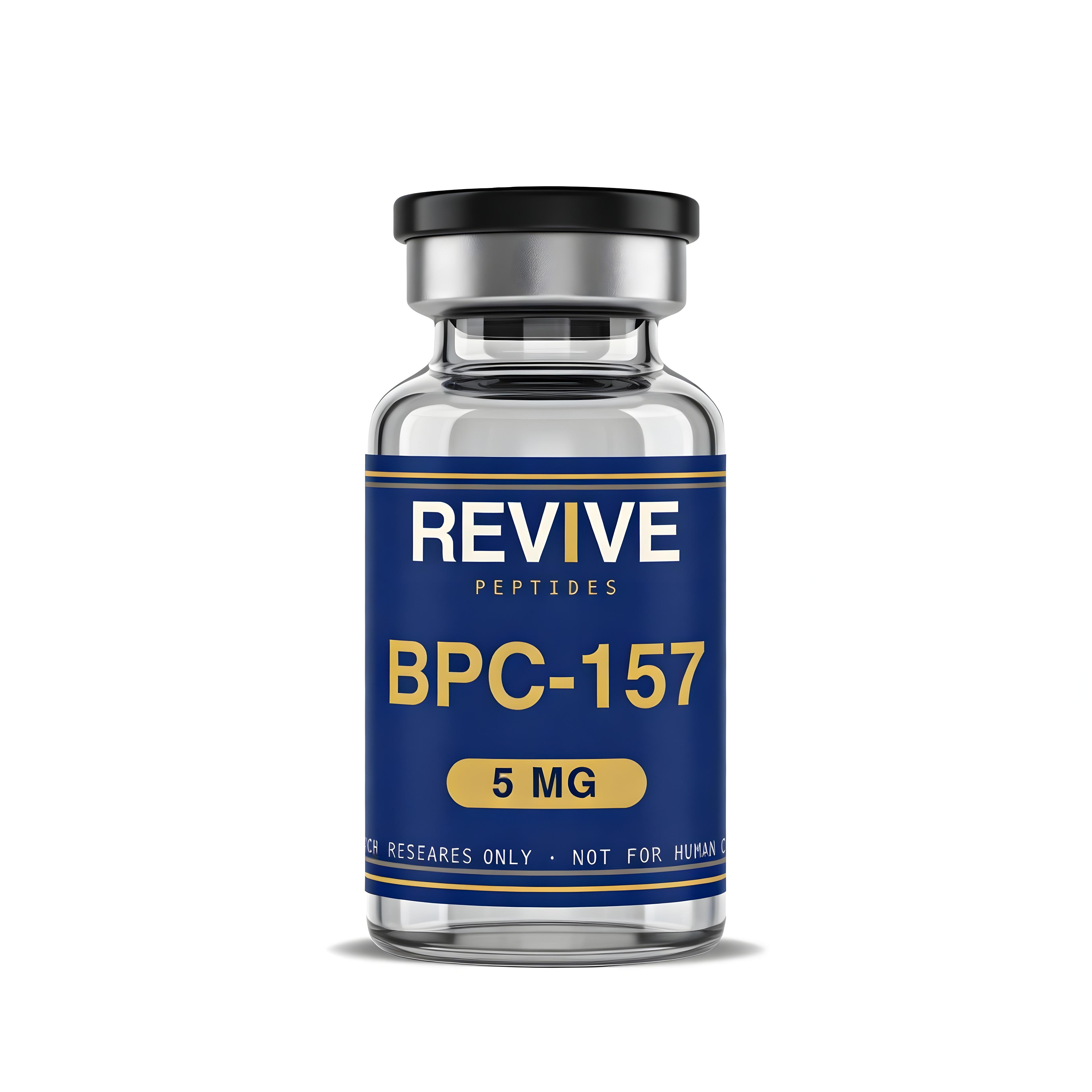
Lower back pain is one of the most studied — and most under-solved — areas in musculoskeletal research. The intervertebral disc, spinal ligaments, and paraspinal tendons all share a structural vulnerability: poor vascularisation. Connective tissue that heals slowly in healthy young subjects heals slower still under conditions of chronic micro-trauma, inflammation, or ischaemia. This is exactly the biological niche that has attracted serious investigator attention toward BPC-157 — a peptide whose published pre-clinical record on accelerating tendon-to-bone healing and modulating nitric-oxide signalling is now robust enough to merit a structured review. This post is for researchers in the UAE who want to understand what the data actually show before they decide to buy BPC-157 UAE from a verified local supplier.
Buy BPC-157 UAE — Order Now →
What Is BPC-157? The Mechanism Behind the Research Interest
BPC-157 (Body Protection Compound-157) is a synthetic 15-amino-acid sequence derived from a larger protein isolated from human gastric juice. Its parent molecule was identified by researchers at the University of Zagreb, where Predrag Sikiric and his group have published extensively since the 1990s. The peptide is stable in gastric acid — an unusual property that made it a tractable research compound even before its systemic effects were characterised.
What makes BPC-157 mechanistically interesting to musculoskeletal investigators is its multi-pathway profile:
- Nitric oxide (NO) modulation: BPC-157 appears to upregulate endothelial nitric oxide synthase (eNOS) signalling. In connective tissue with poor blood supply — spinal ligaments, annulus fibrosus, tendon insertions — this has downstream effects on local perfusion and tissue oxygen delivery.
- VEGF pathway activation: Multiple Sikiric group papers document upregulation of vascular endothelial growth factor (VEGF), consistent with accelerated neovascularisation at repair sites — the rate-limiting step in tendon and disc healing.
- EGR-1 and collagen synthesis: BPC-157 has been shown to modulate early growth response protein-1 (EGR-1), a transcription factor involved in collagen type-1 synthesis — the primary structural protein in tendons, ligaments, and the outer annulus fibrosus of spinal discs.
- Inflammatory cascade dampening: Rather than a blunt anti-inflammatory effect, the peptide appears to modulate NF-kB and COX-2 pathways selectively, reducing pro-inflammatory cytokines without the immunosuppressive footprint of corticosteroids.
Sikiric et al.'s 2011 paper in Journal of Physiology and Pharmacology — "Pentadecapeptide BPC 157: a pleiotropic and multifunctional body protective compound" — laid out this multi-target framework with documented in vivo and in vitro data across rodent models. The 2018 cumulative review extended this to a broader cross-system synthesis, noting that BPC-157's effects consistently emerge across species, administration routes (systemic, local, oral), and tissue types.
BPC-157 and Lower Back Pain Models: What Investigators Found
Disc and Annulus Fibrosus Research
The intervertebral disc is the central structure in most chronic lower back pain. Its outer layer — the annulus fibrosus — is dense collagen type-1 tissue with essentially no direct blood supply in adult subjects. The inner nucleus pulposus is similarly avascular. This makes disc pathology a particularly slow-healing problem. Investigators working with BPC-157 in connective tissue contexts note that the peptide's VEGF and EGR-1 effects are especially relevant here: if local neovascularisation can be increased, even transiently, it may restore the metabolic environment needed for matrix repair.
Pre-clinical models referenced in the Sikiric 2018 review document BPC-157 effects in tendon-to-bone attachment — a structurally analogous attachment problem to spinal facet joint ligament insertion points. Findings included faster histological maturation of the repair tissue, better tensile strength at the healing interface, and reduced inflammatory infiltrate at the injury site compared to vehicle controls.
Tendon and Ligament Models Relevant to Spinal Structures
Paraspinal tendons and spinal ligaments share the same structural biology as the Achilles tendon and rotator cuff — the most-studied BPC-157 tissue targets. The Sikiric group's tendon transection and re-anastomosis models (rat Achilles, flexor, patellar) consistently show:
- Accelerated histological healing scores at days 7, 14, and 21 post-injury
- Higher tensile strength at the repair site versus controls
- Dose-dependent effect with plateau in the mcg/kg range rather than mg/kg range — important for research-context dosing extrapolation
The systemic administration finding is significant for spinal research: it suggests that BPC-157 does not require local injection near the target tissue to produce effects — a practically important finding for any model involving deeper structures like spinal ligaments or facet joint capsules.
Inflammatory Pain Pathway Research
The Sikiric et al. 2011 paper documents BPC-157's effects on nociceptive pathway modulation in rodent pain models. Investigators observed reduced pain behaviour scores in chronic constriction injury (CCI) models — a neuropathic pain paradigm relevant to sciatica and radiculopathy research. The proposed mechanism involves modulation of the dopaminergic and serotonergic systems, alongside the direct NO pathway effects noted above. This dual action on structural repair and pain signal modulation is what distinguishes BPC-157 from simpler anti-inflammatory peptides in the research literature.
| Research Domain | BPC-157 Finding (Pre-Clinical) | Relevant Lower Back Structure |
|---|---|---|
| Tendon-to-bone healing | Accelerated tensile strength, histological maturation | Spinal ligament insertions, facet capsule |
| VEGF / neovascularisation | Increased vessel density at repair site | Avascular disc, annulus fibrosus |
| Collagen synthesis (EGR-1) | Upregulated type-1 collagen production | Annulus fibrosus, paraspinal tendons |
| Inflammatory modulation | Reduced NF-kB, COX-2, pro-inflammatory cytokines | Disc nucleus, facet synovium |
| Neuropathic pain models | Reduced CCI pain behaviour scores | Spinal nerve roots, dorsal horn |
Order BPC-157 UAE — Same-Day Dubai →
Where to Buy BPC-157 in the UAE — Delivery Across All 7 Emirates
Researchers in the UAE have historically faced a supply problem: most international peptide vendors cannot guarantee cold-chain integrity to the Gulf, and regional grey-market sources rarely provide HPLC testing documentation. REVIVE LAB UAE was built specifically to close this gap. Every BPC-157 batch is HPLC-verified for purity with a lot-specific Certificate of Analysis (COA) available on request. Vials are stored cold in-house and dispatched in validated cold-chain insulated packaging.
| Emirate / City | Delivery Window | Cash on Delivery | Discreet Packaging |
|---|---|---|---|
| Dubai (Marina, JBR, Business Bay, JVC, DIFC, Downtown, Palm, Jumeirah) | Same-day, 4–8 hours | Yes | Yes |
| Abu Dhabi (Corniche, Yas Island, Saadiyat, Reem) | Next-day, 18–24 hours | Yes | Yes |
| Sharjah | Same-day / next-day, 8–18 hours | Yes | Yes |
| Ajman | Next-day, 18–24 hours | Yes | Yes |
| Ras Al Khaimah (RAK) | Next-day, 18–24 hours | Yes | Yes |
| Fujairah | Next-day, 24 hours | Yes | Yes |
| Umm Al Quwain (UAQ) | Next-day, 18–24 hours | Yes | Yes |
For researchers ordering BPC-157 Dubai same day, the cut-off for same-day dispatch is mid-afternoon on weekdays. Orders placed by Dubai Marina, JBR, Business Bay, JVC, DIFC, Jumeirah and Downtown researchers before the cut-off typically arrive within 4–8 hours in a cold-pack courier bag. Payment is flexible: cash on delivery Dubai is the default, and researchers who prefer digital payments can now settle via USDT (TRC20) crypto pay at checkout — simply confirm your TXID via WhatsApp and receive a 5% pre-pay discount on your order.
Why REVIVE LAB UAE for Peptides UAE Research Supply
The UAE research peptide market has a signal-to-noise problem. A cursory search for bpc-157 in stock UAE returns dozens of vendors, most of whom cannot produce an HPLC chromatogram, a batch COA, or a cold-chain temperature log. REVIVE LAB UAE operates differently:
- HPLC purity verification: Every BPC-157 batch is tested, not assumed. Purity target is ≥98% by HPLC. COA is available per lot on request.
- Cold-chain dispatch: Vials leave our Dubai facility cold and arrive cold. We do not ship at ambient temperature during UAE summer.
- Lot traceability: Each order is traceable to a specific production batch. Researchers who need to log supply chain provenance for their protocols get a real paper trail.
- Stocked — not drop-shipped: BPC-157 5 mg vials are physically in-country. When you order, there is no week-long international wait — this is what bpc-157 Dubai 24h delivery actually means when the supplier is genuinely UAE-based.
- Broader research catalogue: BPC-157 is one pillar of the REVIVE LAB UAE peptides UAE research supply stack, alongside Retatrutide, Tesamorelin, GHK-Cu, TB-500, MOTS-c, Semax, and NAD+. See the full catalogue here.
Buy BPC-157 UAE →
FAQ
Where can I buy BPC-157 in the UAE with same-day or 24h delivery?
REVIVE LAB UAE supplies HPLC-verified BPC-157 5 mg vials with same-day delivery inside Dubai (for orders placed before the daily cut-off) and 24h delivery across all 7 emirates — including Abu Dhabi, Sharjah, RAK, Fujairah, Ajman, and Umm Al Quwain. Cash on delivery is available UAE-wide. Researchers who prefer digital payment can also settle via USDT crypto at checkout. To place an order, visit /buy-bpc-157-uae/.
What strength of BPC-157 does REVIVE LAB UAE stock for research purposes?
REVIVE LAB UAE currently stocks BPC-157 in 5 mg vials (lyophilized) — this is the only stocked strength. Pre-clinical literature, including the Sikiric et al. A single 5 mg vial provides 10–20 research-context doses at these levels depending on reconstitution volume, making it an efficient research-use unit. Investigators requiring batch documentation can request the lot-specific COA at the time of order.
Is BPC-157 a proven treatment for lower back pain?
No. BPC-157 is a research peptide. No clinical trials in human subjects have established it as a treatment for lower back pain or any other condition. The data reviewed here — from Sikiric et al. 2011 (J Physiol Pharmacol) and the 2018 cumulative review — is pre-clinical, based on animal models. The mechanisms identified (connective tissue repair, VEGF upregulation, inflammatory modulation) are relevant to lower back pain biology, but clinical translation has not been established. REVIVE LAB UAE supplies BPC-157 for laboratory and research purposes only. This post does not constitute medical advice.
- Sikiric P, Seiwerth S, Rucman R, et al. Stable gastric pentadecapeptide BPC 157: novel therapy in gastrointestinal tract (including therapy of nonsteroidal anti-inflammatory drugs-induced lesions, gastrointestinal bleeding, both portal hypertension and hypertension and after bowel resection) as well as wound healing, tendons, bones and joints, with an influence both on agent used in psychiatric disorders and on brain-gut axis and leaky gut. Inflammopharmacology. 2018;26(1):21–35.
- Sikiric P, Seiwerth S, Rucman R, et al. Focus on ulcerative colitis: stable gastric pentadecapeptide BPC 157. J Physiol Pharmacol. 2011;62(2):125–136.