BPC-157 Research Guide: Mechanism, Animal Studies, and What the Evidence Actually Shows
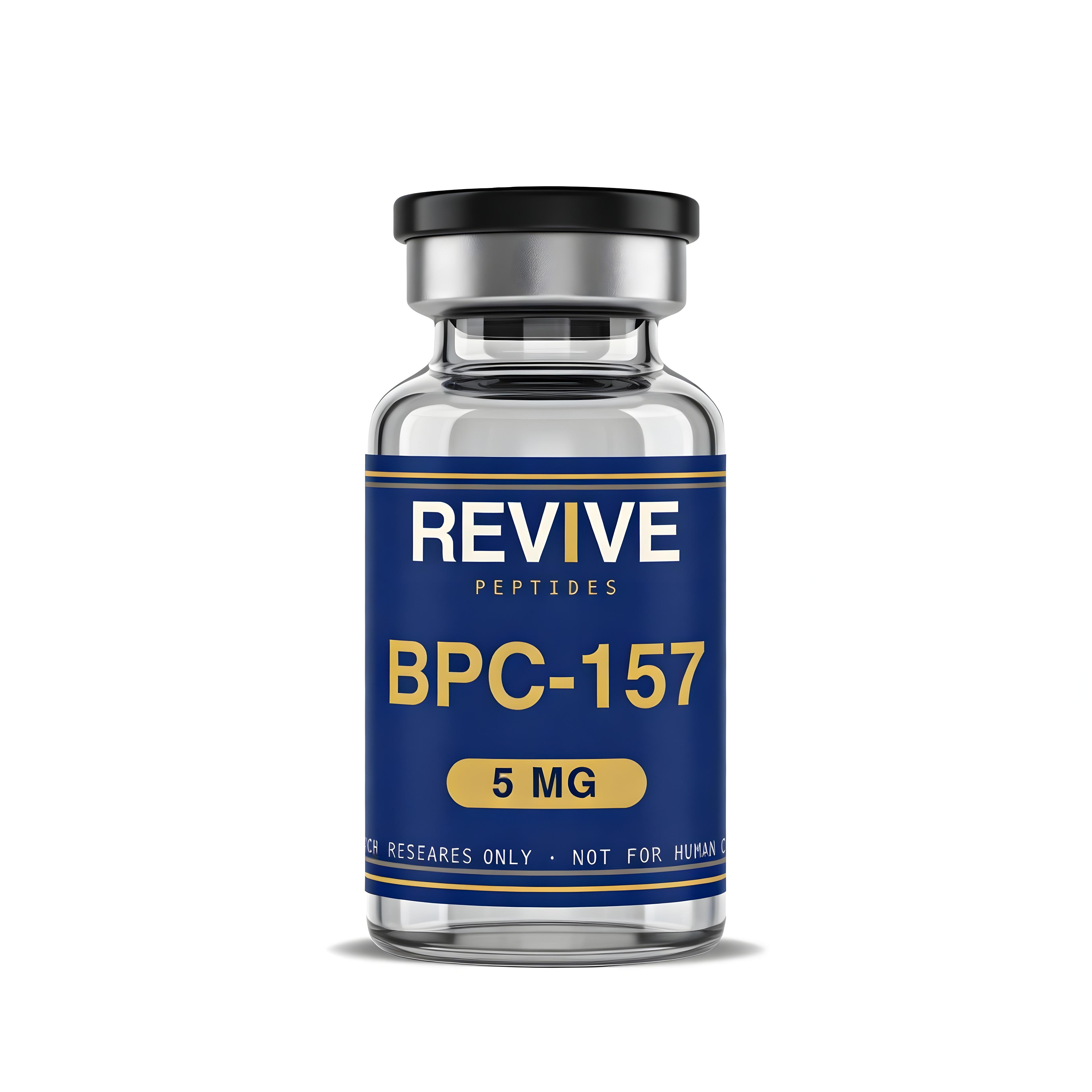
BPC-157 is one of the most-discussed peptides in the research market — and one of the most misrepresented. This guide walks through what the peer-reviewed literature actually documents (animal-model healing across tendon, ligament, gut, and CNS), what it doesn't (no human trials), and how to think about BPC-157 honestly in a research context.
1. Origin: a fragment of a gastric protection compound
BPC-157 — full name pentadecapeptide BPC 157 — is a synthetic 15-amino-acid sequence (GEPPPGKPADDAGLV) derived from a larger gastric juice protein the Croatian researcher Predrag Sikiric and colleagues identified in the early 1990s while studying gastric ulcer healing. The full parent protein was named "Body Protection Compound" (BPC), and the 15-residue stretch they synthesised and tested became BPC-157.
The original 1991 paper documented gastric ulcer protection in rats — and the Sikiric group has spent three decades since then publishing follow-up animal studies on the same molecule. There are now well over 100 peer-reviewed papers on BPC-157 from his group and collaborators, almost all in animal models.
2. The mechanism in plain language
BPC-157's mechanism of action is best described as multimodal — it doesn't bind a single receptor in the way a GLP-1 agonist binds GLP-1R. Instead, the documented pathways include:
- VEGFR2 / angiogenesis. BPC-157 upregulates VEGFR2 expression and accelerates new blood-vessel formation in injury models. This is the most-cited mechanism for tissue-healing effects.
- Growth hormone receptor expression. Chang et al. (2011, J Appl Physiol) documented that BPC-157 increases GHR expression in tendon fibroblasts, which appears to drive the tendon-to-bone healing observed in transected Achilles models.
- Nitric oxide / NO system modulation. Several Sikiric papers describe BPC-157 effects on both NOS inhibition and NO availability in ischaemia-reperfusion models.
- Vagal / gut-brain signalling. The CNS effects of BPC-157 are blocked by vagotomy in rat studies, suggesting the central effects propagate through the vagus nerve rather than crossing the blood-brain barrier directly.
- Dopaminergic, serotonergic, GABAergic systems. Sikiric's 2022 Neural Regeneration Research review summarises the work on neurotransmitter system effects in rodent models of injury and behavioural challenge.
3. What the animal data actually shows
Gastric and gut protection (the original finding)
The reproducible result that started the whole BPC-157 research programme: protection against ethanol-induced and stress-induced gastric ulcers in rats. The same model was extended to other gut-injury contexts — cysteamine-induced duodenal ulcers, NSAID-induced lesions, and inflammatory bowel disease models. Effects are consistent across labs that have tried to reproduce them.
Tendon and ligament healing
The most-cited tendon paper is Chang et al. 2011 (J Appl Physiol), which used a rat Achilles transection model. Animals receiving BPC-157 showed accelerated tendon outgrowth, increased cell survival, and faster cell migration into the injury site. Histology confirmed denser collagen organisation by the 14-day mark.
Subsequent papers from the Sikiric group extended this to medial collateral ligament transection, quadriceps muscle crush, and detached Achilles models — with broadly similar results.
Wound healing in skin and muscle
Multiple Sikiric papers (summarised in the 2021 Frontiers in Pharmacology review) document accelerated closure of skin incision wounds, muscle crush injuries, and ischaemic flaps — again, in rat models. The mechanism converges on VEGFR2 upregulation and faster angiogenesis at the wound site.
Central nervous system effects
The CNS work is more recent and more speculative. Models include traumatic brain injury, spinal cord compression, MPTP-induced Parkinson's-like pathology, and behavioural models of anxiety and depression. The 2022 Neural Regen Res review consolidates this literature. Key caveat: the vagotomy experiments suggest BPC-157 doesn't cross the BBB in a meaningful way — the CNS effects appear to be relayed via the vagus nerve from the gut.
4. BPC-157 vs TB-500 — how researchers think about the comparison
The two most-asked-about healing peptides in the research market. They're often discussed together, sometimes paired in research protocols. The mechanism-level differences:
| BPC-157 | TB-500 | |
|---|---|---|
| Origin | Fragment of human gastric juice BPC protein | Fragment 17–23 of thymosin beta-4 (β-actin sequestering peptide) |
| Primary mechanism | VEGFR2-driven angiogenesis, GHR expression, vagal signalling | Actin sequestration, cell migration, anti-inflammatory modulation |
| Strongest animal data | Tendon, ligament, gut, CNS | Cardiac, dermal, corneal repair |
| Half-life | Short — minutes by IV/IP in rats (subQ may differ) | Hours — longer systemic exposure |
| Human trials | None published | None published for the fragment (parent thymosin β-4 has some) |
5. The honest limitation: no human trials
What this means for research applications: BPC-157 sits in the same category as many promising preclinical molecules — strong animal-model signal, mechanism plausibility, but no human safety profile. That gap is the reason it remains a research peptide rather than an approved pharmaceutical.
6. Practical research considerations
Stability and reconstitution
BPC-157 is reasonably stable as a lyophilised powder. Once reconstituted with bacteriostatic water, the standard recommendation in published reconstitution work is refrigerated storage (2–8 °C) with use within 30 days. Sikiric's group has tested the molecule in both oral and parenteral delivery routes in rats — oral activity is preserved, which is unusual for a peptide.
Acetate vs arginate salt forms
Most BPC-157 research is done with the acetate salt. An "arginate" version exists in the research market but has thinner peer-reviewed documentation. For comparability with the published literature, the acetate form is the safer choice.
7. The summary
- Mechanism: multimodal — angiogenesis, GHR expression, vagal signalling.
- Strongest data: rat tendon/ligament healing (Chang 2011), gastric ulcer protection (original Sikiric work), gut-injury models.
- Honest gap: zero published human RCTs.
- Research peptide, not pharmaceutical. For laboratory research applications only.
References
- Sikiric P, et al. Stable Gastric Pentadecapeptide BPC 157 and Wound Healing. Front Pharmacol. 2021;12:627533. PubMed
- Sikiric P, et al. Pentadecapeptide BPC 157 and the Central Nervous System. Neural Regen Res. 2022;17(3):482–487. PubMed
- Chang CH, Tsai WC, Lin MS, Hsu YH, Pang JH. The promoting effect of pentadecapeptide BPC 157 on tendon healing involves tendon outgrowth, cell survival, and cell migration. J Appl Physiol. 2011;110(3):774–780. PubMed
- Seiwerth S, et al. BPC 157 and Standard Angiogenic Growth Factors. Gastrointestinal Tract Healing, Lessons from Tendon, Ligament, Muscle and Bone Healing. Curr Pharm Des. 2018;24(18):1972–1989. PubMed
- Sikiric P, et al. The Pharmacological Properties of the Novel Peptide BPC 157. Inflammopharmacology. 1999;7(1):1–14. PubMed