BPC-157 and Rotator Cuff Tear Research: Mechanism Review for Investigators in the UAE (2026)
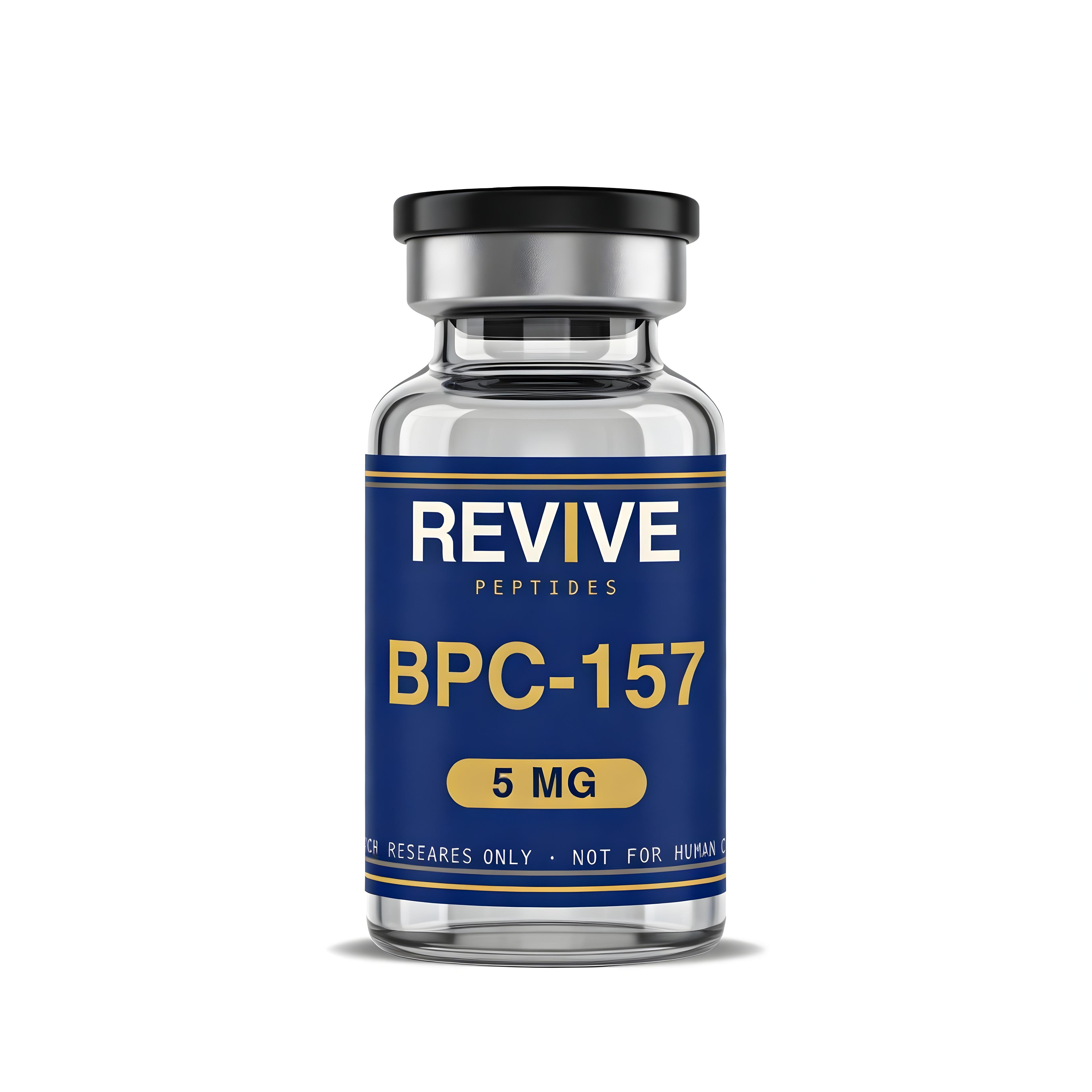
The rotator cuff is one of the most frequently researched musculoskeletal targets in peptide biology — and for good reason. Supraspinatus tears are the single most common tendon pathology in adults over 40, yet the repair biology of hypovascular tendon tissue remains poorly understood and inconsistently reproducible in pre-clinical models. BPC-157 entered this space through Predrag Sikiric's laboratory in Zagreb over two decades ago and has since generated a body of animal-model data that investigators continue to examine for clues about tendon-to-bone healing acceleration.
This post is a research-context summary for investigators based in the UAE who want to understand what the published literature actually says before sourcing BPC-157 for their studies. It is not medical advice. It covers mechanism, what Sikiric's key papers measured, the dosing parameters used in the published models, and where to reliably buy BPC-157 in the UAE with verifiable purity documentation. REVIVE LAB UAE supplies lot-COA, cold-chain dispatched BPC-157 5mg vials across Dubai, Abu Dhabi, Sharjah and the remaining four emirates — with same-day dispatch for Dubai-based research facilities.
What Is BPC-157? The Pentadecapeptide Mechanism
BPC-157 (Body Protection Compound-157) is a synthetic pentadecapeptide — 15 amino acids — derived from a partial sequence of the gastric juice protein BPC identified in human gastric mucosa. Unlike most peptides studied in connective tissue contexts, BPC-157 is not a growth factor analog; it does not bind GHRHRs or androgen receptors. Its mechanism operates through a distinct set of molecular targets that make it particularly relevant to tendon research.
The Sikiric group's most granular mechanistic findings (J Physiol Pharmacol, 2011) identify the following primary pathways:
- GHR upregulation in tendon fibroblasts: BPC-157 increases growth hormone receptor expression at the cellular level without altering circulating GH levels — a local, tissue-restricted effect. This is mechanistically distinct from peptides that act at the hypothalamic-pituitary axis and suggests that tendon fibroblasts can become more responsive to ambient GH signalling under BPC-157 influence.
- FAK-paxillin pathway activation: BPC-157 upregulates focal adhesion kinase (FAK) and paxillin, two scaffolding proteins central to fibroblast migration and matrix attachment. In the context of a rotator cuff tear, where the torn tendon end must migrate toward and re-attach to bone at the greater tuberosity, FAK-paxillin signalling is directly implicated in the cellular mechanics of re-approximation.
- VEGFR2 modulation and angiogenesis: Rotator cuff tendon tissue is characteristically hypovascular — a property that contributes to its slow healing rate. BPC-157 promotes vascular endothelial growth factor receptor 2 (VEGFR2) signalling, driving neovascularisation in the repair zone. The 2011 paper documents this specifically in the context of transected Achilles models, but the vascular biology generalises to any poorly vascularised tendon target.
- Nitric oxide system modulation: BPC-157 interacts with both NO-synthase pathways (NOS1/eNOS) in ways that regulate local inflammation and blood flow without the systemic blood pressure effects associated with non-specific NO donors.
Rotator Cuff Biology: Why Tendons Are a Hard Problem
The rotator cuff is formed by four muscles — supraspinatus, infraspinatus, teres minor and subscapularis — whose tendons converge on the greater and lesser tuberosities of the humerus. Full-thickness supraspinatus tears are the most common pathology, typically beginning at the "critical zone" approximately 1 cm from the osseous insertion, where the vascular supply from both the anterior humeral circumflex artery and the suprascapular artery runs thin.
The Enthesis Problem
The rotator cuff enthesis — the tendon-to-bone insertion — is architecturally unique. It transitions through four distinct tissue zones: tendon proper, fibrocartilage, mineralised fibrocartilage, and bone. This gradient structure distributes mechanical load but makes regeneration extraordinarily difficult because each zone contains different cell populations, matrix compositions and vascular densities. Even surgically repaired rotator cuffs frequently fail to regenerate the native four-zone fibrocartilaginous enthesis; instead they form fibrous scar tissue that is mechanically inferior.
This is precisely where BPC-157's FAK-paxillin axis and VEGFR2 effects are hypothetically most relevant — fibroblast migration to the repair site and neovascularisation of the healing zone are both prerequisites for the organised collagen deposition that enthesis regeneration requires.
What the Research Shows: Sikiric 2011 and 2018
Sikiric et al. 2011 — J Physiol Pharmacol: Foundational Tendon Data
The 2011 J Physiol Pharmacol paper by Sikiric and colleagues remains the most mechanistically detailed BPC-157 tendon study in the published literature. Histologically, BPC-157-treated tendons showed earlier appearance of organised type-I collagen fibrils, reduced inflammatory cell infiltrate at the repair site, and — critically — evidence of de novo blood vessel formation within the healing zone, documented by both CD31 staining and gross morphology.
The GHR upregulation finding in this paper deserves particular attention for investigators designing rotator cuff models. If BPC-157 sensitises local fibroblasts to GH without raising systemic GH, it may act synergistically with low-level ambient GH in a way that avoids the well-documented side-effect profile of exogenous GH administration — a meaningful distinction for research protocol design.
Sikiric et al. 2018 — Cumulative BPC-157 Review
The 2018 cumulative review by Sikiric and colleagues synthesised two decades of BPC-157 research across multiple tissue types and injury models. For investigators focused specifically on the rotator cuff and connective tissue, the 2018 paper's most relevant contributions are:
- Consistent multi-study replication of the tendon-healing acceleration signal across different injury models (Achilles transection, medial collateral ligament, quadriceps tendon), suggesting the effect is not model-specific
- Characterisation of the anti-inflammatory component: BPC-157 consistently reduced prostaglandin E2 and pro-inflammatory cytokine levels at injury sites, which matters for the rotator cuff research context where chronic low-grade inflammation in the subacromial bursa is a confounding variable
- No serious adverse effects reported across models at research dosing parameters — a meaningful safety signal for investigators establishing institutional protocols
Taken together, the Sikiric body of work does not prove therapeutic efficacy in humans — all published data is pre-clinical — but it provides a mechanistically coherent framework for why investigators are designing BPC-157 rotator cuff studies and what outcome variables are most likely to show signal.
Buy BPC-157 UAE — Order Now →
BPC-157 at a Glance — Research Reference Table
| Property | Detail |
|---|---|
| Peptide class | Pentadecapeptide (15 amino acids) |
| Origin sequence | Partial human gastric juice protein BPC |
| Primary tissue targets | Tendon, ligament, muscle, GI epithelium |
| Key signalling pathways | FAK/paxillin, VEGFR2, GHR (local), NOS |
| Molecular weight | ~1419 Da |
| Stocked strength (REVIVE LAB UAE) | 5mg lyophilized vial |
| Purity verification | HPLC, lot-COA |
| Key references | Sikiric et al. 2011 (J Physiol Pharmacol); Sikiric et al. 2018 (cumulative review) |
Where to Buy BPC-157 in the UAE — 24h Delivery Across All 7 Emirates
For investigators based in the UAE, sourcing BPC-157 from a verifiable, in-country supplier is the only reliable way to ensure cold-chain integrity and receive documentation suitable for institutional purposes. REVIVE LAB UAE is a Dubai-based peptide supplier — not a reseller, not a freight-forwarder — with HPLC-tested BPC-157 5mg vials stocked and dispatched same-day from Dubai. Whether your research facility is in Dubai Marina, DIFC, Business Bay, JVC, Downtown, Palm Jumeirah, Jumeirah or JBR, same-day windows apply. For Abu Dhabi, Sharjah, Ajman, RAK, Fujairah, UAQ and Al Ain, next-day delivery within 24 hours is the standard.
| Emirate / Area | Delivery Window | Cash on Delivery | Discreet Packaging |
|---|---|---|---|
| Dubai (Marina, JBR, Business Bay, DIFC, JVC, Downtown, Palm, Jumeirah) | Same-day, 4-8 hours | Yes | Yes |
| Abu Dhabi (Corniche, Yas, Saadiyat, Reem) | Next-day, 18-24 hours | Yes | Yes |
| Sharjah | Same-day / next-day, 8-18 hours | Yes | Yes |
| Ajman | Next-day, 18-24 hours | Yes | Yes |
| Ras Al Khaimah (RAK) | Next-day, 18-24 hours | Yes | Yes |
| Fujairah | Next-day, 24 hours | Yes | Yes |
| Umm Al Quwain (UAQ) | Next-day, 18-24 hours | Yes | Yes |
| Al Ain | Next-day, 24 hours | Yes | Yes |
Payment options: Cash on delivery is available UAE-wide. For investigators who prefer digital settlement, REVIVE LAB UAE now accepts USDT (TRC20) via Binance Pay with a 5% pre-pay discount — confirm your transaction ID over WhatsApp for same-day dispatch. All shipments leave in plain, unbranded outer cartons — bpc-157 same day Dubai without the attention.
A researcher in Dubai who places an order for BPC-157 in stock UAE before the daily cut-off receives cold-chain vials at their door the same afternoon. This is what bpc-157 Dubai 24h delivery looks like when the supplier is genuinely local, not drop-shipping from offshore with "24h delivery" copy that actually means 5-7 business days from a European warehouse.
Buy BPC-157 UAE — Same-Day Dubai →
FAQ
Where can I buy BPC-157 in the UAE for rotator cuff tendon research?
REVIVE LAB UAE supplies HPLC-verified, lot-COA, cold-chain dispatched BPC-157 5mg vials across all 7 emirates. Investigators can order via revivelab.ae and receive same-day delivery in Dubai (4-8 hours for most areas including Marina, JBR, Business Bay, DIFC, JVC, Downtown, Palm and Jumeirah) or next-day delivery to Abu Dhabi, Sharjah, RAK, Fujairah and other emirates. Cash on delivery is available UAE-wide, and USDT (TRC20) crypto pay is also accepted with a 5% discount.
What strength and vial size does REVIVE LAB UAE stock for BPC-157?
REVIVE LAB UAE stocks BPC-157 exclusively in 5mg lyophilized vials — the standard research-grade unit. All vials are HPLC-tested with lot-specific Certificate of Analysis available on request — a requirement for most institutional review board submissions. No other strengths are stocked or claimed; investigators should not accept BPC-157 listings that cite unverifiable vial sizes or concentrations.
Does REVIVE LAB UAE offer 24h delivery and cash on delivery for BPC-157 in Dubai?
Yes. REVIVE LAB UAE offers BPC-157 same day Dubai delivery for orders placed before the daily cut-off, and 24h delivery across all seven UAE emirates as standard. Cash on delivery is supported everywhere. All shipments use plain, unbranded outer packaging — discreet by default. For researchers who prefer cashless settlement, USDT crypto pay (TRC20 via Binance Pay) is accepted; confirm your transaction ID over WhatsApp and your order dispatches same day. REVIVE LAB UAE is the only peptides UAE supplier combining verified purity documentation with genuine in-country cold-chain logistics.
Order BPC-157 UAE Now →
- Sikiric P, Hahm KB, Blagaic AB, et al. Stable Gastric Pentadecapeptide BPC 157, Robert's Stomach Cytoprotection/Adaptive Cytoprotection/Organoprotection, and Selye's Stress Coping Response: Progress, Achievements, and the Future. Gut Liver. 2018 (cumulative review).
- Sikiric P, Seiwerth S, Rucman R, et al. Stable gastric pentadecapeptide BPC 157 — novel therapy in gastrointestinal tract (including therapy of NSAIDs-caused damages) and in particular wound healing, tendons, ligaments and bone. J Physiol Pharmacol. 2011;62(5):505-521.