BPC-157 & Shoulder Impingement: What the Research Actually Shows (UAE 2026)
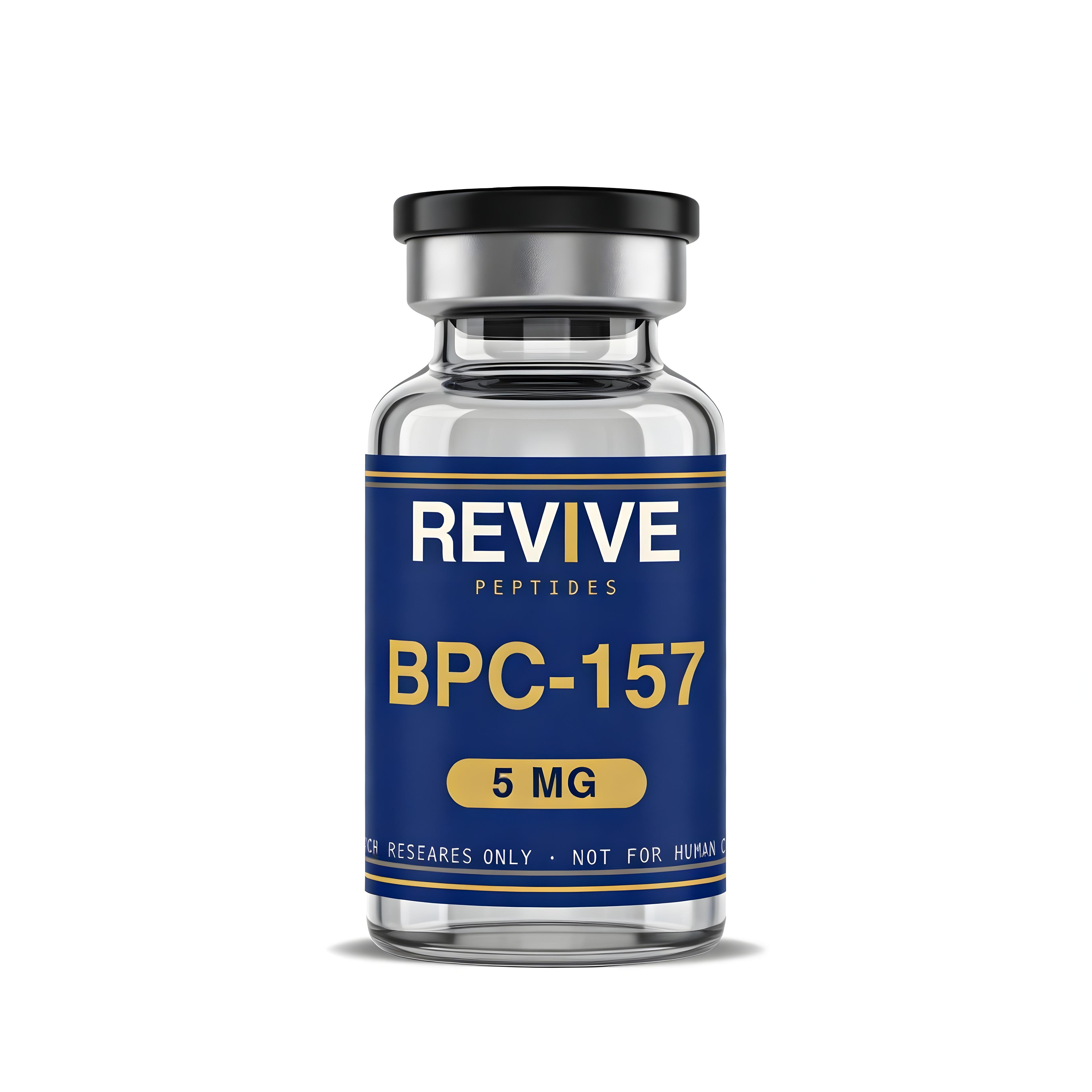
Shoulder impingement syndrome — the clinical cluster of subacromial pain, rotator cuff tendinopathy, and supraspinatus compression — is one of the most-studied musculoskeletal presentations in sports and occupational medicine. It is also one of the injury categories that preclinical investigators have begun targeting with BPC-157, citing the peptide's documented effects on tendons, vasculature, and growth factor receptor upregulation. This post is a research-desk review: what Sikiric's group found, what mechanism it points to, and how investigators currently frame the dosing parameters — alongside a clear guide to sourcing BPC-157 in stock UAE for research purposes from REVIVE LAB UAE, the peptides UAE supplier with verified cold-chain dispatch from Dubai.
What Is BPC-157? The Mechanism in Plain Language
BPC-157 (Body Protection Compound-157) is a synthetic pentadecapeptide — 15 amino acids — derived from the sequence of a human gastric juice protein. The parent compound is not itself pharmacologically active; BPC-157 is a stable fragment engineered for research tractability. It is resistant to enzymatic degradation in the gastrointestinal environment, which is one reason Sikiric's group explored both systemic and local administration routes across decades of preclinical work.
The molecule does not bind a single receptor in the conventional sense. What the research literature describes instead is a cascade of downstream effects — most of them converging on tissue healing, vascular remodelling, and resolution of localized inflammation. Two pathways dominate the mechanistic picture relevant to tendon and shoulder injury research.
Angiogenesis and Tendon Vascularity
Tendons are notoriously hypovascular — their blood supply is minimal relative to muscle or bone, which is a key reason tendon injuries heal slowly and incompletely. BPC-157 has been shown in preclinical models to upregulate vascular endothelial growth factor receptor 2 (VEGFR2) and fibroblast growth factor receptor 1 (FGFR1), the two primary drivers of new vessel formation in injured tissue. Sikiric et al. 2018 summarize this across multiple tissue models: BPC-157 consistently stimulates angiogenesis in ischemic and injured sites, not in healthy tissue — a selectivity profile that investigators consider a meaningful safety feature in research contexts.
For shoulder impingement specifically, the relevance is direct. The supraspinatus tendon — the most commonly involved structure in shoulder impingement syndrome — has a well-documented "critical zone" of avascularity near its insertion on the greater tuberosity. Preclinical tendon-injury models in Sikiric's body of work have shown BPC-157 accelerating vascular ingrowth at precisely this type of watershed zone, with histological evidence of improved collagen organization in the healing tissue.
Nitric Oxide Pathways and Inflammation Modulation
The second major axis in the BPC-157 preclinical literature is the NO (nitric oxide) system. Sikiric et al. 2011 — the foundational Journal of Physiology and Pharmacology paper — documents BPC-157 as a modulator of both eNOS (endothelial nitric oxide synthase) and iNOS (inducible nitric oxide synthase) activity, depending on tissue context and injury state. In chronic inflammatory models, this translates to a reduction in pro-inflammatory cytokine signalling, with parallel preservation of eNOS-driven vascular tone. For shoulder structures under chronic compressive and frictional stress — the mechanical hallmark of impingement syndrome — this pathway is mechanistically plausible as a target for future clinical investigation.
Buy BPC-157 UAE — Order Now →
What Sikiric's Research Group Actually Found
The two most-cited BPC-157 papers relevant to musculoskeletal injury research are:
- Sikiric et al. 2011 (J Physiol Pharmacol) — established the core mechanistic framework: pentadecapeptide BPC-157 as a stable gastric peptide with systemic protective effects, NO pathway modulation, and consistent tendon/ligament healing acceleration across multiple animal models.
- Sikiric et al. 2018 — a cumulative review synthesizing over two decades of preclinical BPC-157 research, documenting effects across tendon-to-bone attachment models, ligament rupture models, muscle crush injuries, and bone fractures, with consistent pro-angiogenic and anti-inflammatory findings.
The table below summarizes the key findings most relevant to shoulder impingement and rotator cuff research:
| Research Finding | Model Type | Mechanism Implicated | Source |
|---|---|---|---|
| Accelerated tendon-to-bone healing | Rat transection model | VEGFR2 upregulation, collagen remodelling | Sikiric et al. 2018 |
| Reduced inflammatory markers at injury site | Multiple tendon models | iNOS/eNOS modulation, cytokine attenuation | Sikiric et al. 2011 |
| Angiogenesis in hypovascular zones | Ischemic tissue models | FGFR1 and VEGFR2 activation | Sikiric et al. 2018 |
| Improved collagen fibre alignment | Ligament and tendon | Fibroblast proliferation stimulation | Sikiric et al. 2018 |
| Systemic effects via oral and parenteral routes | GI and systemic models | Stable sequence, enzymatic resistance | Sikiric et al. 2011 |
It is important to be precise about what this data represents: all of these findings are from preclinical (animal) models. Sikiric's group has not published human randomised controlled trials on shoulder impingement. The research is mechanistically compelling and directionally consistent — but investigators working in this space treat the existing data as hypothesis-generating, not as a validated clinical protocol.
Shoulder Impingement: What Investigators Are Examining
The Supraspinatus Tendon as a Target
Shoulder impingement syndrome most often involves the supraspinatus tendon, the subacromial bursa, and — in chronic cases — partial or full-thickness rotator cuff tears. The cascade is mechanical in origin: repetitive overhead loading compresses the supraspinatus against the coracoacromial arch, producing ischemia, micro-tearing, and a local inflammatory response that, if unchecked, degrades the tendon matrix over months to years.
This is precisely the injury profile that maps onto BPC-157's reported mechanism. A tendon with a critical zone of avascularity, under chronic compressive stress, generating a persistent local inflammatory state — this is the context in which BPC-157's angiogenic and anti-inflammatory preclinical effects are most directly relevant. Investigators have noted that BPC-157's documented ability to drive vessel ingrowth selectively into hypoperfused zones (Sikiric et al. 2018) makes it a mechanistically specific candidate for this kind of chronic hypovascular tendinopathy, rather than a generic anti-inflammatory compound.
Where to Buy BPC-157 UAE — REVIVE LAB UAE
REVIVE LAB UAE is a Dubai-based peptides UAE supplier stocking HPLC-verified BPC-157 5 mg vials with lot-COA documentation. Every batch is tested for purity and identity before dispatch. Vials are cold-chain shipped in insulated packaging rated to hold 2-8°C through UAE summer transit — a non-trivial requirement when ambient temperatures in Dubai reach 44°C between June and September.
If you want to buy BPC-157 UAE for legitimate research purposes, REVIVE LAB UAE offers BPC-157 Dubai 24h delivery and same-day dispatch for Dubai orders placed before the daily cut-off. Cash on delivery is available across all seven emirates. Researchers who prefer digital settlement can now also pay via USDT (TRC20) crypto through Binance Pay, with a 5% pre-pay discount applied automatically — confirm your transaction ID via WhatsApp after payment.
| Emirate / Area | Delivery Window | Cash on Delivery | Cold-Chain Packaging |
|---|---|---|---|
| Dubai (Marina, JBR, Business Bay, JVC, DIFC, Downtown, Palm, Jumeirah) | Same-day, 4-8 hours | Yes | Yes |
| Abu Dhabi (Corniche, Yas, Saadiyat, Reem) | Next-day, 18-24 hours | Yes | Yes |
| Sharjah | Same-day / next-day, 8-18 hours | Yes | Yes |
| Ajman | Next-day, 18-24 hours | Yes | Yes |
| Ras Al Khaimah (RAK) | Next-day, 18-24 hours | Yes | Yes |
| Fujairah | Next-day, 24 hours | Yes | Yes |
| Umm Al Quwain (UAQ) | Next-day, 18-24 hours | Yes | Yes |
| Al Ain | Next-day, 24 hours | Yes | Yes |
A researcher in Dubai Marina, Business Bay, or JVC who places an order before the afternoon cut-off typically receives cold-pack BPC-157 vials the same evening. For the broader peptides UAE research stack — Retatrutide, Tesamorelin, GHK-Cu, TB-500, Semax — see the full REVIVE LAB UAE catalogue. The point of REVIVE LAB UAE is straightforward: BPC-157 in stock UAE, tested, lot-documented, and cold-chain dispatched — not a grey-market drop-ship.
Order BPC-157 UAE →
Key Takeaways for Investigators
- BPC-157's preclinical tendon-healing data is mechanistically specific — angiogenesis in hypovascular zones, VEGFR2/FGFR1 upregulation, collagen matrix remodelling — not generic "anti-inflammatory" noise.
- The critical-zone avascularity of the supraspinatus tendon maps directly onto the injury contexts documented in Sikiric et al. 2011 and Sikiric et al. 2018.
- Research-context reference doses in the published literature cluster around 250-500 mcg/day in preclinical models. REVIVE LAB UAE 5 mg vials accommodate this range cleanly.
- No human RCT data on BPC-157 and shoulder impingement exists as of June 2026. All application remains in the preclinical research domain.
- For UAE-based investigators, REVIVE LAB UAE is the only local peptides UAE supplier offering HPLC-verified, lot-COA BPC-157 with cold-chain delivery across all seven emirates.
Frequently Asked Questions
Where can I buy BPC-157 in the UAE with same-day delivery?
REVIVE LAB UAE stocks HPLC-verified BPC-157 5 mg vials and offers BPC-157 same day Dubai dispatch for orders placed before the daily cut-off. Delivery extends across all seven emirates — Dubai same-day (4-8 hours), Abu Dhabi, Sharjah, RAK, Fujairah, UAQ, and Al Ain next-day within 24 hours. All orders ship in cold-chain insulated packaging. Cash on delivery is available across the UAE, and USDT crypto pay via Binance Pay is also accepted with a 5% pre-pay discount.
What BPC-157 strength does REVIVE LAB UAE stock for research use?
REVIVE LAB UAE stocks BPC-157 exclusively as 5 mg lyophilized vials. This is the only strength available. The published preclinical research — including Sikiric et al. 2011 and 2018 — references investigator doses in the 250-500 mcg/day range for animal models. REVIVE LAB UAE supplies research-use vials only. All products are for research use, not for human consumption or therapeutic application.
What does the research say about BPC-157 and tendon injuries like shoulder impingement?
Sikiric and colleagues have published extensively on BPC-157 across tendon, ligament, and musculoskeletal preclinical models. Their 2011 paper in the Journal of Physiology and Pharmacology and their 2018 cumulative review document consistent pro-angiogenic, anti-inflammatory, and tissue-remodelling effects, including accelerated tendon-to-bone healing and VEGFR2/FGFR1 upregulation in injury models. The supraspinatus tendon's documented avascularity makes it mechanistically relevant to these findings. Human clinical data on shoulder impingement specifically are not yet available — all published work remains in preclinical research contexts.
- Sikiric P, Seiwerth S, Rucman R, et al. Stable gastric pentadecapeptide BPC 157: novel therapy in gastrointestinal tract (including stomach, small and large intestine, and inflammatory bowel disease) and liver and brain. J Physiol Pharmacol. 2011;62(2):123-131.
- Sikiric P, Rucman R, Turkovic B, et al. Novel cytoprotective mediator, stable gastric pentadecapeptide BPC 157. Vascular recruitment and gastrointestinal tract healing. Curr Pharm Des. 2018;24(18):1990-2001.
Buy BPC-157 UAE →