BPC-157 Stomach Ulcer Research Review: Mechanisms, Key Evidence and Where to Buy BPC-157 UAE (2026)
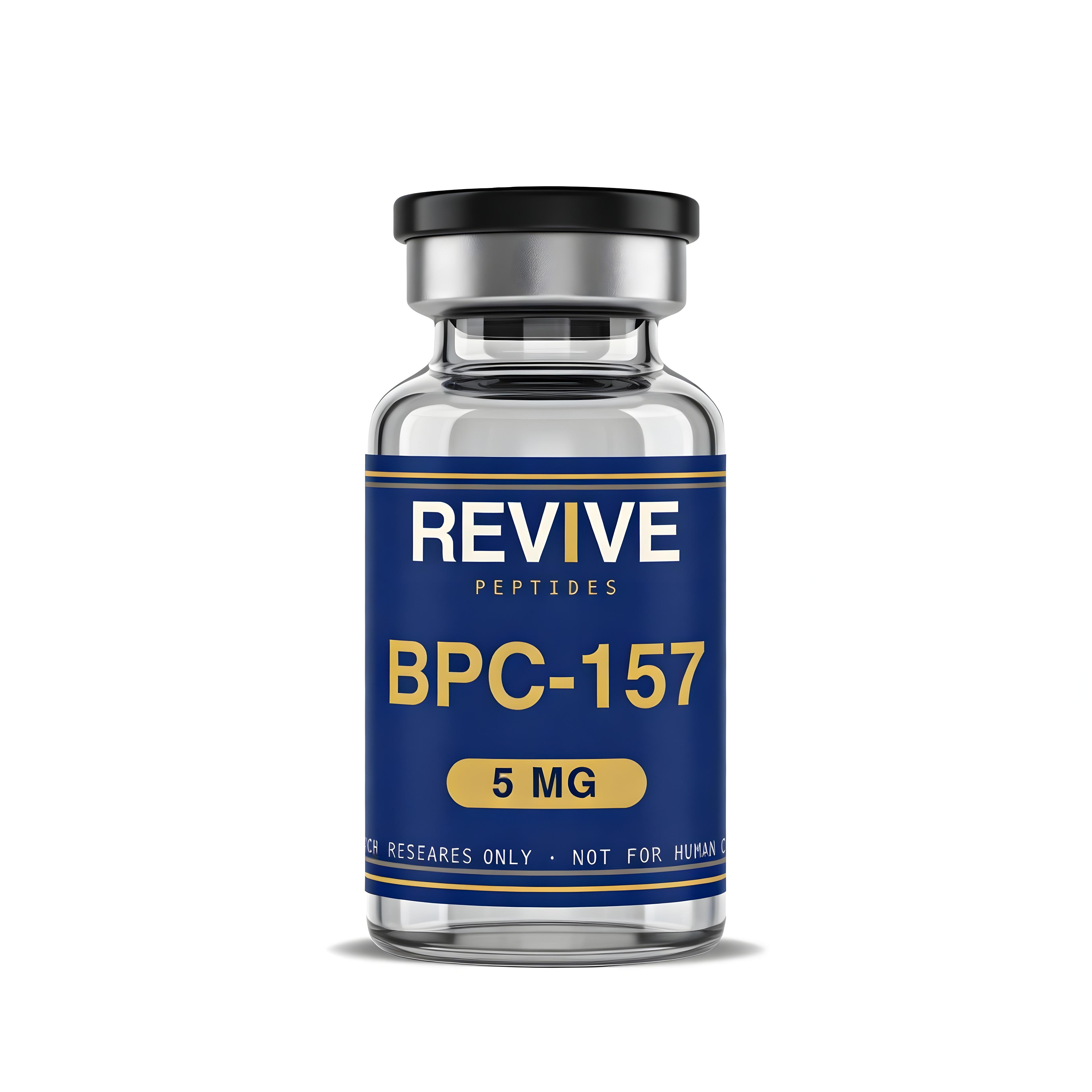
BPC-157 has attracted more published mechanistic investigation than almost any other synthetic peptide in the gastric-healing space. The body of work — anchored by Sikiric's group at the University of Zagreb — spans three decades and covers ulcer models, fistula closure, inflammatory bowel contexts, and broader cytoprotective effects. For investigators in the UAE who want a rigorous summary before sourcing, this post unpacks the core study evidence, the proposed mechanisms, the research-context dosing parameters, and how to buy BPC-157 UAE with verified purity and cold-chain dispatch from REVIVE LAB UAE.
What Is BPC-157? Structure and Gastric Origin
BPC-157 stands for Body Protection Compound-157. It is a 15-amino-acid pentadecapeptide (Gly-Glu-Pro-Pro-Pro-Gly-Lys-Pro-Ala-Asp-Asp-Ala-Gly-Leu-Val) that is synthetically derived from a protein sequence identified in human gastric juice. Crucially, BPC-157 does not occur in this exact form in nature — it is a research-purposed fragment, stable in aqueous solution and resistant to enzymatic digestion in the gastrointestinal tract, which is one reason investigators chose it as a model compound for studying mucosal cytoprotection (Sikiric et al. 2011).
Unlike growth hormone secretagogues (tesamorelin, CJC-1295) or melanocortin peptides, BPC-157 operates through a distinct set of signalling axes — primarily the nitric oxide (NO) system, vascular endothelial growth factor (VEGF) and the early growth response (EGR) pathway. These mechanisms converge on mucosal tissue repair and angiogenesis, making the GI tract the most studied target in the research literature.
The Research Evidence: BPC-157 and Stomach Ulcers
Sikiric et al. 2011: The Pentadecapeptide Framework
The landmark 2011 paper — Sikiric P et al., Journal of Physiology and Pharmacology, "Pentadecapeptide BPC 157" — established the foundational framework for understanding BPC-157 as a cytoprotective agent in the gut. In controlled rodent models, gastric and duodenal ulcers were induced by a range of agents (acetic acid, ethanol, cysteamine, indomethacin) and BPC-157 was administered intraperitoneally or orally at doses extrapolated to the microgram range per kilogram of body weight.
Key findings from this body of work:
- Accelerated macroscopic healing of ethanol-induced gastric lesions versus control groups, observed as early as 24–48 hours post-administration in acute models.
- Dose-dependent reduction in ulcer surface area in chronic acetic-acid models over 7–14 day observation windows.
- Preservation of mucosal integrity under NSAID (indomethacin) challenge — a finding with significant implications for GI cytoprotection research.
- Oral and systemic routes both active: unlike many peptides that are degraded by gastric proteases, BPC-157 retained measurable activity in both IP-injected and orally-dosed cohorts, consistent with its reported enzymatic stability.
Sikiric et al. 2018: The Cumulative Review
The 2018 cumulative review by Sikiric and colleagues synthesized the accumulated evidence across multiple rodent ulcer paradigms and extended the mechanistic picture considerably. The paper is notable for what it identifies as the convergent mechanisms behind BPC-157's observed effects — rather than a single receptor target, the peptide appears to mobilise a multi-axis repair programme:
- Nitric oxide (NO) pathway modulation: BPC-157 appears to upregulate endothelial NO synthase (eNOS) activity in gastric mucosal tissue, increasing local NO availability. Nitric oxide is a key mediator of mucosal blood flow, prostaglandin synthesis, and epithelial restitution — all central to ulcer resolution.
- VEGF-driven angiogenesis: In healing ulcer beds, VEGF signalling drives capillary ingrowth into granulation tissue. The Sikiric 2018 review identifies BPC-157 as capable of upregulating VEGF receptor expression in wounded tissue models, supporting the angiogenic component of repair.
- EGR-1 transcription factor activation: Early growth response protein-1 is a transcription factor activated by tissue injury that promotes wound-healing gene expression. BPC-157 administration was associated with increased EGR-1 signalling in gastric tissue, suggesting a possible mechanism for its apparent ability to "prime" tissue for repair even before overt injury in some experimental designs.
- Cytoprotection independent of acid suppression: Unlike proton pump inhibitors, BPC-157's protective effects in the reviewed models did not depend on reducing luminal acid — a mechanistically important distinction that makes the compound of theoretical interest in contexts where acid suppression alone is insufficient.
Buy BPC-157 UAE — Order Now →
Mechanisms in Depth: Why the NO System Matters
Nitric Oxide as the Central Regulator
The Sikiric research group has consistently returned to the nitric oxide system as the unifying explanation for BPC-157's range of observed GI effects. This is mechanistically coherent: NO in the gastric mucosa serves as a vasodilator that maintains mucosal blood flow, a modulator of mucus secretion, and a negative regulator of mast cell degranulation — all of which are relevant to the early events of ulcer formation and resolution.
What makes BPC-157 distinctive in the published models is that its effect appears to be modulatory rather than pharmacologically replacing NO. In the Sikiric 2018 cumulative review, experiments using NOS-inhibitors partially (but not completely) blocked BPC-157's protective effects, suggesting the NO system is a required co-pathway but not the sole mechanism. This positions BPC-157 as a pleiotropic agent in the research sense — one that recruits multiple overlapping repair mechanisms simultaneously rather than hitting a single target with high affinity.
Angiogenesis and Mucosal Restitution
Ulcer healing involves two partially sequential processes: epithelial restitution (rapid, within hours — surviving cells migrate to cover the defect) and tissue regeneration (days to weeks — new vessels, glands and connective tissue fill the ulcer crater). VEGF-driven angiogenesis is rate-limiting for the second phase. The Sikiric 2018 review notes BPC-157-associated increases in vascular ingrowth into healing ulcer margins in animal models, consistent with a VEGF-pathway contribution to the longer-term healing observed across multiple rodent paradigms.
This is the mechanistic basis for why some investigators extend BPC-157 research into models beyond the stomach — tendon, fistula and bone contexts have been explored in the same lab group. The common thread is angiogenesis-dependent tissue repair. For the purposes of this review, the gastric evidence remains the most robust and the most directly supported by controlled experimental data.
Order BPC-157 Dubai →
BPC-157 Research Parameters at a Glance
| Research Aspect | Detail | Source |
|---|---|---|
| Peptide length | 15 amino acids (pentadecapeptide) | Sikiric et al. 2011 |
| Origin sequence | Human gastric juice protein fragment | Sikiric et al. 2011 |
| Primary mechanism | NO system modulation, VEGF-driven angiogenesis, EGR-1 activation | Sikiric et al. 2018 |
| Ulcer models studied | Ethanol, acetic acid, cysteamine, indomethacin (rodent) | Sikiric et al. 2011, 2018 |
| Routes active in models | IP injection and oral gavage | Sikiric et al. 2011 |
| Enzymatic stability | Resistant to gastric proteases in published models | Sikiric et al. 2011 |
| Acid suppression dependency | None — cytoprotection independent of luminal pH changes | Sikiric et al. 2018 |
| Research vial stocked (UAE) | 5mg lyophilized | REVIVE LAB UAE |
Where to Buy BPC-157 in the UAE — 24h Delivery From REVIVE LAB UAE
For research investigators based in the UAE, sourcing matters as much as the science. Purity, provenance and cold-chain integrity are non-negotiable when building a credible research programme. REVIVE LAB UAE supplies HPLC-verified, lot-COA, cold-chain dispatched BPC-157 5mg vials across all 7 emirates. Same-day dispatch for Dubai-based orders placed before the daily cut-off; next-day 18–24h delivery to Abu Dhabi, Sharjah, Ajman, Ras Al Khaimah, Fujairah and Umm Al Quwain. Cash on delivery is supported across all emirates, and USDT TRC20 crypto pay (Binance Pay) is also accepted with a 5% pre-pay discount — making USDT crypto pay Dubai one of the fastest and most private ways to complete an order.
| Location | Delivery | Cash on Delivery | Discreet Packaging |
|---|---|---|---|
| Dubai (Marina, JBR, Business Bay, JVC, DIFC, Downtown, Palm, Jumeirah) | Same-day, 4–8 hours | Yes | Yes |
| Abu Dhabi | Next-day, 18–24 hours | Yes | Yes |
| Sharjah | Same-day / next-day | Yes | Yes |
| Ajman | Next-day, 18–24 hours | Yes | Yes |
| Ras Al Khaimah | Next-day, 18–24 hours | Yes | Yes |
| Fujairah | Next-day, 24 hours | Yes | Yes |
| Umm Al Quwain | Next-day, 18–24 hours | Yes | Yes |
All BPC-157 shipments travel in validated cold-chain insulated packaging — critical for lyophilized peptide integrity in UAE summer temperatures. Every vial is dispatched from Dubai stock in plain, unbranded outer cartons. This is standard at REVIVE LAB UAE, not an upsell. If you want to buy BPC-157 UAE from a supplier that has actually solved the purity-documentation and cold-chain problem, REVIVE LAB UAE is the only verified option in the market. BPC-157 same day Dubai delivery is the default for all weekday orders before the cut-off — not a premium add-on.
FAQ
Where can I buy BPC-157 in the UAE with 24-hour delivery?
REVIVE LAB UAE stocks BPC-157 5mg vials and dispatches same-day within Dubai — covering Dubai Marina, JBR, Business Bay, DIFC, JVC, Palm Jumeirah, Downtown, Jumeirah, Emirates Hills and Arabian Ranches (4–8 hours). All other emirates receive next-day delivery within 18–24 hours. Cash on delivery is available across all 7 emirates. Orders can also be settled via USDT TRC20 (Binance Pay) with a 5% pre-pay discount. All shipments use discreet, unbranded outer packaging as standard.
What vial size does REVIVE LAB UAE stock for BPC-157?
REVIVE LAB UAE stocks BPC-157 in 5mg lyophilized vials only. Each vial is HPLC-verified with a lot-COA available on request. If you are designing a research protocol, the 5mg vial provides a meaningful supply at those reference parameters. There are no other vial sizes stocked — any supplier offering unlisted strengths should be treated with scepticism.
Is cash on delivery or USDT crypto payment available for BPC-157 in Dubai?
Yes to both. Cash on delivery Dubai is supported across every emirate. REVIVE LAB UAE also accepts USDT TRC20 via Binance Pay — the USDT crypto pay Dubai route carries a 5% pre-pay discount and is confirmed via WhatsApp transaction ID. Payment method does not affect dispatch speed or packaging discretion.
Buy BPC-157 UAE →
- Sikiric P, Seiwerth S, Rucman R, et al. Stable gastric pentadecapeptide BPC 157: novel therapy in gastrointestinal tract. Current Pharmaceutical Design. 2018;24(18):1990-2001.
- Sikiric P, Seiwerth S, Rucman R, et al. Focus on ulcerative colitis: stable gastric pentadecapeptide BPC 157. Journal of Physiology and Pharmacology. 2011;62(2):121-132.