BPC-157 vs TB-500: Mechanism, Animal Data, and How Researchers Choose
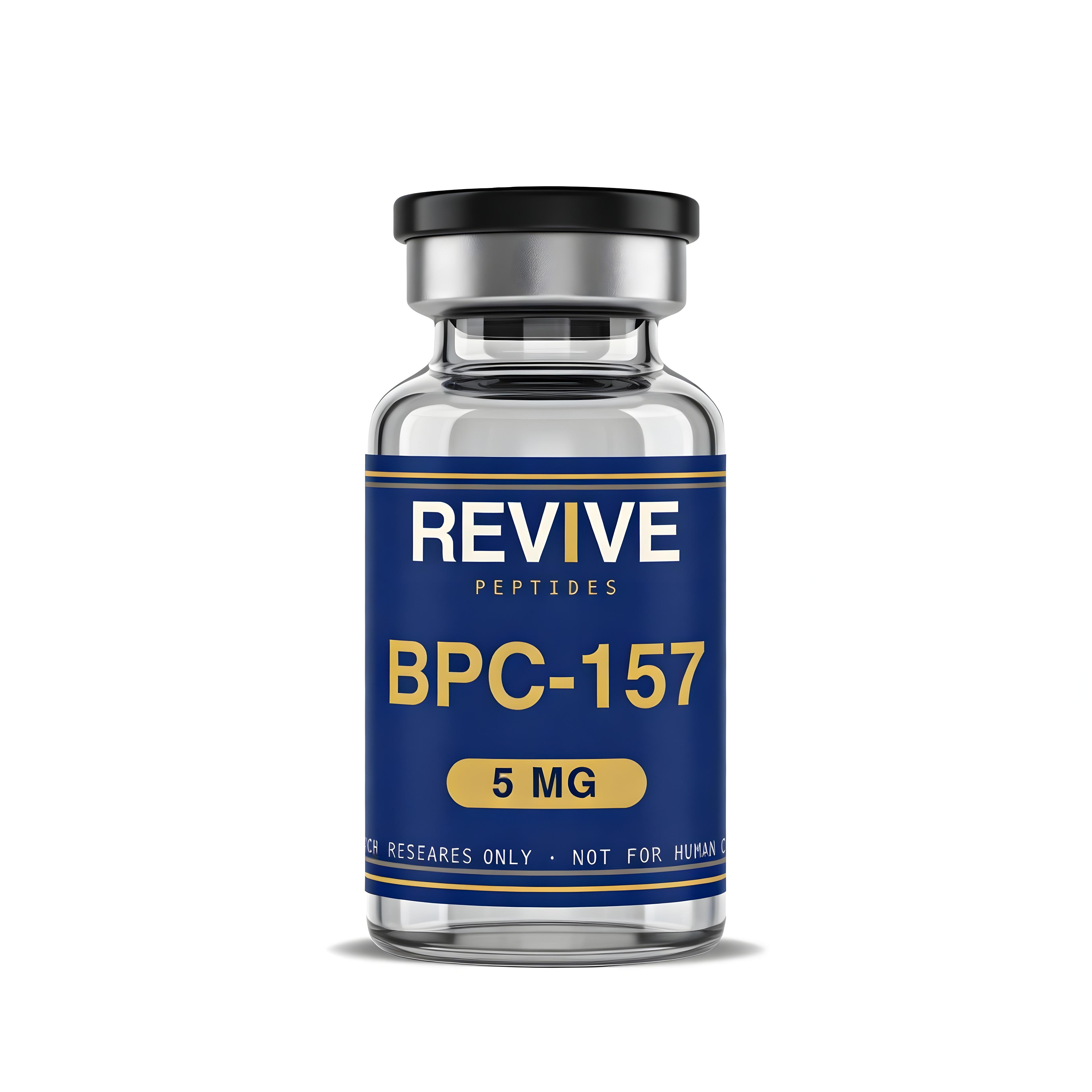
BPC-157 and TB-500 are the two most-discussed healing peptides in the research market — frequently mentioned in the same sentence, often paired in protocols, but operating on completely different cellular machinery. This is the head-to-head: where each comes from, what the strongest animal data documents, and how researchers think about choosing between them.
1. The origin stories
BPC-157 — fragment of a gastric protection protein
BPC-157 is a synthetic 15-amino-acid sequence (pentadecapeptide) derived from the active region of "Body Protection Compound" — a larger protein identified by the Sikiric research group in human gastric juice in the early 1990s. The synthetic version reproduces only the active 15-residue stretch, not the parent molecule.
TB-500 — fragment of thymosin β-4
TB-500 is a synthetic 17-amino-acid fragment of thymosin β-4, a 43-residue actin-binding protein found throughout most mammalian tissues, built around the LKKTETQ actin-binding motif. The parent molecule thymosin β-4 has its own clinical research history (cardiac repair, corneal healing — Goldstein & Kleinman 2015 review). TB-500 is the fragment carrying forward the actin-binding motif from the full molecule.
2. The mechanism difference — the part that matters
| BPC-157 | TB-500 | |
|---|---|---|
| Primary pathway | Angiogenesis via VEGFR2 upregulation | Actin sequestration via the LKKTETQ motif |
| Cellular effect | New blood-vessel formation at injury site | Cell migration into injury site |
| Secondary pathways | GHR expression in tendon fibroblasts, vagal/CNS signalling, NO system modulation | Anti-inflammatory modulation, anti-apoptotic effects |
| Crossing BBB | Effects on CNS appear vagally mediated, not direct | Parent thymosin β-4 documented in brain after parenteral dosing |
The key insight: BPC-157 is about building the road. TB-500 is about who travels on it. That's why they're sometimes paired in research protocols — the mechanisms are complementary, not redundant.
3. Strongest animal-model data for each
BPC-157 — tendon and gut
- Tendon-to-bone healing in transected rat Achilles model (Chang et al. 2011, J Appl Physiol). Accelerated outgrowth, denser collagen organisation by day 14.
- Gastric ulcer protection — the original Sikiric finding from 1991, reproduced across labs.
- Inflammatory bowel disease models — colitis improvement in DSS and TNBS rat models.
- Ligament and muscle — MCL transection, quadriceps crush, ischaemic flap models all show accelerated repair.
TB-500 / thymosin β-4 — cardiac and corneal
- Cardiac repair — Smart et al. 2007 (Nature) documented thymosin β-4 mobilising adult epicardial progenitor cells and driving neovascularisation after myocardial infarction in mice. This is the highest-impact paper in the TB-4 literature.
- Corneal wound healing — Sosne et al. published a series of papers (2002 onwards) on thymosin β-4 accelerating corneal epithelial closure.
- Dermal wound closure — accelerated re-epithelialisation in rat full-thickness wound models.
- Anti-fibrotic effects — documented in models of liver and lung fibrosis.
4. Pharmacokinetics — why dosing frequency differs
BPC-157 has a short systemic half-life — measured in minutes by IV/IP in rat studies. This is why most BPC-157 research protocols use daily dosing or split daily dosing. The molecule is degraded rapidly but appears to exert biological effects at the injury site faster than the systemic half-life would suggest.
TB-500 (and thymosin β-4) have substantially longer half-lives — hours rather than minutes — and TB-500 research protocols are typically dosed less frequently, often twice weekly in animal studies.
5. The stacking question
In research protocols, BPC-157 and TB-500 are frequently used together. The rationale is mechanistic complementarity:
- BPC-157 promotes new blood-vessel formation at the injury site (angiogenesis via VEGFR2).
- TB-500 mobilises stem/progenitor cells and modulates the actin cytoskeleton to enable cell migration into that vascularised region.
There is no peer-reviewed head-to-head study comparing solo BPC-157, solo TB-500, and combination dosing in animal-model healing — the stacked protocols circulating in research forums are mechanism-based, not data-validated. Worth knowing before extrapolating.
6. The honest gap — neither has human trials
7. Practical research considerations
| BPC-157 | TB-500 | |
|---|---|---|
| Common vial sizes | 5 mg | 5 mg or 10 mg |
| Reconstitution | Bacteriostatic water, standard handling | Bacteriostatic water, standard handling |
| Reconstituted stability | ~28–30 days refrigerated | ~28–30 days refrigerated |
| Strongest data domains | Tendon, ligament, gut, gastric | Cardiac, corneal, dermal, anti-fibrotic |
| Half-life | Short (minutes by IV/IP) | Long (hours) |
8. The summary
- BPC-157 = build the road (angiogenesis, GHR expression).
- TB-500 = who travels on it (cell migration, actin sequestration).
- BPC-157 has stronger tendon/gut data. TB-500 has stronger cardiac/corneal data.
- BPC-157 short half-life → frequent dosing. TB-500 long half-life → infrequent dosing.
- Frequently paired in research protocols on mechanism grounds — no peer-reviewed stacking trial exists.
- Neither has published human RCTs. Research peptides, not pharmaceuticals.
References
- Chang CH, Tsai WC, Lin MS, Hsu YH, Pang JH. The promoting effect of pentadecapeptide BPC 157 on tendon healing. J Appl Physiol. 2011;110(3):774–780. PubMed
- Sikiric P, et al. Stable Gastric Pentadecapeptide BPC 157 and Wound Healing. Front Pharmacol. 2021;12:627533. PubMed
- Smart N, Risebro CA, Melville AA, et al. Thymosin beta4 induces adult epicardial progenitor mobilization and neovascularization. Nature. 2007;445(7124):177–182. PubMed
- Goldstein AL, Kleinman HK. Advances in the basic and clinical applications of thymosin β4. Expert Opin Biol Ther. 2015;15 Suppl 1:S139–145. PubMed
- Sosne G, Szliter EA, Barrett R, et al. Thymosin beta 4 promotes corneal wound healing and decreases inflammation in vivo. Exp Eye Res. 2002;74(2):293–299. PubMed