MOTS-c HPLC Purity Testing & COA Verification: Why Newer Peptides Deserve More Scrutiny, Not Less
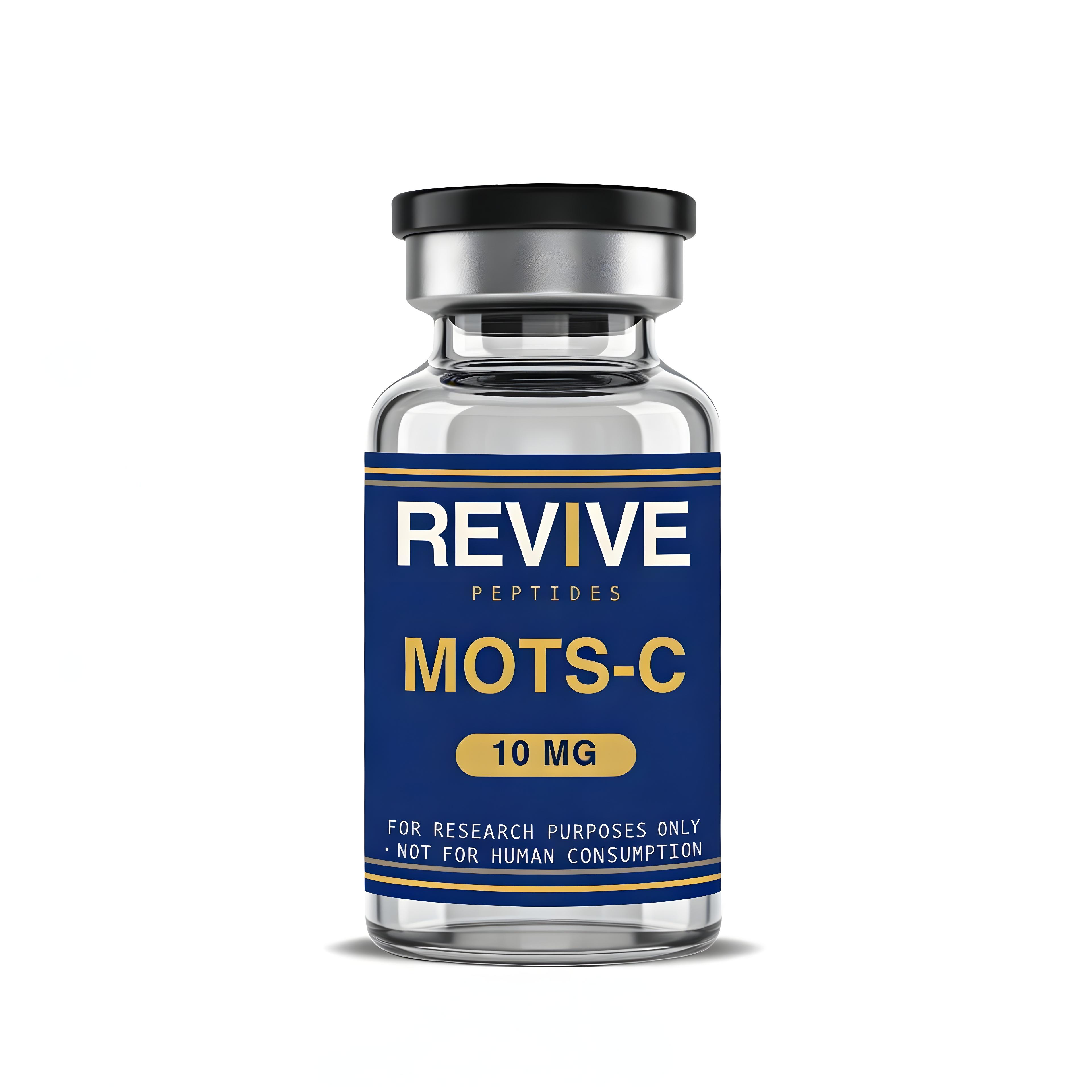
Why Newer Peptides Need More COA Scrutiny, Not Less
MOTS-c is one of the newer entries in the research-peptide catalogue relative to long-established compounds. It's a 16-amino-acid mitochondrial-derived peptide, and its relative novelty in the commercial research-supply market means there's less accumulated buyer experience and fewer suppliers with a long, verifiable testing track record specifically for this molecule. That's not a reason to avoid it — it's a reason to be more careful about who you buy it from.
A common assumption among research buyers is that newer, less mainstream peptides are somehow lower-stakes from a quality-control standpoint simply because demand is lower. The opposite is closer to true: lower demand means fewer suppliers have invested in dedicated per-batch HPLC testing infrastructure for that specific compound, and fewer buyers are comparing notes publicly on quality. Independent COA verification matters just as much here as for any high-volume compound — arguably more, given the thinner base of comparison data.
What HPLC Testing Actually Measures
Confirming a 16-residue chain
Reverse-phase HPLC separates the components of a dissolved sample as they travel through a column, with each component eluting at a characteristic retention time recorded as a peak. For MOTS-c, an analyst confirms the primary peak's retention time and mass are consistent with the intact 16-amino-acid sequence, and calculates purity as the proportion of total peak area belonging to that correctly assembled peptide.
What "≥98.0% purity" means for this lot
A stated purity of ≥98.0% means that, for the specific tested lot, at least 98.0% of the detected material corresponds to the correctly assembled MOTS-c sequence, with the remainder made up of related synthesis impurities. It's a batch-specific analytical result, not a general market claim.
What a Real Certificate of Analysis Should Contain
A genuine, lot-specific MOTS-c COA should include:
- Product name and specification
- Lot or batch number for that manufacturing run
- Test date
- Testing method (HPLC)
- Measured purity percentage for that lot
- Molecular weight confirmation
- Appearance / identity description
- Storage recommendations
- Research-use-only statement
Given how few suppliers stock MOTS-c relative to more established compounds, a supplier that can't produce lot-specific documentation for it is effectively asking buyers to trust the label alone — which, in an unregulated market, isn't verification at all.
The Real Risk of Buying Without a COA
For a less commonly stocked compound like MOTS-c, the absence of a COA is arguably a stronger warning sign than it would be for a mainstream peptide, since it suggests the supplier may not have built out dedicated testing processes for lower-volume products. Watch for:
- No COA provided for this specific compound.
- Prices that seem too low for a peptide with a thinner supply chain and less price competition.
- No verifiable UAE business address.
- Only untraceable payment channels, with no order documentation.
How REVIVE LAB UAE Verifies MOTS-c
| Spec | MOTS-c 10 mg vial |
|---|---|
| Price | AED 750 |
| Molecular weight | ≈2174 Da |
| Purity (HPLC) | ≥98.0% |
| Class | Mitochondrial-derived peptide, 16 amino acids |
| Documentation | Lot-specific HPLC Certificate of Analysis with every order |
| Form | Lyophilised powder, research use only |
A Practical Checklist for UAE Research Buyers
- Ask specifically whether the supplier tests every batch of MOTS-c, not just their higher-volume products.
- Match the lot number on the COA to the vial received.
- Check the test date is current relative to the batch.
- Compare pricing against what a properly tested, lower-volume compound should reasonably cost.
- Verify the supplier has a real, checkable UAE business presence.
Frequently Asked Questions
What does HPLC testing verify for MOTS-c?
It confirms the identity of the intact 16-amino-acid sequence and measures what percentage of the sample is the correctly assembled peptide versus synthesis byproducts.
What should a Certificate of Analysis for MOTS-c include?
Product name, lot number, test date, testing method, measured purity, molecular weight confirmation, appearance description, storage recommendation, and a research-use-only statement.
Why does COA verification matter more for a newer research peptide like MOTS-c?
Fewer suppliers have an established, validated testing track record for lower-demand compounds, which makes independent lot-specific verification even more important.
Does REVIVE LAB UAE provide a COA with every MOTS-c order?
Yes — every batch is HPLC-tested to ≥98.0% purity with a matching lot-specific COA shipped with the vial.
REVIVE LAB UAE ships MOTS-c 10 mg vials with a lot-specific Certificate of Analysis on every order.
Buy MOTS-c UAE →
References
- United States Pharmacopeia. General Chapter <621> Chromatography. USP-NF.
- International Council for Harmonisation. ICH Q6B: Specifications for Biotechnological/Biological Products.
- Snyder LR, Kirkland JJ, Dolan JW. Introduction to Modern Liquid Chromatography. 3rd ed. Wiley; 2010.
- Lee C, Zeng J, Drew BG, et al. The mitochondrial-derived peptide MOTS-c promotes metabolic homeostasis and reduces obesity and insulin resistance. Cell Metab. 2015;21(3):443–454.