MOTS-c: The Mitochondrial-Derived Peptide That Activates AMPK
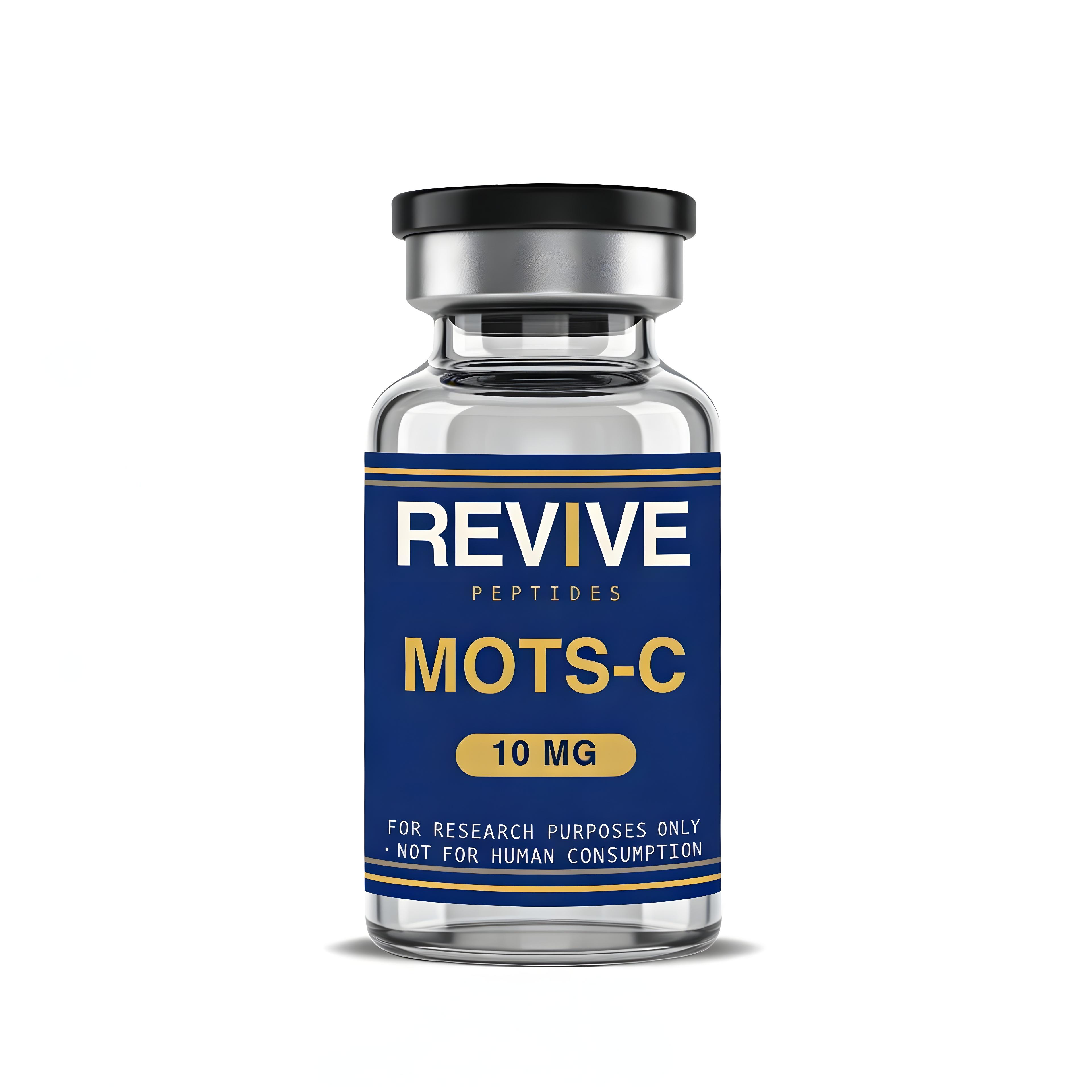
Every other peptide on this site is encoded in nuclear DNA. MOTS-c is the exception — it's a 16-amino-acid signalling peptide encoded inside the mitochondrion, in the 12S rRNA gene. That fact alone makes it one of the most biologically interesting molecules in the research peptide market. Here's what the Lee, Reynolds, and Kim papers actually documented.
1. Where MOTS-c comes from
Mitochondria have their own DNA — a circular ~16,500-base-pair genome encoding 37 genes (13 proteins, 22 tRNAs, 2 rRNAs). In 2015, the Pinchas Cohen lab at USC identified a small open reading frame nested inside the mitochondrial 12S ribosomal RNA gene that codes for a 16-amino-acid peptide. They named it MOTS-c — Mitochondrial Open reading frame of the Twelve S rRNA-c.
This is a category-shift. Until MOTS-c (and the related humanin), mitochondrially-encoded peptides were assumed to all be structural — components of the electron-transport chain. MOTS-c was the first mitochondrially-encoded signalling peptide identified — one that's produced inside the mitochondrion and exits the organelle to signal to the rest of the cell, and beyond, into circulation.
2. The Lee 2015 paper — what it actually showed
The foundational paper is Lee C, et al. The mitochondrial-derived peptide MOTS-c promotes metabolic homeostasis and reduces obesity and insulin resistance, Cell Metabolism, 2015. Headline findings in mouse models:
- AMPK activation. MOTS-c administration activated AMP-activated protein kinase (AMPK) in skeletal muscle — the same pathway activated by exercise and caloric restriction.
- Glucose uptake. Increased glucose uptake into muscle independently of insulin, mediated by GLUT4 translocation.
- Insulin sensitisation. In mice on high-fat diet, MOTS-c administration reduced insulin resistance and improved glucose tolerance.
- Weight gain reduction. Mice receiving MOTS-c on HFD gained less weight than vehicle controls — without reduced food intake.
- Mechanism convergence on folate cycle. MOTS-c was shown to interfere with the folate-methionine-purine pathway, with downstream effects on AICAR levels — AICAR being a known AMPK activator.
3. The Reynolds 2021 paper — MOTS-c as an exercise signal
Six years later, the same group (with Reynolds as first author) published in Nature Communications: MOTS-c is an exercise-induced mitochondrial-encoded regulator of age-dependent physical decline and muscle homeostasis. Key findings:
- Exercise raises MOTS-c. In both mice and humans, plasma and skeletal-muscle MOTS-c levels rose acutely after exercise.
- MOTS-c declines with age. Circulating MOTS-c declined with age in mice and humans, and correlated with physical-function metrics.
- MOTS-c rescues aged-mouse running capacity. Administration of exogenous MOTS-c to aged mice restored treadmill running capacity to near-young levels.
The implication: endogenous MOTS-c appears to be part of how exercise signals systemic metabolic benefits, and its decline with age is mechanistically linked to age-related physical decline.
4. The Kim 2018 paper — nuclear translocation
Kim KH et al. (2018, Cell Metabolism): The Mitochondrial-Encoded Peptide MOTS-c Translocates to the Nucleus to Regulate Nuclear Gene Expression in Response to Metabolic Stress. This was a surprise. MOTS-c doesn't just exit the mitochondrion and bind a membrane receptor — it physically enters the nucleus under metabolic stress and binds transcription factors directly, including NRF2 (the antioxidant master regulator).
This makes MOTS-c one of a small number of peptides documented to act as both a hormone-like signalling molecule AND a direct transcriptional regulator. That dual role complicates the mechanism picture but also explains why effects are so broad.
5. The honest gaps
The other gap worth flagging: most MOTS-c research is concentrated in a few labs (Cohen, Lee, Kim, Reynolds and their collaborators). Independent reproduction by labs outside that network is thinner than it is for, say, Tesamorelin or Retatrutide. That's not damning — it's just where the literature is.
6. What this means for research applications
- Mechanism plausibility: high. AMPK activation, insulin sensitisation, and exercise-mimetic biology are all rigorously documented in animals.
- Human applicability: unproven. Plausible based on plasma-level data; not validated by RCT.
- Comparable peptides: Humanin (the other major MDP), 5-amino-1MQ (mNAM-related), and exercise-mimetics like SS-31 share mechanism territory.
- Stability: short systemic half-life, but the nuclear-translocation finding suggests intracellular activity outlasts plasma exposure.
7. The summary
- MOTS-c is encoded inside mitochondrial DNA, not the nucleus — a category first.
- Activates AMPK, increases glucose uptake, reduces insulin resistance in mice (Lee 2015).
- Rises with exercise, falls with age, rescues aged-mouse running capacity (Reynolds 2021).
- Translocates to the nucleus under metabolic stress to bind transcription factors (Kim 2018).
- No published exogenous-MOTS-c human RCT — research peptide, not pharmaceutical.
References
- Lee C, Zeng J, Drew BG, et al. The mitochondrial-derived peptide MOTS-c promotes metabolic homeostasis and reduces obesity and insulin resistance. Cell Metab. 2015;21(3):443–454. PubMed
- Reynolds JC, Lai RW, Woodhead JST, et al. MOTS-c is an exercise-induced mitochondrial-encoded regulator of age-dependent physical decline and muscle homeostasis. Nat Commun. 2021;12(1):470. PubMed
- Kim KH, Son JM, Benayoun BA, Lee C. The Mitochondrial-Encoded Peptide MOTS-c Translocates to the Nucleus to Regulate Nuclear Gene Expression in Response to Metabolic Stress. Cell Metab. 2018;28(3):516–524.e7. PubMed
- Lu H, Wei M, Zhai Y, et al. MOTS-c peptide regulates adipose homeostasis to prevent ovariectomy-induced metabolic dysfunction. J Mol Med. 2019;97(4):473–485. PubMed
- Merry TL, Chan A, Woodhead JST, et al. Mitochondrial-derived peptides in energy metabolism. Am J Physiol Endocrinol Metab. 2020;319(4):E659–E666. PubMed