MOTS-c vs NAD+ in the UAE: Which One Can You Actually Get Today?
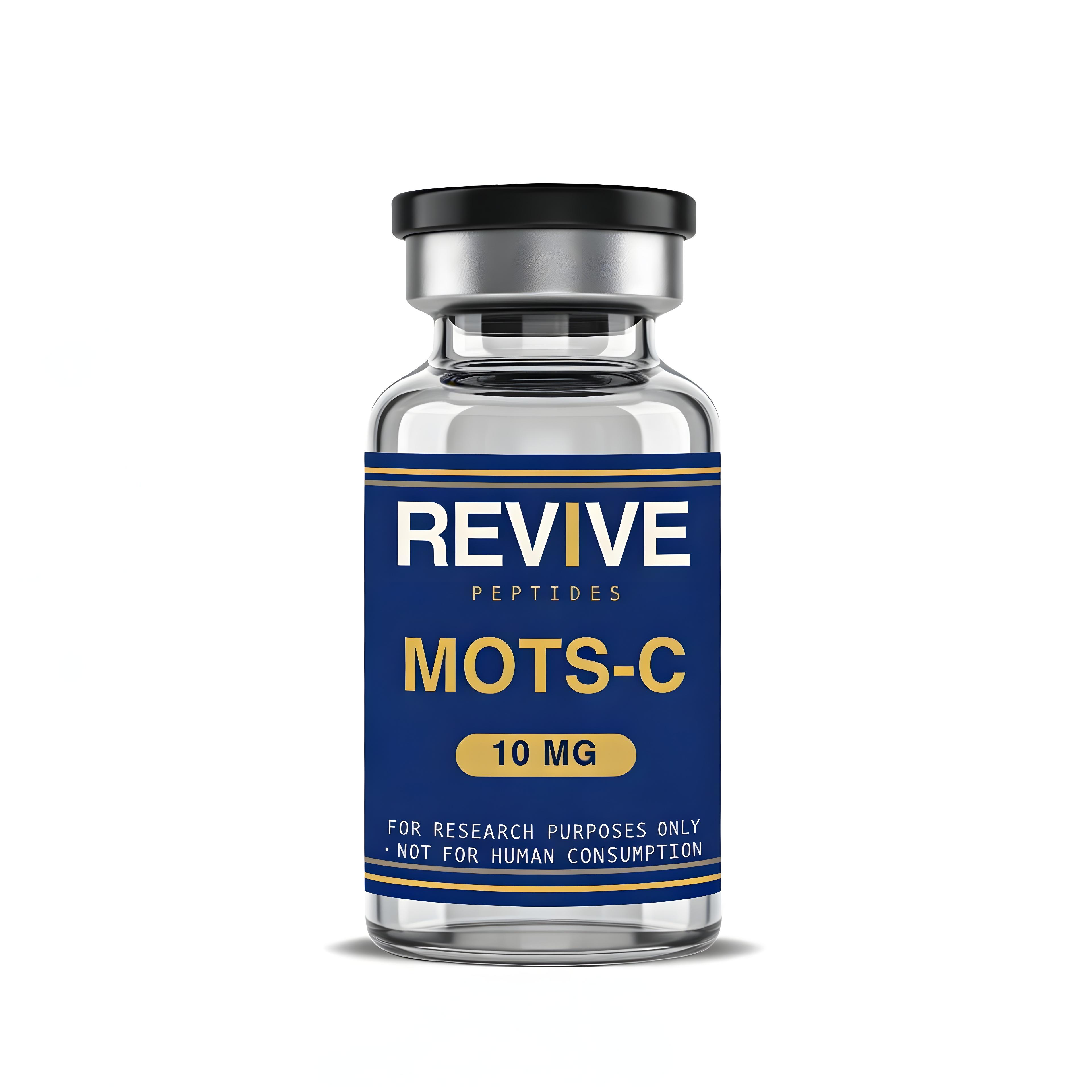
Two Peptides, One Research Family, Very Different Availability Right Now
Researchers building out mitochondrial and cellular-metabolism panels frequently ask about MOTS-c in the same breath — and it makes sense, both sit adjacent to the same broad research territory of how cells generate, sense and manage energy. But there's a practical difference that matters more than mechanism right now: MOTS-c is sitting in REVIVE's Dubai stock ready to ship today is not. If your research timeline can't wait, that single fact should drive the decision.
What Each Molecule Is
MOTS-c is a mitochondrial-derived peptide — a 16-amino-acid sequence encoded within mitochondrial DNA, first characterized by Changhan Lee and colleagues around 2015. Its research profile centers on an apparent role in activating AMPK, the pathway that governs how cells respond to energy stress, which places it firmly in metabolic and exercise-physiology research contexts.
NAD+ (nicotinamide adenine dinucleotide) is a coenzyme, not a peptide — it's central to redox reactions across virtually every cell and is heavily studied in sirtuin-pathway and mitochondrial-function research. It's one of the most foundational molecules in cellular energy metabolism research, which is exactly why demand for it has been high enough to run REVIVE's stock down.
Mechanistically they're not interchangeable — one is a discrete signalling peptide, the other is a coenzyme involved in core redox chemistry — but both show up constantly in the same mitochondrial/metabolic research literature, which is why labs often want both on hand.
Side-by-Side: Specs and Availability
| Spec | MOTS-c | NAD+ |
|---|---|---|
| Availability | In stock now | Out of stock |
| Vial strength | 10 mg | 100 mg |
| Price | AED 750 | No longer stocked |
| Purity (HPLC) | ≥98.0% | ≥99% (when in stock) |
| Molecular class | Mitochondrial-derived peptide | Coenzyme |
| Research context | AMPK / metabolic / exercise research | Redox / sirtuin / mitochondrial research |
| Same-day Dubai delivery | Yes, before 4 PM | Unavailable until restocked |
Why MOTS-c Is the Move Right Now
If your research plan has any flexibility on which mitochondrial-adjacent molecule you start with, MOTS-c is the pragmatic choice today. It's in stock, it's priced accessibly at AED 750 it's HPLC-verified at ≥98.0% purity, and — this is the part that actually matters when you need to keep a project moving — it ships same-day in both Dubai and Abu Dhabi, both on a 4 PM order cut-off. There's no waiting on a restock notification, no guessing when the next batch lands.
| Emirate / Area | Delivery window | Cut-off time |
|---|---|---|
| Dubai (all zones) | Same-day | 4 PM |
| Abu Dhabi (all areas) | Same-day | 4 PM |
| Sharjah & Ajman | 24h | 4 PM |
| Northern Emirates (RAK, Fujairah, UAQ) | 1–2 business days | 4 PM |
MOTS-c vial specification
| Spec | Value |
|---|---|
| Vial strength | 10 mg |
| Price | AED 750 |
| Form | White lyophilized powder |
| Molecular weight | ≈2174 Da |
| Purity (HPLC) | ≥98.0% |
| Storage (lyophilized) | −20°C, desiccated |
| Reconstitution | Bacteriostatic water, 2–3 mL |
Ordering MOTS-c today
- Confirm the spec at /peptides/mots-c.html.
- Order at /buy-mots-c-uae/ or via WhatsApp.
- Confirm before 4 PM for same-day dispatch to Dubai or Abu Dhabi.
- Pay cash on delivery, or use Binance Pay (USDT) for a pre-pay discount.
10 mg vial, AED 750 HPLC-verified ≥98.0% purity. Same-day Dubai, same-day Abu Dhabi.
Order MOTS-c now →
Frequently Asked Questions
Does REVIVE sell NAD+?
REVIVE doesn't publish a fixed restock date — check the NAD+ product page for current status, or ask via WhatsApp.
Should I substitute MOTS-c for NAD+ in my research design?
That depends entirely on your research question — they are mechanistically distinct molecules (a signalling peptide versus a redox coenzyme). This article is a logistics and general-context comparison, not a recommendation on study design.
Does REVIVE sell NAD+?
Message REVIVE on WhatsApp to be added to the restock notification list.
Is MOTS-c's purity as high as NAD+'s listed purity?
MOTS-c is HPLC-verified at ≥98.0%; published NAD+ material is typically ≥99%. Both are independently verified per batch.