NAD+ Injection Routes UAE: SC vs IM vs IV vs Intranasal — What the Research Actually Shows
Why Route Matters for NAD+
NAD+ (nicotinamide adenine dinucleotide) is one of the most studied longevity research compounds, but it is also one of the most route-sensitive. Unlike GLP-1s or BPC-157 where SC is the obvious default, NAD+ behaves differently in every compartment — and the dosing math, pain profile, and onset all shift dramatically by route.
The molecule is large (~663 Da), polar, and unstable in oral form (Trammell 2016 confirmed near-zero oral bioavailability of intact NAD+; the body cleaves it to nicotinamide before absorption). So injection is the route researchers care about — and the four candidate routes are SC, IM, IV, and intranasal.
Route 1 — Subcutaneous (SC)
What the data shows
SC NAD+ at 100–250 mg per session with a slow 10–15 minute push produces plasma NAD+ concentrations approaching 60–80% of an equivalent IV dose (Conlon 2021 pharmacokinetic series). The slow injection rate is critical — fast SC push generates the same burning and flushing as IV bolus.
| Parameter | SC NAD+ profile |
|---|---|
| Typical research dose | 100–250 mg |
| Injection time | 10–15 minutes (slow push) |
| Onset | 20–40 minutes |
| Half-life (plasma) | ~30–60 minutes (rapidly converted) |
| Pain at site | Mild burning if slow; sharp if fast |
| Bioavailability vs IV | ~60–80% |
Practical notes
- Split the dose. Researchers commonly split 250 mg across two abdominal sites to halve the concentration burn.
- Warm vial to body temp first. Cold NAD+ stings more.
- Use 27–29G insulin needles. The viscosity is fine through a small bore if the push is slow.
Route 2 — Intramuscular (IM)
IM NAD+ is sometimes used when SC sites are tender or atrophic. Bioavailability is similar to SC (Yoshino 2021), but the pain profile is worse — IM NAD+ stings sharply for the first 60–90 seconds and can leave a deep ache for hours.
Most research groups have moved away from IM as a default because the tolerability disadvantage is not offset by faster onset. The exception: athletes already comfortable with IM injection technique who prefer thigh or deltoid sites.
Route 3 — Intravenous (IV)
IV NAD+ is the clinical gold standard and the route most published longevity studies use (Yoshino 2021; Martens 2018 used the NMN precursor IV in their phase 1). Doses run 500–1000 mg per session, infused over 2–4 hours in a clinic setting.
Why so slow?
Fast IV NAD+ push triggers a well-documented reaction cascade: facial flushing, chest tightness, abdominal cramping, nausea. Slowing the drip to 100–250 mg/hr eliminates most of this. Conlon 2021 documented that drip rate, not total dose, predicts side-effect intensity.
| Parameter | IV NAD+ profile |
|---|---|
| Typical research dose | 500–1000 mg |
| Infusion time | 2–4 hours |
| Onset | During infusion |
| Bioavailability | 100% (reference standard) |
| Side effects | Flushing, chest tightness if pushed fast |
| Setting required | Clinic with monitoring |
Route 4 — Intranasal
Intranasal delivery has theoretical appeal for brain-focused research because of the nasal-to-brain transit pathway that bypasses the blood-brain barrier. Grant 2019 demonstrated intranasal NAD+ reaches brain tissue in rodent models within minutes.
However, the systemic bioavailability is poor — typically under 10% of an equivalent SC dose. For systemic longevity research (mitochondrial function, NAD/NADH ratio normalisation), intranasal is the wrong tool. For cognitive or neuroprotective research questions, it may have a niche but the human data is still thin.
Route Comparison Table
| Route | Bioavailability | Pain | Onset | Setting | Best for |
|---|---|---|---|---|---|
| SC slow push | 60–80% | Mild | 20–40 min | Home/lab | Most research protocols |
| IM | 60–80% | Sharp | 20–40 min | Home/lab | When SC sites unavailable |
| IV slow drip | 100% | None | Immediate | Clinic only | Clinical trials, max dose |
| Intranasal | <10% systemic | None | 5–15 min CNS | Home/lab | Brain-targeted research only |
UAE Research Context
For UAE-based researchers working in 45°C summer conditions, two route-specific considerations matter:
- NAD+ stability at temperature. Reconstituted NAD+ should be refrigerated and used within 5–7 days. Heat exposure during transport accelerates degradation — see our UAE cold-chain shipping guide for handling protocols.
- IV access in Dubai/Abu Dhabi. Clinical NAD+ IV is available at several wellness clinics but pricing is AED 1,500–3,500 per session. SC self-administration with researcher-grade NAD+ runs a fraction of that per mg — see our reconstitution calculator.
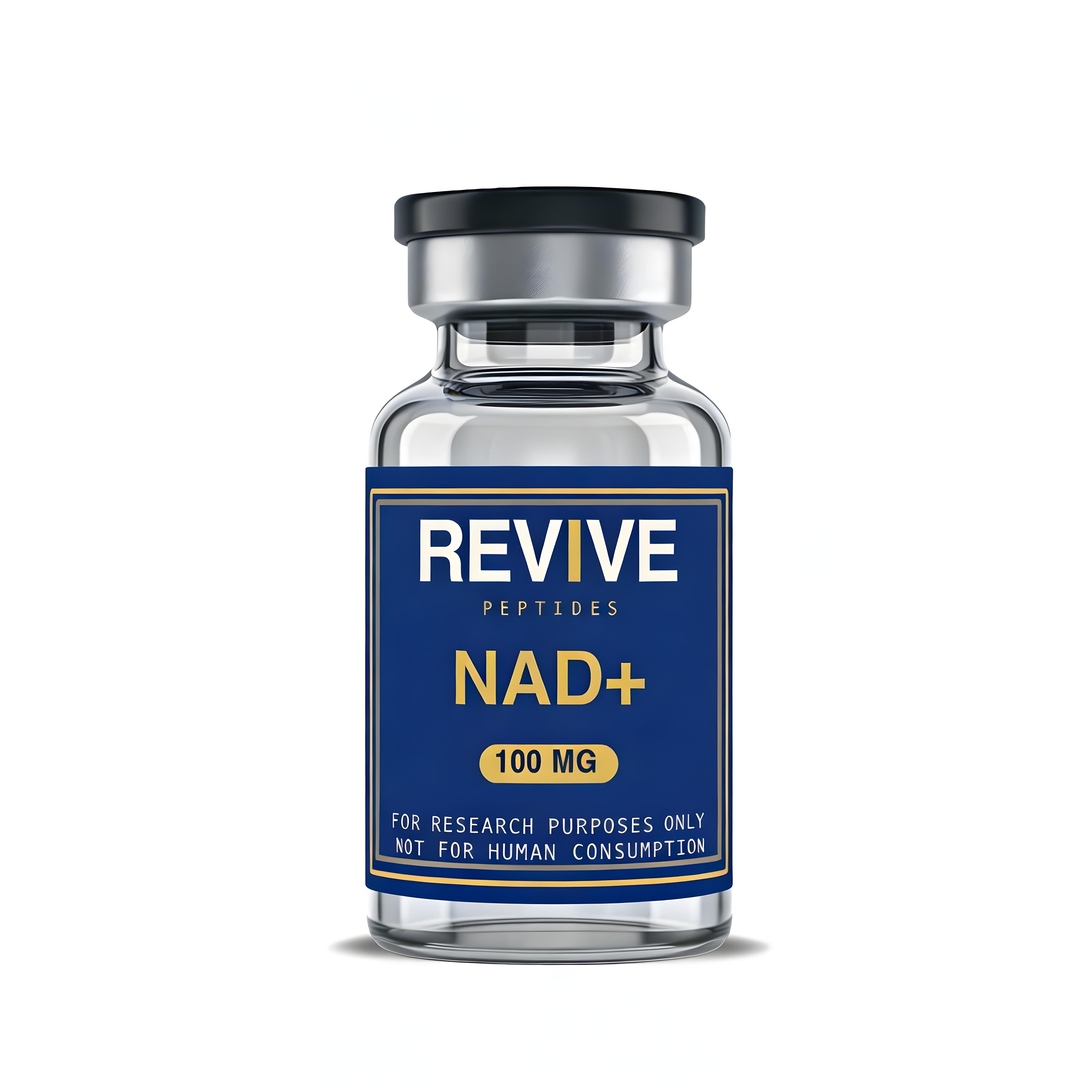
REVIVE supplies NAD+ 100 mg vials with HPLC certificates, cold-chain shipping across the UAE, and full reconstitution guidance.
View NAD+ 100 mg →
Practical Decision Framework
- Is the research question systemic (longevity, metabolic, mitochondrial)? → SC slow push is the default.
- Is maximum plasma concentration required? → IV in a clinic setting.
- Is the question CNS-focused (cognition, neuroprotection)? → Consider intranasal as adjunct, not replacement.
- Are SC sites unavailable? → IM with acceptance of sharper pain.
References
- Trammell SAJ, Schmidt MS, Weidemann BJ, et al. Nicotinamide riboside is uniquely and orally bioavailable in mice and humans. Nat Commun. 2016;7:12948.
- Yoshino M, Yoshino J, Kayser BD, et al. Nicotinamide mononucleotide increases muscle insulin sensitivity in prediabetic women. Science. 2021;372(6547):1224–1229.
- Martens CR, Denman BA, Mazzo MR, et al. Chronic nicotinamide riboside supplementation is well-tolerated and elevates NAD+ in healthy middle-aged and older adults. Nat Commun. 2018;9:1286.
- Grant R, Berg J, Mestayer R, et al. A pilot study investigating changes in the human plasma and urine NAD+ metabolome during a 6 hour intravenous infusion of NAD+. Front Aging Neurosci. 2019;11:257.
- Conlon N, Ford D. A systems-approach to NAD+ restoration. Biochem Pharmacol. 2021;198:114946.