Semax vs Selank — Two Russian Nootropic Peptides, Different Mechanisms
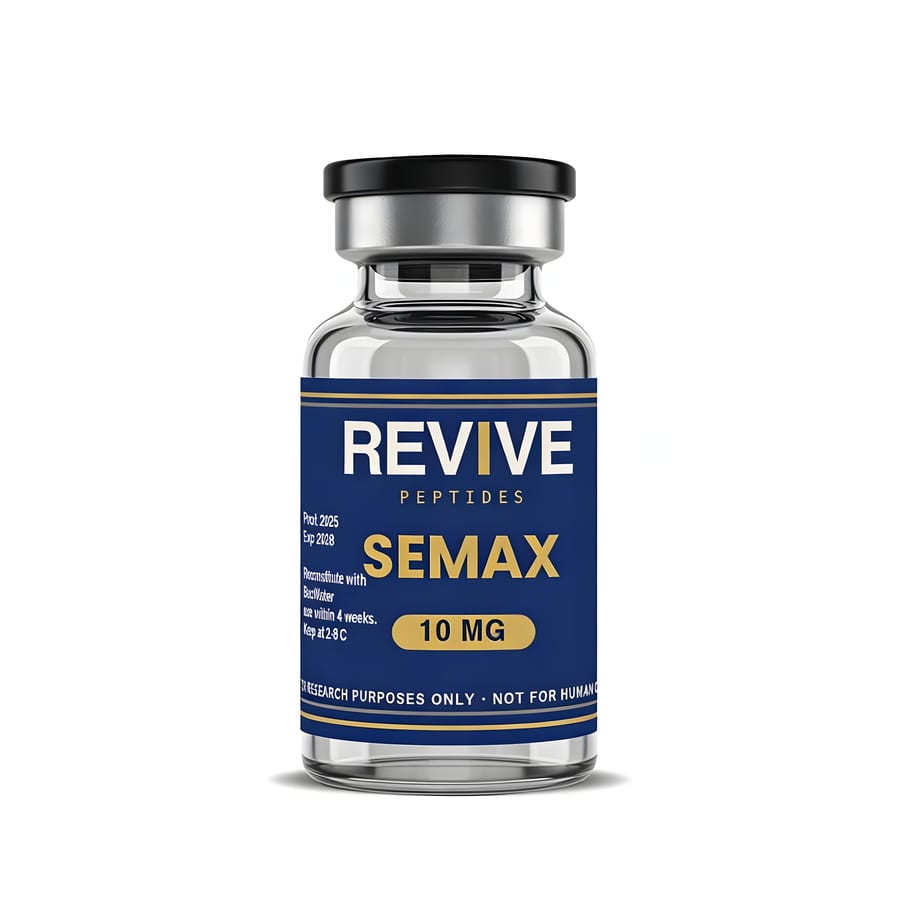
Russian peptide pharmacology produced two flagship nootropic compounds in the late 20th century — Semax and Selank — both 7-amino-acid synthetic peptides, both with established Russian clinical use, both routinely confused in Western peptide-research discussion. The two are not interchangeable. Different parent peptides, different molecular mechanisms, different research endpoints. This is the comparison for UAE peptide researchers running cognitive or anxiolytic protocols.
1. The Russian peptide-pharmacology tradition
Both peptides emerged from the Soviet/Russian neuropeptide research program centred at the Institute of Molecular Genetics (Moscow) and the Institute of Drug Research. The design philosophy was distinctive: take a known endogenous peptide (ACTH, tuftsin) with central nervous system activity, identify the active fragment, then stabilise it against protease degradation by amino acid substitutions and N/C-terminal modifications.
Both compounds went through Russian phase I-III equivalents and were registered for clinical use in Russia (Semax for cognitive indications and stroke recovery; Selank for anxiety). Neither was developed in Western pharmaceutical markets, which is why they remain research-grade material in most jurisdictions outside Russia.
2. The molecular biology — different parents
| Property | Semax | Selank |
|---|---|---|
| Parent peptide | ACTH(4-10) fragment | Tuftsin (TKPR) |
| Sequence | Met-Glu-His-Phe-Pro-Gly-Pro | Thr-Lys-Pro-Arg-Pro-Gly-Pro |
| Length | 7 amino acids (heptapeptide) | 7 amino acids (heptapeptide) |
| Design rationale | ACTH neurocognitive effects without hormonal axis activation | Tuftsin immune + behavioural effects with extended stability |
| Russian clinical use | Stroke recovery, ADHD pediatric, cognitive indication | Anxiety, neurasthenia |
| Russian formulation | 0.1% intranasal solution | 0.15% intranasal solution |
Both peptides retain a Pro-Gly-Pro C-terminal sequence which makes them resistant to amino-peptidase degradation — a Russian peptide-stabilisation signature seen across the broader peptide-research program.
3. The mechanisms — fundamentally different
Semax mechanism
- BDNF (brain-derived neurotrophic factor) upregulation — Dolotov 2006 J Neurochem showed Semax acutely raises BDNF mRNA in hippocampus and frontal cortex.
- NGF (nerve growth factor) upregulation — additional neurotrophic effect.
- Dopaminergic system modulation — Eremin 2005 showed enhanced dopamine release in prefrontal cortex.
- Melanocortin receptor activity — ACTH-derived, so retains some MC receptor binding (likely MC4R-related).
- Net effect: activating, focus-enhancing, neuroprotective.
Selank mechanism
- GABAergic potentiation — Kozlovskaya 2003 showed Selank facilitates GABA neurotransmission without acting as a classical benzodiazepine.
- Serotonergic modulation — Volkova 2016 showed serotonin metabolism effects in prefrontal cortex.
- Enkephalin pathway interaction — Kost 2001 showed Selank stabilises endogenous enkephalin levels.
- Immunomodulatory effects — tuftsin-derived, retains some immune-cell modulation.
- Net effect: calming, anxiolytic, without benzodiazepine-class sedation or dependence profile.
4. Side-by-side comparison
| Dimension | Semax | Selank |
|---|---|---|
| Primary endpoint | Focus, attention, neuroprotection | Anxiolysis, stress modulation |
| BDNF effect | ↑↑ Strongly increased | Mild / variable |
| GABAergic effect | Neutral | ↑↑ Potentiated |
| Dopamine effect | ↑ Activating | Neutral |
| Serotonin effect | Neutral / mild ↑ | ↑ Modulated |
| Subjective profile | "Caffeine without jitter" / focus | Calming, reduced anxiety, similar to L-theanine ceiling |
| Best research context | Cognitive performance, neuroprotection, stroke recovery | Anxiety research, stress-response modulation |
| Time to subjective effect | Minutes (intranasal); within hour | Within hour |
| Tolerance / dependence | Low — published Russian record over decades | Low — no benzodiazepine-class dependence |
5. The published evidence base
Semax evidence highlights
- Dolotov 2006 (J Neurochem): BDNF/NGF upregulation in hippocampus and frontal cortex
- Medvedeva 2014 (BMC Genomics): Genome-wide expression profiling — broad neurotrophic and synaptogenesis-related gene upregulation
- Gusev 2005: Stroke recovery clinical trial — improved neurological outcome at 30 days
- Ashmarin 1995: Foundational pharmacology paper
- Manchenko 2010: Anxiolytic-like effects observed in some preclinical paradigms (overlap with Selank, but smaller)
Selank evidence highlights
- Kost 2001: Enkephalin stabilisation mechanism
- Kozlovskaya 2003: GABAergic mechanism characterisation
- Volkova 2016: Serotonergic and BDNF effects
- Zozulia 2008: Clinical anxiolytic trial — comparable to benzodiazepine effect without sedation
- Mahmoudi 2018: Anti-inflammatory peripheral effects
7. Stackable — and the case for stacking
The non-overlapping mechanisms make the Semax + Selank stack mechanistically coherent. Researchers running combined protocols typically use:
- Semax morning + midday — for activating/focus effect during work hours
- Selank evening — for anxiolytic effect during decompression / pre-sleep
The combination produces a "wide window of operation" — focused during the day, calmer in the evening — without the trade-offs that single-mechanism interventions (caffeine, stimulants, benzodiazepines) impose.
There are no published combination trials. The stack is mechanism-based researcher protocol synthesis.
8. The route — intranasal as the published default
The Russian clinical formulations are intranasal (Semax 0.1%, Selank 0.15%). Intranasal delivery bypasses gastric peptidase breakdown and provides rapid CNS access via the olfactory nerve / cribriform plate pathway.
The full intranasal protocol breakdown for Semax sits in our Semax dosing protocol writeup.
9. The which-one-when decision
Choose Semax if you're researching:
- Cognitive performance, focus, attention endpoints
- Neuroprotection (stroke research, neurodegeneration)
- BDNF / neurotrophic signalling
- ADHD-adjacent or pediatric cognitive research (Russian indication)
- Recovery from cognitive fatigue
Choose Selank if you're researching:
- Anxiety research, stress-response modulation
- Sleep quality (pre-sleep anxiolysis)
- GABAergic mechanisms without benzodiazepine pharmacology
- Serotonin pathway research
Stack both if:
- You want a combined activating/calming research protocol
- Your research question spans both endpoints (e.g., cognitive performance under stress)
10. The safety record
Both peptides have multi-decade Russian clinical-use records with benign safety profiles. The published adverse event spectrum is limited to:
- Nasal irritation (intranasal route)
- Headache (uncommon, transient)
- Occasional sleep changes (vivid dreams reported anecdotally with both)
Neither peptide has shown abuse potential, dependence syndrome, or significant withdrawal in the Russian clinical record.
11. UAE supply context
Semax is reliably stocked at REVIVE LAB UAE in 10 mg HPLC-verified lyophilised vials with lot-level COA. Selank availability varies by lot — research-grade Selank has a smaller global supply chain than Semax.
Semax UAE ships same-day on Dubai orders before 4 PM, 24 hours nationwide. Message REVIVE on WhatsApp to check current Selank stock.
12. The summary
- Semax (ACTH-derived) → BDNF + dopamine → focus, attention, neuroprotection research.
- Selank (tuftsin-derived) → GABA + serotonin → anxiolysis, stress-response research.
- Both heptapeptides with Pro-Gly-Pro C-terminal stabilisation.
- Both intranasal route at 1 mg/mL (matches Russian 0.1% clinical formulation).
- Both 250-1000+ μg/day, split into 2-3 daily doses.
- Mechanisms non-overlapping — stackable for combined activating/calming research.
- REVIVE LAB UAE stocks Semax HPLC-verified in 10 mg vials.
References
- Dolotov OV, Karpenko EA, Inozemtseva LS, et al. Semax, an analog of ACTH(4-10) with cognitive effects, regulates BDNF and trkB expression in the rat hippocampus. J Neurochem. 2006;97(Suppl 1):82-86. PubMed
- Medvedeva EV, Dmitrieva VG, Povarova OV, et al. The peptide semax affects the expression of genes related to the immune and vascular systems in rat brain. BMC Genomics. 2014;15 Suppl 12:S7. PubMed
- Kozlovskaya MM, Kozlovskii II, Val'dman EA, Seredenin SB. Selank and short peptides of the tuftsin family in the regulation of adaptive behavior in stress. Neurosci Behav Physiol. 2003;33(7):639-643. PubMed
- Volkova A, Shadrina M, Kolomin T, et al. Selank Administration Affects the Expression of Some Genes Involved in GABAergic Neurotransmission. Front Pharmacol. 2016;7:31. PubMed
- Gusev EI, Skvortsova VI, Miasoedov NF, et al. Semax efficacy in the treatment of stroke. Zh Nevrol Psikhiatr Im S S Korsakova. 2005;105(2):3-9.