Tesamorelin AM vs PM Injection Timing: GH Pulsatility Research Implications and What the Clinical Trials Actually Used (UAE 2026)
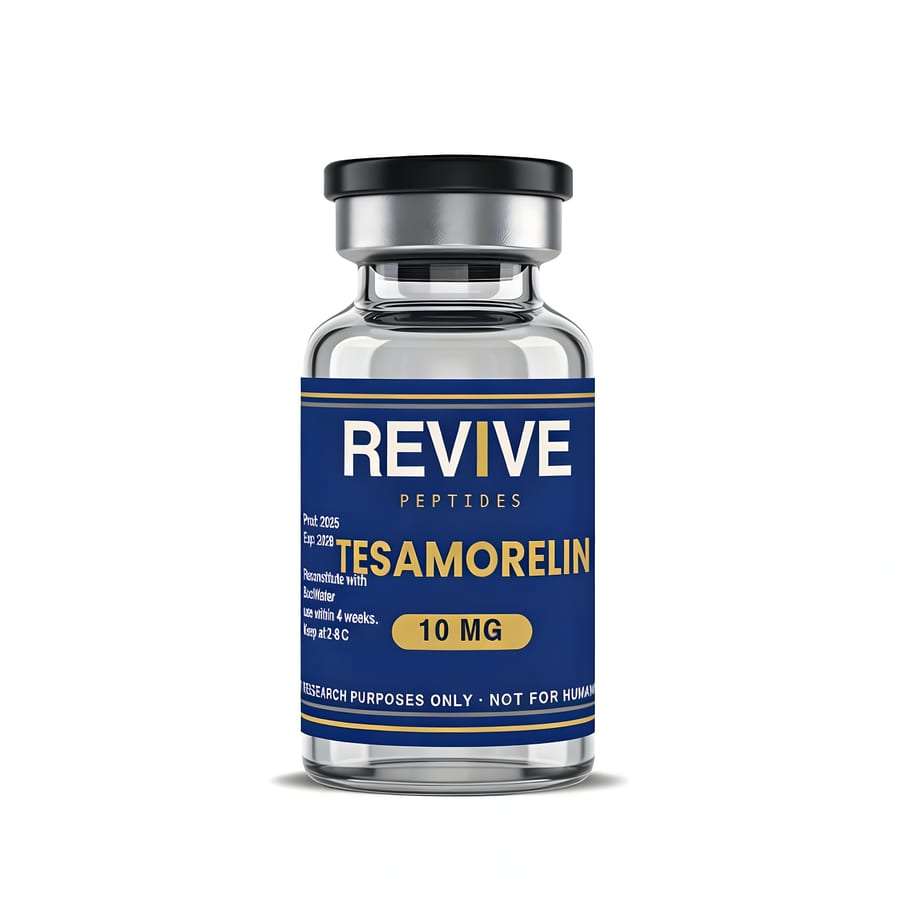
Among the questions UAE-based researchers raise most often about tesamorelin protocol design, injection timing sits near the top — and for a reason that separates this peptide from simpler compounds. Because tesamorelin operates upstream of GH secretion (it is a GHRH analog that tells the pituitary to fire, rather than a direct GH secretagogue like a GH injection), its interaction with the body's endogenous circadian GH architecture is non-trivial. Get the timing right and you are working with the rhythm. Get it wrong and you may be pushing against it.
This research brief synthesizes what the pivotal clinical investigations actually did, examines the mechanistic arguments on both sides, and gives UAE-based investigators the practical information they need to design a coherent protocol before they order tesamorelin from REVIVE LAB UAE.
GH Pulsatility: The Biology That Makes Timing Matter
Endogenous growth hormone is not secreted continuously — it is released in discrete pulses, typically 6-12 per 24 hours in healthy adults, with amplitude that varies sharply across the day. The single largest pulse occurs during slow-wave (deep) sleep, roughly 60-90 minutes after sleep onset, driven by a surge in hypothalamic GHRH activity that coincides with the nocturnal nadir of somatostatin tone. This is not trivial: in younger adults, the nocturnal sleep pulse can account for up to 70% of the entire 24-hour GH secretory output.
Several hormonal dynamics interact with this rhythm:
- Somatostatin — the primary inhibitor of GH release — is suppressed during deep sleep. This is the key permissive event for the large nocturnal pulse. Daytime somatostatin tone is higher, which blunts GH release amplitude.
- Cortisol — counter-regulatory to GH at the receptor and metabolic level — peaks in the early morning (roughly 6-8 AM) and declines through the day toward a late-evening nadir. The GH-cortisol interaction is antagonistic: high cortisol blunts the anabolic GH signal.
- IGF-1 feedback — IGF-1, produced hepatically in response to GH, feeds back to suppress both GHRH output and pituitary GH sensitivity. Administering a GHRH analog like tesamorelin at a moment of elevated IGF-1 (midday, when IGF-1 from the previous nocturnal pulse is still circulating) faces a less responsive pituitary than administration during IGF-1 trough.
- Insulin / glucose — hyperglycemia and elevated insulin suppress GH secretion. The fasted state — typically in the early morning or late evening — is permissive for stronger GHRH-stimulated GH release.
Tesamorelin's mechanism sits precisely inside this system: as a trans-3-hexenoyl-modified analog of GHRH 1-44, it binds pituitary GHRH receptors, stimulates GH synthesis and release, and does so in a pulsatile pattern rather than the supraphysiologic continuous suppression associated with exogenous GH therapy. The N-terminal modification resists DPP-IV cleavage, extending the effective receptor-engagement window versus native GHRH. But fundamentally, its output depends on the pituitary's readiness to respond — which is circadian, sleep-gated, and somatostatin-modulated.
What the Clinical Trials Actually Used: AM Protocol
Before analyzing the AM versus PM debate, it is worth anchoring in what the published evidence base actually did. All four major randomized controlled investigations of tesamorelin used standardized morning administration.
Falutz et al. 2007 and 2010 (NEJM / JCEM)
Over 26 weeks, the tesamorelin group showed a 15-18% reduction in visceral adipose tissue (VAT) versus placebo, with a parallel ~50% rise in IGF-1 from baseline. The 2010 26-week extension (Falutz et al., JCEM) maintained the same AM-dosing protocol and confirmed the VAT benefit was sustained, with IGF-1 remaining elevated above baseline throughout. No dose-timing arms were compared; the AM convention was operationally fixed across both trials.
Order Tesamorelin UAE →
The Case for Morning (AM) Injection
The AM protocol has mechanistic support beyond simply "that is what the trials did." Several overlapping rationales favor a morning window, typically 30-60 minutes before the first meal:
Fasting-State Pituitary Sensitivity
Overnight fasting means insulin levels are at or near their nadir when the researcher wakes. Low insulin correlates with higher GH receptor sensitivity and reduced somatostatin-driven GH inhibition. Administering tesamorelin into this window means the pituitary encounters a GHRH stimulus when it is relatively unencumbered by the insulin-mediated suppression that characterizes postprandial states. The Falutz trials conducted AM dosing pre-breakfast or after a very light meal for this reason.
Post-Nocturnal-Pulse IGF-1 Dynamics
After the large nocturnal GH pulse, IGF-1 rises through the early morning hours. By mid-morning, IGF-1 may be near its daily peak — which would create negative feedback on GHRH receptor responsiveness. Early AM administration (6-8 AM) captures the moment between IGF-1's nocturnal rise still building and the full negative-feedback suppression that follows a few hours later.
Cortisol Separation Strategy
Cortisol peaks at approximately 6-8 AM (the cortisol awakening response). Administering tesamorelin very early — at waking, before the cortisol peak fully establishes — allows some investigators to attempt a brief cortisol-trough window. Others push AM dosing to 9-10 AM, accepting elevated morning cortisol, noting that the VAT-reduction endpoint in the Falutz/Stanley trials was robust despite the cortisol overlap. The clinical evidence suggests the AM cortisol environment does not eliminate tesamorelin's metabolic efficacy over a 26-week research horizon.
The Case for Evening (PM) / Pre-Sleep Injection
A separate and growing area of research-community discussion centers on pre-sleep tesamorelin administration — typically 30-60 minutes before bed — with the explicit goal of amplifying the dominant nocturnal GH pulse rather than creating an independent daytime pulse.
Targeting the Nocturnal Pulse Window
The largest endogenous GH pulse occurs 60-90 minutes after sleep onset, coinciding with the first deep slow-wave sleep cycle. Somatostatin tone is at its daily nadir during this window, meaning the pituitary is maximally receptive to GHRH-type stimulation. Administering tesamorelin 30-60 minutes before bed positions the exogenous GHRH analog to arrive at the pituitary roughly as the subject enters Stage 3 sleep — layering the peptide stimulus on top of the physiological GHRH surge and the somatostatin-withdrawal effect simultaneously.
Cortisol Separation Advantage
PM and pre-sleep administration places tesamorelin's GH-stimulatory effect at the moment of maximum cortisol distance — the late evening is the daily cortisol nadir. This temporal separation may allow the resulting GH pulse (and downstream IGF-1 generation) to operate with less counter-regulatory interference than AM dosing, at least during the acute overnight window. Whether this translates to a measurably different long-term VAT or liver-fat endpoint has not been studied in RCT format.
The Trade-Off: IGF-1 Elevation Timing
The mechanistic argument for PM dosing carries one practical consideration: a tesamorelin-amplified nocturnal GH pulse means elevated IGF-1 will be present during the morning hours. For some research designs — particularly those evaluating daytime metabolic parameters — this may be the intended profile. For protocols that need stable fasting IGF-1 measurements taken in the morning, AM dosing produces a more predictable measurement window.
Buy Tesamorelin UAE →
Where Research Investigators Have Landed
The clinical evidence base was built on AM dosing, and that remains the most defensible protocol position for any investigator who needs their work to sit within the Falutz and Stanley methodological framework. Investigators looking to match their design to peer-reviewed precedent should default to AM.
The PM / pre-sleep argument is mechanistically coherent but remains hypothesis-generating rather than trial-validated. Several considerations push researchers toward exploring it nonetheless:
- If the primary research endpoint is body-composition optimization rather than replication of a specific published protocol, the nocturnal pulse amplification rationale is worth examining.
- Individuals with significantly disrupted sleep patterns (common in certain clinical populations, including those in the original Falutz HIV cohort) may find that PM administration interacts unpredictably with fragmentary slow-wave sleep, reducing the nocturnal pulse amplification benefit.
- Consistency of administration time matters more than which window is chosen. The Falutz and Stanley protocols were explicit: same time, every day. Circadian rhythm research consistently shows that irregularly timed peptide administration produces more variable IGF-1 and GH profiles than consistent AM or consistent PM protocols.
Practical Protocol Notes: Reconstitution and Vial Math
Regardless of timing window, the operational protocol for tesamorelin reconstitution is standardized. REVIVE LAB UAE stocks tesamorelin 5 mg and 10 mg vials. The table below covers the most common reconstitution configurations for UAE-based researchers:
Reconstituted vials should be stored at 2-8°C and used within 14 days. Reconstitute slowly by directing the bacteriostatic water down the inner glass wall of the vial, not directly onto the lyophilized cake, and swirl gently rather than shaking. The 10 mg format is preferred for longer continuous protocols to reduce reconstitution frequency and minimize sterility risk from repeated vial penetration.
Where to Buy Tesamorelin in the UAE — Same-Day Dubai, 24h All Emirates
REVIVE LAB UAE supplies HPLC-verified, lot-COA, cold-chain dispatched tesamorelin across all 7 emirates. Whether you are running an AM or PM protocol, the supply chain requirement is the same: cold, verified, in-hand without a 2-week international shipping wait that burns your reconstitution window before you even start. Here is the current delivery framework for researchers looking to buy tesamorelin UAE:
| Location | Delivery Window | Cash on Delivery |
|---|---|---|
| Dubai (Marina, JBR, DIFC, Business Bay, JVC, Downtown, Palm, Jumeirah) | Same-day, 4-8 hours | Yes |
| Abu Dhabi (Corniche, Yas, Saadiyat, Reem Island) | Next-day, 18-24 hours | Yes |
| Sharjah | Same-day / next-day, 8-18 hours | Yes |
| Ajman | Next-day, 18-24 hours | Yes |
| Ras Al Khaimah (RAK) | Next-day, 18-24 hours | Yes |
| Fujairah | Next-day, 24 hours | Yes |
| Umm Al Quwain (UAQ) | Next-day, 18-24 hours | Yes |
All shipments are dispatched in validated cold-chain insulation, maintaining 2-8°C through the UAE summer. Packaging is plain and unbranded by default. Tesamorelin 5 mg and 10 mg vials are in stock UAE today — no pre-order, no international lead time. For researchers in Dubai Marina, JBR, Business Bay, JVC, DIFC, Palm Jumeirah, Downtown or Jumeirah, ordering before the daily cut-off means vials arrive the same evening, cold and ready to reconstitute on your schedule — AM or PM.
Order Now →
FAQ
Does injection timing (AM vs PM) affect tesamorelin research outcomes?
Published clinical trials — including the Falutz 2007 and 2010 NEJM / JCEM studies and the Stanley 2014 JAMA and 2019 Lancet HIV studies — administered tesamorelin at a consistent time each day in the morning, establishing AM dosing as the evidence-based research standard. The AM window aligns with the post-fast, low-insulin state and avoids direct overlap with the dominant nocturnal GH pulse, producing a discrete daytime GH stimulus. PM / pre-sleep dosing has a mechanistic rationale centered on somatostatin nadir and nocturnal pulse amplification, but no RCT data has validated this approach against metabolic endpoints. Investigators seeking to align their protocol with the Falutz / Stanley evidence base should use AM administration at a consistent daily time.
Can I buy tesamorelin in the UAE with same-day delivery from REVIVE LAB UAE?
Yes. REVIVE LAB UAE supplies HPLC-verified, lot-COA, cold-chain dispatched tesamorelin across all 7 emirates. Same-day delivery is available for researchers in Dubai — including Dubai Marina, JBR, Business Bay, JVC, DIFC, Downtown, Palm Jumeirah and Jumeirah — for orders placed before the daily cut-off. Abu Dhabi, Sharjah, Ajman, RAK, Fujairah and UAQ receive next-day delivery within 24 hours. Cash on delivery Dubai is supported and all shipments use discreet, unbranded outer packaging as the default.
- Falutz J, Allas S, Blot K, et al. Metabolic effects of a growth hormone-releasing factor in patients with HIV. N Engl J Med. 2007;357(23):2359-2370.
- Falutz J, Mamputu JC, Potvin D, et al. Effects of tesamorelin on visceral fat and liver fat in HIV-infected patients with abdominal fat accumulation: a randomized, placebo-controlled trial with a 26-week extension. J Clin Endocrinol Metab. 2010;95(9):4291-4304.
- Stanley TL, Feldpausch MN, Oh J, et al. Effect of tesamorelin on visceral fat and liver fat in HIV-infected patients with abdominal fat accumulation. JAMA. 2014;312(4):380-389.
- Stanley TL, Fourman LT, Feldpausch MN, et al. Effects of tesamorelin on non-alcoholic fatty liver disease in HIV: a randomised, double-blind, multicentre trial. Lancet HIV. 2019;6(12):e821-e830.