Tesamorelin + Cardio Training Research: VO2max, Body Composition & UAE Climate Caveats (2026)
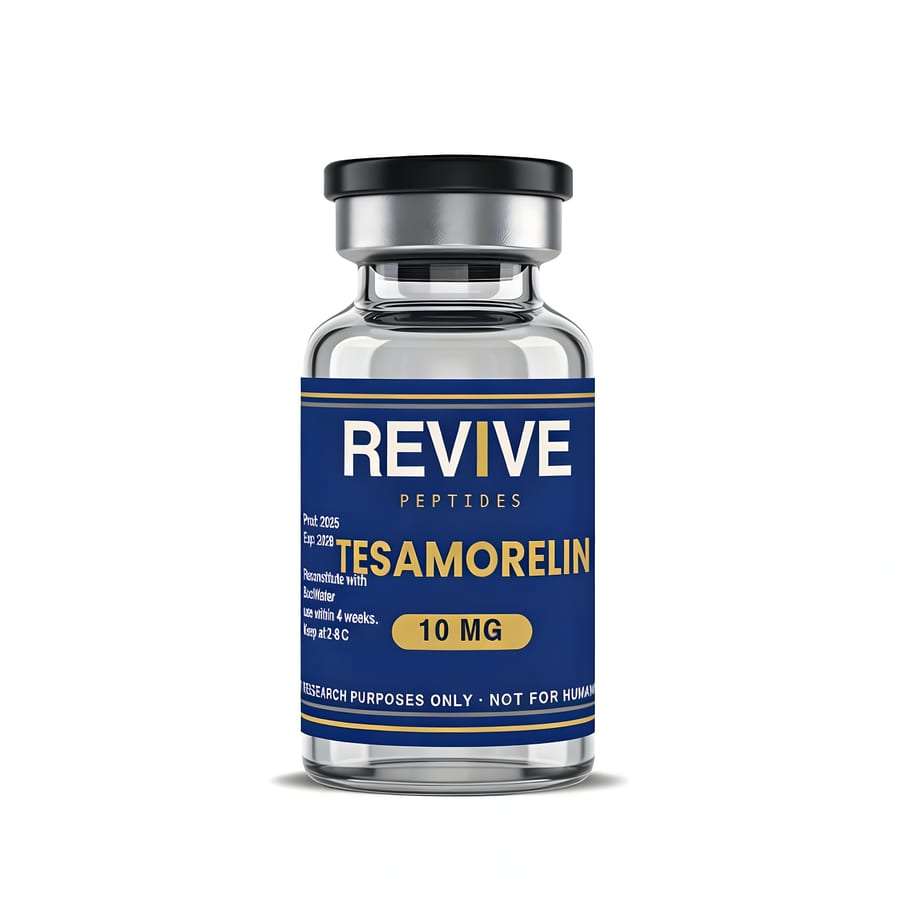
The Mechanism: Why Investigators Pair Tesamorelin With Cardio Protocols
Tesamorelin is not a direct GH agonist — it is a GHRH analog, meaning it works upstream by binding to pituitary GHRH receptors and amplifying the body's own pulsatile GH release. The trans-3-hexenoyl modification on the N-terminus extends its half-life relative to native GHRH 1-44 by conferring resistance to dipeptidyl peptidase-IV (DPP-IV) cleavage. The result is a molecule that produces physiologically patterned GH pulses rather than the supraphysiologic flat-line GH elevation associated with exogenous recombinant GH.
That pulsatility distinction matters for cardio research. Pulsatile GH stimulates hepatic IGF-1 secretion, promotes lipolysis in adipocytes (particularly visceral adipocytes), and supports skeletal muscle protein turnover — all relevant to aerobic work capacity.
Key Mechanism Points at a Glance
- Site of action: Pituitary GHRH receptor — amplifies endogenous GH pulse amplitude, not frequency
- DPP-IV resistance: Trans-3-hexenoyl N-terminus modification extends circulating half-life
- Primary metabolic effect: Selective visceral adipose tissue (VAT) lipolysis via GH/IGF-1 axis
- VAT reduction: 15-18% versus placebo over 26 weeks (Falutz 2007 NEJM, 412 subjects)
- Liver fat: 32% reduction versus placebo at 12 months (Stanley 2014 JAMA; Stanley 2019 Lancet HIV)
Buy Tesamorelin UAE — Order Now →
The Cardio Performance Research Link: VAT, VO2max and Metabolic Flexibility
The connection between visceral adipose mass and aerobic capacity is mechanistically well established, even if tesamorelin has not been tested in dedicated VO2max trials. Each of these pathways impairs mitochondrial efficiency — the core determinant of VO2max — and blunts the substrate flexibility athletes need to sustain work across intensity zones.
Investigators therefore read the Falutz VAT data as indirectly relevant to aerobic research: a 15-18% reduction in visceral fat mass over 26 weeks (Falutz 2007 NEJM, 412 subjects, confirmed in the 2010 extension) removes a meaningful source of systemic metabolic friction. The parallel IGF-1 elevation (~50%) adds a second research-relevant angle: IGF-1 supports skeletal muscle satellite cell activity and type-II fiber hypertrophy, which contributes to peak power output even in aerobically focused protocols.
The Stanley NAFLD work deepens this picture. A 32% reduction in hepatic fat (Stanley 2014 JAMA; confirmed over 12 months in Stanley 2019 Lancet HIV) matters for cardio research because hepatic steatosis is independently associated with reduced VO2max and blunted cardiac stroke-volume response to exercise. Investigators studying subjects with elevated hepatic triglycerides therefore have a documented tesamorelin-related mechanism to work with alongside their aerobic testing.
Research Variables Investigators Monitor Alongside Tesamorelin
| Variable | Tesamorelin Mechanism | Published Signal | Research Notes |
|---|---|---|---|
| Visceral adipose tissue (VAT) | GH-driven visceral lipolysis | -15 to -18% vs placebo (Falutz 2007) | DXA or MRI at baseline and 26 weeks |
| IGF-1 | Hepatic IGF-1 secretion from GH pulse | ~+50% from baseline (Falutz 2007) | Morning fasted draw; mirrors GH pulse amplitude |
| Hepatic fat fraction | Reduced portal FFA flux, improved insulin signaling | -32% vs placebo (Stanley 2014) | MRS or CAP score; 12-month endpoint |
| Fasting glucose / insulin | Transient GH-driven insulin antagonism possible | Modest rise noted in Falutz trials | Monitor at weeks 4, 12, 26 in research protocols |
| Lean mass | IGF-1-mediated muscle protein accretion | Trend positive but not primary endpoint | Use DXA appendicular lean mass |
UAE Climate Caveats for Tesamorelin Research Protocols
Running a tesamorelin + cardio research protocol in the UAE introduces variables that investigators in temperate climates never encounter. The two dominant factors are ambient heat and humidity — and both affect the research design in ways that are easy to underestimate.
Cardiovascular Baseline Is Elevated Year-Round
From May through October, ambient temperatures in Dubai and the wider UAE regularly reach 42-45°C with relative humidity of 70-90% in coastal zones. This pushes resting heart rate 8-12 bpm higher than temperate-climate norms, elevates baseline cardiac output, and accelerates glycogen depletion during any aerobic work. For investigators establishing VO2max baselines, this means measurements taken outdoors or in non-climate-controlled spaces in a UAE summer are not comparable to lab values from a 21°C treadmill environment — or to values from the same subject in winter months. Standardize all cardiorespiratory testing to the same controlled indoor environment.
Thermoregulation and GH Pulse Timing
Growth hormone release follows a circadian pattern — the largest secretory pulse occurs during early slow-wave sleep, with secondary pulses around 30-60 minutes post-exercise. In heat-stressed subjects, sleep architecture can fragment (lighter slow-wave stages, more frequent arousal), which may suppress natural GH pulsatility independently of any tesamorelin intervention. Investigators designing tesamorelin protocols in UAE summer conditions should account for this confound in their data interpretation — a suppressed endogenous GH pulse could attenuate the additive effect of exogenous GHRH stimulation.
Hydration and IGF-1 Measurement
IGF-1 assays are concentration-dependent. A subject who is even mildly dehydrated before a morning blood draw — common in UAE summer when overnight fluid losses are higher — will show artificially elevated serum IGF-1. Standardize pre-draw hydration across research subjects: 500 mL water upon waking, 90 minutes before draw, is the simplest protocol. The Falutz and Stanley teams worked in climate-controlled North American hospital settings; their IGF-1 numbers assume well-hydrated, thermoneutral subjects.
Heat Acclimatization as a Confound
Subjects who have lived in the UAE for more than 6 weeks develop measurable cardiac and vascular heat-acclimatization adaptations — increased plasma volume, reduced heart-rate response to heat load, earlier sweat onset. These adaptations partially mimic aerobic training adaptations and can inflate apparent VO2max improvements if investigators do not separate acclimatization-driven changes from compound-driven changes. Prospective tesamorelin cardio studies in the UAE should therefore track acclimatization status (time-in-UAE, measured sweat threshold) as a covariate.
Order Tesamorelin Dubai — Same Day Dispatch →
The Cardio Protocol Design: What Research Designs Investigators Use
Aerobic Testing Standardization
For investigators layering tesamorelin into a cardio conditioning study, the most defensible VO2max measurement is an incremental treadmill or cycle ergometer protocol conducted in a controlled-temperature room (20-22°C, <60% RH). The Falutz teams measured body composition at baseline, week 13, and week 26 — a quarterly assessment cadence that maps cleanly onto most 26-week cardio conditioning blocks. Running concurrent VO2max or sub-maximal lactate-threshold tests at those same time-points gives investigators paired metabolic and body-composition data sets.
Exercise Timing Relative to Administration
Research protocols examining GH-sensitive outcomes typically schedule administration in the evening to align with the natural GH surge during slow-wave sleep. This is particularly relevant in UAE summer months, when investigators should also ensure the research subject's sleep environment is at 18-20°C — air conditioning failure or power events can disrupt both the GH secretory pattern and peptide refrigeration simultaneously. Cold-chain integrity for the vial and thermoregulation integrity for the subject are not separate concerns; both affect the downstream IGF-1 read-out.
Cardiovascular Markers Worth Tracking
- Resting HR and HRV: Establish a 7-day baseline before compound introduction to separate acclimatization drift from protocol effects
- Sub-maximal VO2 at fixed wattage: More reproducible than VO2max in field settings; tracks aerobic efficiency over time
- Fasting triglycerides: VAT reduction correlates with TG clearance — a useful secondary marker alongside IGF-1
- Waist circumference at umbilicus: Falutz et al. used trunk fat by DXA; waist circumference is an accessible proxy for UAE-based research teams without MRI access
- Liver enzymes (ALT/AST): Relevant given the Stanley NAFLD data; track as a secondary safety variable alongside primary endpoints
Where to Buy Tesamorelin in the UAE — REVIVE LAB UAE
For UAE-based research investigators, sourcing quality matters more than price. Peptide purity directly determines whether the published Falutz and Stanley effect sizes are reproducible in a local research context. REVIVE LAB UAE supplies HPLC-verified, lot-COA, cold-chain dispatched tesamorelin across all 7 emirates — the same quality standard that the pivotal NEJM, JAMA, and Lancet HIV trials assumed when they specified "research-grade investigational product."
| Location | Delivery Window | Cash on Delivery | Cold-Chain |
|---|---|---|---|
| Dubai (Marina, JBR, Business Bay, DIFC, JVC, Downtown, Palm, Jumeirah) | Same-day, 4-8 hours | Yes | Yes |
| Abu Dhabi (Corniche, Yas, Saadiyat, Reem) | Next-day, 18-24 hours | Yes | Yes |
| Sharjah | Same-day / next-day, 8-18 hours | Yes | Yes |
| Ajman | Next-day, 18-24 hours | Yes | Yes |
| Ras Al Khaimah | Next-day, 18-24 hours | Yes | Yes |
| Fujairah | Next-day, 24 hours | Yes | Yes |
| Umm Al Quwain | Next-day, 18-24 hours | Yes | Yes |
| Al Ain | Next-day, 24 hours | Yes | Yes |
Tesamorelin 5 mg and 10 mg are in stock in Dubai right now. Orders placed before the daily cut-off receive tesamorelin same day Dubai dispatch — a researcher in Business Bay or JVC typically has cold-pack vials in hand within 4-8 hours. For the full REVIVE LAB UAE research peptides range — including Retatrutide, GHK-Cu, BPC-157, TB-500, Semax and NAD+ — see the REVIVE LAB UAE peptides catalogue. Tesamorelin cash on delivery Dubai is available on request.
Buy Tesamorelin UAE →
FAQ
Can researchers in the UAE use tesamorelin in a cardio and body composition study protocol?
Yes — tesamorelin is used in research contexts as a GHRH analog that promotes pulsatile GH release, selectively reducing visceral adipose tissue. Investigators studying body composition alongside aerobic conditioning often include tesamorelin as the metabolic variable of interest. REVIVE LAB UAE supplies HPLC-verified tesamorelin 5 mg and 10 mg vials with cold-chain delivery across all seven emirates for legitimate research use.
Does REVIVE LAB UAE have tesamorelin in stock for same-day delivery in Dubai?
Yes. REVIVE LAB UAE maintains standing inventory of tesamorelin 5 mg and 10 mg vials in Dubai. Orders placed before the daily cut-off receive same-day courier dispatch within Dubai, including Marina, JBR, Business Bay, JVC, DIFC, Downtown, Palm Jumeirah, and Jumeirah. Abu Dhabi, Sharjah, Ajman, RAK, Fujairah, UAQ and Al Ain receive next-day delivery within 18-24 hours. All shipments are cold-chain insulated with HPLC certificates of analysis available on request. Tesamorelin cash on delivery Dubai is accepted across the UAE.
- Falutz J, Allas S, Blot K, et al. Metabolic effects of a growth hormone-releasing factor in patients with HIV. N Engl J Med. 2007;357(23):2359-2370.
- Falutz J, Mamputu JC, Potvin D, et al. Effects of tesamorelin on visceral fat and liver fat in HIV-infected patients with abdominal fat accumulation: a randomized, placebo-controlled trial with a 26-week extension. J Clin Endocrinol Metab. 2010;95(9):4291-4304.
- Stanley TL, Feldpausch MN, Oh J, et al. Effect of tesamorelin on visceral fat and liver fat in HIV-infected patients with abdominal fat accumulation. JAMA. 2014;312(4):380-389.
- Stanley TL, Fourman LT, Feldpausch MN, et al. Effects of tesamorelin on non-alcoholic fatty liver disease in HIV: a randomised, double-blind, multicentre trial. Lancet HIV. 2019;6(12):e821-e830.