Tesamorelin & Carpal Tunnel — Research Notes UAE: GH-Axis Connective Tissue Observations for Dubai Lab Teams
Why Tesamorelin Is the Benchmark GHRH Analog for Serious UAE Research
The UAE peptide research landscape has grown considerably over the past three years. Labs in Business Bay, academic institutions in Abu Dhabi, and private research facilities near Dubai Marina now run structured peptide protocols with a rigour that matches international standards. In that environment, compound selection matters enormously — and among GHRH analogs available for research acquisition in the UAE, tesamorelin has a decisive advantage: it is the most thoroughly characterised peptide in its class in the peer-reviewed literature.
The Falutz et al. 2007 paper in the New England Journal of Medicine established the foundational clinical research basis for tesamorelin, documenting its capacity to significantly reduce visceral adipose tissue via GH-axis stimulation. That same trial series — extended by the Falutz et al. 2010 NEJM continuation study — gave researchers a long-duration picture of what sustained GHRH analog stimulation produces at the systemic level. Stanley et al. (2014, JAMA) added visceral fat and liver fat quantification data with body composition imaging precision that few research trials at the time matched. Stanley et al. (2019, Lancet HIV) further extended the dataset to cover long-term outcomes, making tesamorelin's published record broader than any comparable GHRH analog by a considerable margin.
For UAE-based research teams that need to justify compound selection to institutional review bodies, procurement committees, or funding stakeholders, that literature trail is not a minor detail — it is the difference between a compound that can be discussed in academic terms and one that cannot. Tesamorelin clears that bar; most GHRH analogs do not. That is the starting point for understanding why demand for tesamorelin in the UAE, and specifically for same-day tesamorelin delivery in Dubai, has grown so substantially among organised research operations.
The growth hormone axis that tesamorelin stimulates also sits upstream of biological processes well beyond visceral adipose metabolism. Among the most interesting for current research agendas: collagen synthesis, peripheral nerve conduction, glycosaminoglycan accumulation in perisynovial tissues, and the fluid dynamics of enclosed anatomical compartments — including the carpal tunnel. Those connections are the subject of these notes.
The GH/IGF-1 Axis and Connective Tissue: Establishing the Mechanistic Framework
Growth hormone exerts its connective tissue effects primarily through two channels. The first is direct: GH receptors are expressed on fibroblasts, chondrocytes, and tenocytes, and GH binding at these receptors drives proliferative and synthetic responses in those cell populations. The second is indirect and quantitatively larger: GH induces hepatic and peripheral IGF-1 secretion, and IGF-1 is the primary driver of extracellular matrix production, collagen fibre cross-linking, and glycosaminoglycan synthesis in connective tissues across the body.
At pathologically elevated GH levels — as seen in untreated acromegaly — the downstream result includes soft-tissue hypertrophy, perisynovial oedema, transverse carpal ligament thickening, and median nerve compression within the carpal tunnel. The association between acromegaly and carpal tunnel syndrome (CTS) is well-established and mechanistically coherent: elevated IGF-1 drives the connective tissue expansion that reduces the effective volume of a closed anatomical space, and the median nerve bears the consequences. Studies in acromegalic populations have documented CTS prevalence substantially above background rates.
The research question for GHRH analogs operating at non-acromegalic GH stimulation levels — such as tesamorelin in the dose ranges used in the Falutz and Stanley trial series — is categorically different from the acromegaly question, but mechanistically adjacent. Does pulsatile, physiologically-modelled GH stimulation produce measurable changes in perisynovial anatomy? Does it shift median nerve cross-sectional area at the carpal inlet? Does it alter nerve conduction velocity in a direction consistent with early compressive change? These are open empirical questions — which is precisely what makes them research-worthy. The mechanistic link is real; the dose-response relationship at research-range GH stimulation is incompletely characterised and therefore investigable.
There is also a potentially protective or reparative angle that research teams have begun to explore. IGF-1 has known effects on peripheral nerve remyelination and Schwann cell function. Some pre-clinical data suggest that IGF-1 elevation can accelerate peripheral nerve repair following compressive injury. Whether GHRH-analog-driven IGF-1 elevation has any bearing on median nerve function in compression models is an entirely open question — but one that sits neatly in the intersection of GH-axis biology and carpal-tunnel neuroscience. Research teams in Dubai and Abu Dhabi with access to electrophysiology equipment are well-positioned to explore this intersection.
GH/IGF-1 Downstream Effects on Carpal Tunnel Anatomy
| Tissue Compartment | GH/IGF-1 Effect | Direction of Research Interest |
|---|---|---|
| Flexor tenosynovium | Fibroblast proliferation; GAG accumulation; volume increase | Does stimulated GH produce measurable tenosynovial expansion? |
| Transverse carpal ligament | Collagen synthesis; fibre remodelling; thickening at supraphysiological GH | Are changes detectable below acromegalic thresholds? |
| Median nerve sheath | Perisynovial oedema may compress; IGF-1 may support remyelination | Net direction (compressive vs. trophic) at research-range IGF-1? |
| Carpal canal volume | Soft-tissue expansion reduces effective space under GH excess | Detectable via high-resolution wrist ultrasound in longitudinal design |
| Schwann cells / myelin | IGF-1 promotes Schwann cell proliferation and myelination | Potential NCV improvement in nerve injury models under IGF-1 elevation |
Carpal Tunnel as a Research Endpoint in GH-Axis Studies: Design Considerations
Carpal tunnel syndrome is, by conventional understanding, a clinical diagnosis — but its anatomical and electrophysiological correlates are measurable with research-grade instruments that yield quantitative, reproducible data. That makes carpal tunnel parameters viable research endpoints in GH-axis studies, particularly when the primary research interest is in soft tissue remodelling rather than metabolic outcomes.
The most tractable endpoint is median nerve cross-sectional area (CSA) at the carpal inlet, measured by high-resolution wrist ultrasound. Normative values in healthy populations are well-documented, inter-rater reliability with standardised protocols is acceptable, and the measurement is non-invasive and repeatable across multiple timepoints — all of which matter for longitudinal research designs. Nerve CSA has been used in acromegaly research as both a diagnostic marker and an outcome measure following treatment, and it is directly analogous to parameters that GHRH analog research teams would want to track.
Nerve conduction velocity (NCV) studies provide an electrophysiological complement to ultrasound anatomy. Median sensory and motor latency measurements quantify functional conduction at the wrist and can detect subclinical changes before anatomical compression becomes gross. For a research team monitoring tesamorelin protocols, NCV data collected at baseline, mid-protocol, and washout timepoints would allow characterisation of both the direction and reversibility of any GH-axis-driven changes in nerve function. The Falutz et al. 2010 NEJM continuation trial, which re-randomised subjects after initial treatment, provides a design template — its on/off architecture maps naturally onto the kind of before-during-after-washout dataset that would be most informative for carpal-tunnel endpoint research.
The Stanley et al. 2019 Lancet HIV long-term data are relevant here in a specific way: they establish that sustained tesamorelin use maintains elevated IGF-1 over multi-month periods. That sustained IGF-1 elevation is the exposure variable that connective-tissue researchers care about, and having that time-course data from a credible long-term trial means research teams designing carpal-tunnel studies can calibrate their expected IGF-1 trajectories against published data rather than starting from zero. That is a significant advantage for protocol design.
One design consideration that UAE research teams should think carefully about: the reversibility question is arguably more scientifically interesting than the direction-of-effect question alone. If carpal-tunnel parameters shift during a tesamorelin research window, do they return to baseline on washout? A within-subject, crossover-style design that includes a structured washout period and a post-washout measurement would address both questions simultaneously. Labs in Abu Dhabi with established electrophysiology infrastructure are better placed than most to run this kind of design efficiently.
5mg & 10mg lyophilised vials. CoA on every batch. Cold-chain same-day Dubai dispatch.
Buy Tesamorelin UAE — Order Now from REVIVE LAB UAE
Tesamorelin Vial Specifications and Research-Protocol Context
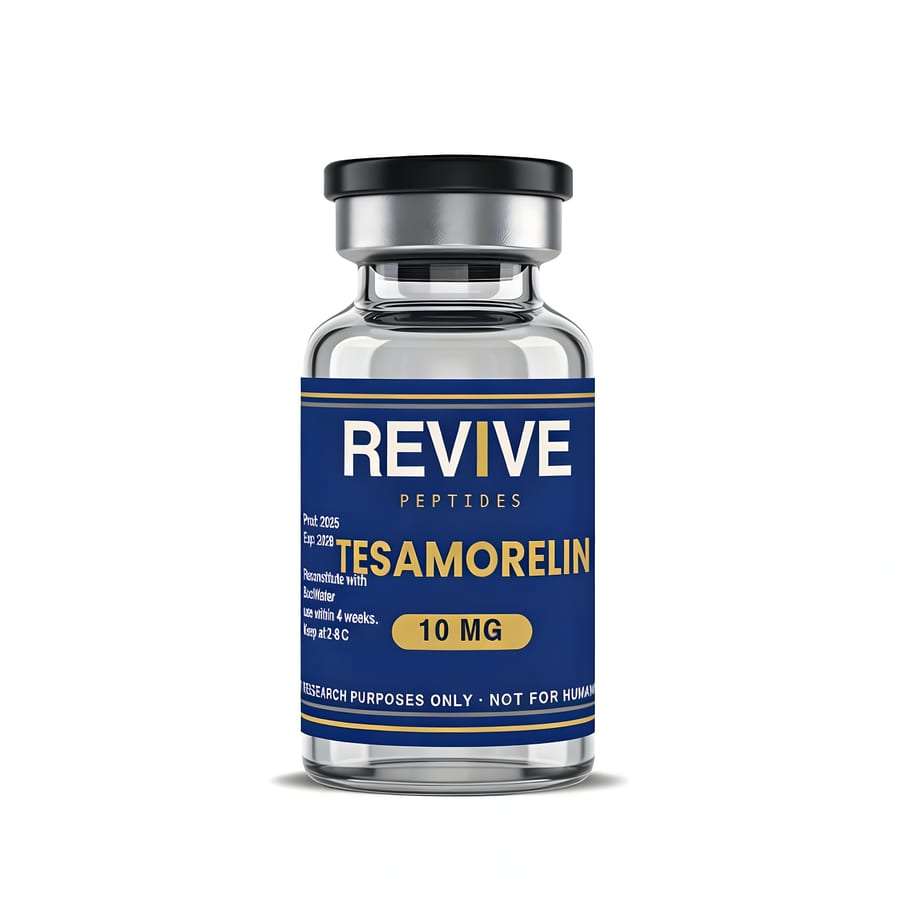
REVIVE LAB UAE supplies tesamorelin in two lyophilised vial formats: 5mg and 10mg. Both are produced under controlled manufacturing conditions and ship with a certificate of analysis generated by an independent third-party analytical laboratory. The CoA covers purity by reverse-phase HPLC, identity confirmation by mass spectrometry, and sterility and endotoxin parameters. Every batch that REVIVE LAB UAE dispatches has a CoA on file, and a digital copy is sent to the ordering contact on dispatch — not included as an afterthought, but as a standard part of the order record.
Research teams constructing their own protocols use those published trial parameters as a reference framework for contextualising their experimental design. The 5mg vial format suits shorter-duration research windows, dose-titration designs, or protocols that require fresh reconstitution at each timepoint. The 10mg format is preferred by labs running extended longitudinal models where minimising reconstitution frequency is important for consistency of preparation and reduction of per-vial wastage.
Vial Format Comparison for Research Planning
| Format | Best-Fit Research Model | Storage Note |
|---|---|---|
| 5mg lyophilised vial | Short-window studies; dose-titration designs; minimal wastage per reconstitution event | Lyophilised: -20°C long-term; reconstituted: 2–8°C, per lab SOP |
| 10mg lyophilised vial | Multi-week longitudinal protocols; lower reconstitution frequency; higher throughput labs | Lyophilised: -20°C long-term; reconstituted: 2–8°C, minimise freeze-thaw cycles |
Cold-chain integrity from production to delivery is non-negotiable for lyophilised peptides. REVIVE LAB UAE ships all tesamorelin orders with appropriate cold packs and insulated packaging that maintains the required temperature range through same-day Dubai delivery and overnight UAE-wide shipments. For labs in Palm Jumeirah, JBR, or Dubai Marina that have experienced degradation issues with international peptide shipments — where cold-chain control across multiple carrier handoffs is unreliable — the difference between a local same-day cold-chain dispatch and a week-long international freight journey is not academic.
Reconstitution should follow each lab's validated SOP for lyophilised peptides. REVIVE LAB UAE provides the peptide; the receiving research team is responsible for reconstitution protocol, working concentration determination, and sterile technique — all of which are within the standard competence of any organised research lab.
Monitoring Stack for GH-Axis Carpal Tunnel Research Protocols
A well-designed tesamorelin research protocol that includes carpal tunnel endpoints requires a monitoring stack that extends beyond standard metabolic biomarkers. The following is an opinionated, specific list of what UAE-based research teams running such protocols should build into their baseline and follow-up assessment schedules — organised by measurement domain.
Biomarker Monitoring
- IGF-1 serum level — the primary downstream indicator of tesamorelin's GH-stimulating effect; should be measured at baseline, at the midpoint of any sustained protocol, and at washout. The Stanley et al. 2019 Lancet HIV long-term data provide a published reference range for what sustained tesamorelin use produces in IGF-1 trajectory terms.
- Fasting glucose and fasting insulin — GH has well-characterised counter-regulatory effects on insulin sensitivity; these are standard co-monitoring parameters in the Falutz and Stanley trial series and should be included in any tesamorelin protocol monitoring plan.
- HOMA-IR — a derived insulin resistance index calculated from fasting glucose and insulin; useful for characterising the metabolic context of any connective tissue observations.
Imaging and Electrophysiology
- Wrist ultrasound — median nerve CSA — high-resolution ultrasound measurement of median nerve cross-sectional area at the carpal tunnel inlet; non-invasive, repeatable, and directly comparable to published acromegaly and CTS literature. Private diagnostic centres in Dubai's Business Bay and DIFC corridor can provide this with acceptable inter-operator standardisation.
- Nerve conduction velocity (NCV) study — median sensory and motor latencies across the wrist; electrophysiological confirmation of any functional changes suggested by anatomical measurements. Abu Dhabi's academic medical facilities offer NCV with research-grade protocols; several private neurology centres in Jumeirah and Umm Suqeim also operate electrophysiology suites.
- Body composition — DEXA or MRI — visceral adipose tissue quantification connects carpal-tunnel sub-studies back to the primary literature and provides a systemic metabolic anchor. DEXA is available at multiple private health assessment centres across Dubai including in the Marina and Jumeirah Beach Residence areas.
Functional Assessment
- Grip strength dynamometry — a low-tech, high-reproducibility proxy for neuromuscular function at the wrist; useful as a complementary endpoint when imaging or electrophysiology access creates scheduling constraints. Grip dynamometry requires no specialist equipment beyond a calibrated dynamometer and a standardised measurement protocol.
- Pinch strength — lateral and tip pinch measured by pinch gauge; sensitive to early median nerve impairment at thenar muscle function and complements grip strength data.
- Standardised symptom inventory — questionnaire instruments validated in CTS research contexts provide a subjective functional endpoint that pairs with objective anatomical and electrophysiological measures. Research teams should select an instrument at baseline and use it consistently across all timepoints.
Sourcing Tesamorelin in the UAE: Logistics, Delivery, and Pre-Order Lab Checklist
Procurement is reliably the most disruptive bottleneck in UAE peptide research programmes. International shipping of lyophilised peptides into the UAE involves customs clearance uncertainty, cold-chain degradation risk across multiple freight handoffs, lead times of seven to fourteen days that play havoc with protocol scheduling, and occasional complete shipment loss. These are not edge cases — they are routine experiences for labs that have relied on international suppliers.
REVIVE LAB UAE eliminates that bottleneck entirely for teams ordering tesamorelin within the UAE. Current logistics for tesamorelin orders:
- Same-day Dubai dispatch — orders placed before 4 PM UAE time on any business day are dispatched the same day. Coverage includes all Dubai zones: Downtown, Business Bay, DIFC, JBR, Marina, Palm Jumeirah, Deira, Bur Dubai, Al Quoz, and surrounding areas.
- 24-hour UAE-wide delivery — Abu Dhabi, Sharjah, Ajman, Ras Al Khaimah, and Fujairah all receive next-morning delivery on orders placed before cut-off. For Sharjah-based labs in particular, turnaround is typically faster than the nominal 24-hour window.
- Discreet, cold-chain packaging — all tesamorelin orders ship in plain outer packaging with no product name or REVIVE LAB UAE branding visible externally. Cold packs are included as standard; no special request is required. The inner packaging maintains integrity through delivery in Dubai summer ambient temperatures.
- Cash on delivery (COD) — available across Dubai and most UAE emirates. Research labs with procurement constraints that prevent upfront payment can order on COD without penalty or minimum order threshold.
- USDT TRC20 via Binance Pay — a 5% pre-pay discount applies automatically when settling before dispatch. For labs that run regular procurement cycles, the pre-pay discount represents meaningful cost savings across annual volume.
- Certificate of Analysis with every batch — digital CoA sent to the order contact email on dispatch; physical copy included with shipment. CoA covers HPLC purity, MS identity, and sterility/endotoxin data from a third-party lab.
Research teams based in Abu Dhabi running extended tesamorelin protocols should consider ordering in the 10mg vial format to reduce reconstitution frequency and minimise the number of procurement cycles required across a protocol window. Labs in Sharjah or Ajman that need to coordinate delivery with specific working days should note that cut-off times are UAE-standard and orders placed with same-day intent before 4 PM arrive the same evening within Dubai or following morning in northern emirates.
Pre-Order Lab Checklist for Tesamorelin Research
- Dedicated 2–8°C refrigeration confirmed and segregated from biological samples
- Validated SOP for lyophilised peptide reconstitution in place and accessible to all relevant staff
- Baseline biomarker draw (IGF-1, fasting glucose, fasting insulin) scheduled before first research use
- Wrist ultrasound or NCV access confirmed and pre-booked if carpal-tunnel endpoints are included in the protocol
- Certificate of Analysis filed against lot number in lab inventory system on receipt
- Research-use-only documentation in place per institutional SOP
- Washout timepoint and post-washout assessment scheduled at the time of protocol design, not as an afterthought
FAQ
Can I get tesamorelin with same-day delivery in Dubai?
Yes. REVIVE LAB UAE dispatches tesamorelin orders placed before 4 PM UAE time on the same business day, with coverage across all major Dubai zones including JBR, Marina, Business Bay, Downtown, Palm Jumeirah, and DIFC. Abu Dhabi and Sharjah orders typically arrive the following morning. All shipments use discreet outer packaging — no product name or supplier branding externally — with cold packs included as standard. Tesamorelin same-day delivery in Dubai is a standard REVIVE LAB UAE service, not a special arrangement.
What vial sizes of tesamorelin does REVIVE LAB UAE stock?
REVIVE LAB UAE maintains in-stock tesamorelin in 5mg and 10mg lyophilised vials. Both are supplied for research-use only and ship with a certificate of analysis from an independent third-party analytical laboratory covering HPLC purity, MS identity, and sterility and endotoxin parameters. The 5mg format suits shorter-duration or dose-titration research designs; the 10mg format is preferred by labs running multi-week longitudinal protocols. Both formats are available for cash on delivery or USDT TRC20 prepayment across UAE.
Is cash on delivery available for tesamorelin orders in Dubai?
Yes. Cash on delivery is available for tesamorelin orders across Dubai and most UAE emirates from REVIVE LAB UAE. No upfront payment or advance bank transfer is required for COD orders. Alternatively, USDT TRC20 via Binance Pay is accepted with a 5% pre-pay discount applied automatically at checkout — a meaningful saving for labs that order regularly or in volume. Both payment paths use the same discreet cold-chain packaging and same-day Dubai dispatch timeline.
- Falutz J, et al. Metabolic effects of a growth hormone-releasing factor in patients with HIV. N Engl J Med. 2007;357(23):2359–2370.
- Falutz J, et al. Effects of tesamorelin, a growth hormone-releasing factor analog, in HIV-infected patients with excess abdominal fat: a pooled analysis of two multicentre, double-blind placebo-controlled Phase 3 trials with safety extension data. N Engl J Med. 2010;362(7):597–609.
- Stanley TL, et al. Effect of tesamorelin on visceral fat and liver fat in HIV-infected patients with abdominal fat accumulation: a randomized clinical trial. JAMA. 2014;312(4):380–389.
- Stanley TL, et al. Long-term effects of tesamorelin on visceral adipose tissue and liver fat in HIV-infected patients. Lancet HIV. 2019;6(12):e821–e830.
5mg & 10mg vials in stock now. Same-day delivery Dubai. Next-day Abu Dhabi & Sharjah.
Cash on delivery available. Discreet cold-chain packaging. CoA on every batch.
Buy Tesamorelin UAE — Same-Day Dubai Dispatch from REVIVE LAB UAE