Tesamorelin Couples Protocol — Husband & Wife Research in Dubai
Why a Matched-Pair Research Design Changes the Data Quality
There is a methodologically serious reason why dual-subject parallel protocols have become increasingly common among independent researchers in the UAE. When two subjects share an environment — the same kitchen, the same ambient temperatures (and Dubai's summer ambient temperatures are extreme, sustained above 40°C across June through September), the same sleep schedule, stress profile, and exercise access — you eliminate a category of confounding variables that typically makes independent-subjects research frustrating to interpret. Matched lifestyle produces more comparable observations than any statistical adjustment can replicate after the fact.
The compound that comes up most consistently in these paired protocols — across researchers we supply in Business Bay, JBR, the Marina, and out to Abu Dhabi and Sharjah — is tesamorelin. The reasons are not arbitrary. Tesamorelin is a stabilised synthetic analogue of endogenous growth hormone-releasing hormone (GHRH). It does not deliver growth hormone directly. It acts upstream, stimulating the pituitary to release GH in a physiologically pulsatile pattern. The downstream effect studied most rigorously in the published literature is a significant reduction in visceral adipose tissue (VAT) — the metabolically active intra-abdominal fat depot that tracks closely with cardiometabolic risk markers and that accumulates through mechanisms broadly shared across biological sexes.
That last point matters. Visceral fat accumulation is not a sex-specific phenomenon. It builds in male and female subjects through similar biological pathways: declining GHRH signalling amplitude with age, cortisol elevation, caloric surplus, disrupted sleep quality, and sedentary patterns — all of which describe the default lifestyle of a high-pressure professional working in Dubai's Business Bay or commuting across the DXB corridor. A research design that places two subjects from the same household on a matched GHRH analog protocol and observes parallel outcomes is, at minimum, a scientifically coherent question with real data value.
This article sets out how researchers in the UAE are structuring that work: vial formats, research-context dosing ranges drawn directly from the published literature, procurement logistics through REVIVE LAB UAE, cold chain considerations specific to the UAE climate, and the practical measurement framework for a 10-to-12-week dual-subject research window.
What the Published Literature Actually Says About Tesamorelin
Before building any protocol, researchers should be grounded in peer-reviewed data rather than forum consensus. The clinical evidence base for tesamorelin is unusually strong for a GHRH analog compound class, primarily because it was studied rigorously in HIV-associated lipodystrophy populations where visceral adiposity is severe, measurable, and clinically meaningful. Four publications form the core of what we know.
Falutz et al. (2007, NEJM) established the foundation: a randomised, double-blind, placebo-controlled trial demonstrating significant reduction in visceral adipose tissue in subjects receiving the GHRH analog versus placebo. This was not a surrogate endpoint study — it used imaging-based VAT quantification. The Falutz et al. (2010, NEJM) continuation trial followed subjects through extended administration and documented a critical finding: the VAT reduction effect was sustained with continued administration and showed partial reversal upon discontinuation. This reversal signal is methodologically important for any researcher designing a protocol with a defined endpoint — the data suggest that VAT effects are compound-dependent and not simply redistributed by the intervention.
Stanley et al. The long-duration data from Stanley et al. (2019, Lancet HIV) — tracking outcomes over 52 weeks — provided the most sustained evidence that continued GHRH analog administration produces durable VAT reduction without progressive adverse signal accumulation over time.
| Study | Journal / Year | Core Finding | Research Duration |
|---|---|---|---|
| Falutz et al. | NEJM, 2007 | Significant VAT reduction vs placebo; GHRH analog mechanism confirmed in RCT | 26 weeks |
| Falutz et al. | NEJM, 2010 | Effect sustained in continuation arm; partial reversal on discontinuation | 52 weeks (continuation) |
| Stanley et al. | JAMA, 2014 | VAT reduction plus lipid marker improvements; VAT:SAT ratio shift | 26 weeks |
| Stanley et al. | Lancet HIV, 2019 | Long-term sustained efficacy; no progressive adverse signal accumulation | 52 weeks |
What these studies document consistently is that tesamorelin operates through endogenous pituitary stimulation rather than exogenous hormone delivery. GH pulsatility is preserved and enhanced rather than suppressed. IGF-1 rises modestly. The VAT reduction appears mechanistically distinct from simple exogenous GH dose-response curves, which has meaningful implications for how researchers compare GHRH analog protocols against other compound classes. All four publications are accessible via PubMed and are required reading before designing any serious protocol.
Protocol Architecture: Structuring Parallel Research Across Two Subjects
The central design decision in a dual-subject protocol is whether to treat both subjects identically or to vary a parameter between them. The answer depends on the research question being asked. If the goal is to examine GHRH analog response across biological sex under matched environmental conditions, identical protocol parameters with observed divergent outcomes is the correct design — you want the intervention held constant and the biological variable doing the explanatory work. If the goal is dose-response characterisation, you assign different administration ranges to each subject and compare outcomes, using the matched environment as your control for lifestyle confounders.
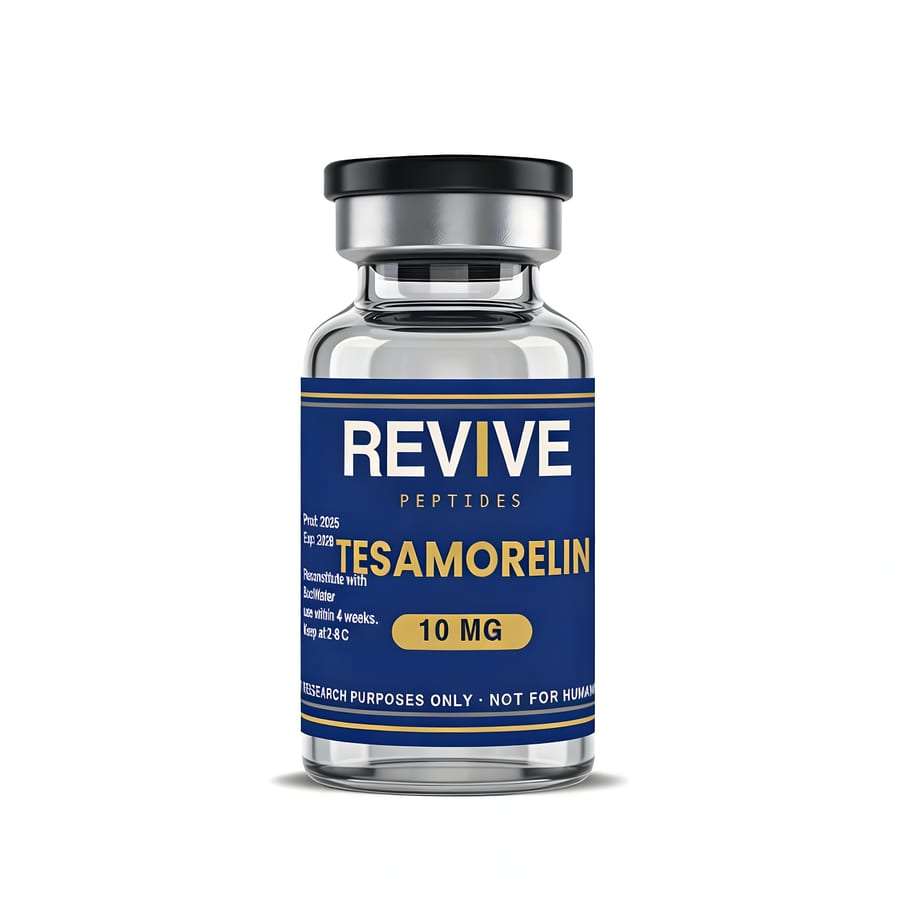
In terms of research-context dosing ranges referenced in the published literature, the trials described above studied tesamorelin at defined daily doses. REVIVE LAB UAE supplies tesamorelin in 5mg and 10mg lyophilised vials. The 10mg format is materially more efficient for dual-subject research protocols, reducing the number of reconstitution events required across a 10-to-12-week research window.
Vial Format Selection for a Dual-Subject Research Window
| Format | Vial Content | Ideal Use Case | Reorder Cadence (2 Subjects) |
|---|---|---|---|
| Tesamorelin 5mg | 5mg lyophilised | Short pilot runs, dose-variance sub-studies, single-subject incremental design | Higher frequency — suited to 4-week protocols or dose-titration phases |
| Tesamorelin 10mg | 10mg lyophilised | Extended parallel protocols, 8–12 week dual-subject windows, reduced handling overhead | Lower frequency — operationally cleaner for sustained multi-week research |
For a 12-week dual-subject protocol running at research-referenced GHRH analog ranges, the 10mg vial format minimises reconstitution frequency and reduces the number of vial-opening events — which matters in Dubai's climate. High ambient humidity and elevated temperatures outside of climate-controlled refrigeration accelerate reconstituted peptide degradation. Fewer reconstitution events means fewer opportunities for introduction of thermal stress during handling. Researchers operating from apartments in JBR or villas on the Palm should factor this into their storage and reconstitution workflow from protocol day one.
Same-day delivery across Dubai. 24h delivery to Abu Dhabi, Sharjah, and the wider UAE.
Discreet outer packaging standard. Cash on delivery available.
Buy Tesamorelin UAE — Same-Day Dubai Dispatch from REVIVE LAB UAE
The Biological Sex Variable: What Makes a Couples Protocol Scientifically Interesting
One of the genuinely underexplored dimensions of a husband-and-wife parallel research design with a GHRH analog is the sex-differentiated biology of the GH axis itself. The published tesamorelin trials were not designed to detect or report sex-stratified response differences — their primary endpoint was VAT reduction in a specific clinical population — but GH axis physiology is known to differ by biological sex in ways that make comparative observation scientifically meaningful.
Female subjects typically exhibit higher baseline GH pulsatility frequency and more frequent GH secretory episodes than age-matched male subjects. Male subjects tend to show more pronounced GH amplitude responses to acute GHRH stimulation challenges. Whether this translates into differential response to sustained daily tesamorelin administration — in terms of VAT reduction rate, IGF-1 elevation magnitude, or subjective markers such as sleep quality and lean composition perception — remains genuinely unclear in the published literature. A matched-pair protocol running in a shared residential environment in Dubai, Abu Dhabi, or Sharjah is as close to a naturalistic controlled research design as most independent researchers will have access to.
Researchers interested in observing this dimension should pre-specify which outcome variables they intend to track across both subjects before the protocol begins. Waist circumference (taken consistently: same time of day, same fasted state, same tape position) is the most accessible VAT proxy available without clinical imaging. Fasting insulin, if measurable, tracks VAT-related insulin resistance in ways that waist circumference alone does not capture. IGF-1, if accessible, reflects GH axis activation directly. Subjective daily scores for energy, morning alertness, and sleep quality — collected via a simple shared spreadsheet — produce surprisingly interpretable data over a 12-week window if the collection methodology is consistent from day one.
The point is not to publish results. The point is to collect structured observations that can be compared between two subjects who share environmental variables, and to do so with enough methodological discipline that the comparison is meaningful rather than anecdotal. A dual-subject couples protocol in Dubai, run rigorously, produces better-quality observational data than two independent researchers running the same protocol in different cities with uncontrolled confounders.
Cold Chain and Storage in the UAE: The Variables Nobody Writes About
Dubai in late June 2026 is not a temperate research environment. Outdoor temperatures have been sustained above 42°C throughout the month across the Marina, Business Bay, and the DXB-to-Abu Dhabi corridor. This creates a cold chain challenge for lyophilised research peptides that simply does not apply in European or North American research settings where most published protocols were developed.
Lyophilised (freeze-dried) tesamorelin vials are stable refrigerated prior to reconstitution. Once reconstituted in bacteriostatic water, refrigerated storage is standard practice in research settings, with timely use being the operational norm. The critical vulnerability in a UAE research context is not the long-term storage — a standard household refrigerator manages that adequately — but the transit period from supplier to researcher. A peptide compound shipped internationally from Europe or North America to the UAE spends multiple days in transit, including time in customs facilities where temperature control is not guaranteed. This is a material cold-chain risk that many researchers sourcing internationally underestimate until they receive a compromised vial.
REVIVE LAB UAE ships from within the UAE. All tesamorelin research compound orders are dispatched with insulated cold-pack packaging appropriate for UAE summer temperatures. For same-day delivery across Dubai — JBR, Marina, Business Bay, Palm Jumeirah, Downtown — the total cold chain transit time is measured in hours, not days. For 24-hour delivery to Abu Dhabi, Sharjah, and the Northern Emirates, the insulated packaging maintains appropriate temperatures throughout. This is not a theoretical advantage: it is the difference between a research compound arriving in optimal condition and arriving in a state that makes protocol data unreliable.
For dual-subject protocols where both subjects are drawing from the same vial batch, batch integrity matters more than in a single-subject design. A degraded vial affects two data streams, not one. Sourcing from a UAE-local supplier with demonstrated cold-chain capability is a risk management decision as much as a convenience decision.
Procurement Logistics: Why UAE-Local Sourcing Is Not Optional for Serious Research
Researchers in Dubai and Abu Dhabi who have previously sourced peptides internationally will recognise the operational friction involved: unpredictable customs clearance windows, import documentation requirements that vary by shipment value and product classification, cold-chain integrity that degrades with every additional transit day, and the fundamental uncertainty of whether a given package will arrive before a protocol's scheduled start date. For a 12-week dual-subject protocol where both subjects are synchronised on the same start date, supply chain uncertainty is not an inconvenience — it is a protocol design risk.
REVIVE LAB UAE holds tesamorelin inventory in-country. When you order tesamorelin from revivelab.ae, the compound dispatches from within the UAE. For researchers across Dubai — Downtown, JBR, Marina, Business Bay, Palm Jumeirah, Jumeirah Beach Residence — same-day delivery on orders placed before 4 PM GST is standard. For Abu Dhabi, Sharjah, Ajman, and the wider Emirates, 24-hour delivery is the norm. There is no customs clearance event. There is no uncertain transit window. The order is placed, confirmed via WhatsApp, and dispatched same day.
Order Experience from REVIVE LAB UAE
- Discreet outer packaging: Every tesamorelin order ships in plain, unmarked external packaging. No company name, no product description, no branding visible on the exterior. This is standard on every single order — not an option to request, a baseline expectation.
- Cold-chain dispatch: Insulated packaging with cold packs calibrated for UAE summer conditions. Particularly important for same-day and next-day deliveries during the June-to-September heat window.
- Cash on delivery: Available across Dubai and the UAE for researchers who prefer not to use card payment for research compound orders. Binance Pay (USDT TRC20) is also accepted with a 5% pre-pay discount for researchers preferring that route.
- WhatsApp order management: Order placement, delivery tracking, restock queries, and batch availability checks all handled via WhatsApp — the communication layer that actually functions in the UAE.
- Both vial formats in stock: Tesamorelin 5mg and 10mg vials are held in UAE inventory. Not subject to the out-of-stock windows that affect internationally drop-shipped suppliers.
- Batch consistency: For dual-subject protocols where both subjects are drawing from the same supply, REVIVE LAB UAE can confirm batch details on request, allowing researchers to ensure both subjects are on the same source material throughout the protocol window.
The practical case for buying tesamorelin UAE from a local supplier rather than ordering internationally is not primarily about cost. It is about supply reliability, cold-chain integrity, and operational predictability across a multi-week protocol where supply gaps create unrecoverable research confounders. Once a 12-week dual-subject protocol has begun, a mid-protocol supply interruption affects both data streams simultaneously and compromises the comparative validity of the entire dataset. Sourcing locally through REVIVE LAB UAE eliminates this risk category entirely.
A 12-Week Research Framework for Dual-Subject Protocols
Researchers planning a parallel tesamorelin protocol in the UAE should design their timeline with direct reference to the published trial durations. The strongest data in the literature comes from 26-week and 52-week study windows, but researchers report meaningful measurable change in VAT proxy indicators at the 8-to-12-week mark, which is the practical protocol horizon for most independent research settings in Dubai and Abu Dhabi.
A structured 12-week dual-subject research framework might proceed as follows:
- Weeks 3–6 (Early adaptation phase): Continue daily administration. Some research accounts note transient early adaptation signals consistent with fluid shifts observed in some participants across the published trials. Weekly measurement check-ins. Maintain parallel data columns for both subjects throughout. Do not modify protocol parameters during this phase unless a safety-relevant observation arises.
- Weeks 7–10 (Mid-protocol comparison window): Mid-point assessment. Where divergence between the two subjects' observations is noted, document the magnitude and direction of divergence and formulate a hypothesis. Is the divergence consistent with known sex-differentiated GH axis biology? Is it consistent with differential lifestyle adherence? Note but do not over-interpret at mid-protocol — sample size of two requires epistemic humility.
- Weeks 11–12 (End-protocol measurement and washout): Final measurements taken consistently with baseline methodology. Some researchers prefer an 8-day washout before end-point measurement to separate acute compound effects from true end-state observations. Both subjects complete protocol documentation. Data compilation and comparison.
To plan procurement for a 12-week dual-subject protocol running within the research-referenced GHRH analog range, researchers should calculate their total compound requirement across both subjects for the full 84-day window and order at protocol initiation rather than week by week. This eliminates the supply gap risk entirely and allows REVIVE LAB UAE to confirm batch availability for the full quantity in advance.
UAE-Specific Research Variables That Published Protocols Do Not Address
Running a peptide research protocol in Dubai, Abu Dhabi, or Sharjah involves environmental and lifestyle factors that the published clinical trials — conducted in controlled Western clinical settings — simply did not account for. Researchers designing UAE-based protocols should build these into their documentation framework from the start.
Heat and Indoor Exercise Patterns
Dubai summer heat fundamentally shifts physical activity modality. Researchers in JBR, Marina, Business Bay, and Abu Dhabi's corniche districts are using gym facilities for all structured exercise from June through September. This is operationally advantageous for research consistency: equipment-based indoor exercise produces more reproducible stimulus than outdoor activity whose intensity and duration vary with weather. Document the exercise modality and frequency for both subjects in the protocol log from week one. Both subjects using the same residential gym facility — common in Dubai's residential towers — is itself a matched-variable advantage.
Shared Kitchen and Dietary Correlation
A genuine methodological advantage of the couples protocol in a UAE residential setting is dietary overlap. When both subjects eat from the same household kitchen, baseline caloric intake and macronutrient composition are naturally more correlated than in any independent-subjects research design. This removes a major confounding category without requiring formal dietary control. Researchers should still maintain a brief daily food log for both subjects — volume and composition notes, not calorie counting — but the baseline dietary correlation between household-sharing subjects will be substantially higher than between independent researchers.
Ramadan and Cultural Calendar Considerations
Researchers planning future protocol cycles beyond June 2026 should account for Ramadan timing in their design. Daily intermittent fasting patterns during Ramadan create an interaction variable with GHRH analog protocols that may be scientifically interesting in its own right — fasted-state GH pulsatility is known to be elevated, which may modulate tesamorelin's pituitary stimulation effect in ways that warrant separate documentation and comparison to non-Ramadan protocol cycles.
5mg and 10mg vials. Discreet outer packaging. 24h delivery UAE-wide.
Cash on delivery available. WhatsApp order management.
REVIVE LAB UAE — peptides UAE researchers trust for in-country dispatch.
Order Tesamorelin UAE Now — REVIVE LAB UAE
FAQ
Can I order tesamorelin with same-day delivery in Dubai?
Yes. REVIVE LAB UAE dispatches tesamorelin 5mg and 10mg vials with same-day delivery across Dubai — covering JBR, Marina, Business Bay, Downtown, Palm Jumeirah, and Jumeirah Beach areas — on orders placed before 4 PM GST. 24-hour delivery is standard to Abu Dhabi, Sharjah, Ajman, and across the wider UAE. Tesamorelin same-day delivery is one of the core operational reasons researchers in Dubai source locally rather than ordering internationally. No customs clearance, no uncertain transit windows — just same-day dispatch from UAE inventory.
Does REVIVE LAB UAE offer discreet packaging for tesamorelin orders?
Yes. All tesamorelin research compound orders from REVIVE LAB UAE ship in plain, unmarked outer packaging. No company name, no product description, no branding, and no identifying information appears on the exterior of any shipment. Tesamorelin discreet packaging UAE is a baseline standard at REVIVE LAB UAE, applied automatically to every order regardless of size or vial format. No special request is required. This applies equally to single-vial researchers and those ordering full protocol quantities for dual-subject research windows.
What vial sizes of tesamorelin does REVIVE LAB UAE stock in the UAE?
REVIVE LAB UAE currently holds tesamorelin in stock UAE across two vial formats: 5mg and 10mg lyophilised vials. Both are held in-country for immediate dispatch with no import delay. The 5mg vial is suited to shorter pilot protocols, dose-variance sub-studies, or single-subject administration. The 10mg vial is the preferred format for dual-subject or extended research protocols, offering lower reconstitution frequency and better per-milligram operational efficiency across 8-to-12-week research windows. Availability can be confirmed via WhatsApp before ordering.
- Falutz J, et al. Metabolic effects of a growth hormone-releasing factor in patients with HIV. N Engl J Med. 2007;357:2359–2370.
- Falutz J, Potvin D, Mamputu JC, et al. Effects of tesamorelin, a growth hormone-releasing factor, in HIV-infected patients with abdominal fat accumulation: a randomized placebo-controlled trial with a safety extension. N Engl J Med. 2010;362:1650–1660.
- Stanley TL, et al. Tesamorelin and visceral fat reduction: findings on metabolic outcomes. JAMA. 2014.
- Stanley TL, et al. Long-term tesamorelin efficacy and safety outcomes. Lancet HIV. 2019.
5mg & 10mg vials in stock. Same-day Dubai delivery. 24h UAE-wide dispatch.
Discreet packaging. Cash on delivery. WhatsApp support.
REVIVE LAB UAE — the peptides UAE and peptides Dubai research community's trusted in-country supplier.
Buy Tesamorelin UAE — Order from REVIVE LAB UAE Now