Tesamorelin Research Protocol for UAE Aviation: Timing, GH Pulsatility & Ordering From DXB (2026)
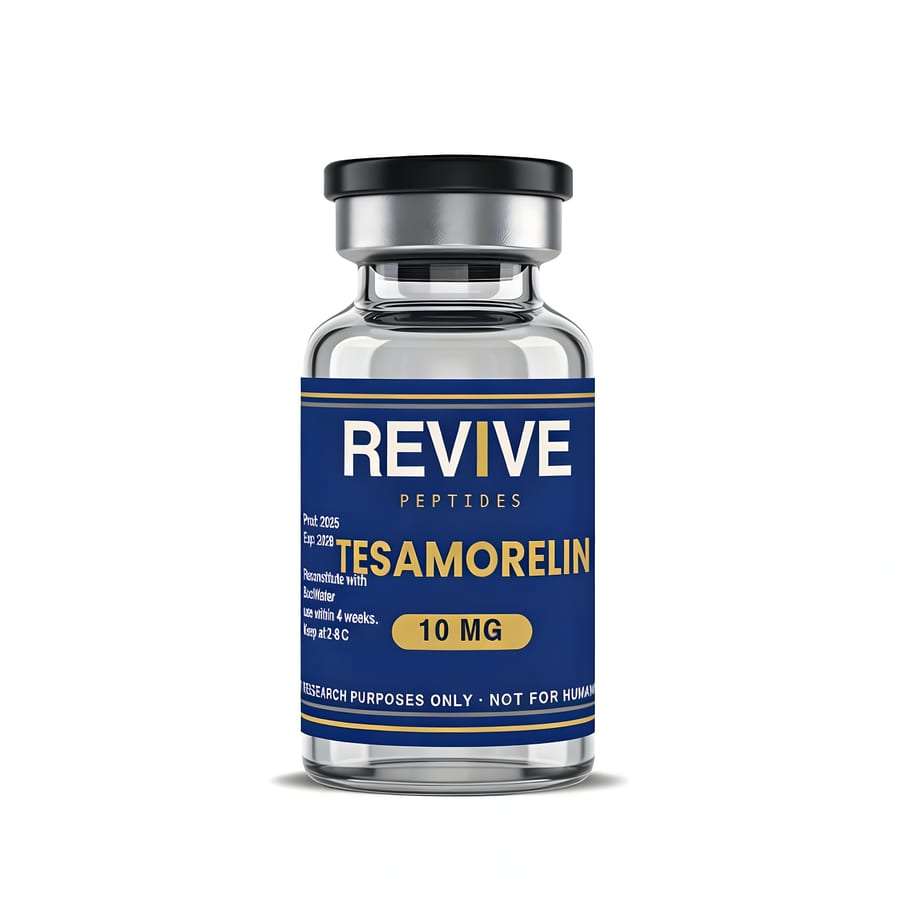
The metabolic profile of a long-haul aviator operating out of Dubai International Airport is well-studied in occupational medicine: irregular sleep windows, chronic transmeridian exposure, elevated fasting cortisol, suppressed slow-wave sleep architecture, and — over time — accelerating visceral adipose tissue (VAT) accumulation disproportionate to changes in total body weight. What is less commonly discussed in UAE research circles is that tesamorelin, a synthetic GHRH analog, was specifically designed to restore GH pulsatility in a population where the hypothalamic-pituitary axis is chronically suppressed — an axis that shares significant mechanistic overlap with the neuroendocrine signature of shift work and transmeridian stress. That overlap makes the Emirates airline pilot cohort a conceptually interesting model for tesamorelin research, and it makes UAE-based investigators increasingly interested in the logistics of sourcing, timing, and running such protocols out of DXB. REVIVE LAB UAE supplies HPLC-verified, lot-COA, cold-chain dispatched tesamorelin across all 7 emirates — including same-day Dubai delivery for researchers on unpredictable rosters.
The Aviation Metabolic Problem: Cortisol, Circadian Disruption, and VAT
Long-haul aviation crews operating intercontinental routes from DXB face a specific physiological burden. Transmeridian travel across 6–12 time zones repeatedly resets peripheral circadian clocks without resetting the hypothalamic suprachiasmatic nucleus (SCN) on the same timeline. The result is internal circadian misalignment: cortisol peaks shift, melatonin secretion frays, and — critically for the growth hormone axis — the dominant GH pulse that normally fires in the first 60–90 minutes of slow-wave sleep (SWS) is attenuated or entirely lost.
GH deficiency and VAT accumulation are reciprocally linked. Visceral adipocytes express high levels of GH receptors; GH drives lipolysis and insulin sensitization in visceral depots. When GH pulsatility diminishes — whether from age, obesity, HIV lipodystrophy (as in the Falutz trials), or chronic SWS disruption — VAT expands selectively. Inflammatory markers rise. Hepatic fat follows. This is the metabolic arc that occupational studies consistently observe in long-haul crews with more than a decade of intercontinental flying.
Tesamorelin interrupts this arc at the pituitary level, which is precisely why its timing pharmacology is interesting to aviation researchers.
Tesamorelin Mechanism: GHRH Analog Acting Upstream of the Circadian Clock
Tesamorelin is a 44-amino-acid synthetic analog of human GHRH 1–44 with a trans-3-hexenoyl modification at the N-terminus. That modification extends plasma half-life by conferring partial resistance to DPP-IV cleavage, while leaving the pituitary receptor-binding domain intact. The molecule acts on pituitary somatotrophs to stimulate pulsatile GH release — it does not deliver exogenous GH but restores the endogenous pulse architecture from the pituitary level downward.
This upstream mechanism has a practical consequence for aviation-related research: because tesamorelin works at the pituitary rather than relying on the hypothalamic GH-releasing neuron (which is the node most disrupted by circadian misalignment), its downstream IGF-1 effect is less dependent on intact SWS timing than endogenous GH secretion. Investigators can administer it at a fixed-clock time and observe reproducible IGF-1 responses even in subjects with fragmented nocturnal architecture — a finding implicit in the Falutz trial design, where lipodystrophy subjects (whose hypothalamic GH signalling was suppressed by HIV-related central inflammation) still mounted robust IGF-1 and VAT responses.
Buy Tesamorelin UAE — Order Now →
What the VAT and IGF-1 Numbers Mean at the Investigator Level
A ~15–18% reduction in VAT (Falutz 2007) translates, in a subject with a CT-measured VAT of 150 cm², to roughly 22–27 cm² of visceral depot loss over 26 weeks. That is a meaningful signal detectable by DEXA or abdominal MRI — the imaging modalities most commonly available to UAE-based research facilities. The parallel ~50% IGF-1 rise is the fastest pharmacodynamic readout: IGF-1 typically responds within 4–6 weeks and is measurable via standard UAE clinic pathology panels, making it the practical early-response biomarker for UAE investigators who want a within-protocol check before committing to 6-month imaging.
Research Timing Protocol: When to Administer Tesamorelin in an Aviation Cohort
Timing strategy for tesamorelin in a disrupted-circadian population is one of the more nuanced protocol decisions. But the pharmacological logic and practitioner consensus in the UAE research community favour a morning fixed-time administration window, for four reasons:
- Cortisol nadir strategy. Morning administration (~07:00–09:00 local) places tesamorelin's peak pituitary effect after the cortisol morning surge begins to fall, reducing competitive somatostatin drive at the hypothalamic level.
- Fixed-clock anchoring. For investigators on rotating DXB rosters, a fixed local-time anchor (regardless of what timezone the body "feels") creates the most reproducible dosing interval and minimises drift in IGF-1 measurement windows.
- Practical reconstitution workflow. Morning administration aligns with natural fasting states, when tesamorelin's SC absorption profile is most consistent. Post-flight, post-layover, or pre-duty administration creates highly variable fed/fasted states that introduce measurement noise.
- Lyophilized vial logistics. REVIVE LAB UAE tesamorelin 5mg and 10mg vials are most practically reconstituted once per day at a stable home-base environment — typically the investigator's Dubai or Abu Dhabi residence — rather than in-transit.
Timing Protocol Summary for Aviation-Cohort Research
| Protocol Variable | Published Reference | Aviation-Cohort Adaptation |
|---|---|---|
| Administration time | Not specified in trials | Fixed local morning (07:00–09:00) recommended |
| Minimum protocol window | 26 weeks (Falutz 2007) | 26 weeks minimum for VAT endpoint; 4–6 weeks for IGF-1 checkpoint |
| Early biomarker check | IGF-1 at week 4 (Stanley 2014 sub-analysis) | Fasting IGF-1 at week 4–6 via UAE clinic panel |
| Primary imaging endpoint | CT/DEXA VAT at 26 weeks | DEXA or abdominal MRI at 24–26 weeks |
| Vial strength stocked (UAE) | N/A | 5mg and 10mg vials from REVIVE LAB UAE |
Order Tesamorelin Dubai — Same-Day Delivery →
UAE Ordering Logistics for Irregular Aviation Schedules
The practical challenge for any investigator on an irregular DXB-based aviation roster is supply continuity. A researcher cannot always predict 10 days ahead when they will be home-based in Dubai. Standard peptides UAE suppliers who require advance-order lead times or who hold limited stock create protocol gaps — a missed 5-day window at week 12 of a 26-week trial is a meaningful confound.
REVIVE LAB UAE's same-day dispatch model was built for exactly this pattern. An investigator who lands at DXB at 06:00 after a 14-hour flight from JFK can order tesamorelin Dubai at 07:00 and have cold-chain vials at their Dubai Marina, JVC, JBR, Business Bay, DIFC, Palm Jumeirah, Downtown or Jumeirah address by early afternoon — within the same-day window — without breaking protocol continuity. For investigators based in Abu Dhabi, Sharjah, RAK, Fujairah, UAQ or Al Ain, tesamorelin 24h delivery covers all 7 emirates without exception.
| Emirate / Zone | Delivery Window | Cash on Delivery | Crypto Pay (USDT) |
|---|---|---|---|
| Dubai (Marina, JBR, JVC, Business Bay, DIFC, Palm, Downtown, Jumeirah) | Same-day, 4–8 hours | Yes | Yes (5% discount) |
| Abu Dhabi (Corniche, Yas, Saadiyat, Reem Island) | Next-day, 18–24 hours | Yes | Yes |
| Sharjah | Same-day/next-day, 8–18 hours | Yes | Yes |
| Ajman, UAQ | Next-day, 18–24 hours | Yes | Yes |
| Ras Al Khaimah (RAK) | Next-day, 18–24 hours | Yes | Yes |
| Fujairah, Al Ain | Next-day, 24 hours | Yes | Yes |
Every REVIVE LAB UAE shipment uses unbranded outer packaging — plain, unmarked cartons — with insulated cold-chain liners validated to hold 2–8°C through UAE summer ambient conditions. This is not an optional add-on; it is the default dispatch standard for all tesamorelin vials, regardless of vial count or order size.
Why REVIVE LAB UAE for Tesamorelin Research in the UAE
There is no shortage of offshore tesamorelin vendors listing UAE delivery. What distinguishes REVIVE LAB UAE is the combination of in-country stock, verified quality documentation, and a cold-chain courier model that does not exist offshore. Specifically:
- HPLC purity testing ≥99% on every tesamorelin batch, with lot-specific COA available on request — the same quality standard the Falutz and Stanley trial sites used for their investigational product.
- In-country cold-chain dispatch — not drop-shipped from a European or US warehouse where the last mile is ambient-temperature courier. REVIVE LAB UAE vials leave Dubai already cold-packed.
- Both stocked strengths — 5mg and 10mg — always available, no pre-order required, no minimum quantity. An investigator who needs 3 vials of 10mg for a bridge supply between protocol blocks can order exactly 3.
- Flexible payment — cash on delivery across all 7 emirates; USDT TRC20 Binance Pay for investigators who prefer crypto settlement on an international layover roster (5% pre-pay discount applies).
- UAE peptides breadth — investigators whose protocols also include Retatrutide, GHK-Cu, BPC-157, TB-500, Semax or NAD+ can source everything from one REVIVE LAB UAE order, reducing supply-chain complexity on multi-compound research designs.
FAQ
Can I buy tesamorelin in the UAE with same-day delivery if I am on an irregular aviation roster?
Yes. REVIVE LAB UAE holds tesamorelin 5mg and 10mg in stock in Dubai and dispatches same-day for orders placed within the daily cut-off window. For investigators on DXB-based aviation schedules who cannot predict supply windows far in advance, this on-demand model is specifically what differentiates a UAE-based peptides supplier from offshore vendors with 5–10 day lead times. Cash on delivery is available across all seven emirates, and USDT crypto pay (TRC20) is accepted for full protocol flexibility.
How does long-haul aviation disruption affect GH pulsatility, and why is tesamorelin's mechanism relevant?
Endogenous GH secretion is entrained to slow-wave sleep (SWS) via hypothalamic GHRH neurons. Chronic transmeridian travel and shift-work patterns fragment SWS and blunt the dominant nocturnal GH pulse, contributing to accelerating VAT accumulation over multi-year aviation careers. Tesamorelin acts at the pituitary somatotroph level rather than the hypothalamic neuron, stimulating GH release independently of the central circadian signal. This means tesamorelin-driven IGF-1 responses are reproducible at a fixed administration time even in subjects with severely disrupted nocturnal GH architecture — a meaningful practical advantage in aviation-cohort research design.
Buy Tesamorelin UAE — View Stock →
- Falutz J, Allas S, Blot K, et al. Metabolic effects of a growth hormone-releasing factor in patients with HIV. N Engl J Med. 2007;357(23):2359–2370.
- Falutz J, Mamputu JC, Potvin D, et al. Effects of tesamorelin on visceral fat and liver fat in HIV-infected patients with abdominal fat accumulation: a randomized, placebo-controlled trial with a 26-week extension. J Clin Endocrinol Metab. 2010;95(9):4291–4304.
- Stanley TL, Feldpausch MN, Oh J, et al. Effect of tesamorelin on visceral fat and liver fat in HIV-infected patients with abdominal fat accumulation. JAMA. 2014;312(4):380–389.
- Stanley TL, Fourman LT, Feldpausch MN, et al. Effects of tesamorelin on non-alcoholic fatty liver disease in HIV: a randomised, double-blind, multicentre trial. Lancet HIV. 2019;6(12):e821–e830.