Falutz 2007 NEJM Tesamorelin Trial: VAT −15–18%, IGF-1 +50% — What the Data Really Shows for UAE Researchers
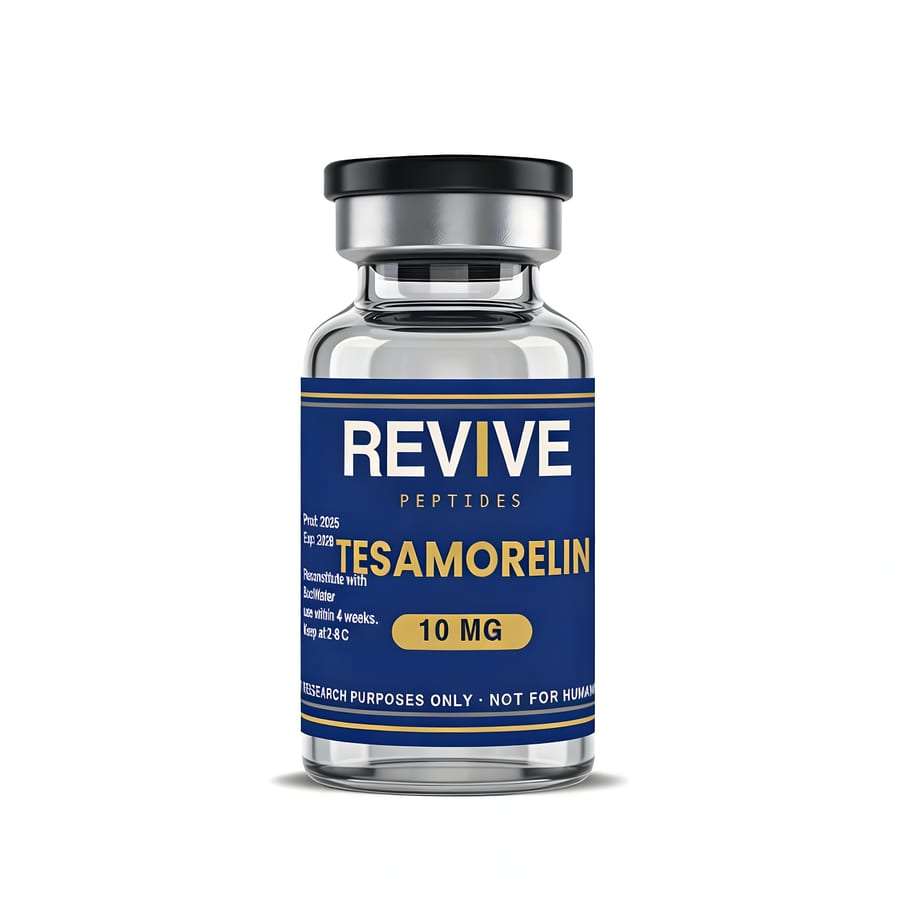
When UAE-based researchers ask which peptide trial actually changed the trajectory of a molecule, tesamorelin's answer is unambiguous: Falutz et al., New England Journal of Medicine, 2007. Most GHRH analogs existed in smaller pilot studies or animal data. Tesamorelin reached a 412-subject, multi-centre, randomized double-blind placebo-controlled design, and it produced numbers clean enough that the FDA approved the compound for HIV-associated lipodystrophy in 2010 under the brand name Egrifta. The trial is not just historically significant — it is the evidentiary baseline for every tesamorelin research protocol running today. If you want to buy tesamorelin UAE and build a serious research context around it, you need to know this data cold. Below is the complete breakdown: design, outcomes, mechanism, and dosing math for REVIVE LAB UAE’s 5 mg and 10 mg vials.
The Falutz 2007 Trial — Design and What Made It Pivotal
The 412-Subject Cohort: Who Was Enrolled
Falutz and colleagues enrolled 412 HIV-infected adults who had been on stable antiretroviral therapy (ART) for at least 12 months and who displayed clinical lipodystrophy — specifically, excess visceral adiposity confirmed by CT cross-sectional area ≥100 cm² at the L4–L5 level. The cohort was multi-centre, spanning North America and Europe. Randomization was 2:1, tesamorelin to placebo. This design detail matters: with 412 subjects randomized at 2:1, the active arm had sufficient statistical power to detect moderate effect sizes in body composition endpoints, which are notoriously noisy. The investigators pre-specified VAT area change from baseline as the primary endpoint — not weight, not BMI, not a patient-reported outcome. CT-measured VAT is an objective, reproducible, clinically meaningful endpoint. That methodological discipline is precisely why the result carried regulatory weight.
Primary Outcomes — VAT −15–18% and IGF-1 +50%
The headline numbers from Falutz 2007 hold up under scrutiny:
- VAT reduction: The tesamorelin arm showed a mean VAT decrease of approximately 15–18% from baseline CT at week 26. The placebo arm showed no significant change, and in some sub-analyses, a slight increase. The between-group difference was statistically significant (p < 0.0001).
- IGF-1 elevation: Serum IGF-1 rose approximately 50% from baseline in the active arm versus near-zero change in placebo. The IGF-1 signal served as a mechanistic confirmation that tesamorelin was engaging the GH axis as intended — not merely redistributing fat through some non-hormonal pathway.
- No significant change in limb fat: Critically, tesamorelin did not worsen the peripheral lipoatrophy that many ART patients also carry — a meaningful safety finding for the research population.
- Lipids and glucose: Triglycerides decreased modestly in the tesamorelin arm. Fasting glucose and insulin showed no statistically significant difference from placebo in the primary analysis.
| VAT area change (CT, L4–L5) | −15 to −18% | No significant change | < 0.0001 |
| IGF-1 change from baseline | ~+50% | ~+2% | < 0.0001 |
| Trunk fat (DXA) | Decreased significantly | No change | < 0.001 |
| Limb fat (DXA) | No significant change | No significant change | NS |
| Triglycerides | Modest decrease | No change | < 0.05 |
| Fasting glucose | No significant change | No significant change | NS |
Order Tesamorelin UAE →
The Falutz 2010 Extension: Durability at 52 Weeks
The 2010 NEJM paper from the same group reported a 26-week extension arm. Subjects who had completed the original 2007 trial on tesamorelin continued treatment for an additional 26 weeks; a subset of placebo-arm completers switched to active treatment. Two critical findings emerged:
- Sustained VAT reduction: Investigators who remained on tesamorelin from weeks 26–52 maintained their VAT reduction. There was no statistically significant rebound in the continuation arm through week 52, indicating the VAT effect was durable rather than transient.
- Washout signal: In subjects who completed week 26 on tesamorelin and then discontinued (observation window within the trial), VAT returned toward baseline, suggesting the effect is pharmacologically driven and requires ongoing exposure. This is mechanistically expected for a GHRH analog with a short half-life — the compound drives pulsatile GH secretion only while present. Once dosing stops, GH pulse amplitude normalizes, and the selective lipolytic pressure on visceral fat wanes.
The extension data established what research teams now treat as an operational parameter: tesamorelin’s VAT effects are real but contingent on continued administration. This shapes protocol design for UAE investigators using tesamorelin in stock UAE — supply continuity matters as much as initiation.
Stanley 2014 and 2019 — The NAFLD Extension
Thomas Stanley and colleagues at Massachusetts General Hospital extended the tesamorelin evidence base into a different pathology: HIV-associated non-alcoholic fatty liver disease (NAFLD). This was a meaningful pivot because NAFLD is increasingly prevalent in ART-treated HIV populations and carries independent cardiovascular and hepatic morbidity.
Stanley 2014 (JAMA): Liver Fat −32%
In the JAMA 2014 trial, Stanley’s team randomized HIV-infected adults with NAFLD confirmed by MR spectroscopy (hepatic fat fraction ≥5%). Tesamorelin 2 mg/day versus placebo for 12 months. The primary endpoint was change in liver fat fraction. Tesamorelin reduced liver fat by approximately 32% relative to placebo — a clinically and statistically significant effect. The VAT reduction signal from Falutz 2007 was replicated in this cohort. IGF-1 again rose approximately 50% in the active arm.
Stanley 2019 (Lancet HIV): 12-Month NAFLD Durability
The 2019 Lancet HIV paper from the same group provided 12-month durability data in the NAFLD population. The liver fat reduction was maintained over the full year of treatment, and a subset of responders showed improvement in markers of liver fibrosis risk (APRI score). The NAFLD data extended tesamorelin’s research relevance beyond lipodystrophy into hepatic metabolic outcomes — a distinct and growing area of investigator interest.
| Trial | Journal | N | Duration | Key Finding |
|---|---|---|---|---|
| Falutz et al. 2007 | N Engl J Med | 412 | 26 weeks | VAT −15–18%, IGF-1 +~50% |
| Falutz et al. 2010 | J Clin Endocrinol Metab | Extension | 26-week extension (52 weeks total) | VAT reduction sustained; discontinuation = partial rebound |
| Stanley et al. 2014 | JAMA | NAFLD cohort | 12 months | Liver fat −32% vs placebo by MR spectroscopy |
| Stanley et al. 2019 | Lancet HIV | NAFLD cohort | 12 months | Liver fat reduction durable; fibrosis markers improved |
Buy Tesamorelin UAE →
Mechanism Deep Dive — GHRH Analog, DPP-IV Resistance, and the IGF-1 Axis
Tesamorelin is a synthetic analog of endogenous growth-hormone-releasing hormone (GHRH 1-44). The critical structural modification is a trans-3-hexenoyl fatty acid group on the N-terminal tyrosine residue. This modification does two things simultaneously:
- DPP-IV resistance: Native GHRH 1-44 is rapidly cleaved at the N-terminal Tyr-Ala bond by dipeptidyl peptidase-IV (DPP-IV), an enzyme found in plasma and on vascular endothelium. The hexenoyl modification sterically blocks this cleavage, extending the effective half-life from minutes (native GHRH) to approximately 30–45 minutes in circulation. This is the key pharmacokinetic advance that makes tesamorelin practically usable.
- Preserved receptor agonism: Despite the N-terminal modification, tesamorelin retains full agonist activity at the pituitary GHRH receptor, triggering pulsatile GH secretion from somatotroph cells. This is mechanistically distinct from exogenous GH administration: tesamorelin drives endogenous GH pulses rather than delivering supraphysiological GH concentrations, which is part of the reason the Falutz trial showed a relatively clean side-effect profile.
The downstream cascade follows the established GH/IGF-1 axis: pulsatile GH secretion → hepatic IGF-1 production → ~50% IGF-1 elevation (confirmed in Falutz 2007) → enhanced lipolysis in visceral adipose tissue via HSL (hormone-sensitive lipase) activation and adipocyte beta-adrenergic sensitization.
Why These Trial Findings Matter for UAE Investigators
The Falutz 2007 and 2010 data, combined with Stanley 2014 and 2019, represent a body of evidence unusual in peptide research for its methodological rigour: large-N, placebo-controlled, objective imaging endpoints, published in first-tier journals. For UAE-based investigators, this creates a clear evidence hierarchy to work from:
- VAT as a research endpoint is well-validated for tesamorelin in the 26-week window. Investigators using CT or MRI-based VAT measurement have a direct benchmark from the Falutz cohort (mean baseline VAT ~170–190 cm² in the lipodystrophy population; effect size 15–18% reduction).
- IGF-1 as a compliance and activity biomarker is established: the ~50% rise in the active arm serves as a useful internal check that the GHRH axis was engaged. If IGF-1 does not move, the molecule did not work, the sample is degraded, or administration was inconsistent.
- Liver fat outcomes (Stanley 2014/2019) are MR spectroscopy-validated at the 12-month horizon. A −32% relative reduction in liver fat fraction is a meaningful signal for NAFLD-focused research designs.
- The washout finding from Falutz 2010 is an important design constraint: tesamorelin’s VAT effect does not persist after discontinuation. Research protocols should account for this when planning observation windows.
Buy Tesamorelin UAE — REVIVE LAB UAE Supply and Logistics
REVIVE LAB UAE is the UAE’s dedicated research-grade peptide supplier — not a reseller or grey-market re-packager. Every tesamorelin batch arrives HPLC-verified (≥99% purity) with a lot-specific COA available on request. Cold-chain dispatch is standard: vials leave the Dubai facility in validated insulated packaging that holds 2–8°C for 36+ hours, covering every emirate transit window. Whether you are in Dubai Marina, DIFC, Business Bay, JBR, JVC, Palm Jumeirah, Downtown, or in Abu Dhabi, Sharjah, RAK, Fujairah, Ajman or Umm Al Quwain, REVIVE LAB UAE reaches you within the delivery windows below.
| Emirate / Zone | Delivery Window | Cash on Delivery | Cold-Chain Packed |
|---|---|---|---|
| Dubai (all areas) | Same day, 4–8 hours | Yes | Yes |
| Abu Dhabi | Next day, 18–24 hours | Yes | Yes |
| Sharjah | Same day / next day, 8–18 hours | Yes | Yes |
| Ajman | Next day, 18–24 hours | Yes | Yes |
| Ras Al Khaimah | Next day, 18–24 hours | Yes | Yes |
| Fujairah | Next day, 24 hours | Yes | Yes |
| Umm Al Quwain | Next day, 18–24 hours | Yes | Yes |
For researchers in Dubai who place orders before 4pm, tesamorelin same day Dubai dispatch means cold vials arrive the same evening — no customs, no freight delays, no cold-chain gamble. Tesamorelin cash on delivery Dubai and UAE-wide means you do not pre-pay through an unknown payment channel. All outer packaging is plain and unbranded. REVIVE LAB UAE also stocks the broader peptide research catalogue — Retatrutide, GHK-Cu, BPC-157, TB-500, Semax, NAD+, MOTS-c — for research teams running multi-arm protocols.
Buy Tesamorelin UAE — Order Now →
FAQ
What did the Falutz 2007 NEJM trial find about tesamorelin and visceral fat?
In the Falutz et al. 2007 New England Journal of Medicine trial — 412 HIV-infected subjects with lipodystrophy, randomized double-blind placebo-controlled, 26 weeks — tesamorelin 2 mg/day SC produced a statistically significant 15–18% reduction in visceral adipose tissue (VAT) measured by CT at the L4–L5 level. Placebo showed no meaningful VAT change. IGF-1 rose approximately 50% in the active arm. This remains the largest controlled dataset on tesamorelin and visceral fat remodelling in a human cohort and formed the evidentiary basis for FDA approval (Egrifta, 2010).
Can I buy tesamorelin in the UAE for research into the Falutz NEJM protocol?
Yes. REVIVE LAB UAE stocks HPLC-verified tesamorelin 5 mg and 10 mg vials with lot-COA documentation, dispatched cold-chain across all 7 emirates. Researchers can order tesamorelin Dubai with same-day delivery for orders placed before 4pm, or tesamorelin 24h delivery to Abu Dhabi, Sharjah, RAK, Fujairah, Ajman and Umm Al Quwain. Tesamorelin cash on delivery Dubai and UAE-wide is supported. See the order page for current stock status.
- Falutz J, Allas S, Blot K, et al. Metabolic effects of a growth hormone-releasing factor in patients with HIV. N Engl J Med. 2007;357(23):2359–2370.
- Falutz J, Mamputu JC, Potvin D, et al. Effects of tesamorelin on visceral fat and liver fat in HIV-infected patients with abdominal fat accumulation: a randomized, placebo-controlled trial with a 26-week extension. J Clin Endocrinol Metab. 2010;95(9):4291–4304.
- Stanley TL, Feldpausch MN, Oh J, et al. Effect of tesamorelin on visceral fat and liver fat in HIV-infected patients with abdominal fat accumulation. JAMA. 2014;312(4):380–389.
- Stanley TL, Fourman LT, Feldpausch MN, et al. Effects of tesamorelin on non-alcoholic fatty liver disease in HIV: a randomised, double-blind, multicentre trial. Lancet HIV. 2019;6(12):e821–e830.