Tesamorelin & Football Performance — Research Notes UAE 2026
UAE Sports Science in 2026: Why GHRH Analogs Are Now Being Tracked
The summer of 2026 has sharpened something that Gulf sports scientists have been circling for several years. Body composition optimisation at the elite level is no longer purely a pharmacological conversation — it has become a research one. Sports science infrastructure across Dubai, from labs embedded in fitness facilities near Business Bay and DIFC to academic units at major Abu Dhabi institutions, has shifted meaningfully toward GHRH-axis modulation, and Tesamorelin sits at the centre of that interest.
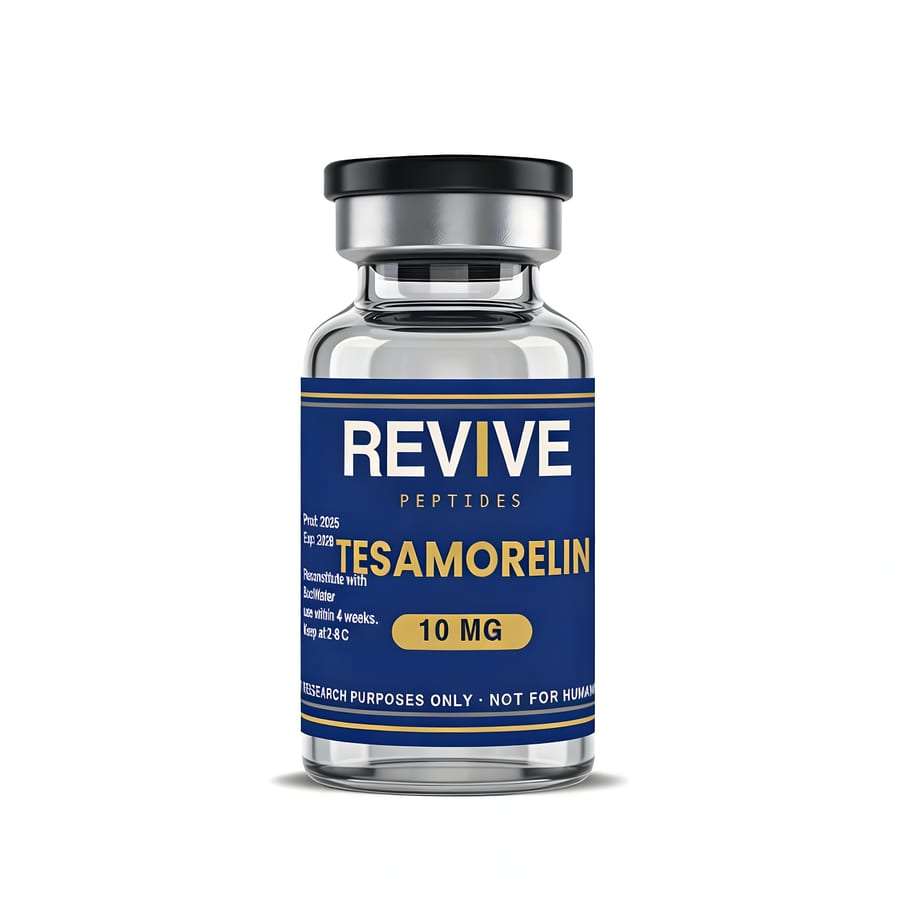
The immediate regional context is obvious to anyone following UAE football through spring 2026. UAE Pro League clubs, elite academies operating across Jumeirah and the Dubai Marina corridor, and national programme research arms in Abu Dhabi and Sharjah all saw a material uptick in pre-clinical research budgets directed at body composition modelling, recovery timeline research, and lean mass preservation methodology. The post-tournament research window — when squads are in transition and pre-season blocks are being re-engineered from the ground up — is precisely when peptide procurement queries at REVIVE LAB UAE spike sharply. Tesamorelin 5mg and 10mg vials are consistently among the top three research compound requests we field from Dubai-based lab teams.
This article exists for one reason: to give researchers in the UAE a citation-grounded, honest reference document for Tesamorelin in the context of high-performance body composition research. It is not a prescriptive protocol, a clinical recommendation, or guidance of any kind for human use. It is lab-research context, written for qualified scientists who already understand their research framework and need accurate mechanistic and procurement information to move forward.
Tesamorelin: Mechanism at the GHRH Receptor
Tesamorelin is a synthetic 44-amino acid analogue of endogenous growth hormone releasing hormone (GHRH), stabilised by the addition of a trans-3-hexenoic acid moiety at the N-terminus. This structural modification improves metabolic stability without materially altering the receptor binding profile — Tesamorelin binds the pituitary GHRH receptor on somatotroph cells and drives pulsatile growth hormone (GH) secretion through the same downstream signalling cascade as native GHRH. It is not exogenous GH. That distinction is the mechanistic foundation of everything that follows.
The key point for researchers comparing Tesamorelin to other GH-axis compounds is the preserved regulatory architecture. Because Tesamorelin works upstream at the GHRH receptor rather than bypassing the pituitary entirely, the hypothalamic negative feedback loop remains substantially intact. The body's own ceiling on GH secretion continues to operate. This is why Tesamorelin became the most rigorously studied GHRH analog in randomised human trials — the downstream GH and IGF-1 effects accumulate within a physiologically bounded range rather than producing the flat, non-pulsatile supraphysiological GH profiles seen with direct exogenous GH administration.
At the receptor level, Tesamorelin binding produces a dose-dependent increase in GH pulse amplitude. IGF-1 rises as a downstream consequence. In research models examining body composition endpoints, the most consistently observed effect is visceral adipose tissue (VAT) reduction, mediated through GH-stimulated lipolysis in metabolically active visceral depots. For sports science researchers at UAE institutions, this is the core of the relevant research question: what does GHRH-receptor-mediated GH stimulation do to fat compartment distribution, and what body composition consequences are worth modelling in the context of high-load athletic subjects?
GHRH Analog vs Exogenous GH: Why Research Design Must Keep These Separate
This distinction matters significantly for protocol design. Recombinant GH introduces supraphysiological concentrations that bypass pituitary regulation entirely, producing non-pulsatile GH profiles with correspondingly blunt IGF-1 kinetics. GHRH analogs like Tesamorelin induce pulsatile GH release that mirrors — at elevated amplitude — normal physiological rhythms. The implications for IGF-1 response curves, for negative feedback sensitivity across a research timeline, and for the body composition effects that accumulate over 8 to 26 weeks are meaningfully different. Researchers designing comparative peptide protocols should treat these as mechanistically distinct research objects, not interchangeable instruments targeting the same endpoint from the same direction.
What the Clinical Literature Actually Shows
Tesamorelin is unusual among research peptides available for procurement in the UAE in that it carries a genuinely deep human clinical trial record. Most compounds in the Gulf peptide research market have pre-clinical or early Phase 1 data at best. Tesamorelin has two pivotal NEJM-published trials, a JAMA-published body composition study, and a Lancet HIV long-term follow-up. That body of literature is worth understanding clearly — and worth not extrapolating beyond its actual endpoints.
Falutz et al. (2007, N Engl J Med) was the seminal Phase 3 randomised controlled trial establishing Tesamorelin's effects on visceral adipose tissue in HIV-infected patients with antiretroviral-associated lipodystrophy. Participants showed statistically significant VAT reduction compared to placebo over 26 weeks. The mechanistic pathway involved GHRH-receptor-driven GH stimulation with downstream IGF-1 elevation and preferential lipolysis in visceral fat compartments. This paper established the foundational body composition endpoint data for this compound class.
Falutz et al. (2010, N Engl J Med) confirmed durability in a continuation trial. VAT reductions were maintained in the continued-treatment group and reversed in those switched to placebo, demonstrating that the body composition effect is compound-dependent rather than a one-time reset. This durability finding is relevant to research designs examining steady-state body composition trajectories rather than acute responses.
Stanley et al. (2014, JAMA) extended the body composition research by examining a broader array of metabolic and body compartment markers alongside VAT in a similar study population. The data confirmed the VAT-reduction signal and added granularity to the trunk fat and metabolic marker picture. Stanley et al. (2019, Lancet HIV) provided the long-term safety and efficacy follow-up, with subjects tracked over extended periods showing sustained body composition changes with an acceptable tolerability profile in the studied population.
What the literature does not show — and what no responsible researcher should claim — is direct football performance enhancement. These trials studied a specific clinical population with a defined metabolic disorder. The body composition endpoints are nonetheless the data that sports scientists in Dubai, Abu Dhabi, and across the Gulf are referencing when they design exploratory studies. VAT reduction, GH pulse amplification, IGF-1 trajectory — these are the variables under active investigation. The translation to athletic body composition contexts is the research question, not the established answer.
| Citation | Journal | Key Research Endpoint | Relevance to Body Comp Research |
|---|---|---|---|
| Falutz et al. 2007 | N Engl J Med | VAT reduction at 26 weeks vs placebo | Core visceral fat lipolysis dataset |
| Falutz et al. 2010 | N Engl J Med | Continuation trial — sustained VAT reduction | Long-term body composition effect durability |
| Stanley et al. 2014 | JAMA | VAT + trunk fat + metabolic markers | Multi-compartment body composition profile |
| Stanley et al. 2019 | Lancet HIV | Long-term safety and efficacy | Extended timeline tolerability and effect data |
Football Body Composition: The Research Questions Worth Asking
Professional football at the Gulf level in 2026 presents a specific and demanding research context. The game has become significantly more metabolically intensive than it was a decade ago. Average distance covered per match in top-tier UAE Pro League fixtures has increased. High-intensity sprint volumes in the final twenty minutes of matches — precisely when body composition and fuel partitioning matter most — have climbed. Recovery windows between fixtures in condensed mid-season schedules are narrow. Against this backdrop, body composition is not an aesthetic variable; it is a performance input that directly affects acceleration profiles, jump power, and late-game sprint capacity.
The research question that GHRH analog studies are positioned to investigate is not whether Tesamorelin makes footballers faster. That is not a question this peptide class has been designed to answer, and extrapolating from clinical lipodystrophy trial data to athletic performance outcomes would be a significant methodological error. The defensible research questions are narrower and, frankly, more interesting to anyone serious about the science:
- Does GHRH-receptor-mediated GH pulse amplification alter visceral fat distribution in non-lipodystrophic male subjects with high lean mass and low baseline body fat?
- What is the IGF-1 response trajectory under GHRH analog stimulation in subjects whose baseline GH output reflects a high training load?
- How does trunk fat compartment composition respond across research timelines of 8–26 weeks under sustained GHRH agonism?
- What interaction effects, if any, exist between GHRH-axis peptide exposure and recovery biomarker kinetics in subjects undergoing high-volume training?
These are legitimate pre-clinical and exploratory research designs. They are not claims about what Tesamorelin does to a footballer's 40-metre sprint time. Sports scientists at institutions in Business Bay, on the Abu Dhabi Corniche, and in research departments attached to Sharjah and Al Ain sports complexes who are building research proposals around this compound are working within these narrower, more defensible frames — and that is where the useful data will emerge in 2027 and beyond.
Visceral Fat as a Performance Research Variable
One specific research angle attracting serious attention is the relationship between visceral adipose tissue quantity and explosive muscular performance metrics. Whether GHRH-driven VAT reduction in non-pathological subjects produces measurable downstream changes in those markers is a question the existing clinical literature cannot fully answer in athletic populations. That gap is where pre-clinical and exploratory human research using Tesamorelin as a tool compound is scientifically justified and increasingly pursued across Gulf research institutions.
Same-day dispatch from REVIVE LAB UAE · Discreet packaging · Cash on delivery available · 24h UAE-wide delivery
Buy Tesamorelin UAE — Same-Day Dubai Dispatch from REVIVE LAB UAE
Reconstitution Notes for Research Settings
Lyophilised Tesamorelin vials require reconstitution with sterile bacteriostatic water or sterile water for injection prior to experimental use. Standard sterile reconstitution technique appropriate to the receiving lab's environment should be followed. Once reconstituted, peptide stability is time-limited — researchers should follow their lab's standard operating procedures for peptide handling timelines. REVIVE LAB UAE vials are supplied sealed and lyophilised; all reconstitution steps are the researcher's procedural responsibility and should be performed under conditions appropriate to the study protocol.
Procuring Tesamorelin in the UAE: What Dubai Researchers Need to Know Right Now
Peptide procurement in the UAE has historically introduced material friction into research timelines. Lead times from international suppliers, unpredictable customs clearance windows, cold-chain integrity questions across long-haul freight, and complex payment arrangements have all slowed researchers down. REVIVE LAB UAE was built specifically to remove those friction points for Dubai-based and UAE-wide research teams.
Stock position as of late June 2026: Tesamorelin 5mg and 10mg vials are confirmed in stock in Dubai. Same-day dispatch is available for orders placed before the daily cutoff, with delivery across central Dubai — Business Bay, DIFC, Dubai Marina, Jumeirah Beach Residence, Palm Jumeirah — typically completed same day. Tesamorelin 24h delivery Dubai extends across Abu Dhabi, Sharjah, Ajman, Ras Al Khaimah, and Fujairah. Researchers at institutions on the Abu Dhabi Corniche, in the Al Reem Island district, or in the Khalifa City academic zone should plan for the 24-hour delivery window.
Packaging is discreet and unmarked by default — no external labelling identifies peptide contents. This is a standard operational feature across all REVIVE LAB UAE shipments, not an optional upgrade. For procurement officers managing institutional delivery addresses with reception staff who handle multiple parcels, tesamorelin discreet packaging UAE is the baseline, not the exception.
Payment Options for UAE Research Orders
- Cash on delivery (COD): Available for Dubai and Abu Dhabi deliveries. Settlement at point of delivery with the courier — no advance payment, no bank transfer coordination required. Tesamorelin cash on delivery Dubai is the preferred method for researchers who need a simple, frictionless procurement cycle.
- USDT via Binance Pay (TRC20): Available for all UAE and international orders. A 5% pre-pay discount applies to all Binance Pay transactions. Share your TXID via WhatsApp after transfer for same-session confirmation from REVIVE LAB UAE.
- Institutional invoicing: Contact REVIVE LAB UAE directly via the website for bank transfer arrangements or institutional purchase order flows applicable to university and corporate research labs.
For research teams managing multi-compound procurement — combining a Tesamorelin order with BPC-157 for a recovery co-administration study design, or pairing with GHK-Cu for a parallel tissue biology track — REVIVE LAB UAE can consolidate into a single cold-chain dispatch. This is a practical consideration for labs on Palm Jumeirah residential addresses or across the Sharjah research corridor where daily courier deliveries are logistically managed.
Tesamorelin in the Broader UAE Peptide Research Landscape
Tesamorelin does not exist in a vacuum in the Gulf research context. Sports science labs and independent researchers across Dubai, Abu Dhabi, and Sharjah are increasingly building multi-compound research programmes — not in the informal supplement sense, but in the rigorous sense of studying peptide class mechanisms in parallel and examining potential interaction or additive effects under controlled conditions with defined endpoints.
The GHRH-axis remains one of three broad research clusters active in UAE sports science peptide work in 2026. The other two are injury recovery peptides — where BPC-157 has accumulated a meaningful pre-clinical signal in soft tissue models — and connective tissue and skin biology compounds, where GHK-Cu research output has been growing steadily. Tesamorelin sits firmly in the body composition and metabolic cluster, making it the compound of choice for research designs examining adipose tissue dynamics, lean mass preservation under caloric restriction or high training load, and GH-axis modulation in subjects whose baseline physiology differs materially from the lipodystrophic population studied in the pivotal trials.
What differentiates Tesamorelin from other GHRH-class research compounds in the UAE procurement landscape is the clinical data depth. Sermorelin, CJC-1295, and related compounds have thinner human trial records and less precisely characterised body composition endpoints. The Falutz and Stanley trial series gives Tesamorelin a published clinical anchor that allows UAE-based researchers to cite genuine Phase 3 evidence in grant applications, IRB submissions at institutions such as Khalifa University, UAE University Al Ain, or the Mohammed Bin Rashid University of Medicine and Health Sciences, and in research proposal frameworks requiring substantive peer-reviewed citation. That matters when research funding committees in Abu Dhabi or Dubai ask for evidence-basis justification.
GHRH Research Compounds — Evidence Depth Comparison
| Compound | Class | Highest Trial Phase (Human) | Body Comp Endpoint Data |
|---|---|---|---|
| Tesamorelin | GHRH analog (modified) | Phase 3 RCT + long-term follow-up | VAT reduction, IGF-1, trunk fat (Falutz/Stanley series) |
| Sermorelin | GHRH fragment (1–29) | Phase 2 / small RCTs | GH stimulation; limited body comp endpoint data |
| CJC-1295 | GHRH analog (DAC) | Phase 1/2 only | GH pulse data; no published VAT endpoint |
This comparison maps where each compound sits in the published evidence hierarchy. It is not an endorsement of one research tool over another. Different research designs require different compounds — the question is whether the evidence base is sufficient to anchor the research question you are building around. For body composition research requiring a published Phase 3 human clinical anchor, Tesamorelin is the only GHRH analog currently available for research procurement in the UAE that meets that threshold.
FAQ
Where can I buy Tesamorelin in the UAE for research?
Research-grade Tesamorelin 5mg and 10mg vials are available directly from REVIVE LAB UAE at revivelab.ae. Same-day dispatch is available from our Dubai facility, with tesamorelin 24h delivery Dubai and UAE-wide reaching Abu Dhabi, Sharjah, Ajman, Ras Al Khaimah, and Fujairah within 24 hours. You can order tesamorelin Dubai here. Cash on delivery is available for Dubai and Abu Dhabi orders; USDT via Binance Pay carries a 5% discount.
What vial sizes of Tesamorelin does REVIVE LAB UAE stock?
REVIVE LAB UAE stocks Tesamorelin in two sizes: 5mg lyophilised vials and 10mg lyophilised vials. Both are held in stock in Dubai for immediate same-day dispatch. The 10mg vial is typically preferred by research labs running multi-week protocols where minimising reconstitution frequency is a procedural priority. Both sizes are supplied sealed, with reconstitution performed by the receiving researcher under their laboratory's standard operating conditions. Tesamorelin in stock UAE means no lead time, no international freight wait, no cold-chain uncertainty across long-haul delivery.
Does REVIVE LAB UAE offer discreet packaging and cash on delivery in Dubai?
Yes on both. All REVIVE LAB UAE shipments use tesamorelin discreet packaging UAE as the default — unmarked external packaging with no peptide or research compound identification on the outside of the parcel. Cash on delivery (COD) is available for Dubai and Abu Dhabi deliveries: settlement happens at point of handover with the courier, no advance payment required. For researchers who prefer digital settlement, USDT via Binance Pay (TRC20) is accepted on all orders and carries a 5% pre-pay discount. Share your TXID via WhatsApp for rapid same-session confirmation from REVIVE LAB UAE.
- Falutz J, Allas S, Blot K, et al. Metabolic effects of a growth hormone-releasing factor in patients with HIV. N Engl J Med. 2007;357(23):2359–2370.
- Falutz J, Mamputu JC, Potvin D, et al. Effects of tesamorelin (TH9507), a growth hormone-releasing factor analogue, in HIV-infected patients with abdominal fat accumulation: a randomized placebo-controlled trial with a safety extension. N Engl J Med. 2010;362(1):44–55.
- Stanley TL, Falutz J, Mamputu JC, et al. Effect of tesamorelin on visceral fat and liver fat in HIV-infected patients with abdominal fat accumulation: a randomized clinical trial. JAMA. 2014;312(4):380–389.
- Stanley TL, Fourman LT, Feldpausch MN, et al. Long-term effects of tesamorelin in HIV-infected patients with abdominal fat accumulation. Lancet HIV. 2019;6(12):e821–e830.
Same-day Dubai dispatch · Tesamorelin 24h delivery Dubai and UAE-wide · Discreet packaging · Cash on delivery · REVIVE LAB UAE
Buy Tesamorelin UAE from REVIVE LAB UAE — Order Now