Tesamorelin for Frequent Flyers: How Jet-Lag Disrupts the Circadian GH Axis — and What Research Investigators in the UAE Are Studying (2026)
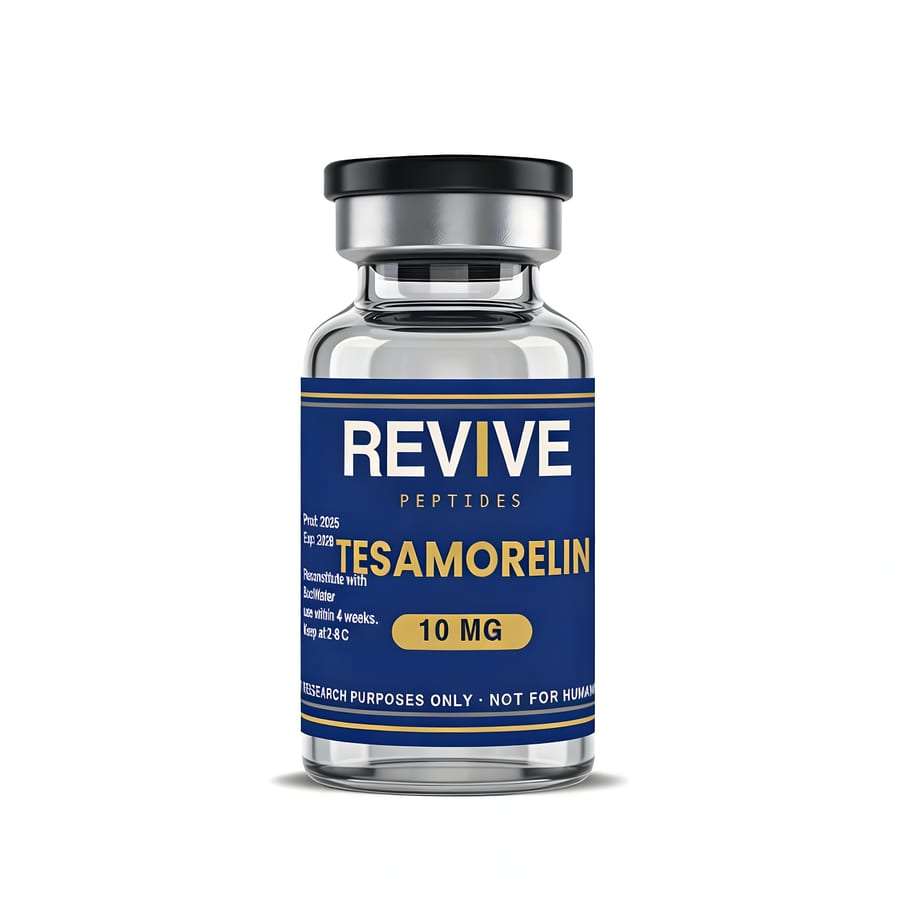
Dubai sits at a geographic crossroads that makes it the de facto frequent-flyer capital of the world. Researchers based in Dubai Marina, DIFC, Business Bay and the wider UAE regularly cross 5-9 time zones in a single itinerary — London, New York, Singapore, Tokyo — then return to the Gulf to pick up their protocols. That kind of repeated circadian dislocation does not just produce fatigue. It suppresses the somatotropic axis in measurable, documented ways. And that is precisely why a small but growing cohort of research investigators in the UAE has started mapping tesamorelin onto frequent-flyer circadian protocols. REVIVE LAB UAE supplies HPLC-verified, lot-COA, cold-chain dispatched tesamorelin 5mg and 10mg vials across all 7 emirates for research purposes — here is what the science actually says.
Why Frequent Flyers Have a GH Problem
Growth hormone is not secreted continuously. In healthy adults it is released in discrete, amplitude-modulated pulses — typically 6-12 per day — with one dominant pulse that is tightly coupled to slow-wave sleep (SWS, stages N3). This pulse accounts for roughly 70% of daily GH secretion in young adults, falling to 50-60% in adults over 40. The pituitary receives rhythmic GHRH signals from hypothalamic neurons that are themselves entrained to the suprachiasmatic nucleus (SCN) — the master circadian clock. When the SCN is desynchronized, GHRH signaling loses its timing, the dominant sleep-phase GH pulse either attenuates or shifts, and IGF-1 levels fall transiently.
Jet lag is precisely that desynchronization — and long-haul routes from DXB compound the effect. A researcher who flies Dubai to New York (9-hour eastward shift) and back within a week faces:
- Fragmented slow-wave sleep on both outbound and return flights
- Misaligned GHRH pulsatility for 3-5 days after each crossing
- Elevated cortisol during the circadian trough (early biological morning) — which actively suppresses GH pulsatility via somatostatin tone
- Reduced overnight IGF-1 synthesis during the re-entrainment window
For a single trip, these effects are transient nuisances. For investigators crossing 5+ time zones 8-15 times per year — as is entirely ordinary for Dubai-based business researchers — the cumulative suppression of the GH axis becomes a research variable in its own right. This is the clinical question that makes tesamorelin interesting in the frequent-flyer context.
Tesamorelin Mechanism: GHRH Analog Binding at the Pituitary Receptor
Tesamorelin is the trans-3-hexenoyl ester of human GHRH(1-44)-NH₂ — a synthetic analog that binds the pituitary GHRH receptor with high affinity and mimics the action of endogenous GHRH. Two structural features define its pharmacology. First, the N-terminal hexenoyl modification confers resistance to dipeptidyl peptidase-IV (DPP-IV) cleavage, the primary degradation pathway for native GHRH. This approximately triples the functional half-life relative to endogenous GHRH. Second, it preserves the full 44-amino-acid receptor-binding sequence, meaning it engages the GHRH receptor in the same way endogenous GHRH does — it does not bypass normal pituitary feedback loops.
The mechanistic implication for frequent-flyer research is significant. Tesamorelin does not flood the system with exogenous GH. It stimulates the pituitary to release its own GH in a pulsatile pattern, preserving the endocrine negative-feedback arc. In research subjects with suppressed GHRH signaling — whether from HIV-related lipodystrophy (as in Falutz's trials) or from circadian disruption — this receptor-level rescue of GH pulsatility is the working hypothesis investigators are testing.
Buy Tesamorelin UAE — Order Now →
The Clinical Evidence Base: What Falutz and Stanley Documented
Tesamorelin has a more robust clinical evidence base than almost any peptide in the research peptides UAE space. Four large, placebo-controlled trials establish its efficacy and safety profile — and while none were designed around jet lag, their mechanistic findings directly inform the frequent-flyer hypothesis.
Falutz et al. 2007 (NEJM) — The Pivotal Lipodystrophy Trial
Falutz and colleagues enrolled 412 HIV-positive subjects with excess visceral adipose tissue (VAT) and randomized them to tesamorelin 2 mg SC daily or placebo for 26 weeks. The primary outcomes were VAT reduction (measured by CT) and IGF-1. Results: tesamorelin reduced VAT by approximately 15-18% versus placebo and raised IGF-1 by roughly 50%. The IGF-1 finding is the one investigators cite most often in the circadian GH context — it is an objective, quantifiable proxy for restored somatotropic axis activity. IGF-1 is synthesized in the liver under GH stimulation and integrates GH pulsatility over 24-hour windows; a 50% rise in IGF-1 indicates meaningfully restored GH exposure, not just a one-time spike.
Falutz et al. 2010 — The 26-Week Extension
The 2010 extension study followed the original Falutz cohort for an additional 26 weeks. Continued tesamorelin administration maintained VAT reduction and IGF-1 elevation, while subjects who had received placebo and were then switched to tesamorelin showed rapid GH axis activation — demonstrating that the pituitary response is accessible even after a period of relative somatotropic suppression. For researchers studying jet-lag-induced GH axis attenuation, this reversibility finding is directly relevant: the axis responds to GHRH receptor stimulation even after a period of disruption.
Stanley et al. 2014 (JAMA) — Liver Fat and GH
Stanley and colleagues at Massachusetts General Hospital extended the tesamorelin evidence base into HIV-associated non-alcoholic fatty liver disease (NAFLD). In this trial, tesamorelin reduced liver fat by 32% relative to placebo over 12 months. The mechanism is GH-mediated: restored GH pulsatility increases hepatic fatty acid oxidation and reduces de novo lipogenesis — the same metabolic pathway that jet-lag-induced GH suppression impairs when repeated transmeridian travel chronically elevates cortisol and suppresses nocturnal GH pulses.
Circadian GH Disruption: The Research Framework for Frequent Flyers
The circadian disruption model for GH suppression in frequent flyers is built on three converging mechanisms that any serious research investigator should understand before designing a protocol:
1. Slow-Wave Sleep Fragmentation
Long-haul eastward flights (Dubai to Asia: +3-5 hours; Dubai to the Americas: -7 to -9 hours) systematically fragment N3 sleep for 3-6 days post-landing. Polysomnography studies in transmeridian travellers show a 40-60% reduction in SWS duration in the first two nights after crossing 7+ time zones. Because the dominant GH pulse is SWS-gated, this directly attenuates the largest daily GH secretory event. Accumulated over 10-15 transmeridian crossings per year, the somatotropic axis operates in a state of chronic partial suppression.
2. Cortisol Phase Inversion
Jet lag inverts the cortisol rhythm relative to the new local time. For 2-4 days post-crossing, the HPA axis fires cortisol surges at what is biologically still the old "morning" — which may now correspond to local midnight. Elevated cortisol drives hypothalamic somatostatin release, which inhibits pituitary GH secretion. The Falutz 2007 data is instructive here: the 412-subject trial documented that tesamorelin restored IGF-1 even in subjects with elevated baseline cortisol — suggesting the GHRH receptor-level stimulus can overcome somatostatin-mediated inhibition when it is sufficiently strong.
3. Peripheral Clock Desynchrony
Even after central sleep normalizes (day 4-7 post-crossing), peripheral tissue clocks in the liver and adipose tissue continue to run on their own re-entrainment timeline. GH receptor sensitivity is partly clock-controlled; disrupted peripheral clocks reduce the efficacy of residual GH pulses at the tissue level. This is a slower-resolving component — one reason investigators hypothesize that tesamorelin's direct GH-axis stimulation may provide benefit beyond the initial SWS disruption window.
Order Tesamorelin Dubai — Same Day →
Where to Order Tesamorelin in the UAE: REVIVE LAB UAE Supply Chain
The frequent-flyer protocol creates a particular supply challenge: researchers often need tesamorelin on arrival in Dubai, not 5 days later. REVIVE LAB UAE is a Dubai-based peptides UAE supplier with same-day dispatch — not a reseller forwarding from an offshore warehouse. Every tesamorelin batch is HPLC-tested to ≥99% purity with lot-COA documentation available on request. Cold-chain dispatch uses validated insulation that holds 2-8°C through UAE summer ambient conditions. Tesamorelin same day Dubai is the operational reality, not a marketing claim, for orders placed before the daily cut-off.
| Location | Delivery Window | Cash on Delivery | Cold-Chain Packaging |
|---|---|---|---|
| Dubai (Marina, JBR, Business Bay, JVC, DIFC, Palm, Downtown, Jumeirah) | Same-day, 4-8 hours | Yes | Yes |
| Sharjah | Same-day / next-day, 8-16 hours | Yes | Yes |
| Abu Dhabi (Corniche, Yas, Saadiyat, Reem Island) | Next-day, 18-24 hours | Yes | Yes |
| Ajman | Next-day, 18-24 hours | Yes | Yes |
| Ras Al Khaimah (RAK) | Next-day, 18-24 hours | Yes | Yes |
| Fujairah | Next-day, 24 hours | Yes | Yes |
| Umm Al Quwain (UAQ) | Next-day, 18-24 hours | Yes | Yes |
Researchers who return from a transmeridian crossing on a Thursday night and need tesamorelin in stock UAE for a protocol starting Friday can order on landing and receive vials the same day — a logistical window that matters when the circadian disruption timeline is the research variable. Cash on delivery Dubai is supported as the default, with no upfront payment required. All shipments use plain, unbranded outer packaging.
Why REVIVE LAB UAE for Peptides UAE Research
REVIVE LAB UAE supplies HPLC-verified, lot-COA, cold-chain dispatched tesamorelin across all 7 emirates. The supply chain is built for the UAE climate: insulated packaging certified for ambient temperatures above 40°C, refrigerated last-mile couriers in Dubai, and validated cold-chain transfer to Abu Dhabi and Northern Emirates routes. For the broader peptides UAE research stack — Retatrutide, GHK-Cu, BPC-157, TB-500, Semax — see the full REVIVE LAB UAE catalogue. But for circadian GH axis research, tesamorelin 5mg and 10mg are the flagship molecules: the only GHRH analog with four published RCTs and a validated IGF-1 response endpoint. If you are designing a frequent-flyer protocol in the UAE, this is where the evidence sits.
The operational proposition from REVIVE LAB UAE is straightforward: tesamorelin Dubai 24h delivery, HPLC-tested, cold-chain guaranteed, with tesamorelin in stock UAE year-round — no pre-order windows, no out-of-stock substitutions. That reliability matters when protocol timing is dictated by a flight schedule, not a supplier's warehouse.
Buy Tesamorelin UAE →
Frequently Asked Questions
Where can I buy tesamorelin in the UAE with same-day delivery for research use?
REVIVE LAB UAE stocks tesamorelin 5mg and 10mg vials with HPLC-verified purity and lot-COA documentation. Research investigators in Dubai receive same-day delivery for orders placed before the daily cut-off. Tesamorelin 24h delivery is available across all seven emirates — Abu Dhabi, Sharjah, Ajman, Ras Al Khaimah, Fujairah and Umm Al Quwain all fall within the next-day cold-chain window. Cash on delivery is standard. Place your order at /buy-tesamorelin-uae/.
What tesamorelin vial strengths does REVIVE LAB UAE stock?
No other strengths are stocked or sold. Each vial ships with mannitol stabilizer and a validated cold-chain insert holding 2-8°C. Lot-COA is available on request for every batch.
Does REVIVE LAB UAE offer cash on delivery for tesamorelin across Dubai and other emirates?
Yes. Cash on delivery Dubai is the default payment option — no upfront card payment required. Coverage includes all major Dubai areas (Marina, JBR, Business Bay, JVC, DIFC, Palm Jumeirah, Downtown, Jumeirah, Emirates Hills, Arabian Ranches) and extends to Abu Dhabi, Sharjah, Ajman, Ras Al Khaimah, Fujairah and Umm Al Quwain. All shipments use discreet, unbranded outer packaging as standard.
- Falutz J, Allas S, Blot K, et al. Metabolic effects of a growth hormone-releasing factor in patients with HIV. N Engl J Med. 2007;357(23):2359-2370.
- Falutz J, Mamputu JC, Potvin D, et al. Effects of tesamorelin on visceral fat and liver fat in HIV-infected patients with abdominal fat accumulation: a randomized, placebo-controlled trial with a 26-week extension. J Clin Endocrinol Metab. 2010;95(9):4291-4304.
- Stanley TL, Feldpausch MN, Oh J, et al. Effect of tesamorelin on visceral fat and liver fat in HIV-infected patients with abdominal fat accumulation. JAMA. 2014;312(4):380-389.
- Stanley TL, Fourman LT, Feldpausch MN, et al. Effects of tesamorelin on non-alcoholic fatty liver disease in HIV: a randomised, double-blind, multicentre trial. Lancet HIV. 2019;6(12):e821-e830.