Tesamorelin Fujairah: 24h East-Coast Delivery, Humid Climate Storage, and the GHRH Research Stack (2026)
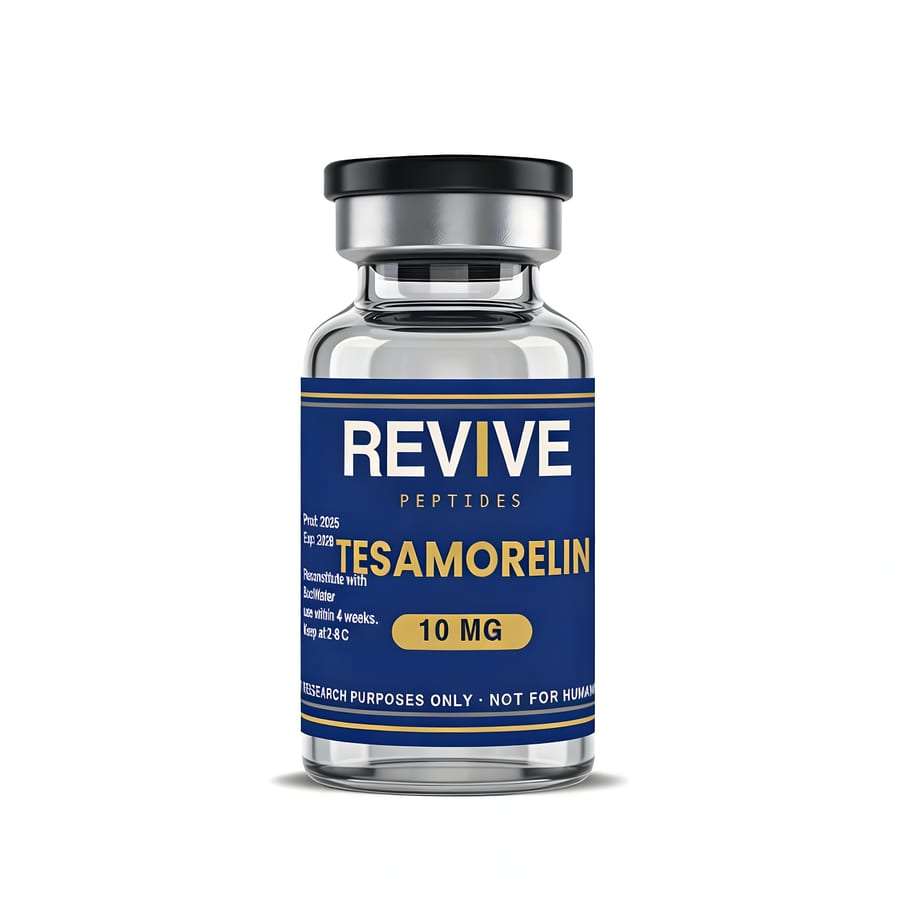
Fujairah sits on the UAE's Indian Ocean flank — the Hajar Mountains at its back, the Gulf of Oman stretching east. That geography shapes everything about peptide storage on the east coast. Researchers in Fujairah, Khor Fakkan, Dibba, Kalba, and Al Bithnah face ambient humidity levels that routinely exceed 80% relative humidity from June through September — a combination of coastal air and mountain rain shadow that makes the east coast the most humidity-stressed research environment in the UAE. While Dubai investigators worry about 44°C desert heat, Fujairah investigators face the compound stress of heat plus moisture. This guide is for researchers who want to buy tesamorelin UAE and use it on the east coast without fighting a losing battle against the Gulf of Oman summer.
REVIVE LAB UAE supplies HPLC-verified, lot-COA, cold-chain dispatched tesamorelin across all 7 emirates, including dedicated 24-hour east-coast delivery routes to Fujairah with phase-change cold packs engineered for the Hajar Mountain crossing. Tesamorelin 5 mg and 10 mg vials are in stock now. Tesamorelin in stock UAE means Fujairah researchers are not waiting on international shipping — vials are already here.
The GHRH Mechanism: What Tesamorelin Actually Does
Tesamorelin is a 44-amino-acid synthetic analog of endogenous growth-hormone-releasing hormone (GHRH), modified at the N-terminus with a trans-3-hexenoyl group. That single structural addition protects the molecule from rapid degradation by dipeptidyl peptidase-IV (DPP-IV) — the enzyme that cleaves native GHRH within minutes in circulation. The result is a peptide that engages somatotroph GHRH receptors in the anterior pituitary with enough residence time to restore pulsatile GH secretion, drive hepatic IGF-1 synthesis, and selectively mobilize visceral adipose tissue (VAT). Critically, it does this without the supraphysiological GH spikes associated with exogenous GH administration — the pulsatility is preserved because the pituitary's own feedback mechanisms remain operative.
The core clinical evidence base for tesamorelin research is four landmark papers:
- Falutz et al. 2010 (NEJM extension, 26 weeks additional): The 52-week extension confirmed that VAT reduction was maintained with continued use and reversed upon discontinuation — confirming mechanism dependence rather than a one-time effect.
- Stanley et al. 2014 (JAMA, HIV-associated NAFLD): Investigators at Massachusetts General Hospital showed tesamorelin reduced liver fat by 32% relative to placebo — the first controlled evidence that a GHRH analog could drive hepatic fat reduction, opening a separate research avenue beyond body composition.
- Stanley et al. 2019 (Lancet HIV, 12-month data): The durability of the NAFLD signal was confirmed at one year, without adverse lipid effects, reinforcing tesamorelin's metabolic specificity as a research compound.
All four trials stored investigational product at 2-8°C, protected from light, with reconstituted vials used within validated windows. That operational detail matters more in Fujairah than anywhere else in the UAE — because the climate has more ways to violate those conditions.
Order Now →
Why Fujairah's Humid Climate Is the Hardest Test for Tesamorelin
Most peptides UAE content talks about heat. Fujairah researchers face a more complex problem: heat plus high ambient humidity. These are separate degradation pathways and they interact.
Heat denatures reconstituted peptides directly — thermal energy breaks hydrogen bonds in the folded peptide backbone, collapsing secondary structure and destroying bioactivity. Humidity attacks through a different route: water vapor infiltrates seals and packaging, lyophilized cake absorbs ambient moisture and loses its structural stability, and reconstituted solutions become progressively diluted by condensation on cold surfaces in a warm humid room. At 85% RH and 30°C — a typical Fujairah August night — a carelessly stored reconstituted vial degrades far faster than the same vial sitting in 10% RH Dubai at 40°C. The combined thermal-humidity stress is the east coast's defining storage challenge.
Lyophilized Vial Risk: What Humidity Actually Threatens
REVIVE LAB UAE vials are nitrogen-blanketed before crimp-sealing. In this sealed state, the lyophilized peptide cake is isolated from the external environment — ambient RH of 85% is simply irrelevant because no moisture can reach the peptide. The risk begins at two points: (a) if the seal is mechanically compromised before use, and (b) at reconstitution, when the crimp seal is first breached. The practical rule for Fujairah storage is: keep every lyophilized tesamorelin vial in its original outer carton with the desiccant sachet intact until the exact moment of reconstitution. The carton and desiccant provide a secondary moisture barrier around the already-sealed vial — belt and suspenders in a coastal humidity environment.
The Reconstituted Vial Problem in High-Humidity Climates
Once BAC water is added to a tesamorelin vial, a 14-day stability clock starts under controlled 2-8°C conditions — the window the Falutz research teams operated within. In a Fujairah residential fridge held at the correct 2-8°C range, this window is valid. The problem is that most non-research-grade refrigerators cycle between 4°C and 12°C over a 24-hour period, and many portable or dorm-style units run warmer still. In a high-humidity environment, even brief temperature excursions above 8°C matter more, because dissolved oxygen content in the solution increases with temperature and accelerates oxidative side-chain modifications. Investigators working in Fujairah should apply a 7-day conservative reconstitution window — half the theoretical maximum — as standard research protocol. Reconstitute only one vial at a time, refrigerate within 60 seconds of adding BAC water, and never let the reconstituted solution equilibrate to room temperature between uses.
| Storage Condition | Lyophilized Vial Risk | Reconstituted Vial Risk | Research Protocol Action |
|---|---|---|---|
| 2-8°C, sealed carton + desiccant | Very low | N/A (not yet reconstituted) | Ideal — maintain this throughout |
| 8-15°C (hotel mini-bar, non-spec fridge) | Low | Moderate — 7-day max recommended | Reconstitute only immediate-use volumes |
| 15-25°C, AC room, 70-80% RH | Low-moderate | High — 24-48h absolute max | Not acceptable for multi-day storage |
| 25-35°C, coastal humidity, no AC | Moderate (seal stress over time) | Very high — discard | Unacceptable under any research protocol |
| 2-8°C, carton + desiccant, 85%+ RH room | Very low (sealed and carton-protected) | Low (temp maintained) | Acceptable with desiccant intact |
REVIVE LAB UAE Fujairah Delivery — Cold Chain Over the Hajar Mountains
The Hajar Mountains between Dubai and Fujairah are not just a scenic backdrop to the E611 — they are a cold-chain logistics challenge. The route gains significant altitude before dropping sharply toward the coast. On a 44°C summer afternoon, a courier vehicle without active refrigeration can reach 55°C internal temperature on the ascent. This is why most suppliers who claim to deliver peptides UAE to Fujairah are not delivering tesamorelin in research-grade condition — they are delivering vials that have been through a thermal stress event that no research protocol accounts for.
REVIVE LAB UAE routes tesamorelin to Fujairah using phase-change material (PCM) cold packs validated to maintain 2-8°C for 36-48 hours — longer than any single-day UAE east-coast transit requires. The PCM pack mass is calibrated specifically for Hajar crossings: higher thermal mass to absorb the ambient heat load during the mountain ascent and the coastal humidity on arrival. The insulated outer box is sealed before dispatch and carries a temperature indicator strip — if the 8°C threshold is breached in transit, the strip activates, and we reship at no charge. This is what tesamorelin Dubai 24h delivery looks like when the cold chain is genuinely engineered, not assumed.
Delivery Windows to Fujairah and East-Coast Locations
| Location | Delivery Window | Cash on Delivery | Cold-Chain Packaging |
|---|---|---|---|
| Fujairah City | 18-24 hours | Yes | PCM phase-change + temperature indicator |
| Khor Fakkan | 20-24 hours | Yes | PCM phase-change + temperature indicator |
| Dibba Al Fujairah | 22-26 hours | Yes | PCM phase-change + temperature indicator |
| Kalba | 20-24 hours | Yes | PCM phase-change + temperature indicator |
| Al Bithnah | 18-22 hours | Yes | PCM phase-change + temperature indicator |
| Masafi | 16-20 hours | Yes | PCM phase-change + temperature indicator |
All east-coast shipments are dispatched from Dubai in plain, unbranded outer cartons — discreet packaging is default, not an add-on. Cash on delivery Dubai and across all Fujairah-area destinations is supported. Researchers placing orders before the daily dispatch cut-off can expect vials on the doorstep by the following morning. For tesamorelin same day Dubai investigators who then relocate to Fujairah for fieldwork: you can order to your Dubai address and transfer with the original cold pack for up to 12 additional hours before the pack needs replacing.
Buy Tesamorelin UAE →
Reconstitution Protocol for East-Coast Research
In a humid coastal environment, sterile technique during reconstitution carries more weight than in drier climates. Airborne moisture in a high-RH room can carry microbial contamination into an open vial in the seconds the rubber septum is breached. The standard protocol for Fujairah research: swab the vial crimp top with a 70% isopropyl alcohol swab and allow 30 seconds to dry before inserting the needle; keep the reconstitution process under 60 seconds total; never reconstitute in a bathroom or any room where steam or shower moisture is present. Use only REVIVE LAB UAE 3 mL bacteriostatic water (BAC water, 0.9% benzyl alcohol) — the antimicrobial additive provides meaningful protection during the multi-draw storage period that sterile water alone cannot match in a humid environment.
Add BAC water slowly down the side of the vial — never directly onto the lyophilized cake, which can shear peptide aggregates and reduce bioactivity. Gently swirl; never vortex. Reconstituted solution should be clear and colorless. Any cloudiness indicates degradation or contamination — do not use.
Why REVIVE LAB UAE — Not Just Any Peptides Supplier
Fujairah researchers have fewer walk-in options than Dubai counterparts, which makes supplier reliability — genuine HPLC verification, real cold-chain logistics, lot-COA documentation — more consequential, not less. REVIVE LAB UAE supplies HPLC-verified, lot-COA, cold-chain dispatched tesamorelin across all 7 emirates. Every tesamorelin batch is independently tested to ≥99% purity with the certificate of analysis available on request before dispatch. Tesamorelin 5 mg and 10 mg are the only stocked strengths — matching exactly the concentrations used in the published literature, with no unstocked or speculative vial sizes listed as available.
For east-coast investigators building a full peptide research stack — Retatrutide, GHK-Cu (copper tripeptide), BPC-157, TB-500 — REVIVE LAB UAE's catalogue covers all key compounds on the same 24-hour Fujairah cold-chain delivery window. Order tesamorelin UAE here and confirm in-stock availability before placing your east-coast order. Tesamorelin in stock UAE is updated daily on the product page.
FAQ
Can I get tesamorelin delivered to Fujairah with the cold chain intact?
Yes. REVIVE LAB UAE ships tesamorelin to Fujairah using PCM cold packs validated to hold 2-8°C for 36-48 hours — well beyond the 18-24 hour transit from Dubai over the Hajar Mountains. All Fujairah-bound shipments include a temperature indicator strip: if the 8°C threshold is breached in transit, the indicator activates and we reship at no charge. Cash on delivery Dubai and all Fujairah-area locations is supported. Tesamorelin in stock UAE in 5 mg and 10 mg vials, plain unbranded packaging.
Does Fujairah's coastal humidity damage lyophilized tesamorelin vials during storage?
Not if the vial is kept sealed and refrigerated correctly. REVIVE LAB UAE lyophilized tesamorelin vials are nitrogen-blanketed before crimp-sealing — in this state, external humidity is irrelevant because no moisture reaches the peptide cake. Risk increases at reconstitution. In a high-humidity room (85%+ RH), reconstitute quickly with sterile technique, refrigerate within 60 seconds, and apply a conservative 7-day use window. Keep lyophilized vials in their outer carton with desiccant intact until the moment of use — this provides a secondary moisture barrier in Fujairah's coastal summer climate.
What tesamorelin vial sizes does REVIVE LAB UAE stock and ship to Fujairah?
REVIVE LAB UAE stocks tesamorelin in 5 mg and 10 mg vials — the only strengths used in the controlled clinical literature (Falutz 2007 NEJM, Falutz 2010, Stanley 2014 JAMA, Stanley 2019 Lancet HIV). Both sizes are dispatched to Fujairah on the same 24-hour cold-chain courier route. No 1 mg or 2 mg vials are stocked or required — reconstitution from 5 mg or 10 mg with the table above covers all research-context dose volumes cleanly.
Buy Tesamorelin UAE — Order Now →
- Falutz J, Allas S, Blot K, et al. Metabolic effects of a growth hormone-releasing factor in patients with HIV. N Engl J Med. 2007;357(23):2359-2370.
- Falutz J, Mamputu JC, Potvin D, et al. Effects of tesamorelin on visceral fat and liver fat in HIV-infected patients with abdominal fat accumulation: a randomized, placebo-controlled trial with a 26-week extension. J Clin Endocrinol Metab. 2010;95(9):4291-4304.
- Stanley TL, Feldpausch MN, Oh J, et al. Effect of tesamorelin on visceral fat and liver fat in HIV-infected patients with abdominal fat accumulation. JAMA. 2014;312(4):380-389.
- Stanley TL, Fourman LT, Feldpausch MN, et al. Effects of tesamorelin on non-alcoholic fatty liver disease in HIV: a randomised, double-blind, multicentre trial. Lancet HIV. 2019;6(12):e821-e830.