Tesamorelin & Low-Carb Diet Research UAE: What Ketosis Does to the GH Axis — and Where Tesamorelin Fits (2026)
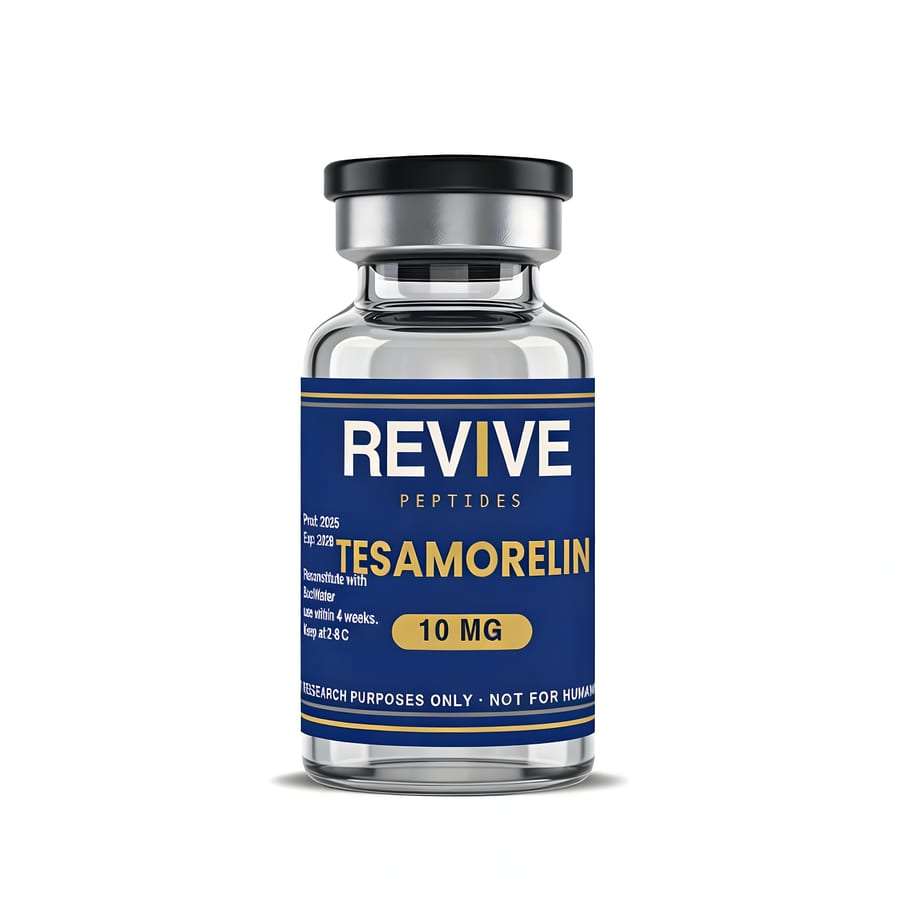
Research into low-carb dietary interventions has accelerated sharply in the Gulf over the past three years, driven partly by the UAE's high metabolic-syndrome burden and a research community willing to investigate multi-modal fat-reduction approaches. The intersection most investigators have not yet mapped carefully is this: when a research subject is already running deep ketosis or a sustained low-carbohydrate protocol, what happens to the GH axis — and does a GHRH analog like tesamorelin amplify, blunt, or simply stack onto those dietary effects? This post works through the mechanism, the trial data, and the practical research-context considerations for investigators who want to buy tesamorelin UAE to study alongside nutritional protocols.
How Low-Carb Diets Shift the GH Axis
Insulin as the Primary GH Brake
The relationship between carbohydrate intake and growth hormone is mediated almost entirely through insulin. Carbohydrates drive insulin release; insulin acutely suppresses GH secretion from the anterior pituitary through somatostatin upregulation and direct pituitary feedback. This is why a post-prandial glucose load predictably blunts GH pulses for 90–120 minutes after eating — the standard oral glucose tolerance test exploits precisely this mechanism to assess GH suppression.
On a sustained low-carbohydrate or ketogenic diet, fasting insulin drops significantly — often to below 5 mIU/L in metabolically adapted subjects. The downstream result is derepression of GH pulsatility: investigators using 24-hour GH sampling have documented increases in pulse frequency and amplitude in subjects on very-low-carbohydrate diets, even without exogenous peptides. This is the GH-axis benefit that low-carb proponents cite most often.
The IGF-1 Paradox on Keto
Here is the part most popular-science accounts skip: IGF-1 synthesis in the liver is insulin-dependent. The liver requires insulin signalling to efficiently transduce the GH pulse into IGF-1 secretion. In a low-insulin environment — exactly the state created by sustained ketosis — circulating IGF-1 often falls despite the increase in GH. Studies in fasting models and prolonged low-carbohydrate restriction consistently document this GH/IGF-1 uncoupling: GH up, IGF-1 flat or down.
This matters for research because many of the downstream effects attributed to GH — lean mass preservation, visceral fat mobilization, connective tissue turnover — are at least partly IGF-1 mediated. A low-carb protocol that raises GH but suppresses IGF-1 may deliver only a fraction of the potential GH-axis benefit. This is the gap tesamorelin addresses in the research literature.
Tesamorelin as a GHRH Analog: Mechanism in the Low-Carb Context
Tesamorelin is a synthetic GHRH 1-44 analog with a trans-3-hexenoyl modification at the N-terminus that extends its half-life by conferring resistance to dipeptidyl peptidase-IV (DPP-IV) cleavage. Unlike exogenous GH, which saturates GH receptors continuously and triggers downregulation, tesamorelin works by amplifying the pituitary's endogenous pulsatile GH release — it pushes the existing pulse higher and longer rather than replacing it with a flat pharmacokinetic curve.
This pulsatile preservation is mechanistically important in the low-carb research context. The pituitary in a keto-adapted subject is already generating more frequent GH pulses due to reduced insulin inhibition. The result, in the trial data, is IGF-1 increases of approximately 50% from baseline — a rise large enough to likely overcome the hepatic IGF-1 synthesis deficit created by low-insulin states.
Buy Tesamorelin UAE — Order Now →
Ketosis + Tesamorelin: Mechanistic Synergy Points and Divergences
The table below summarises where a sustained low-carb protocol and tesamorelin's mechanism converge or diverge across the key metabolic axes. Investigators should use this as a hypothesis framework, not a clinical protocol.
The IGF-1 Offset Effect: Why This Is the Core Research Hypothesis
The most tractable research hypothesis at the intersection of low-carb dietary protocols and tesamorelin is the IGF-1 offset. To restate it precisely: a ketogenic diet increases GH pulsatility through reduced insulin-mediated somatostatin drive, but simultaneously reduces hepatic IGF-1 output because the liver requires insulin signalling to translate GH into IGF-1. This creates a functional GH-resistance state at the tissue level — high GH signal, low tissue response.
If a researcher's baseline is already reduced by a low-insulin keto state, tesamorelin's IGF-1 effect represents a potentially larger relative restoration. The mechanistic argument is that tesamorelin re-couples the pulsatile GH signal to downstream anabolic and lipolytic outputs that the dietary protocol alone could not fully activate.
This is the kind of hypothesis that makes tesamorelin interesting to investigators who are not simply chasing VAT reduction in isolation but are instead modelling the full GH-axis metabolic response to combined dietary and peptide interventions. It is also the reason investigators in the UAE running structured low-carb research programmes are increasingly asking to order tesamorelin in UAE as a research adjunct rather than a standalone compound.
Order Tesamorelin Dubai →
Practical Research Considerations for UAE Investigators
Reconstitution and the Low-Carb Research Timeline
Investigators running multi-week protocols should plan reconstitution schedules around the 14-day stability window of reconstituted tesamorelin at 2–8°C. Lyophilized vials from REVIVE LAB UAE ship in validated cold-chain insulation and carry the same storage spec used in the trial supply chains. Reconstitute with 3 mL bacteriostatic water, adding slowly down the side of the vial — never directly onto the lyo cake. For investigators running 12-week protocols (the minimum meaningful window in the Falutz and Stanley data), a standing order arrangement with REVIVE LAB UAE ensures uninterrupted supply without cold-chain integrity gaps.
Monitoring Variables in Low-Carb + Tesamorelin Research
Investigators should account for the following confounders when designing a low-carb + tesamorelin study:
- Fasting glucose: Tesamorelin can reduce insulin sensitivity transiently — combined with ketosis-driven gluconeogenesis, glucose monitoring is a necessary study variable, not an afterthought.
- IGF-1 at baseline vs. on-keto: If baseline IGF-1 is already suppressed by dietary protocol, the absolute IGF-1 response to tesamorelin may appear exaggerated. Establish a two-week dietary run-in before beginning tesamorelin to get a stable keto-baseline IGF-1 reading.
- Body composition imaging: DEXA or visceral CT at baseline, 12 weeks and 26 weeks mirrors the Falutz and Stanley measurement intervals and provides interpretable endpoints.
Where to Buy Tesamorelin UAE — REVIVE LAB UAE Delivery Coverage
REVIVE LAB UAE supplies HPLC-verified, lot-COA, cold-chain dispatched tesamorelin across all 7 emirates. Tesamorelin 5mg and 10mg vials are in stock in Dubai right now, with same-day delivery inside the emirate and next-day delivery to every other UAE location. All orders ship in plain, unbranded outer packaging by default — no visible branding, no clinical-sounding labels. Cash on delivery is available UAE-wide.
| Location | Delivery Window | Cash on Delivery | Cold-Chain Packaging |
|---|---|---|---|
| Dubai (Marina, JBR, Business Bay, JVC, DIFC, Downtown, Palm, Jumeirah, Emirates Hills) | Same-day, 4–8 hours | Yes | Yes |
| Abu Dhabi (Corniche, Yas Island, Saadiyat, Reem Island) | Next-day, 18–24 hours | Yes | Yes |
| Sharjah | Same-day / next-day, 8–18 hours | Yes | Yes |
| Ajman | Next-day, 18–24 hours | Yes | Yes |
| Ras Al Khaimah (RAK) | Next-day, 18–24 hours | Yes | Yes |
| Fujairah | Next-day, 24 hours | Yes | Yes |
| Umm Al Quwain (UAQ) | Next-day, 18–24 hours | Yes | Yes |
| Al Ain | Next-day, 24 hours | Yes | Yes |
For investigators in Dubai Marina, JBR, Business Bay, JVC, DIFC, Palm Jumeirah or Downtown, a morning order typically means vials in-hand by early afternoon — tesamorelin same day Dubai is not a marketing phrase, it is the operational default. For Abu Dhabi, Sharjah, RAK and Fujairah, tesamorelin Dubai 24h delivery applies with the same cold-chain spec. Every batch comes with a lot-specific COA and HPLC purity verification — the minimum standard for any research-grade peptide supply chain. For investigators building out a broader low-carb metabolic research stack, REVIVE LAB UAE's catalogue also includes Retatrutide and GHK-Cu alongside tesamorelin.
Buy Tesamorelin UAE — Order Now →
FAQ
Can I buy tesamorelin UAE to study alongside a ketogenic or low-carb dietary protocol?
Yes. REVIVE LAB UAE supplies tesamorelin 5mg and 10mg vials for research use, available with tesamorelin same day Dubai delivery or tesamorelin 24h delivery across Abu Dhabi, Sharjah, RAK, Fujairah, Ajman, UAQ and Al Ain. Visit /buy-tesamorelin-uae/ to order.
What vial strengths of tesamorelin does REVIVE LAB UAE stock in the UAE?
REVIVE LAB UAE stocks tesamorelin in 5mg and 10mg vials — the two sizes supported by the published pivotal trial literature. No other strengths are stocked, consistent with the research-use framing that applies to all peptides UAE supply from REVIVE. Both vial sizes come with lot-specific COA, HPLC purity verification, and cold-chain dispatch. Tesamorelin in stock UAE status is confirmed at the product page.
Does REVIVE LAB UAE offer cash on delivery for tesamorelin in Dubai?
Yes. Cash on delivery Dubai is available across all seven emirates as a default payment option, not an upsell. All shipments use plain, unbranded outer cartons. Same-day orders in Dubai are dispatched before the daily cut-off and typically delivered within 4–8 hours to Marina, JBR, Business Bay, JVC, DIFC, Palm Jumeirah, Downtown, Jumeirah and surrounding areas.
- Falutz J, Allas S, Blot K, et al. Metabolic effects of a growth hormone-releasing factor in patients with HIV. N Engl J Med. 2007;357(23):2359-2370.
- Falutz J, Mamputu JC, Potvin D, et al. Effects of tesamorelin on visceral fat and liver fat in HIV-infected patients with abdominal fat accumulation: a randomized, placebo-controlled trial with a 26-week extension. J Clin Endocrinol Metab. 2010;95(9):4291-4304.
- Stanley TL, Feldpausch MN, Oh J, et al. Effect of tesamorelin on visceral fat and liver fat in HIV-infected patients with abdominal fat accumulation. JAMA. 2014;312(4):380-389.
- Stanley TL, Fourman LT, Feldpausch MN, et al. Effects of tesamorelin on non-alcoholic fatty liver disease in HIV: a randomised, double-blind, multicentre trial. Lancet HIV. 2019;6(12):e821-e830.