Tesamorelin Mechanism of Action: GHRH Analogue Pharmacology for Researchers (2026)
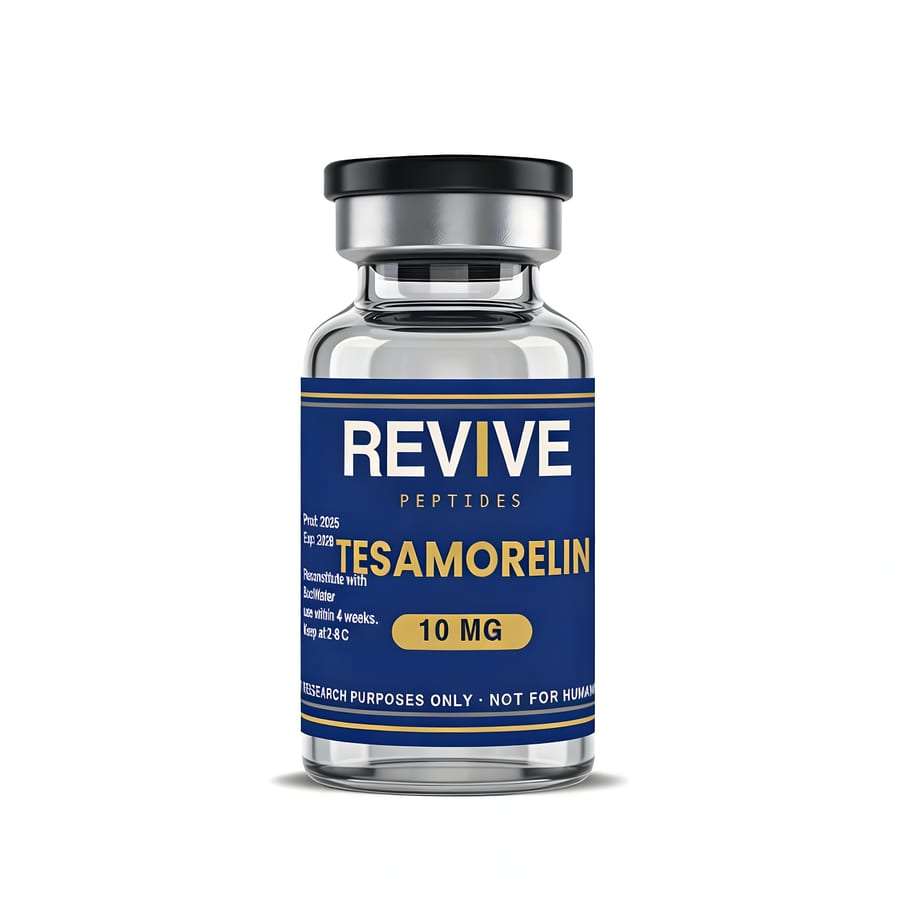
What Makes Tesamorelin a GHRH Analogue
Tesamorelin is classified in the research literature as an analogue of growth-hormone-releasing hormone (GHRH) — meaning it is structurally engineered to mimic the endogenous hormone that signals the pituitary gland to release growth hormone. At 44 amino acids and a molecular weight of approximately 5135 Da, it is a larger peptide than many single-pathway research compounds, reflecting the structural complexity required to engage the GHRH receptor with research-documented specificity.
The GHRH-to-Pituitary Signalling Pathway
GHRH receptor engagement
In normal physiology, GHRH is released from the hypothalamus and travels to the anterior pituitary, where it binds GHRH receptors on somatotroph cells. Tesamorelin is studied as an analogue engineered to engage this same receptor pathway, which is the basis for its classification in the pharmacological literature.
Pulsatile growth-hormone release
A defining characteristic of the GHRH pathway studied in the literature is that growth-hormone release is pulsatile rather than constant — the pituitary releases GH in discrete bursts rather than a steady stream. Research on GHRH analogues like tesamorelin has focused substantially on how closely an analogue's receptor-engagement profile preserves this natural pulsatile pattern, which is considered pharmacologically significant compared to non-pulsatile GH-pathway interventions.
Downstream IGF-1 axis
Growth hormone released from the pituitary acts primarily by stimulating the liver to produce insulin-like growth factor 1 (IGF-1). IGF-1 then mediates many of the systemic downstream signalling effects that are of research interest across metabolic, musculoskeletal and tissue-research literature. This GH → IGF-1 signalling cascade is the core downstream pathway researchers reference when discussing GHRH-analogue pharmacology.
Why Tesamorelin Is a Well-Characterized Reference Compound
As noted in our clinical trial literature review, tesamorelin is the active ingredient in an FDA-approved pharmaceutical (Egrifta) for a specific HIV-associated lipodystrophy indication, studied by Falutz and colleagues in trials published in NEJM and JCEM. That regulatory and peer-review history means the GHRH-receptor engagement mechanism described above has been characterized to an unusually high evidentiary standard relative to many other research peptides — while REVIVE's product remains a distinct research-grade reference material, not the approved pharmaceutical itself.
- Receptor specificity research. Studies characterizing how selectively tesamorelin engages the GHRH receptor relative to other endocrine signalling pathways.
- Pulsatility preservation. Research interest in whether analogue-stimulated GH release maintains the physiological pulsatile pattern associated with endogenous GHRH signalling.
- Downstream IGF-1 kinetics. Pharmacological research into the time course and magnitude of IGF-1 axis activation following GHRH-receptor engagement.
- Structural stability research. The 44-amino-acid backbone and its stability characteristics under laboratory storage and reconstitution conditions.
Structural Characteristics Relevant to Research Handling
| Property | Research-relevant detail |
|---|---|
| Molecular weight | ≈5135 Da |
| Purity (HPLC) | ≥98.5% |
| Sequence class | GHRH analogue, 44 amino acids |
| Storage | −20°C, desiccated (lyophilised powder) |
| Reconstitution | Bacteriostatic water, 3–5 mL, for laboratory preparation only |
Reconstitution — dissolving the lyophilised powder into solution with bacteriostatic water — is a laboratory-preparation step described here at a general level only; this article provides no dosing or usage guidance.
HPLC-verified ≥98.5% purity GHRH-analogue research compound, cold-chain shipped UAE-wide. Sold strictly for laboratory research — not for human use.
View tesamorelin research vial →
Open Questions in the Current GHRH-Analogue Literature
Despite tesamorelin's relatively deep evidentiary base, several mechanistic questions remain active areas of academic research: the precise receptor-binding kinetics compared to endogenous GHRH, how structural modifications extending the peptide's stability affect its downstream signalling profile, and cross-comparisons with other GH-secretagogue research compounds acting through different receptor mechanisms (such as ghrelin-receptor agonists, which operate through a separate pathway entirely). These are questions for properly designed in-vitro and preclinical research, not vendor content.
References
- Falutz J, et al. GHRH-analogue clinical research program supporting FDA approval for HIV-associated lipodystrophy. New England Journal of Medicine / Journal of Clinical Endocrinology & Metabolism.
- REVIVE LAB UAE. Certificate of Analysis — Tesamorelin 10 mg research vial, HPLC purity verification.