Tesamorelin Reconstitution, Storage & Handling: The UAE Researcher's Complete Guide
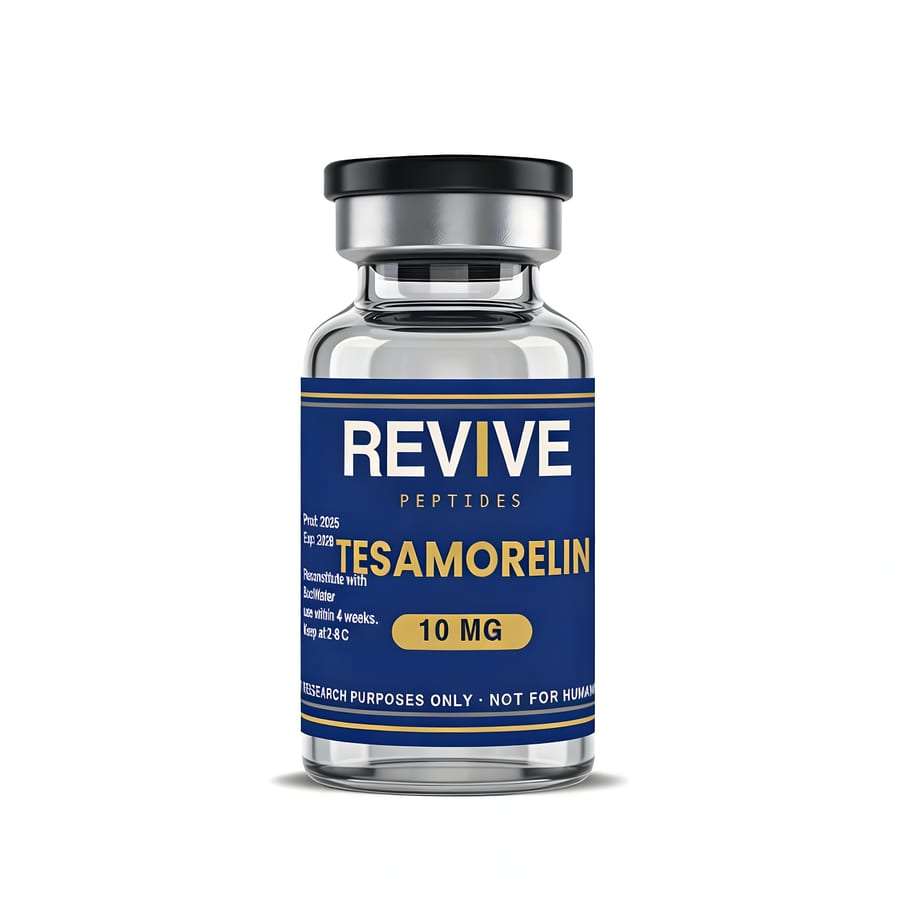
Research Design Considerations for Tesamorelin Studies in the UAE
Reproducibility in any multi-week tesamorelin research programme depends on controlling the variables a supplier and researcher can each influence. On the supply side, that means consistent vial potency, an unbroken cold chain, and verifiable batch quality — which is why REVIVE LAB UAE HPLC-tests every batch and makes certificates of analysis available on request. On the research side, that means documenting protocol decisions consistently across sessions so that any variability observed in outcomes can be traced to a specific, logged variable rather than guessed at after the fact.
REVIVE LAB UAE does not provide dosing, cycling, injection-site, or administration guidance for any compound. Those decisions — including anything related to how, where, or how often a compound is administered — sit entirely with the researcher's own institutional protocol and IRB oversight. What this guide focuses on instead is what REVIVE LAB UAE can speak to directly: getting a stable, correctly-handled, HPLC-verified vial into your hands, and keeping it stable once it arrives.
Order tesamorelin Dubai with same-day dispatch to Marina, JBR, Business Bay & Downtown. 24h delivery to Abu Dhabi, Sharjah & wider UAE. Discreet packaging. Cash on delivery Dubai available. USDT accepted with 5% discount.
Buy Tesamorelin UAE — Same-Day Dubai Dispatch from REVIVE LAB UAE
Reconstitution and Storage: What UAE Climate Demands of Tesamorelin
Dubai ambient temperatures exceed 40°C outdoors from May through September, with Sharjah, Ajman, and Abu Dhabi following closely. This makes cold-chain handling non-negotiable — tesamorelin is a fragile 44-amino-acid peptide and lyophilised peptide vials stored above 25°C for extended periods show measurable degradation of bioactive content.
Reconstitution Best Practices
- Use bacteriostatic water for injection (BAW) as the reconstitution vehicle for multi-use vials. Sterile water for injection (SWFI) is acceptable for single-session use but provides no antimicrobial protection if the vial will be accessed multiple times.
- Add BAW down the inner wall of the tesamorelin vial — never aim the stream directly at the lyophilised pellet. Allow the liquid to flow down to the powder and dissolve it by gentle diffusion. Directing a high-pressure stream at the pellet promotes aggregation.
- Swirl gently — do not vortex or shake. Tesamorelin is notably prone to foam-induced aggregation compared with smaller peptides. Visible foaming during reconstitution is a sign of mechanical stress on the molecule and should prompt a pause and a check of your technique.
- Once reconstituted, store at 2–8°C in a dedicated research refrigerator. Avoid door shelf positions where temperature cycles with each opening. A compact compressor-based refrigerator with stable internal temperature, positioned away from the motor housing, is the optimal UAE laboratory setup.
Bringing a Vial to Room Temperature Before Use
Allowing a reconstituted vial to sit briefly at room temperature before drawing from it gives you an accurate visual read on clarity — the solution should be visually clear and colourless. Any turbidity, particulate matter, or persistent cloudiness after gentle swirling is a discard criterion, not a proceed criterion. This is a quality-control check, not an administration instruction; REVIVE LAB UAE does not advise on injection timing, technique, or scheduling for any compound.
Researchers travelling between Dubai and Abu Dhabi — for example, between facilities in DXB and Masdar City, or for conferences at ADNEC — should use portable peptide coolers with gel packs rather than hotel mini-bar refrigerators for transit storage. Hotel mini-bars cycle erratically between 2°C and 12°C and are not suitable for peptide cold-chain management.
Common Handling Mistakes That Degrade Tesamorelin Before Use
Based on procurement and handling conversations across REVIVE LAB UAE's UAE research buyer base, the following errors appear with enough frequency to warrant explicit enumeration. None require new equipment — only a handling revision. None of the following relates to dosing, injection site, or administration technique, which REVIVE LAB UAE does not advise on for any compound.
Mistake 1: Storing Reconstituted Solution Without a Consistent Cold Chain
A reconstituted vial that cycles between a refrigerator, a warm car, and back again degrades faster than one held at a stable 2–8°C. In UAE summer conditions, even brief uncontrolled exposure accelerates peptide degradation. Map your cold chain from delivery reception through to lab storage and eliminate any gap.
Mistake 2: Shaking Rather Than Swirling the Vial
Tesamorelin is shear-sensitive. Vigorous shaking during reconstitution produces visible foam and initiates peptide aggregation. Any solution showing persistent cloudiness, visible particulate, or discolouration after gentle swirling should not be used — discard and reconstitute fresh.
Mistake 3: Ignoring the Vial's Stability Window
Lyophilised (dry powder) tesamorelin maintains excellent stability when stored as directed, but the reconstituted liquid form is significantly more labile and should be used within the stability window appropriate to the specific vial and reconstitution conditions. Tracking reconstitution date alongside batch reference keeps this variable controlled across a research programme.
FAQ
Can I order tesamorelin with same-day delivery in Dubai?
Yes. REVIVE LAB UAE offers same-day tesamorelin delivery across Dubai — including Marina, JBR, Business Bay, Downtown, and the Palm — for orders placed before 12:00 PM GST. Tesamorelin 24h delivery is available to Abu Dhabi, Sharjah, and the wider UAE. Both 5mg and 10mg vials are held in stock for immediate dispatch. All orders use discreet, unmarked packaging with no peptide-related branding on the exterior. Check live availability and order at revivelab.ae/buy-tesamorelin-uae/.
Does REVIVE LAB UAE offer cash on delivery for tesamorelin in Dubai?
Yes. REVIVE LAB UAE provides cash on delivery for tesamorelin orders across Dubai and the wider UAE — no pre-payment required for COD. Binance Pay (USDT TRC20) is also accepted as a second checkout method, with a 5% pre-pay discount applied at checkout confirmation. All tesamorelin orders ship in discreet, unmarked packaging regardless of payment method. Contact via WhatsApp to confirm TXID for crypto orders.
What tesamorelin vial sizes does REVIVE LAB UAE stock?
REVIVE LAB UAE stocks tesamorelin in 5mg and 10mg vials, both available for immediate UAE-wide dispatch. Both formats are dispatched in cold-compatible packaging for UAE transit conditions. Current stock status at revivelab.ae/buy-tesamorelin-uae/.
- Falutz J, et al. Metabolic effects of a growth hormone-releasing factor in patients with HIV. New England Journal of Medicine. 2007;357(23):2359–2370.
- Falutz J, et al. Long-term safety and effects of tesamorelin, a growth hormone-releasing factor analogue, in HIV patients with abdominal fat accumulation: continuation trial results. New England Journal of Medicine. 2010;363(7):632.
- Stanley TL, et al. Effect of tesamorelin on visceral fat and liver fat in HIV-infected patients with abdominal fat accumulation: a randomized clinical trial. JAMA. 2014;312(4):380–389.
- Stanley TL, et al. Reduction in visceral adiposity is associated with an improved metabolic profile in HIV-infected patients receiving tesamorelin. Lancet HIV. 2019;6(12):e821–e830.
5mg and 10mg vials. Same-day dispatch across Dubai. 24h delivery to Abu Dhabi, Sharjah & wider UAE. Discreet unmarked packaging. Cash on delivery Dubai. USDT accepted with 5% pre-pay discount.
Order Tesamorelin UAE — REVIVE LAB UAE