Tesamorelin Pre-Triathlon Protocol — IRONMAN 70.3 Dubai UAE: A Research Framework for Endurance Performance Science
Why IRONMAN 70.3 Dubai Makes Body Composition a Research Priority
The IRONMAN 70.3 Dubai course is one of the most metabolically demanding events on the MENA triathlon calendar — not because of the distance, which is standard, but because of what the UAE environment adds to every segment. The 1.9 km swim in the Arabian Gulf is manageable. The 90 km bike leg, which cuts out toward Jebel Ali and back through the industrial corridor before looping toward the finish near the DXB approach path, routinely sees road surface temperatures above 50 °C during the later spring edition. The 21.1 km run along the Jumeirah waterfront finishes the destruction. In this environment, excess visceral adiposity is not merely an aesthetics variable — it is an active metabolic liability. Visceral fat elevates resting metabolic heat production, blunts fat-oxidation efficiency at race intensities, and disrupts the hormonal stress response in ways that compete directly with growth hormone pulsatility.
This is the research context that has drawn sports-science investigators based in Dubai, Abu Dhabi, and Sharjah toward tesamorelin — a synthetic analogue of human growth hormone releasing hormone (GHRH) with a published track record of selective visceral fat reduction in controlled trials. Unlike exogenous GH administration, tesamorelin works upstream: it stimulates the pituitary to release GH in natural pulsatile bursts rather than flooding systemic circulation, a distinction that matters considerably for research design and for the downstream feedback loop integrity that endurance physiology depends on.
This article is a research framework, not a training plan or clinical protocol. Everything that follows is written for research coordinators, sports-science investigators, and laboratory procurement teams operating in the UAE. No language here should be read as medical advice, a treatment recommendation, or guidance for human consumption of any kind. The word "protocol" throughout means "research protocol." The word "subjects" means "research subjects."
What the Tesamorelin Literature Actually Establishes
Tesamorelin is a stabilised synthetic analogue of GHRH(1-44) modified at the N-terminus with a trans-3-hexenoic acid group. This modification confers resistance to dipeptidyl peptidase IV (DPP-IV) degradation, meaningfully extending plasma half-life compared to native GHRH while preserving receptor binding specificity at the pituitary GHRH receptor. The downstream cascade — stimulated GH pulsatility, increased hepatic IGF-1 synthesis, enhanced lipolysis in visceral adipocytes — is the same physiological pathway that exercise physiologists care about when designing endurance performance studies.
The evidence base for tesamorelin is unusually strong for a research peptide. Falutz et al. (2007, New England Journal of Medicine) established the compound's visceral fat reduction effect in a large double-blind, placebo-controlled trial — approximately 15% reduction in trunk adiposity versus placebo across 26 weeks of administration. The paper is widely cited because it was the first to clearly demonstrate that selective GHRH-axis stimulation, without exogenous GH, could produce clinically meaningful visceral fat change. Falutz et al. (2010, New England Journal of Medicine), the continuation trial from the same group, extended this dataset and established a key finding for research protocol design: the body-composition benefits of tesamorelin are substantially maintained during continued exposure but partially reverse following cessation. This is not a unique finding in peptide pharmacology — it simply means that endpoint timing relative to protocol conclusion requires deliberate design decisions.
Stanley et al. (2014, JAMA) provided the largest and most methodologically rigorous data set on tesamorelin body composition effects, with approximately 18% VAT reduction versus placebo in a multicentre trial. Critically for sports-science researchers concerned about glucose regulation — given that elevated GH can theoretically impair insulin sensitivity — this trial confirmed metabolic neutrality: tesamorelin did not adversely affect fasting glucose or HbA1c in the study population. Stanley et al. (2019, Lancet HIV) extended the safety picture across 52 weeks of continuous administration, finding no serious adverse event signal attributable to tesamorelin itself — a long-term safety profile that is rare in the GHRH-axis research space and that gives research design teams confidence in multi-month protocol architectures.
None of these trials studied endurance athletes. All were conducted in HIV-associated lipodystrophy populations. The mechanism by which tesamorelin reduces visceral fat is, however, not pathology-specific: visceral adipocytes are GH-receptor-rich regardless of what drove the visceral fat accumulation, and the GHRH-receptor pathway operates the same way across populations. The extrapolation from lipodystrophy to general visceral adiposity in endurance sport research contexts requires scientific caution, but the physiological target is shared — which is why UAE-based researchers find the literature base directly relevant.
The Research Protocol Window: Timing Around IRONMAN 70.3 Dubai
In the Falutz and Stanley trials, statistically significant visceral fat reduction as measured by CT scan or DEXA emerged reliably from week 12 onward, with signal appearing for GH pulsatility and serum IGF-1 changes as early as weeks 4–6. This creates a natural tiered protocol architecture for studies anchored to a fixed competitive calendar event. For IRONMAN 70.3 Dubai, which typically lands in the Q1 calendar window, this means a 12–16 week study initiation in October–November — a period that conveniently follows the post-summer deconditioning window that characterises the UAE athlete population and that gives research coordinators a clean baseline measurement opportunity before heat-training loads ramp up.
Whether to continue, reduce, or discontinue tesamorelin exposure in the final 4 weeks before the target event is an open research design question. The Falutz 2010 continuation data — showing partial reversal on cessation — argues for continuous administration through the event endpoint rather than a washout period, if body composition at the event date is a primary or secondary endpoint. Researchers measuring GH pulsatility or IGF-1 as the primary endpoint may reach a different protocol decision. Both positions are defensible; they just need to be specified in advance in the study design document.
| Protocol Phase | Week Range | Research Focus | Primary Measurable |
|---|---|---|---|
| Baseline Establishment | 0 – 2 | Fasting labs, DEXA or CT-VAT, VO2 proxy | Serum IGF-1, fasting glucose, visceral fat area |
| Early Exposure | 2 – 6 | GH pulsatility response, tolerability | Serum IGF-1 trajectory, subjective recovery score |
| Mid Exposure | 6 – 12 | Lean mass preservation, aerobic load tolerance | Repeat DEXA, training load diary, time-trial proxy |
| Peak Window | 12 – 16 | Visceral fat reduction, performance correlation | CT-VAT or DEXA, race simulation benchmark |
| Event Endpoint | 16 | Competitive event data collection | Race splits, recovery biomarkers, post-race labs |
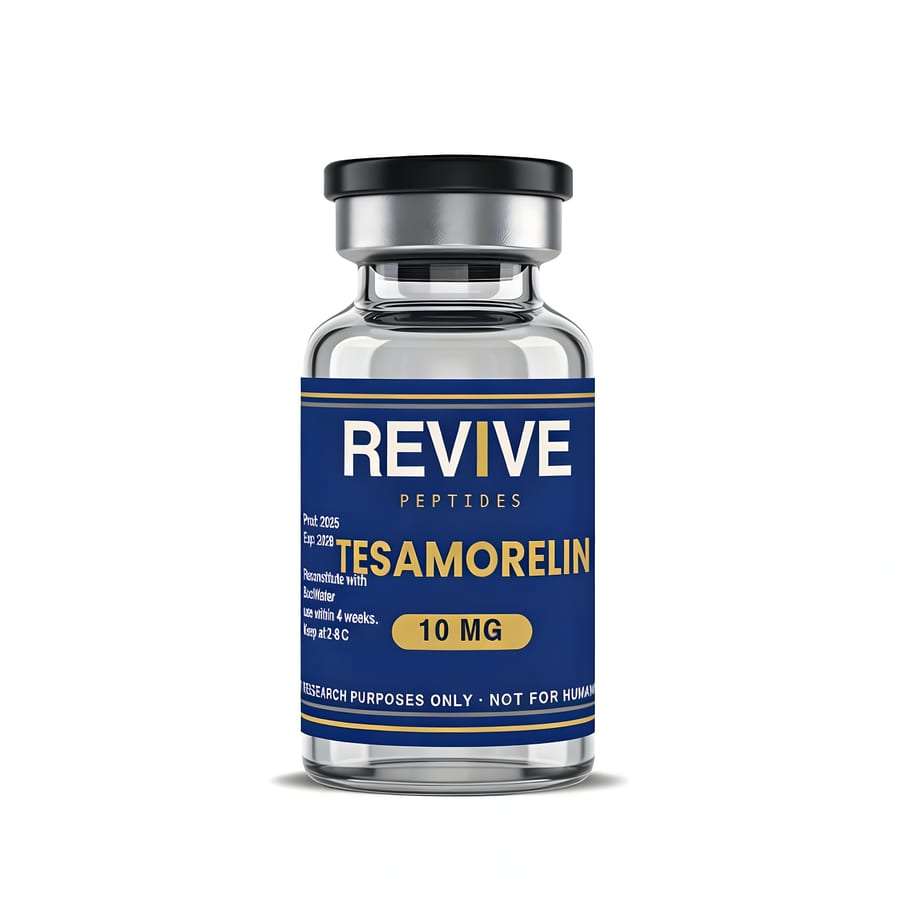
UAE-based research coordinators managing protocol supply should note that ordering tesamorelin for a 12–16 week multi-subject study requires advance planning. REVIVE LAB UAE maintains standing stock of both 5mg and 10mg vials, but endurance-season research demand in Dubai spikes significantly in the September–October window. If your study begins in October, procure the full protocol supply in August or September. REVIVE LAB UAE can fulfill tesamorelin orders UAE-wide with same-day Dubai dispatch and 24-hour delivery to Abu Dhabi and Sharjah facilities.
Tesamorelin 5mg & 10mg — In Stock Now at REVIVE LAB UAE
Same-day dispatch for Dubai research orders. 24h delivery to Abu Dhabi, Sharjah, Ajman. Discreet packaging. Certificate of analysis with every shipment. Cash on delivery available.
Buy Tesamorelin UAE — Same-Day Dubai Dispatch from REVIVE LAB UAEThe UAE Endurance Athlete Profile and Why the GHRH Axis Is a Relevant Research Target
The published tesamorelin trials were conducted in HIV-associated lipodystrophy populations — a condition involving pathological visceral fat accumulation driven by antiretroviral medication side effects. This is a general physiological pathway, which is why the Stanley et al. (2014, JAMA) 18% VAT reduction is interesting to sports-science researchers even though the trial population was entirely different from an endurance athlete cohort.
The UAE endurance athlete profile presents a specific phenotype that makes the GHRH axis a particularly compelling research target. Professional and serious amateur athletes training for IRONMAN 70.3 Dubai, the Abu Dhabi Triathlon, or mountain ultra events in the Hatta highlands frequently carry visceral fat disproportionate to their training volume — a pattern driven by the Gulf professional lifestyle baseline: high sedentary occupational hours, late-night calorie timing common in Marina and JBR social culture, chronically disrupted sleep in a city that operates around the clock, and, critically, years of suppressed GH pulsatility from accumulated sleep debt and elevated evening cortisol. These individuals may train 12–15 hours per week and still present with elevated visceral adipose tissue area on CT scan. The upstream intervention point — the GHRH receptor — is exactly where tesamorelin operates.
Stanley et al. (2014, JAMA) is notable in this context because the 18% VAT reduction in that dataset occurred without significant caloric restriction or structured exercise intervention. For UAE researchers designing a naturalistic study where subjects maintain their existing training loads and no dietary protocol is imposed, this creates a clean separation between the tesamorelin signal and the confounding effects of dietary change — a methodological advantage that makes interpretation of body-composition endpoints much cleaner at week 16.
Secondary Research Stacks: BPC-157 and TB-500 in Multi-Peptide UAE Protocols
Sports-science research teams operating in the UAE are rarely studying a single compound in isolation. Tesamorelin is frequently positioned within multi-peptide research designs alongside compounds targeting connective tissue recovery and acute inflammation regulation. The two that appear most consistently in endurance-adjacent research designs are BPC-157 and TB-500, and both warrant brief treatment here because their mechanisms are orthogonal to the GHRH axis — meaning they do not compete at the receptor level with tesamorelin and can be incorporated into the same research protocol without interference at the primary endpoint.
BPC-157 (body protection compound-157) is a synthetic pentadecapeptide derived from a gastric cytoprotective sequence. Sikiric et al. (2018) reviewed the preclinical BPC-157 literature and identified consistent signal for tendon-to-bone attachment healing and nitric oxide pathway modulation across multiple animal model studies. In a 70.3-distance triathlon research context, the injury signatures that are most relevant — patellar tendinopathy from the run leg, Achilles stress accumulation across the bike-run transition, hip flexor overuse from sustained aero-position time — are precisely the tissue targets that BPC-157 research is focused on. Research coordinators stacking BPC-157 alongside tesamorelin in a UAE protocol should note that BPC-157 also requires cold-chain storage; REVIVE LAB UAE supports both compounds on a single shipment.
TB-500 is the synthetic analogue of Thymosin Beta-4, an actin-sequestering peptide with documented roles in cell migration and tissue remodelling. Goldstein et al. (2012) described Thymosin Beta-4's angiogenic and wound-healing properties in a review of the available preclinical and early clinical evidence. In a UAE triathlon research context, muscle damage from the run leg — compounded by heat-mediated oxidative stress at 35+ °C ambient temperatures along the Jumeirah beachfront — creates a recovery-biology endpoint that TB-500 research is explicitly designed to study. Like tesamorelin and BPC-157, TB-500 is a lyophilised peptide requiring refrigerated storage and cold-chain transit, all of which REVIVE LAB UAE's UAE-wide delivery infrastructure supports.
Ordering Tesamorelin in the UAE: Same-Day Delivery, Discreet Packaging, Cash on Delivery
For UAE research teams, supply-chain reliability is a protocol integrity variable. A 16-week tesamorelin study that loses access to compound at week 10 is not just inconvenient — it is a data validity problem that may require the entire cohort run to be abandoned. This is the operational argument for sourcing from REVIVE LAB UAE rather than international vendors with 7–14 day shipping windows and customs uncertainty: consistent local stock, same-day dispatch for Dubai orders, and a supply relationship that can cover weeks 2, 6, 10, and 14 of your protocol without logistical drama.
Delivery coverage across the Emirates is comprehensive. Orders placed with REVIVE LAB UAE before 4 PM GST on business days qualify for tesamorelin same-day delivery within Dubai — covering JBR, Business Bay, DIFC, Downtown Dubai, Dubai Marina, Palm Jumeirah, Dubai Healthcare City, and Dubai Science Park. Research facilities in Abu Dhabi — including those near Cleveland Clinic Abu Dhabi, NYU Abu Dhabi campus, and the healthcare free zones — receive deliveries within 24 hours. Sharjah, Ajman, RAK, and Fujairah labs are also served within the 24-hour window. All shipments use plain, unbranded outer packaging — tesamorelin discreet packaging UAE is not an upgrade, it is the default for every order.
Cash on delivery Dubai is available for research coordinators who prefer to pay on receipt. For labs operating on crypto-friendly procurement budgets, USDT via Binance Pay (TRC20) is accepted with a 5% pre-pay discount — a practical option for larger bulk protocol orders. Research coordinators purchasing full 12–16 week protocol supply for multi-subject cohorts should reach out via WhatsApp on the product page after placing an initial order to discuss bulk pricing and scheduled delivery cadence.
Tesamorelin in stock UAE availability is displayed in real time on the REVIVE LAB UAE product page. The pre-race season procurement window — September through November for Q1 IRONMAN events — consistently sees the fastest stock movement. If your protocol begins in October, the prudent approach is to place your full supply order in late August. REVIVE LAB UAE has not yet missed a protocol supply requirement for a Dubai-based research team that ordered in advance; the same cannot be said for suppliers shipping from outside the UAE.
Order Tesamorelin UAE — 5mg & 10mg In Stock at REVIVE LAB UAE
24h delivery across UAE. Same-day Dubai dispatch before 4 PM GST. Discreet packaging on every order. Certificate of analysis included. Cash on delivery and USDT accepted.
Buy Tesamorelin UAE — Order from REVIVE LAB UAEFAQ
Can I order tesamorelin with same-day delivery in Dubai?
Yes. REVIVE LAB UAE offers same-day dispatch on tesamorelin orders placed before 4 PM GST on business days, with delivery across Dubai covering JBR, Business Bay, Marina, DIFC, Downtown, Palm Jumeirah, Dubai Healthcare City, and Dubai Science Park. Cash on delivery is available for all Dubai zones. For Abu Dhabi, Sharjah, and wider UAE destinations, the standard delivery window is 24 hours from dispatch. All shipments use cold-pack inserts for lyophilised peptide integrity in UAE transit temperatures.
Does REVIVE LAB UAE offer discreet packaging for tesamorelin orders?
All tesamorelin orders from REVIVE LAB UAE are shipped in plain, unbranded outer packaging with no external markings indicating the product, its category, or the supplier beyond a generic return address. This is the standard for every order — no upgrade required. Discreet packaging applies to all UAE delivery zones including Abu Dhabi, Sharjah, Ajman, RAK, and Fujairah, in addition to all Dubai districts. Cold-pack inserts are included in every shipment to maintain lyophilised peptide stability during UAE ambient-temperature transit.
What vial sizes of tesamorelin does REVIVE LAB UAE stock?
REVIVE LAB UAE currently stocks tesamorelin in 5mg and 10mg lyophilised vials, both suitable for research reconstitution. Certificates of analysis with HPLC purity data are included with every order as standard. Same-day delivery within Dubai and 24-hour UAE-wide delivery apply to both vial formats. For extended research protocols requiring bulk supply across a 12–16 week study, contact REVIVE LAB UAE via WhatsApp on the product page for bulk pricing and scheduled delivery arrangements.
- Falutz J, et al. Metabolic effects of a growth hormone-releasing factor in patients with HIV. N Engl J Med. 2007;357(23):2359–2370.
- Falutz J, et al. Long-term safety and effects of tesamorelin (continuation trial). N Engl J Med. 2010.
- Stanley TL, et al. Effect of tesamorelin on visceral fat and liver fat in HIV-infected patients with abdominal fat accumulation: a randomized clinical trial. JAMA. 2014;312(4):380–389.
- Stanley TL, et al. Long-term effects of tesamorelin on visceral fat and metabolic parameters. Lancet HIV. 2019;6(12):e821–e830.
- Sikiric P, et al. Stable gastric pentadecapeptide BPC 157: novel therapy in gastrointestinal tract. Curr Pharm Des. 2018;24(18):1972–1989.
- Goldstein AL, et al. Thymosin beta4: a multi-functional regenerative peptide — basic properties and clinical applications. Expert Opin Biol Ther. 2012;12(1):37–51.
Ready to Source Tesamorelin for Your UAE Research Protocol?
REVIVE LAB UAE — the UAE's specialist research peptide supplier. Tesamorelin 5mg and 10mg in stock. Same-day Dubai delivery. 24h UAE-wide. Discreet packaging standard. CoA with every order. Cash on delivery and USDT accepted.
Order Tesamorelin UAE — REVIVE LAB UAE