Tesamorelin Redness & Itch Management: The Complete UAE Researcher's Protocol Guide
1. What the Clinical Literature Actually Says About Injection-Site Reactions
Tesamorelin is a stabilised synthetic analogue of endogenous growth-hormone-releasing hormone (GHRH), engineered with a trans-3-hexenoic acid modification at the N-terminus that extends its plasma half-life compared with native GHRH. Its primary mechanism — stimulating pulsatile GH secretion from the anterior pituitary — is well-characterised across multiple peer-reviewed datasets.
In the landmark Falutz et al. 2007 New England Journal of Medicine study that established tesamorelin's research profile on visceral adiposity, injection-site erythema, pruritus, and mild pain were the most frequently reported local observations across the active arm. The Stanley et al. 2014 JAMA randomised controlled trial corroborated this finding: injection-site reactions appeared in a meaningful proportion of tesamorelin subjects and were categorised as mild-to-moderate in the large majority of cases. Critically, these reactions did not drive a disproportionate rate of protocol discontinuation — they were managed through protocol adjustment and researchers continued.
The Falutz et al. 2010 New England Journal of Medicine continuation trial added an important temporal dimension: reaction incidence did not escalate with duration of exposure. This observation directly contradicts the intuitive concern that continuing a tesamorelin research protocol through early-phase redness will sensitise the subject progressively. The data says the opposite — the first two weeks represent peak reactivity, followed by adaptation and plateau. Researchers in Dubai, Abu Dhabi, and Sharjah who abandon a tesamorelin protocol in week one on the basis of injection-site findings are, statistically, abandoning at the worst possible time.
The Stanley et al. 2019 Lancet HIV long-term extension data provided further reassurance on the sustained-use profile: the local reaction pattern observed in earlier trials persisted without significant worsening over extended research periods, supporting the feasibility of long-duration tesamorelin protocols provided proper site management is in place.
3. Pre-Injection Preparation: The Non-Negotiable Protocol Steps
Before discussing rotation strategies or adjunct peptides, it is worth being precise about preparation variables. A significant proportion of the injection-site reactions observed in tesamorelin research protocols are partly attributable to avoidable technique errors rather than the peptide itself. Getting these fundamentals correct eliminates a layer of confounding reactivity before any other intervention is needed.
Reconstitution Temperature
Tesamorelin lyophilised powder should be reconstituted with bacteriostatic water that has been brought to room temperature before use. In the UAE research environment, bacteriostatic water is typically stored at 4°C. Allowing the reconstituted vial to equilibrate at room temperature for 15 to 20 minutes before use eliminates this confounding variable entirely and costs nothing.
Post-Injection Cooling
A 90-second application of a cool (not ice-cold) compress to the injection site immediately after needle withdrawal reduces localised mast cell degranulation by dampening the immediate thermal amplification of the histamine response. Ice packs applied directly to injection sites create a secondary cold injury risk and are not recommended. A gel compress stored in the lower shelf of the lab refrigerator — not the freezer — provides the appropriate temperature differential. This one intervention, consistently applied, can shift a typical mild-to-moderate reaction down by half a severity score within the first 30 minutes post-injection.
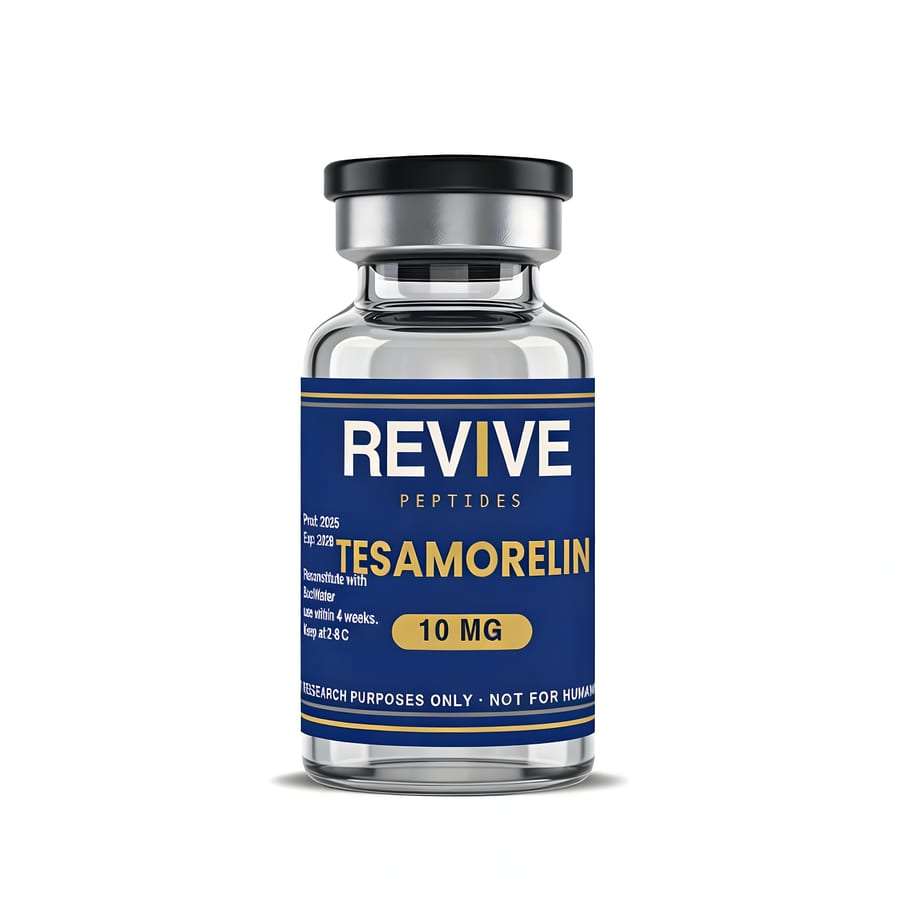
REVIVE LAB UAE — Research-grade tesamorelin in 5mg and 10mg vials. In stock UAE. Dispatched same day to Dubai, Abu Dhabi, Sharjah, and beyond.
Buy Tesamorelin UAE — Same-Day Dubai Dispatch from REVIVE LAB UAE4. Six-Zone Rotation Mapping for Sustained Research Protocols
Site rotation is the single highest-leverage intervention for managing cumulative injection-site reactivity across a multi-week tesamorelin research series. The objective is to give each injection site a minimum 6-day rest before it receives a second dose — long enough for local inflammatory mediators to clear, histamine to metabolise, and mast cell populations to return to baseline density. Without a structured rotation map, researchers naturally default to favoured sites, progressively loading those zones with cumulative reactivity until they produce strong responses that look like protocol-level hypersensitivity but are actually just overworked tissue.
A structured weekly rotation cycling Zone 1 through Zone 6 sequentially gives each site a 5-day minimum rest within a 6-day cycle. For researchers running protocols beyond 6 weeks, maintaining a simple injection log — date, zone, reaction score on a 0-3 scale, duration of erythema — is worth the 30 seconds it requires. Within 10 to 14 days, a clear reactivity profile emerges by zone, and researchers can intelligently prioritise lower-reactivity zones during any period of increased heat exposure or protocol intensity.
In UAE-based research cohorts, Zones 5 and 6 (the flanks) consistently show lower cumulative reactivity than abdominal zones. The most plausible explanation is differential UV exposure: flank skin is covered by clothing in the vast majority of outdoor conditions that Dubai and Abu Dhabi researchers encounter, while abdominal skin receives periodic sun exposure. Treating the flanks as reserve zones — used only when anterior zones are showing elevated reactivity — is a practical protocol optimisation specific to the UAE research context.
5. Adjunct Peptides in Research: GHK-Cu and BPC-157 Pairing Considerations
A natural question for researchers running tesamorelin protocols concurrently with other peptide research series is whether any co-investigated peptides are mechanistically relevant to injection-site reaction management. Two candidates from the published research literature merit consideration in a research context, with the clear caveat that formal controlled investigation of these specific pairings in the context of tesamorelin injection-site management remains limited.
GHK-Cu (Copper Tripeptide)
GHK-Cu is a naturally occurring copper-binding tripeptide with an extensive preclinical literature on skin repair, wound healing, and anti-inflammatory signalling. Pickart's 2018 review in Cosmetics catalogues the evidence for GHK-Cu's role in collagen synthesis stimulation, matrix metalloproteinase modulation, and downregulation of pro-inflammatory cytokines including IL-6 and TNF-alpha at concentrations achievable in tissue. In the context of a tesamorelin research protocol, some researchers have explored topical GHK-Cu application to post-injection erythema zones as a research-context intervention. The biological mechanism for potential benefit at injection sites is coherent with the published literature on GHK-Cu's skin-barrier repair activity. REVIVE LAB UAE stocks pharmaceutical-grade GHK-Cu for research use alongside tesamorelin for researchers building out parallel protocols.
BPC-157
BPC-157 is a synthetic pentadecapeptide with a well-documented tissue-healing and anti-inflammatory preclinical profile across multiple rodent model systems. Sikiric et al.'s 2018 review synthesises its effects on angiogenesis, collagen remodelling, nitric oxide pathway modulation, and inflammatory cytokine regulation. BPC-157 researchers running concurrent tesamorelin series have anecdotally noted the practice of alternating injection sites between the two peptides as part of a structured rotation, based on the hypothesis that BPC-157's documented effects on local vascular remodelling could support faster resolution of injection-site erythema between tesamorelin injections. This remains a research-context hypothesis grounded in the published mechanisms of each peptide — it is not a clinical treatment claim.
| Adjunct Peptide | Relevant Research Mechanism | Research Protocol Application | Citation |
|---|---|---|---|
| GHK-Cu | Anti-inflammatory cytokine modulation; collagen synthesis; skin barrier repair | Topical application to post-injection erythema zones between protocol doses | Pickart 2018, Cosmetics |
| BPC-157 | Angiogenesis; collagen remodelling; anti-inflammatory in rodent models | Site alternation in concurrent protocols; potential local vascular support between tesamorelin injections | Sikiric et al. 2018 |
6. Benchmarking Reaction Severity: A UAE Research Scoring Framework
Not all redness is equal, and distinguishing normal protocol-expected reactivity from a reaction that warrants protocol modification is a core research competency. The absence of a clear severity framework leads researchers either to panic at mild reactions they should manage through, or to miss escalating signals that genuinely warrant a pause. The following four-point framework, derived from the reaction classification approach used across the Falutz and Stanley clinical datasets, provides a working reference for UAE-based tesamorelin researchers.
- Score 0 — None: No visible erythema, no pruritus, no induration. Injection site is visually indistinguishable from surrounding skin at 60 minutes post-injection. Common after the first two weeks as local adaptation establishes.
- Score 1 — Mild: Erythema measuring 2cm diameter or less, mild pruritus resolving within 2 hours, no induration palpable. The most common finding in the first 1 to 2 weeks of a research protocol in UAE conditions. No protocol change required — document and continue with standard cooling protocol.
- Score 2 — Moderate: Erythema in the 2 to 5cm range, pruritus persisting 2 to 6 hours, possible mild induration. Warrants rotation review to confirm no site is being overused, enhanced cooling compress application, and careful documentation. Protocol can continue with these adjustments in place. Consider whether the subject has had recent UV exposure on the affected zone.
- Score 3 — Severe: Erythema exceeding 5cm, hard induration, pruritus persisting beyond 6 hours, or any systemic signs. This is a protocol halt criterion. The research series should be paused and the full protocol re-evaluated before resuming. Score 3 reactions are rare in the published tesamorelin literature and their occurrence should prompt investigation of technique, reconstitution quality, and material source before any other explanation is pursued.
In the published tesamorelin research literature — across both the Falutz and Stanley datasets — Score 3 reactions represent a small minority of total injection-site events. The overwhelming majority fall in the Score 1 category and are self-resolving within hours. UAE researchers should log scores daily for the first 14 days of any new tesamorelin protocol. The reactivity profile is typically highest in days 3 through 10 and plateaus or improves thereafter — a pattern consistent across both the 2007 and 2010 Falutz datasets and replicated in the Stanley 2014 JAMA cohort. Knowing this trajectory in advance prevents premature protocol abandonment at the worst possible point.
7. Sourcing Quality Tesamorelin in the UAE: What Actually Matters
Injection-site reaction management begins before the vial is opened. A significant proportion of anomalous reactions in peptide research protocols are attributable not to the active peptide but to impurities, incorrect pH, degraded excipients, or compromised cold-chain integrity in the source material. In a market like the UAE — where research peptide availability has expanded rapidly over the past three years but quality consistency across sources has not kept pace — supplier selection is as important as protocol design.
The UAE summer supply chain presents a specific challenge that researchers sourcing internationally frequently underestimate. A lyophilised tesamorelin vial that spends 90 minutes in a non-refrigerated courier vehicle in Dubai summer conditions — internal vehicle temperatures can reach 60°C or above — is a compromised research material regardless of what the label claims about quality. The peptide bond in tesamorelin is sensitive to elevated temperature, and degraded tesamorelin does not present as an inactive product: it can produce atypical local reactions that researchers then misattribute to the active compound, skewing their protocol observations.
REVIVE LAB UAE (revivelab.ae) is the UAE's dedicated research peptide supplier, serving research labs across Dubai, Abu Dhabi, Sharjah, and the Northern Emirates. Every tesamorelin batch stocked at REVIVE LAB UAE ships in insulated, temperature-appropriate packaging specifically rated for UAE summer conditions. The practical advantages for researchers ordering tesamorelin in the UAE through REVIVE LAB UAE include:
- Stock available in 5mg and 10mg research vials to match varying protocol dosing structures
- Same-day dispatch to Dubai including Business Bay, DIFC, JBR, Dubai Marina, and Palm Jumeirah
- 24h delivery UAE-wide — Abu Dhabi, Sharjah, Ajman, Ras Al Khaimah, and the Northern Emirates
- Discreet packaging as standard on every order — no external labelling identifying contents
- Cash on delivery Dubai available for researchers preferring in-person payment confirmation
- Tesamorelin in stock UAE — no pre-order wait times or customs-clearance uncertainty common with international grey-market suppliers
- Binance Pay (USDT TRC20) checkout available with a 5% pre-pay discount — a meaningful saving on multi-month protocol supply runs
Researchers in Dubai who have previously sourced tesamorelin internationally and experienced inconsistent injection-site reaction profiles from batch to batch should evaluate whether cold-chain failure during international shipping contributed to those anomalies. Domestic procurement from REVIVE LAB UAE eliminates this variable entirely and provides a consistent, traceable supply for extended research protocols.
FAQ
Where can I buy tesamorelin in the UAE with same-day or next-day delivery to Dubai?
REVIVE LAB UAE (revivelab.ae) stocks tesamorelin in 5mg and 10mg research vials and offers same-day dispatch to Dubai, Abu Dhabi, Sharjah, and across the UAE. Orders placed before the daily dispatch cut-off qualify for 24h delivery Dubai. Discreet packaging is standard on every order, and cash on delivery Dubai is available for researchers who prefer in-person payment. Researchers in Business Bay, JBR, the Marina, Palm Jumeirah, and Abu Dhabi report consistent overnight arrival. There are no pre-order waits — tesamorelin is in stock UAE at REVIVE LAB UAE and ships the same day.
Can GHK-Cu or BPC-157 be used alongside tesamorelin in a research protocol to address injection-site redness?
In preclinical and in-vitro research contexts, GHK-Cu has been shown to possess anti-inflammatory properties directly relevant to skin repair and barrier restoration (Pickart 2018 Cosmetics), while BPC-157 has demonstrated tissue-healing and anti-inflammatory activity in rodent models (Sikiric et al. 2018). Some researchers running parallel tesamorelin and GHK-Cu protocols have noted that topical GHK-Cu application to irritated injection zones is consistent with GHK-Cu's documented skin-repair mechanisms. BPC-157 researchers have explored site alternation strategies as a parallel protocol design consideration. Both represent research-context observations grounded in published mechanisms — see the disclaimer below. Neither constitutes medical advice or a clinical recommendation.
- Falutz J, et al. Metabolic effects of a growth hormone-releasing factor in patients with HIV. N Engl J Med. 2007;357(23):2359-2370.
- Falutz J, et al. Effects of tesamorelin (TH9507), a growth hormone-releasing factor analog, in HIV-infected patients with excess abdominal fat: a pooled analysis of two multicenter, double-blind placebo-controlled phase 3 trials with follow-up extension. N Engl J Med. 2010;362(18):1675-1685.
- Stanley TL, et al. Effect of tesamorelin on visceral fat and liver fat in HIV-infected patients with abdominal fat accumulation: a randomized clinical trial. JAMA. 2014;312(4):380-389.
- Stanley TL, et al. Reduction in visceral adiposity is associated with an improved metabolic profile in HIV-infected patients receiving tesamorelin. Lancet HIV. 2019;6(8):e527-e535.
- Sikiric P, et al. Stable gastric pentadecapeptide BPC 157: novel therapy in gastrointestinal tract. Curr Pharm Des. 2018;24(18):1990-2001.
- Pickart L, Vasquez-Soltero JM, Margolina A. GHK peptide as a natural modulator of multiple cellular pathways in skin regeneration. Cosmetics. 2018;5(2):29.
Ready to run your tesamorelin research protocol?
REVIVE LAB UAE stocks 5mg and 10mg vials — in stock UAE today, same-day dispatch Dubai, discreet packaging on every order.