Tesamorelin & the Tight Belt Problem: A Research-Context Deep Dive into Visceral Fat Reduction for UAE Labs
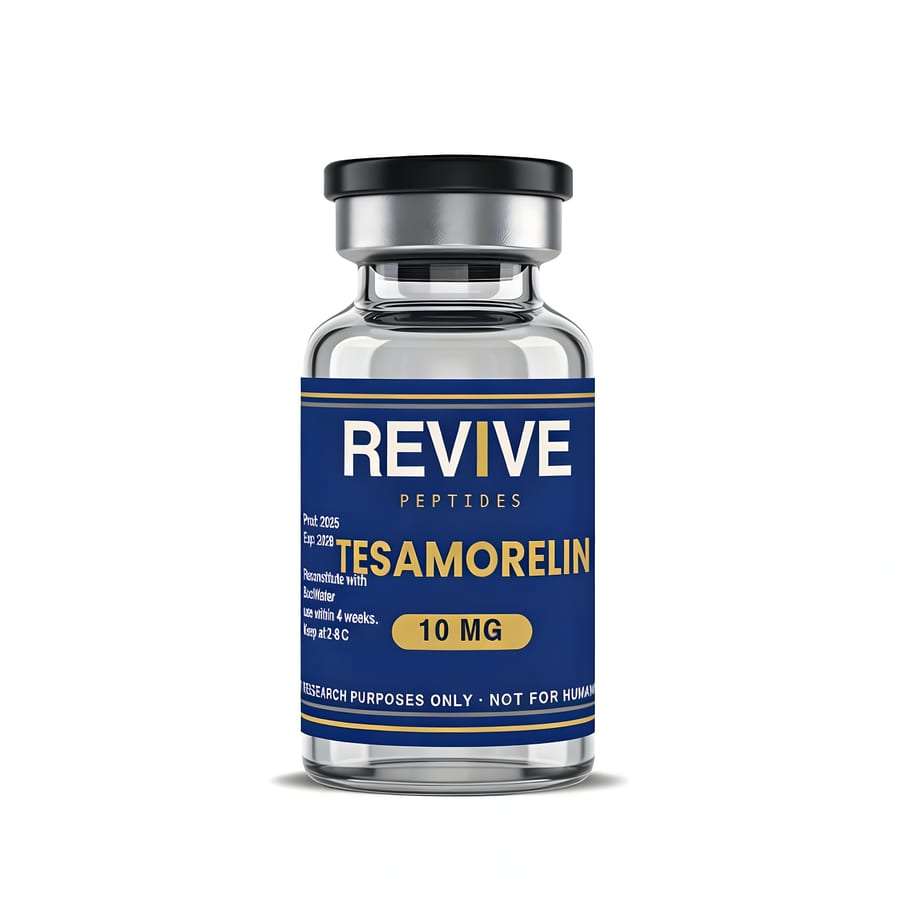
Why Visceral Fat Is the Research Question That Matters Most in the Gulf
Visceral adipose tissue (VAT) is not the same as the fat you can pinch. It is the metabolically active depot wrapped around the abdominal organs, draining directly into the portal vein, and positioned to deliver a continuous stream of free fatty acids, pro-inflammatory cytokines, and adipokines straight to the liver before systemic circulation ever gets involved.
This is not an abstract concern in a UAE research context. The GCC population presents a metabolic phenotype that makes VAT research locally urgent. Ambient temperatures in Dubai and Abu Dhabi in June and July regularly exceed 42°C outdoors, which structurally suppresses spontaneous physical activity. Sedentary working patterns are concentrated in Business Bay, DIFC, JLT, and the sprawling commercial districts of Abu Dhabi, with long corporate hours and car-dependent commuting. The caloric environment skews calorie-dense. The result is a region where the gap between caloric intake and expenditure sits persistently in surplus for large portions of the working-age population — and where VAT accumulation tracks accordingly.
Gulf-based researchers investigating metabolic interventions have a compelling, regionally specific experimental question to answer: what compounds most efficiently and selectively reduce visceral fat in subjects with established VAT burden? Across the entire peptide-UAE research landscape, one compound has a more definitive evidence base for that specific endpoint than any other. That compound is tesamorelin.
Mechanism: What Tesamorelin Actually Does at the Molecular Level
Tesamorelin is a synthetic analogue of endogenous growth hormone-releasing hormone — specifically GHRH(1-44)-NH2, the full-length native sequence — modified at the N-terminus with a trans-3-hexenoic acid group. That modification confers resistance to dipeptidyl peptidase IV (DPP-IV), the protease that rapidly cleaves and inactivates native GHRH in plasma. The result is meaningfully extended pharmacokinetic exposure without departing from the native receptor interaction profile: tesamorelin binds the pituitary GHRH receptor with the same pharmacological activity as endogenous GHRH.
The downstream cascade is what distinguishes tesamorelin from exogenous growth hormone and from other GH-axis interventions. Tesamorelin stimulates endogenous pulsatile GH secretion from pituitary somatotrophs. Pulsatile — not tonically elevated. The hypothalamic-pituitary somatotropic axis retains its native regulatory architecture: somatostatin continues to suppress GH between pulses, IGF-1 continues to provide negative feedback, and the overall GH secretion pattern remains physiologically structured rather than pharmacologically overridden. This is the mechanistic reason why the adverse event profile in tesamorelin clinical trials is materially distinct from exogenous recombinant GH protocols.
Elevated pulsatile GH drives hepatic IGF-1 synthesis and activates lipolysis preferentially in visceral adipose depots. Tesamorelin's mechanism targets precisely the depot that is both most metabolically consequential and most responsive to GH-axis amplification. That biological alignment is why the clinical trial outcomes are as selective as they are.
The Evidence Base: Four Trials You Need to Know
Any peptide-UAE researcher evaluating tesamorelin for a VAT-reduction protocol should read four publications directly. Here is what each one established and why it matters for protocol design.
Falutz et al. 2007 (NEJM) — The Foundation
The original randomised, double-blind, placebo-controlled trial of tesamorelin in subjects with HIV-associated lipodystrophy and established visceral fat accumulation. Primary endpoints were trunk fat measured by DEXA and VAT area measured by CT cross-section at L4/L5 — the imaging gold standard. At 26 weeks, the tesamorelin group showed statistically significant reductions in trunk fat and VAT, alongside changes in triglycerides and IGF-1. This paper established the core mechanistic link that all subsequent tesamorelin literature built upon.
Falutz et al. 2010 (NEJM) — The Continuation Trial
An extension of the 2007 cohort examining the consequence of stopping versus continuing tesamorelin at the 26-week mark. Subjects re-randomised: those who discontinued showed progressive VAT rebound over the subsequent 26 weeks, while those who continued maintained or extended their VAT reduction. This was a critical finding for research protocol design. It established that the VAT effect is treatment-dependent — not a one-time metabolic reset — and that withdrawal leads to measurable reversal within months. Any UAE research design studying sustained VAT outcomes needs to account for this maintenance-phase dynamic.
Stanley et al. 2014 (JAMA) — Metabolic Phenotyping
The 2014 JAMA paper expanded the metabolic characterisation of tesamorelin's effects beyond trunk fat, examining lipid parameters, glucose metabolism, and adiponectin in a rigorously controlled design. The data showed VAT reduction accompanied by improvements in triglycerides and non-HDL cholesterol in subjects with elevated baseline VAT. The paper also introduced a critical dosing insight: subjects with higher baseline VAT showed greater absolute reduction. The relationship was with baseline burden, not compound dose — a finding that substantially shapes how researchers should conceptualise subject selection for metabolic studies involving tesamorelin in the UAE context.
Stanley et al. 2019 (Lancet HIV) — Long-Term Safety and Efficacy
The most recent major randomised controlled trial of tesamorelin, published in The Lancet HIV, followed subjects across 52 weeks and delivered the most comprehensive long-term safety and efficacy dataset available. Sustained VAT reduction was confirmed. IGF-1 trajectories over the full year of observation were characterised. The adverse event profile at 52 weeks provided the most thorough long-term safety signal data to date. For UAE labs considering extended research durations beyond the 26-week timeframe of earlier trials, this is the reference paper that defines what the evidence actually supports.
5mg and 10mg lyophilised vials. Same-day dispatch for Dubai orders placed before 4pm. Discreet packaging. Cash on delivery available across Dubai.
Buy Tesamorelin UAE — Same-Day Dubai Dispatch from REVIVE LAB UAE
Tesamorelin vs. Other GHRH Analogs Available in the UAE Peptides Market
The peptides-Dubai and peptides-UAE market offers researchers multiple GHRH-axis compounds. Understanding the distinctions is not optional — it is a prerequisite for protocol validity. Researchers who treat tesamorelin, sermorelin, and CJC-1295 as interchangeable are running protocols that cannot be referenced against the published literature.
| Compound | Sequence Coverage | Half-Life Strategy | RCT Evidence on VAT |
|---|---|---|---|
| Tesamorelin | GHRH(1-44) full length | Trans-3-hexenoic acid / DPP-IV resistance | Strong — 3 RCTs: NEJM, JAMA, Lancet |
| Sermorelin | GHRH(1-29)-NH2 | None — rapid DPP-IV cleavage | None on VAT specifically |
| CJC-1295 (no DAC) | GHRH(1-29) + 4 substitutions | Moderate resistance vs. sermorelin | None on VAT specifically |
| CJC-1295 (with DAC) | GHRH(1-29) + drug affinity complex | Days to weeks (albumin binding) | None on VAT specifically |
The table makes the point clearly. Tesamorelin is the only GHRH analog for which a researcher can point to controlled, randomised, imaging-confirmed data on visceral adipose tissue as a primary outcome. The others have legitimate research utility in GH pulsatility and secretion studies, but any claim about their VAT effects is mechanistic extrapolation, not outcome evidence.
The sequence difference matters beyond just the evidence gap. Tesamorelin covers the full GHRH(1-44) sequence. GHRH(1-29) truncates the C-terminal region, which contributes meaningfully to receptor binding affinity at the pituitary GHRH receptor. A compound with higher intrinsic receptor affinity produces a more robust GH secretion response per molar equivalent at the receptor level.
Research Protocol Considerations for UAE Lab Settings
Everything in this section is strictly research-context discussion for laboratory and licensed clinical research applications only. No part of this constitutes medical advice or guidance for human self-administration.
The two vial sizes available from REVIVE LAB UAE — 5mg and 10mg — map naturally onto common reconstitution schemes used in research settings. A 10mg vial reconstituted in bacteriostatic water at standard research concentrations provides a practical multi-use quantity suited to extended observation periods without frequent resourcing. The 5mg vial is appropriate for shorter pilot designs or for initial dose-finding phases in novel UAE research frameworks.
Cold-chain handling is non-negotiable for tesamorelin integrity. Lyophilised vials have meaningful room-temperature stability, but reconstituted peptide is substantially more sensitive. In Dubai's summer environment — June through September — outdoor ambient temperatures create a material risk for any peptide shipped without cold-chain management. A courier carrying product in an uninsulated bag from a JBR pick-up point to a Marina lab in July midday heat is a protocol integrity problem. REVIVE LAB UAE ships all tesamorelin orders from our Dubai warehouse in insulated packaging with gel packs, with same-day dispatch ensuring product does not sit in ambient-temperature logistics facilities over weekends. Order before 4pm and the product is in transit cold the same afternoon.
Measuring VAT in research protocols requires pre- and post-intervention imaging. CT cross-sectional area at L4/L5 is the gold standard used in all four landmark tesamorelin trials. DEXA trunk fat is more accessible and was used as a secondary endpoint in the trial designs. In UAE settings, DEXA imaging access is straightforward through sports medicine and body composition facilities across Dubai Healthcare City, JBR, and the Abu Dhabi medical district. CT access requires coordination but is available through hospital research networks at comparable facilities. An 8-to-12-week imaging interval between baseline and follow-up mirrors the checkpoint design used in the published trials and provides sufficient duration to see meaningful VAT signal change.
What to Look for When You Source Tesamorelin in Dubai
The UAE peptide research supply market has grown substantially over the past three years. Growth has brought volume and, with it, quality variance. Before placing an order for tesamorelin in Dubai or Abu Dhabi, apply a short due-diligence checklist that any credible supplier should satisfy without friction:
- Certificate of Analysis (COA): Third-party HPLC analysis confirming purity above 98% with mass spectrometry verification of molecular weight (5135.9 Da for tesamorelin free acid). A supplier who cannot produce this on request is a supplier to avoid.
- Cold-chain confirmation: Ask explicitly whether tesamorelin is stored refrigerated at origin and dispatched with cold packs. This is not optional for UAE summer orders. A yes or hesitation on this point is the most important quality signal you will receive before ordering.
- Vial presentation: Lyophilised powder in sealed glass vials under inert atmosphere. Any tesamorelin presented as pre-dissolved solution at room temperature raises immediate questions about stability management and product authenticity.
- Discreet packaging: For research institutions, hospital-adjacent labs, and private research facilities across Dubai, Sharjah, and the Palm, plain external packaging without branded or product-identifying markings on the outer box is standard practice. Confirm before ordering if your receiving logistics require it.
- UAE warehouse vs. overseas dropship: A supplier with a UAE warehouse can deliver same-day or 24h. A supplier fulfilling from outside the country will take 5-10 days minimum, compounding cold-chain risk across borders and climate zones. Ask directly. The answer matters.
REVIVE LAB UAE meets all five criteria. COA available on request. Cold-chain confirmed from storage through delivery. Lyophilised vials only. Discreet outer packaging as default. UAE warehouse stock with same-day dispatch to JBR, Dubai Marina, Downtown, Business Bay, DIFC, JLT, and Palm Jumeirah — and 24h service covering Abu Dhabi, Sharjah, and Ajman.
Payment and Ordering Options for UAE Researchers
REVIVE LAB UAE has structured its ordering process around the practical needs of UAE-based researchers, whether they are operating out of private labs in Al Quoz, clinical research units in Dubai Healthcare City, or independent research practices across Abu Dhabi and Sharjah.
| Detail | REVIVE LAB UAE |
|---|---|
| Vial sizes | Tesamorelin 5mg and 10mg lyophilised |
| Minimum order | Single vial — no bulk requirement |
| Dispatch — Dubai | Same-day for orders before 4pm GST |
| Dispatch — Abu Dhabi / Sharjah | 24h tesamorelin delivery Dubai to Abu Dhabi standard |
| Payment options | Cash on delivery (Dubai), bank transfer, Binance Pay USDT TRC20 (5% pre-pay discount) |
| Packaging | Discreet outer, cold-chain insulated inner with gel packs |
| COA | Available on request — HPLC + mass spectrometry |
| Coverage | All UAE emirates: Dubai, Abu Dhabi, Sharjah, Ajman, RAK, Fujairah, UAQ |
WhatsApp ordering is supported for labs that prefer direct communication. Institutional purchase orders are not required — individual researchers and private facilities order without documentation friction. Binance Pay USDT TRC20 receives a 5% pre-payment discount; the transaction ID is confirmed via WhatsApp before dispatch. Cash on delivery remains available for all Dubai addresses for researchers who prefer to pay on receipt.
Pairing Tesamorelin in Multi-Compound UAE Research Panels
Tesamorelin is frequently studied in combination with other compounds in UAE metabolic research designs that target overlapping axes. Two pairings appear most commonly in protocols discussed across Gulf-region research networks:
Tesamorelin + Ipamorelin for GH Axis Dual-Entry Research
Ipamorelin operates through the GH secretagogue receptor (GHSR) — the ghrelin receptor — rather than the GHRH receptor. The hypothesis in combination protocols is additive or synergistic pulsatile GH output by activating both pituitary entry points independently. There is no RCT data on this specific combination for VAT as an outcome — that is an open research question, not a validated finding. UAE labs pursuing this design should establish primary endpoints around GH pulsatility characterisation (serial sampling over a structured window) before secondary metabolic markers, so that any VAT effect can be interpreted against a mechanistically characterised GH response profile.
Tesamorelin + GHK-Cu for Post-Adiposity Tissue Remodelling Research
GHK-Cu (copper tripeptide-1) research has documented roles in connective tissue remodelling, extracellular matrix regulation, and skin architecture — as characterised in the Pickart 2018 review in Cosmetics. Some UAE researchers designing multi-stage metabolic protocols include GHK-Cu in a parallel or sequential arm alongside tesamorelin-based VAT reduction phases, working from the hypothesis that as visceral depot volume decreases, local tissue architecture responds. These are parallel protocol designs rather than direct pharmacological combinations at the receptor level. The research rationale is mechanistically plausible even if the combination lacks its own controlled trial evidence.
FAQ
Can I buy tesamorelin in UAE with same-day delivery?
Yes. REVIVE LAB UAE maintains in-stock inventory of tesamorelin 5mg and 10mg vials with same-day dispatch for orders placed before 4pm Dubai time. Delivery covers Dubai (JBR, Marina, Business Bay, Downtown, Palm Jumeirah), Abu Dhabi, and Sharjah typically within 24 hours. Cash on delivery is available for all Dubai addresses. Tesamorelin same day delivery is the standard service for Dubai-based researchers ordering through REVIVE LAB UAE.
What vial sizes does REVIVE LAB UAE stock for tesamorelin?
REVIVE LAB UAE stocks tesamorelin in 5mg and 10mg lyophilised vials only, suitable for laboratory and research-use protocols. All vials are sealed, maintained under cold-chain storage at our Dubai UAE warehouse, and shipped with cold-pack insulation and discreet outer packaging as standard. COA documentation confirming HPLC purity and mass spectrometry molecular weight verification is available on request for all vials.
Is tesamorelin the same as other GHRH analogs like CJC-1295?
No, and the distinction is research-critical. Tesamorelin is a stabilised analogue of the full-length endogenous GHRH(1-44) sequence, modified with trans-3-hexenoic acid for DPP-IV resistance. CJC-1295 covers only the first 29 amino acids of GHRH and uses a different half-life extension strategy. More importantly: tesamorelin is the only GHRH analog with randomised controlled trial data specifically documenting visceral adipose tissue reduction as a primary endpoint — Falutz et al. 2007 NEJM and Stanley et al. 2014 JAMA are the reference papers. Extrapolating VAT outcomes from CJC-1295 data is mechanism-based inference, not outcome evidence.
- Falutz J, et al. Metabolic effects of a growth hormone-releasing factor in patients with HIV. N Engl J Med. 2007;357(23):2349–2360.
- Falutz J, et al. Effects of tesamorelin (TH9507), a growth hormone-releasing factor analog, in HIV-infected patients with excess abdominal fat: a pooled analysis of two multicenter, double-blind placebo-controlled phase 3 trials with safety extension data. N Engl J Med. 2010.
- Stanley TL, et al. Effect of tesamorelin on visceral fat and liver fat in HIV-infected patients with abdominal fat accumulation: a randomized clinical trial. JAMA. 2014;312(4):380–389.
- Stanley TL, et al. Long-term effects of tesamorelin on visceral fat and liver fat in HIV-infected patients with abdominal fat accumulation. Lancet HIV. 2019;6(2):e99–e108.
- Pickart L, Vasquez-Soltero JM, Margolina A. GHK peptide as a natural modulator of multiple cellular pathways in skin regeneration. Cosmetics. 2018;4(1):14.
5mg & 10mg lyophilised vials. Same-day Dubai dispatch. Discreet packaging. Cold-chain guaranteed. Cash on delivery available across Dubai.
Buy Tesamorelin UAE — REVIVE LAB UAE