Tesamorelin vs Bremelanotide — Research Comparison for UAE Labs (2026)
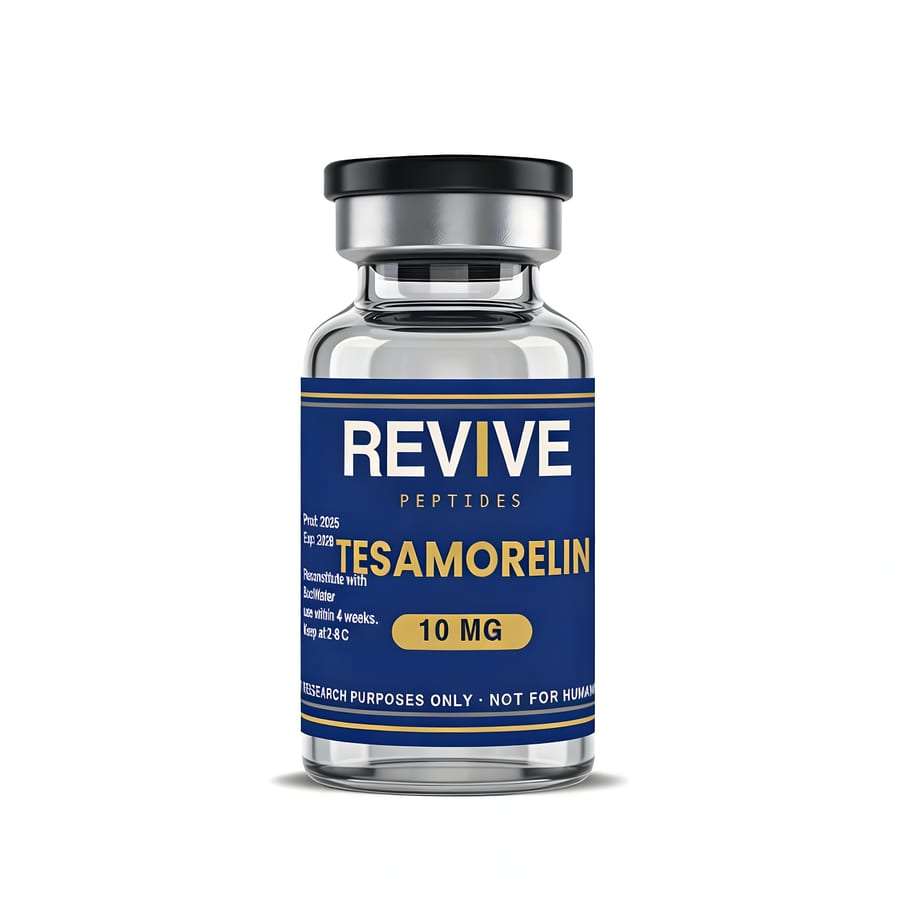
Why UAE Research Labs Are Comparing These Two Peptides
The peptide research landscape in the UAE has matured faster than most regional markets anticipated. Labs operating out of Business Bay towers, the Dubai Science Park cluster, and research facilities near DXB are running increasingly sophisticated multi-compound protocols — and procurement teams are no longer ordering blindly. They want to understand the mechanistic distinctions between compounds before committing to a research direction. Among the comparison requests we field at REVIVE LAB UAE, tesamorelin versus bremelanotide comes up with striking regularity.
On the surface the comparison appears counterintuitive. Tesamorelin is a well-characterised GHRH (growth hormone-releasing hormone) analog with a robust clinical literature trail spanning multiple NEJM, JAMA, and Lancet publications. Bremelanotide — catalogued in research contexts as PT-141 — is a synthetic melanocortin receptor agonist derived from a structural modification of melanotan II, with a pharmacodynamic profile that has nothing to do with the GH axis. The receptor systems, downstream signalling pathways, and translational research frameworks are completely non-overlapping.
The reason researchers keep pairing these two in sourcing conversations is not mechanistic — it is logistical. Both are cold-chain peptides commanding premium pricing. Both require reliable UAE-based suppliers to avoid the import delays and customs complications that plague labs ordering from European or North American distributors. And both represent research categories where compound quality has an outsized effect on data validity. This post gives you the side-by-side breakdown you actually need: mechanism, literature, protocol considerations, and where the UAE procurement picture stands today.
Tesamorelin: Receptor System, Research Profile, and the Published Evidence Base
Tesamorelin is a 44-amino acid synthetic analog of human GHRH, modified at the N-terminus with a trans-3-hexenoic acid group. This structural modification extends plasma half-life relative to endogenous GHRH(1–44) while preserving high-affinity binding to the GHRH receptor (GHRHR) on anterior pituitary somatotroph cells. Receptor activation drives pulsatile GH secretion, and downstream IGF-1 synthesis in peripheral tissues — a clean, well-characterised signalling cascade with decades of validated assay infrastructure behind it.
What sets tesamorelin apart from most research peptides in the GHRH class is the quality of its published evidence. This is not a peptide supported only by preclinical rodent data and grey-literature case reports. The landmark Falutz et al. 2007 NEJM study demonstrated significant visceral adipose tissue reduction in a rigorous double-blind, placebo-controlled trial design. The Falutz et al. 2010 NEJM continuation trial extended those findings over a 26-week follow-on period, confirming durability of GH-axis response with sustained compound exposure. Stanley et al. 2014 in JAMA then documented visceral fat modulation effects in a distinct population model, widening the translational research interest considerably beyond the original study context. Stanley et al. 2019 in Lancet HIV provided 52-week longitudinal data — an unusually long observation window for a peptide research compound — cementing tesamorelin as the best-characterised GHRH analog in the peer-reviewed literature.
For researchers designing GH-axis protocols, tesamorelin's critical attribute is its preservation of physiological feedback regulation. Unlike direct GH secretagogues — ghrelin mimetics such as ipamorelin or MK-677 class compounds — tesamorelin works upstream, at the GHRH receptor. Somatostatin counter-regulation remains intact. The resulting GH release is pulsatile and feedback-responsive rather than a pharmacologically imposed surge. This makes tesamorelin the more physiologically relevant tool for research questions involving GH secretion dynamics, IGF-1 modulation kinetics, or the relationship between GH axis activity and adipose tissue metabolism.
REVIVE LAB UAE stocks tesamorelin in 5mg and 10mg lyophilised research vials, both available for immediate dispatch from our Dubai facility.
5mg & 10mg research vials · Same-day Dubai dispatch · Cold-chain packaging · Cash on delivery available
Buy Tesamorelin UAE — Same-Day Dubai Dispatch from REVIVE LAB UAE
Bremelanotide (PT-141): Receptor System and Research Distinction
Bremelanotide is a synthetic heptapeptide derived from melanotan II (MT-II), itself a cyclic analog of alpha-melanocyte-stimulating hormone (α-MSH). The structural relationship to MT-II is close but pharmacologically significant: a C-terminal modification shifts bremelanotide's receptor selectivity profile relative to its parent compound. Bremelanotide acts primarily as an agonist at melanocortin receptors MC3R and MC4R, with lower affinity at MC1R and MC5R.
This is an entirely different receptor system from the GHRH axis. Melanocortin receptors are G-protein-coupled receptors (GPCRs) operating primarily through Gs-coupled cAMP-mediated intracellular signalling. MC4R is densely expressed in hypothalamic nuclei and has been studied in research contexts involving central regulation of energy homeostasis, autonomic function, and neuroendocrine feedback. MC3R shows both central and peripheral expression, including limbic regions and adipose tissue. Bremelanotide's agonist activity at both of these receptors gives it a distinctly CNS-weighted research profile — the relevant biology is happening in the brain, not the pituitary or peripheral fat depots.
The published literature on bremelanotide is thinner than for tesamorelin and skews heavily toward preclinical work. There is no equivalent of the tesamorelin NEJM/JAMA/Lancet trifecta in the melanocortin research literature. Labs setting up bremelanotide protocols are navigating a sparser primary source environment and should plan for more conservative interpretation of translational relevance. That is not a condemnation of bremelanotide as a research tool — it is simply an accurate characterisation of where the evidence base currently stands, and any researcher designing around it deserves that transparency upfront.
Head-to-Head Comparison: What Matters for Research Protocol Design
The following table compares tesamorelin and bremelanotide across the dimensions that genuinely matter when designing a research protocol, allocating procurement budget, or evaluating whether a compound fits a specific research objective. This is a research-context framework only.
| Parameter | Tesamorelin | Bremelanotide (PT-141) |
|---|---|---|
| Peptide class | GHRH analog (44 amino acids) | Melanocortin receptor agonist (heptapeptide) |
| Primary receptor target | GHRHR (anterior pituitary somatotrophs) | MC3R, MC4R (hypothalamic/limbic CNS) |
| Downstream signalling | Pulsatile GH release → IGF-1 axis | Gs-coupled cAMP via melanocortin GPCRs |
| Feedback regulation preserved? | Yes — somatostatin counter-regulation intact | Separate axis; not applicable |
| Primary research area | GH secretion dynamics, visceral adipose tissue, metabolic signalling | CNS melanocortin pathways, hypothalamic signalling, autonomic function |
| Peer-reviewed RCT evidence base | Strong — NEJM (2007, 2010), JAMA (2014), Lancet HIV (2019) | Limited; primarily preclinical and small observational studies |
| Cold-chain requirement | Yes — lyophilised, refrigerated dispatch | Yes — lyophilised, refrigerated dispatch |
| Available from REVIVE LAB UAE | Yes — 5mg and 10mg vials, in stock | Check current availability at revivelab.ae |
The practical implication of this receptor-level divergence is that tesamorelin and bremelanotide are not interchangeable and should never be treated as substitutes based on availability. A lab investigating GH-axis pulsatility or visceral adipose tissue dynamics in a metabolic model has zero use case for a melanocortin agonist. A lab probing MC4R-mediated hypothalamic signalling has zero use case for a GHRH analog. This sounds obvious when stated plainly — but procurement decisions in the UAE peptide market do get driven by supply availability and pricing rather than protocol requirements, and that produces compromised data.
If your research question touches the GH axis, IGF-1 signalling, or metabolic tissue biology, tesamorelin is the well-supported choice with a literature framework you can actually cite. If your research question lives in the CNS melanocortin system, that is a different procurement conversation entirely.
Research Protocol Considerations: A Closer Look at the Tesamorelin Framework
For labs that have confirmed tesamorelin as the appropriate compound for their research objective, the published literature provides a practical methodological scaffold. Across the major RCTs — Falutz et al. 2007, Falutz et al. 2010, Stanley et al. 2014, Stanley et al. Researchers should consult these primary sources for the specific temporal parameters and outcome measurement intervals relevant to their model system; the published methods sections are detailed enough to serve as genuine methodological references rather than black boxes.
One variable that deserves particular attention in GH-axis research is baseline characterisation. Because tesamorelin amplifies pulsatile GH secretion through an intact feedback loop rather than bypassing pituitary regulation, baseline somatotroph function in the model system substantially affects outcome variability. Labs observing inconsistent IGF-1 response data in their tesamorelin protocols should audit baseline GH measurement timing before attributing the variance to compound quality or batch-to-batch differences. The pulsatile nature of GH secretion means that a single-point baseline measurement is rarely sufficient.
Reconstitution protocol also matters more than researchers accustomed to more forgiving small-molecule tools often appreciate. Tesamorelin belongs to a structural class where suboptimal reconstitution — incorrect diluent pH, aggressive vortexing, excessive reconstitution volume — can accelerate degradation via methionine oxidation or aspartate isomerisation without producing obvious visual cues. A degraded batch may still show an HPLC peak and immunoreactivity on a standard ELISA while delivering attenuated biological potency. Standard practice is bacteriostatic water as diluent, gentle reconstitution, and avoidance of repeated freeze-thaw cycling post-reconstitution.
The 5mg vial format from REVIVE LAB UAE is well-suited for shorter protocol runs or multi-arm comparative studies where vial integrity across repeated use is a concern. The 10mg vial is the practical choice for extended single-arm protocols or labs running parallel cohorts simultaneously. Both formats arrive lyophilised with cold-chain packaging — a non-trivial logistics point for facilities receiving orders at JBR, Palm Jumeirah, or Abu Dhabi addresses during UAE summer months, where ambient temperatures during last-mile delivery can compromise non-insulated packages.
Purity, Testing, and Why Compound Quality Defines Data Quality
The UAE research peptide market has a well-documented quality fragmentation problem. Procurement managers at labs in Sharjah and Dubai report the same pattern repeatedly: inconsistent stock from grey-market distributors, no cold-chain documentation, no recourse on purity shortfalls, and no paper trail when a batch underperforms. For commodity supplies this is an inconvenience. For a research-grade GHRH analog where the biological response is the entire point, it is a fundamental threat to data validity.
Single-point HPLC purity is an inadequate specification for tesamorelin quality assessment. As noted above, the peptide's primary degradation pathways — methionine oxidation and aspartate isomerisation under temperature stress or improper storage — can reduce receptor binding affinity without dramatically altering the HPLC retention time profile. A batch that shows 98% HPLC purity may still be biologically compromised if it has experienced cold-chain failures upstream. Mass spectrometry confirmation of intact molecular weight is the minimum meaningful supplementary test, and sequence integrity verification via MS/MS is the gold standard for a compound this size.
REVIVE LAB UAE sources from manufacturers whose QC process includes mass spectrometry alongside HPLC. We do not publish certificates of analysis as a matter of policy — those documents contain supplier identification information that would compromise supply chain security — but documentation is available on request for research institutions requiring it for their own compliance records or IRB submissions. Contact us via WhatsApp with your institutional affiliation and we will handle the paperwork directly.
Sourcing in the UAE: The Procurement Reality for Research Labs
Labs in Dubai, Abu Dhabi, and Sharjah face a structural disadvantage when ordering from international peptide suppliers. The UAE customs environment for research-grade peptides shipped from the US, Germany, or China has produced a pattern of delays, confiscations, and compliance complications that effectively make cross-border ordering an unreliable procurement strategy for time-sensitive research protocols. The alternative — sourcing domestically from a UAE-based operation — eliminates the customs layer entirely. Your order moves through domestic courier infrastructure, not international inspection channels.
REVIVE LAB UAE was built around the logistics realities of the Emirates research market specifically. The operational setup reflects what UAE-based labs actually need:
- Same-day dispatch in Dubai for orders placed before 4 PM — covers Business Bay, DIFC, JBR, the Marina corridor, Downtown, and surrounding areas
- 24-hour delivery to Abu Dhabi, Sharjah, Ajman, and Ras Al Khaimah — reliable for labs across the Northern Emirates and Abu Dhabi research facilities
- Cold-chain packaging on every tesamorelin order — gel packs and insulated mailers, not afterthought bubble wrap; relevant given UAE summer ambient temperatures
- Discreet packaging as standard — no product name, no branding, no description on exterior packaging; discretion built into the default process, not an add-on
- Cash on delivery available in Dubai — no upfront payment required for local orders; particularly useful for labs with slow institutional procurement cycles
- Binance Pay / USDT TRC20 accepted — for procurement teams requiring a non-banking payment channel, with a 5% pre-pay discount applied automatically
For labs procuring at research volume — university research units at UAEU or affiliated Abu Dhabi institutions, private research facilities near DXB, or multi-site research operations across the Emirates — REVIVE LAB UAE operates bulk pricing tiers not listed publicly. WhatsApp us directly via the contact number on the site; volume enquiries are handled through direct conversation, not a public price grid. Typical turnaround for a volume quote is under two hours during UAE business hours.
FAQ
Can I order tesamorelin with same-day delivery in Dubai?
Yes. REVIVE LAB UAE dispatches tesamorelin orders placed before 4 PM on the same day across Dubai — covering Business Bay, DIFC, Downtown, JBR, the Marina, Palm Jumeirah, and surrounding areas. Abu Dhabi, Sharjah, and other Emirates are on a 24-hour delivery window. Every order ships with discreet outer packaging: no product name, no branding, no exterior labelling beyond the courier details. Cash on delivery is available for Dubai addresses.
What vial sizes of tesamorelin does REVIVE LAB UAE stock?
REVIVE LAB UAE stocks tesamorelin in 5mg and 10mg research vials. Both formats are lyophilised and dispatched with cold-chain insulated packaging. The 5mg vial suits shorter protocols, multi-arm studies, or labs managing vial integrity across repeated-use sessions. The 10mg vial is the practical choice for extended single-arm research runs or labs running parallel cohorts. Both formats are in stock for immediate dispatch — check revivelab.ae for real-time availability.
How does tesamorelin differ from bremelanotide as a research peptide?
The difference is foundational — these two peptides operate through entirely different receptor systems and are not interchangeable research tools. Tesamorelin is a GHRH analog that activates the GHRH receptor on anterior pituitary somatotrophs, driving pulsatile GH secretion and downstream IGF-1 synthesis. It has a strong peer-reviewed evidence base including Falutz et al. NEJM (2007, 2010), Stanley et al. JAMA (2014), and Stanley et al. Lancet HIV (2019). Bremelanotide (PT-141) is a melanocortin receptor agonist with primary activity at MC3R and MC4R — a CNS-dominant research profile centred on hypothalamic and limbic signalling that has nothing to do with the GH axis. Choose your compound based on your research question, not on which one is easier to source.
- Falutz J, Allas S, Blot K, et al. Metabolic effects of a growth hormone-releasing factor in patients with HIV. N Engl J Med. 2007;357(23):2359–2370.
- Falutz J, Mamputu JC, Potvin D, et al. Effects of tesamorelin (TH9507), a growth hormone-releasing factor analog, in HIV-infected patients with abdominal fat accumulation: continuation trial results. N Engl J Med. 2010 [continuation trial].
- Stanley TL, Falutz J, Marsolais C, et al. Reduction in visceral adiposity is associated with an improved metabolic profile in HIV-infected patients receiving tesamorelin. JAMA. 2014;312(4):380–389.
- Stanley TL, Feldpausch MN, Oh J, et al. Effect of tesamorelin on visceral fat and liver fat in HIV-infected patients with abdominal fat accumulation: a randomised clinical trial. Lancet HIV. 2019.
In stock now · 5mg & 10mg vials · Same-day Dubai dispatch · 24h delivery UAE-wide · Discreet packaging · Cash on delivery
Order Tesamorelin UAE — REVIVE LAB UAE