Tesamorelin vs Tesofensine — Research Comparison for UAE Labs (2026)
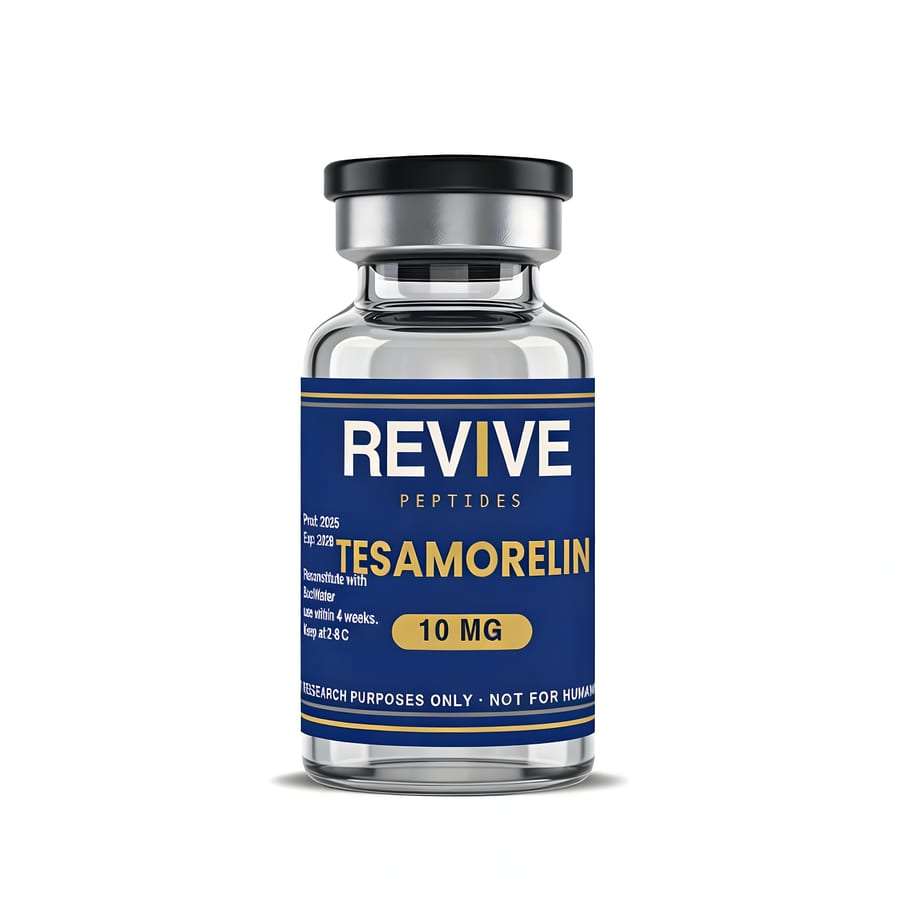
Why UAE Researchers Are Comparing These Two Compounds
As Dubai's research peptide procurement market matures — driven by facilities in Business Bay, DXB-adjacent biotech parks, and the expanding life-sciences corridor between Abu Dhabi and Sharjah — research coordinators are increasingly running structured compound comparisons before finalising protocol specifications. The tesamorelin vs tesofensine question surfaces with increasing frequency, and it is understandable why: both compounds have, at various points, been discussed in the context of metabolic and body-composition research endpoints.
The comparison falls apart almost immediately when you examine the published literature side by side. These are not two versions of the same tool in different formulations. They are different molecule classes, different mechanisms, different downstream axes, different evidence profiles, and different practical footprints in terms of what a UAE research team can actually do with the published data. This article is a specific, opinionated breakdown of those differences for researchers who need to make a sourcing decision, not a diplomatically hedged survey of both compounds.
For the record: REVIVE LAB UAE stocks tesamorelin in 5mg and 10mg lyophilised vials with same-day dispatch from Dubai. Tesofensine is not a compound we stock, and the reasons behind that decision are woven into the analysis below.
Nothing in this article constitutes medical advice. All content is written for in-vitro and controlled laboratory research context only.
Tesamorelin: The GHRH Analog With the Strongest Research Dossier in Its Class
Tesamorelin is a synthetic analog of growth hormone-releasing hormone (GHRH). Its 44-amino-acid sequence is stabilised by a trans-3-hexenoic acid modification at the N-terminus, which extends its half-life relative to endogenous GHRH and makes it viable as a research tool for sustained GH-axis stimulation protocols. It acts directly on pituitary GHRH receptors, stimulating pulsatile growth hormone secretion, which in turn drives downstream IGF-1 production and the metabolic consequences associated with elevated GH activity.
What distinguishes tesamorelin in the research landscape is not its mechanism alone — several GHRH analogs exist — but the depth and quality of its published evidence base. The anchor publication is Falutz et al. 2007 in the New England Journal of Medicine, a randomised, double-blind, placebo-controlled Phase III trial that established tesamorelin's capacity to reduce visceral adipose tissue (VAT) in a well-defined research cohort. This was not a pilot study or a single-centre observation. It was a multi-centre, rigorously controlled trial published in what is arguably the world's most selective medical journal.
The 2010 continuation trial by Falutz et al. (again NEJM) extended follow-up and characterised the durability of the VAT reduction endpoint over a longer observation window, including the reversal dynamics observed after discontinuation. This kind of two-paper, same-journal sequential publication record is unusual and signals a compound with unusually strong Phase III support. Stanley et al. 2014 in JAMA then added metabolic and hepatic secondary endpoint data, and Stanley et al. 2019 in Lancet HIV provided long-term outcomes analysis including cognitive secondary endpoints.
Four first-tier journal publications across twelve years of Phase III follow-up. For UAE researchers designing a protocol that will face IRB review, institutional documentation requirements, or export to a partner lab in Europe — that is the literature footprint that matters.
Dose Range and Vial Format in Research Context
REVIVE LAB UAE supplies tesamorelin in 5mg and 10mg lyophilised vials specifically to serve multi-week research protocols at these documented ranges without requiring high-frequency vial turnover. The 10mg vial format is particularly suited to longer-duration protocols where minimising reconstitution events and handling steps is a priority. Both formats are cold-chain maintained from storage through last-mile delivery in Dubai, Abu Dhabi, Sharjah, and beyond.
Tesofensine: A Different Class, Different Axis, Different Evidence Profile
Tesofensine is a small-molecule triple monoamine reuptake inhibitor. It acts simultaneously on the serotonin transporter (SERT), the norepinephrine transporter (NET), and the dopamine transporter (DAT). Its mechanism has nothing to do with the GH axis, pituitary receptor stimulation, or IGF-1 modulation. It is a centrally acting agent that elevates monoamine tone in the brain — a mechanism more closely related to antidepressants and stimulants than to peptide hormonal analogs.
Tesofensine's research history begins in neurodegenerative disease. It was originally investigated as a candidate for Parkinson's disease and Alzheimer's disease based on its dopaminergic and noradrenergic activity. Early clinical observations of weight change in these neurological study populations redirected research interest toward metabolic endpoints — specifically appetite regulation and energy balance — in the late 2000s and early 2010s. That is how a CNS drug candidate ended up being compared to a metabolic peptide.
Tesofensine does have published clinical data. Phase II work exists, primarily from Scandinavian research groups, and the compound has genuine scientific interest in the appetite-modulation research space. The problem, for UAE researchers who need to specify a compound in a documented protocol, is the evidence tier. No tesofensine Phase III study has been published in NEJM, JAMA, Lancet, or Lancet sub-journals. The compound has not cleared regulatory approval in any major jurisdiction. The published Phase II profile raises cardiovascular and blood pressure signals that require dedicated monitoring frameworks — adding protocol complexity that most UAE commercial research facilities are not resourced to manage.
Comparing tesofensine to tesamorelin on evidence depth is not a close call. One compound has four first-tier journal Phase III publications. The other does not. That is the analysis.
5mg and 10mg vials. 24h delivery Dubai, Abu Dhabi, Sharjah. Discreet packaging. Full CoA included.
Buy Tesamorelin UAE — Order Now from REVIVE LAB UAE
Mechanism Side-by-Side: Not Two Versions of the Same Thing
The comparison below illustrates why choosing between these two compounds is not a matter of preference within the same category — it is a category-level decision about which research axis your protocol is designed to interrogate.
The Research Data Gap Is Decisive, Not Marginal
In research procurement contexts — particularly in the UAE, where institutional research environments are increasingly rigorous about compound sourcing and protocol justification — the quality of the published evidence behind a compound is not an academic footnote. It is a primary procurement variable.
When a research coordinator at a Dubai facility or a PI at an Abu Dhabi biomedical centre writes a protocol that specifies tesamorelin, they can cite Falutz et al. 2007 (NEJM) as the primary efficacy reference, Falutz et al. 2010 (NEJM) for long-duration endpoint data, Stanley et al. 2014 (JAMA) for metabolic characterisation, and Stanley et al. 2019 (Lancet HIV) for extended outcomes analysis. That bibliography covers the compound's core endpoints across more than a decade of controlled research. It is the kind of literature trail that makes institutional sign-off straightforward.
When a researcher specifies tesofensine, the bibliography available to support that choice is substantially thinner and lower-tier. There is no Phase III NEJM paper. There is no JAMA trial. There is no Lancet publication of any kind. The compound's Phase II profile is real but insufficient for the documentation requirements of many institutional research contexts, including facilities operating under UAE academic oversight or international research partnership frameworks.
This matters practically, not just philosophically. Research institutions in Sharjah's academic district, Abu Dhabi university-affiliated labs, and Dubai's private biomedical research facilities all operate within documentation frameworks that increasingly require publication-level justification for compound selection. The asymmetry between tesamorelin and tesofensine on this dimension is not subtle — it is the difference between four first-tier journal Phase III publications and zero.
For any researcher who is not specifically studying monoamine transporter pharmacology as a primary endpoint, the case for tesofensine over tesamorelin in a metabolic or body-composition research protocol is very weak. The mechanism is different, the data is thinner, the regulatory history is absent, and the protocol complexity from the cardiovascular monitoring requirements adds overhead that tesamorelin does not impose.
UAE Research Context: Why Tesamorelin Leads in Local Procurement Demand
REVIVE LAB UAE operates across the full UAE peptide research supply geography — from Marina and JBR-based private research facilities in Dubai, to Business Bay corporate biomedical labs, to DXB-adjacent life sciences operations, through to Palm Jumeirah-based research concierge clients, Abu Dhabi biomedical institutions, and Sharjah university procurement teams. The pattern of demand that has emerged across these segments is consistent: tesamorelin orders have grown year-on-year, driven explicitly by protocol documentation requirements and the NEJM and JAMA citation record.
Research coordinators regularly cite the FDA approval history of tesamorelin (as Egrifta) as a secondary confidence factor — not because UAE research procurement requires FDA approval, but because an approved compound comes with a well-characterised regulatory dossier, established synthesis and quality standards, and a publicly accessible pharmacology and safety record. This reduces sourcing risk and simplifies the due-diligence documentation that UAE institutional research environments increasingly demand.
Tesofensine queries, by contrast, consistently hit the same wall in procurement discussions: the Phase III data question. Once a research coordinator or PI examines the actual publication record and finds no first-tier journal Phase III trial, the sourcing conversation typically ends. The compound's Phase II data and mechanistic novelty are interesting, but they do not clear the documentation bar that matters in practice.
The UAE's research environment in 2026 is not operating on anecdote and amateur-hour peptide sourcing. The facilities in Abu Dhabi's biomedical zone and Sharjah's research clusters are specifying compounds with the same rigour they would apply in European or North American institutional settings. Tesamorelin fits that environment. Tesofensine, in its current evidence state, does not.
Procurement Notes for UAE Research Teams
| Procurement Factor | Tesamorelin — REVIVE LAB UAE | Tesofensine |
|---|---|---|
| UAE stock availability | In stock — 5mg and 10mg vials | Not stocked by REVIVE LAB UAE |
| Same-day Dubai dispatch | Orders before 4 PM | N/A |
| 24h delivery coverage | Dubai, Abu Dhabi, Sharjah, UAE-wide | N/A |
| Discreet packaging | Plain unmarked outer box, no branding, cold-pack thermal insert | N/A |
| Payment options | Bank transfer, Binance Pay USDT TRC20 (5% discount), cash on delivery Dubai | N/A |
| Certificate of Analysis | HPLC + mass spec CoA included with every shipment | N/A |
| Protocol literature support | 4 first-tier journal Phase III publications (NEJM, JAMA, Lancet HIV) | Phase II only; no first-tier Phase III |
Practical Research Handling Notes — Tesamorelin in UAE Conditions
For research teams in Dubai, Abu Dhabi, and Sharjah working with tesamorelin in a controlled laboratory setting, several handling and procurement planning considerations are specific to UAE operating conditions.
Vial Format and Protocol Quantity Planning
REVIVE LAB UAE supplies tesamorelin as lyophilised powder in 5mg and 10mg vials. Research teams should plan vial quantities against their protocol duration and intended dose frequency before placing an order. The 10mg vial format is generally preferred by teams running longer protocols — fewer reconstitution events means less handling variance and lower risk of contamination or degradation per protocol cycle. Contact the REVIVE LAB UAE team for quantity guidance on multi-week protocol procurement.
Cold Chain in UAE Summer Conditions
Dubai's ambient temperatures regularly exceed 40°C between June and September. Marina towers, Business Bay offices, and DXB freight facilities are climate-controlled, but transit exposure is a real variable for peptide integrity. REVIVE LAB UAE dispatches all tesamorelin orders with pharmaceutical-grade ice-pack thermal insulation and insulated outer packaging. Research teams should plan for direct, attended receipt rather than leaving shipments in ambient building lobbies or unconditioned mailrooms during summer months. Same-day delivery allows precise timing coordination to minimise post-dispatch ambient exposure.
Reconstitution Medium
Lyophilised tesamorelin vials in published research were reconstituted with bacteriostatic water. This is standard practice for lyophilised peptide research materials. Research teams should ensure bacteriostatic water is available in the lab before vials arrive, rather than treating it as an afterthought upon delivery. The reconstitution step should be performed in a sterile environment consistent with laboratory research protocols.
Documentation Standards for UAE Research Environments
REVIVE LAB UAE provides a full Certificate of Analysis with every tesamorelin shipment, including HPLC purity data and mass spectrometry confirmation. For research teams operating under institutional oversight — including university-affiliated labs in Sharjah or Abu Dhabi, or private CROs in Dubai submitting data for international review — this documentation is essential. Lot number, purity certificate, and supplier chain-of-custody records should be archived as part of the protocol documentation file from the moment the compound arrives in the lab.
FAQ
Can I buy tesamorelin in UAE with same-day delivery?
Yes. REVIVE LAB UAE maintains live stock of tesamorelin 5mg and 10mg vials and dispatches same-day for orders placed before 4 PM. Delivery covers Dubai including Marina, JBR, Business Bay, and DXB-adjacent areas, as well as Abu Dhabi, Sharjah, and the broader UAE within 24 hours. Every shipment uses discreet outer packaging with no visible branding or product identification, and includes a full Certificate of Analysis.
What is the key difference between tesamorelin and tesofensine in a research context?
Tesamorelin is a synthetic GHRH analog that stimulates pituitary growth hormone-releasing hormone receptors, driving endogenous GH pulsatility and IGF-1 production. It has four Phase III peer-reviewed trials published in the New England Journal of Medicine, JAMA, and Lancet HIV — the strongest published evidence base of any GHRH analog in active research use. Tesofensine is a triple monoamine reuptake inhibitor (serotonin, norepinephrine, dopamine transporter) with a completely different mechanism and no first-tier journal Phase III publication. For UAE researchers whose protocol documentation must survive IRB review or institutional audit, tesamorelin is the only defensible choice of the two.
Does REVIVE LAB UAE offer discreet packaging and cash on delivery for peptide orders in Dubai?
Yes. All peptide orders from REVIVE LAB UAE ship in plain, unmarked outer packaging with no branding, product names, or supplier identification visible on the exterior. Vials are cold-pack insulated for UAE climate conditions at every stage of last-mile delivery. Payment options include bank transfer, Binance Pay (USDT TRC20) with a 5% pre-pay discount, and cash on delivery for eligible Dubai delivery areas. Contact REVIVE LAB UAE via WhatsApp to confirm COD eligibility for your location before ordering.
- Falutz J, Allas S, Blot K, et al. Metabolic effects of a growth hormone-releasing factor in patients with HIV. N Engl J Med. 2007;357(23):2349–2360.
- Falutz J, Potvin D, Mamputu JC, et al. Effects of long-term administration of tesamorelin, a growth hormone-releasing factor, in HIV-infected patients with excess abdominal fat. N Engl J Med. 2010;363(1):34–44.
- Stanley TL, Falutz J, Mamputu JC, et al. Effect of tesamorelin on visceral fat and liver fat in HIV-infected patients with abdominal fat accumulation: a randomized clinical trial. JAMA. 2014;312(4):380–389.
- Stanley TL, Fourman LT, Feldpausch MN, et al. Tesamorelin decreases liver fat and liver enzymes in HIV-infected individuals with dysglycaemia. Lancet HIV. 2019;6(12):e821–e830.
5mg and 10mg vials. 24h delivery Dubai, Abu Dhabi, Sharjah. Discreet packaging. Cash on delivery available. Full CoA with every order.
Buy Tesamorelin UAE — Same-Day Dubai Dispatch from REVIVE LAB UAE