BPC-157 Clinical & Preclinical Literature Review: Reading the Published Record (2026)
Why a Literature Review Matters Before Sourcing a Research Compound
Before designing any laboratory protocol around a novel compound, researchers typically want to know: what has actually been published, by whom, and in which peer-reviewed venues. BPC-157 has an unusually large body of preclinical literature attached to it, almost entirely originating from or building on a single research group — which makes provenance-tracking an especially important exercise for anyone compiling a review.
This page orients UAE-based researchers to the published BPC-157 record. It is a literature summary, not a clinical claim sheet, and it contains no outcome percentages, no dosing figures, and no guidance for human or animal administration. REVIVE LAB UAE sells BPC-157 strictly as a laboratory research reference material.
The Origin of the Literature: Sikiric and the Zagreb Research Group
BPC-157 is a synthetic pentadecapeptide — a chain of 15 amino acids — whose sequence was derived from research into a naturally occurring protective protein studied in gastric juice. Predrag Sikiric and colleagues at the University of Zagreb have published the substantial majority of the foundational literature on the compound, spanning several decades and dozens of peer-reviewed papers in gastroenterology and tissue-repair research journals.
One of the most frequently cited overview papers is Sikiric et al.'s 2011 publication in Current Pharmaceutical Design, titled "Stable gastric pentadecapeptide BPC 157: novel therapy in gastrointestinal tract," which synthesises much of the group's earlier animal-model work into a single reference researchers commonly cite as an entry point into the literature.
Reading a Literature Base Concentrated in One Research Group
A useful discipline when reviewing BPC-157 literature is recognising that a large share of the published record originates from a single lab group, which is a meaningfully different evidentiary situation than a compound whose findings have been independently replicated by multiple unrelated laboratories worldwide. That doesn't invalidate the findings — Sikiric's group has published extensively and consistently over a long period — but researchers building their own literature review should note this concentration explicitly and actively search for independent replication where it exists, rather than assuming breadth of publication count alone establishes independent corroboration.
This is standard practice in any rigorous literature review: separating "how many papers exist" from "how many independent groups have replicated the core findings." Both questions matter, and they are not the same question.
Research Areas Covered in the Published Literature
Read collectively, the published BPC-157 literature spans several research areas that researchers most commonly reference:
- Gastrointestinal protection models. The compound's naming and original research context relate to studies of gastric-mucosal protection in animal models, the area where Sikiric's group has published most extensively.
- Tissue and tendon repair research. A substantial body of published animal-model work has examined BPC-157 in the context of soft-tissue and tendon injury models, an area of ongoing research interest among sports-science and orthopaedic-research laboratories.
- Angiogenesis-related research. Published work has also examined BPC-157 in the context of blood-vessel formation processes studied in laboratory models, an area connected to both the gastrointestinal and tissue-repair research threads above.
This review deliberately does not cite specific outcome figures, percentages, or dose-linked results from any individual study — researchers who need quantitative data should consult the primary papers directly through PubMed or institutional library access.
What Remains Open in the Literature
It should be stated plainly: the published BPC-157 literature is overwhelmingly preclinical — in-vitro and animal-model research — rather than large-scale, independently replicated, controlled human trials. Researchers building on this literature should treat the existing body of work as a basis for further laboratory investigation, not as established clinical evidence, and should weigh the concentration of authorship noted above when assessing the overall strength of the evidence base.
Reading Primary Literature Responsibly
- Read the full paper, not just the abstract. Methods sections reveal the animal model, sample size, and study design limitations that summaries often omit.
- Track authorship and lab affiliation. Note which papers originate from Sikiric's group versus independent laboratories.
- Separate preclinical findings from any translational claims. Animal-model results do not automatically generalise to other contexts.
- Cross-reference on PubMed. Review citing papers to see how findings have been engaged with by the broader field over time.
Sourcing BPC-157 for Laboratory Use in the UAE
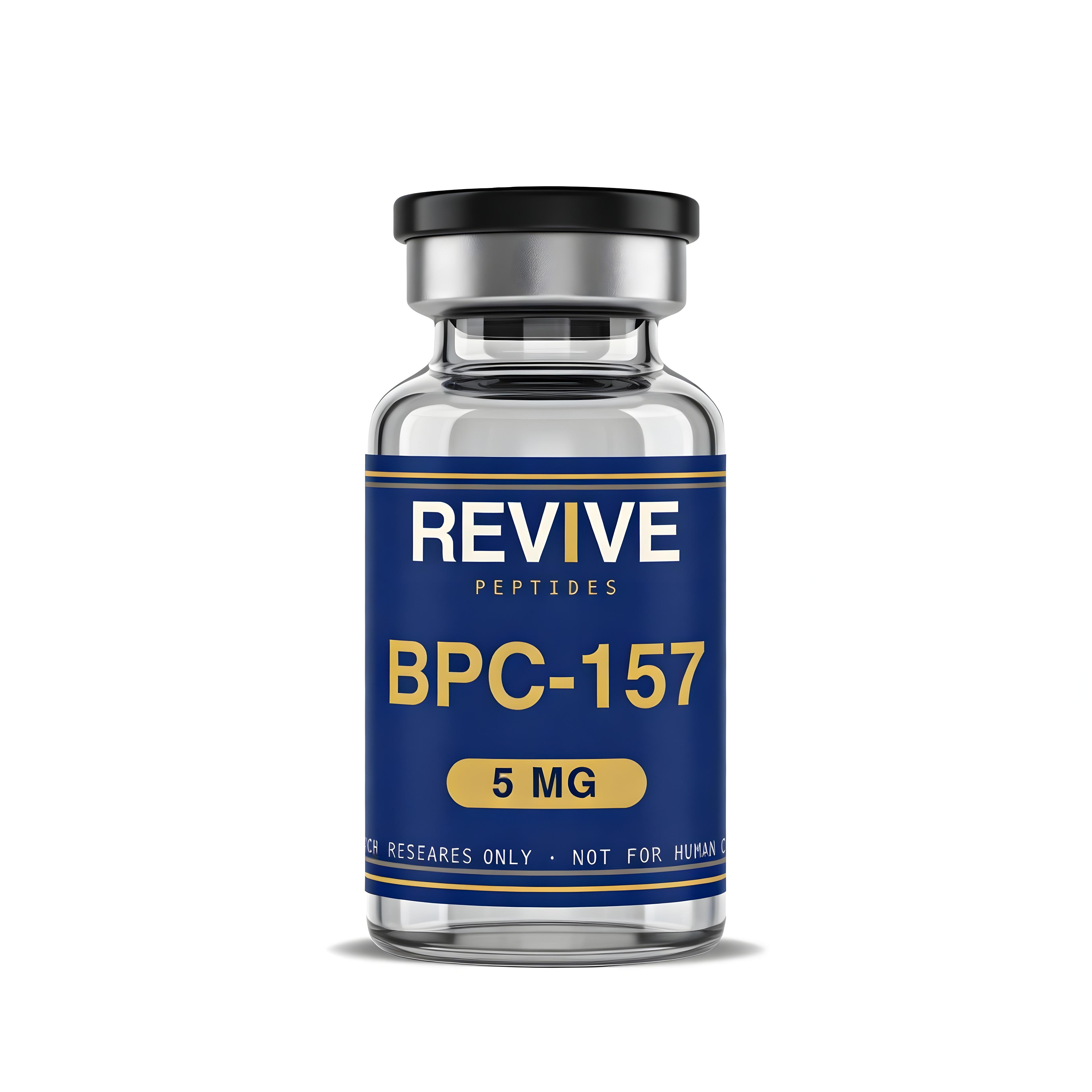
Researchers who have reviewed the literature and determined BPC-157 is relevant to a laboratory protocol need a research-grade, verifiably pure supply. REVIVE LAB UAE stocks BPC-157 as a 5 mg vial, HPLC-verified at ≥99.2% purity, supplied as the full 15-amino-acid pentadecapeptide sequence with a certificate of analysis accompanying every batch.
| Spec | BPC-157 5 mg vial |
|---|---|
| Price | AED 490 |
| Molecular weight | ≈1419 Da |
| Purity (HPLC) | ≥99.2% |
| Sequence | Pentadecapeptide (15 amino acids) |
| Storage | −20°C, desiccated |
| Reconstitution | Bacteriostatic water, 2–3 mL |
| Intended use | Laboratory research only — not for human or veterinary use |
REVIVE LAB UAE supplies HPLC-verified BPC-157 5 mg vials with certificate of analysis. Strictly a research reference material.
View BPC-157 research specs →
Framing This Review for Your Own Research File
If you are compiling a literature review as part of a broader research proposal, cite the primary papers directly — Sikiric et al. 2011 (Current Pharmaceutical Design) is a well-indexed entry point retrievable through standard academic databases, and its reference list will lead to the group's earlier foundational animal-model papers. This page is intended as an orientation and starting point, not a substitute for reading those sources in full.
References
- Sikiric P, Seiwerth S, Rucman R, et al. Stable gastric pentadecapeptide BPC 157: novel therapy in gastrointestinal tract. Curr Pharm Des. 2011;17(16):1612–1632.