BPC-157 & CrossFit Injury Recovery: What the Research Shows — and Where to Buy in the UAE
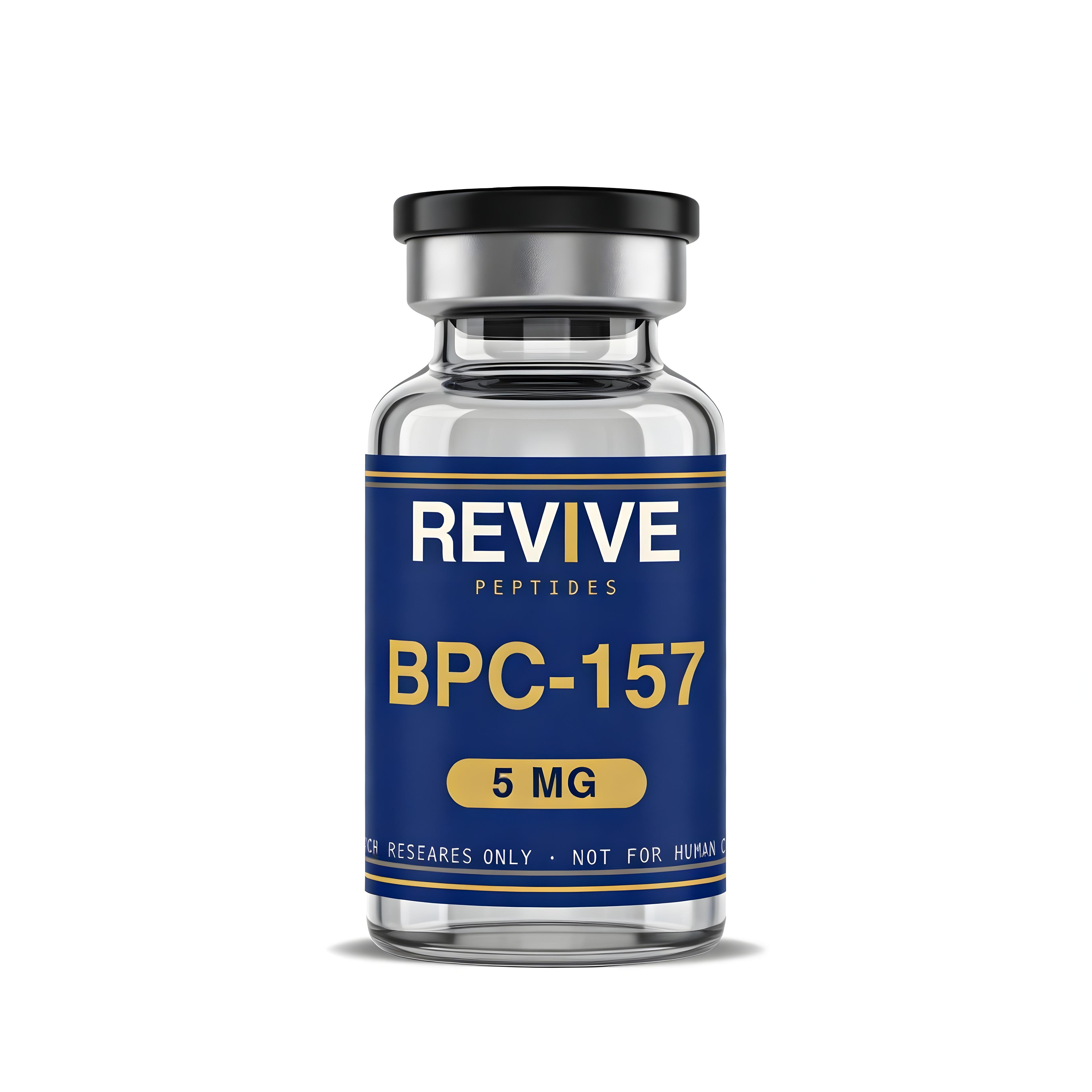
The CrossFit community in Dubai is one of the most active in the region — boxes from Jumeirah to Business Bay run competitive programming that would exhaust most recreational athletes. The injury rate reflects this intensity: rotator cuff tears, Achilles tendinopathy, patellar tendon stress, and lower-back strains are the predictable tax on high-volume Olympic lifting and gymnastics loading. It is against this backdrop that a growing cohort of research-oriented CrossFit athletes in Dubai and Abu Dhabi are investigating BPC-157 — not as a shortcut, but as a peptide with a credible mechanistic rationale supported by peer-reviewed animal data. This guide covers what the research actually says, what a responsible research-context protocol looks like, and how to buy BPC-157 UAE from a verified supplier with same-day dispatch.
What Is BPC-157? The Pentadecapeptide Background
BPC-157 (Body Protection Compound 157) is a synthetic 15-amino-acid peptide with the sequence Gly-Glu-Pro-Pro-Pro-Gly-Lys-Pro-Ala-Asp-Asp-Ala-Gly-Leu-Val. It was isolated from human gastric juice, where analogous protective sequences appear to play a role in mucosal integrity. The "157" designation tracks its position in the original isolation series from Sikiric's laboratory at the School of Medicine, University of Zagreb, Croatia.
What distinguishes BPC-157 from many other research peptides is its stability profile. As documented in Sikiric et al. 2018, BPC-157 is stable in human gastric juice, plasma, and saline at room temperature — a property that makes it atypical among injectable research peptides and has implications for its bioavailability across different administration routes. This stability is one reason investigators find it tractable to study: degradation artefacts are less likely to confound in-vivo results than with more fragile molecules.
The Sikiric group has produced what is now the most extensive body of BPC-157 research in the literature, covering musculoskeletal injury, GI protection, wound healing, bone repair, and neurological effects. For CrossFit-adjacent research, the musculoskeletal and connective tissue findings are the most directly relevant.
CrossFit Injuries: Why Investigators Are Interested in BPC-157
CrossFit programming generates a specific injury signature. Unlike single-sport athletes, CrossFitters load the same connective tissue structures repeatedly across multiple movement patterns in a single session — kipping pull-ups and muscle-ups on the shoulder complex, double-unders and box jumps on the Achilles, thrusters and wall balls on the patellar tendon, and heavy barbell work on lumbar erectors and intervertebral discs. This creates what sports medicine researchers sometimes call "repetitive microtrauma accumulation" — a progressive degradation of tissue integrity that precedes acute injury.
Tendons and ligaments are the structural bottleneck. Unlike muscle tissue, which is highly vascularised and heals relatively quickly, tendons have poor intrinsic blood supply. The enthesis — the insertion zone where tendon meets bone — is particularly vulnerable: it is fibrocartilaginous, hypovascular, and slow to remodel. This is the precise territory where Sikiric's research becomes interesting to investigators.
| CrossFit Movement | Primary Connective Tissue at Risk | Injury Pattern |
|---|---|---|
| Muscle-ups / kipping pull-ups | Supraspinatus, biceps tendon, labrum | Rotator cuff tendinopathy, SLAP tear |
| Box jumps / double-unders | Achilles tendon, plantar fascia | Achilles tendinopathy, PF stress |
| Thrusters / wall balls | Patellar tendon, quadriceps tendon | Patellar tendinopathy (jumper's knee) |
| Deadlifts / cleans / snatches | Lumbar erectors, intervertebral discs | Lower back strain, disc herniation |
| Ring dips / handstand push-ups | Wrist flexors, TFCC, elbow UCL | Wrist impingement, medial epicondylitis |
The vascular limitation is the mechanistic link to BPC-157. If the principal bottleneck in tendon healing is inadequate angiogenesis — new blood vessel formation to deliver oxygen, growth factors, and fibroblasts to the repair site — then a compound that demonstrably upregulates VEGF and nitric-oxide-driven vascular pathways is worth investigating in that context. That is exactly what Sikiric's group documented.
Buy BPC-157 UAE →
What the Published Research Actually Shows
Sikiric et al. 2011 — J Physiol Pharmacol: Tendon and Ligament Healing
The 2011 paper by Sikiric and colleagues in the Journal of Physiology and Pharmacology remains one of the most directly relevant publications for musculoskeletal researchers. Using a rat Achilles tendon transection model — a well-validated preclinical proxy for tendon injury — the investigators compared BPC-157-treated animals against controls over multiple timepoints. The key findings:
- Functional recovery was significantly faster in BPC-157-treated animals, with measurable improvements in weight-bearing and locomotion ahead of controls at matched timepoints.
- Histological organisation favoured the treatment group: collagen fibre alignment was more parallel and structured, and fibroblast density at the repair site was higher.
- Angiogenesis was enhanced — the investigators observed more robust vascular ingrowth into the healing tendon compared to controls, consistent with BPC-157's documented effect on VEGF signalling.
- The authors proposed that upregulation of the EGR-1 (early growth response factor 1) transcription factor was a likely upstream mechanism driving collagen synthesis in the repair cascade.
These findings have been reproduced across related injury models in subsequent work from the same group — bone-to-tendon junction healing (directly relevant to enthesopathies like jumper's knee and rotator cuff insertional disease), ligament repair, and muscle laceration models all showed directionally consistent results.
Sikiric et al. 2018 — Cumulative Review: Mechanistic Framework
The 2018 cumulative review synthesises the full body of Sikiric laboratory data and situates BPC-157's mechanisms within a unified framework. The central thesis is that BPC-157 acts primarily through modulation of the nitric oxide (NO) system — specifically, through interaction with NO-synthase pathways that regulate both vascular tone and tissue healing responses. Key points relevant to CrossFit injury research:
- NO-system modulation is proposed as the master regulatory mechanism explaining BPC-157's pleiotropic effects: the same pathway that drives angiogenesis in healing tendons also accounts for cytoprotective effects in GI and CNS tissue.
- Bone healing and enthesopathy data are reviewed in detail — investigators found that bone-to-tendon junction remodelling was accelerated in BPC-157 groups, with improved histological integration at the fibrocartilage transition zone. This is the specific zone damaged in insertional Achilles tendinopathy and rotator cuff enthesopathy — two of the most common serious CrossFit injuries.
- Muscle injury data is also reviewed — crush injury and laceration models showed improved fibre regeneration and reduced fibrosis in treated animals.
| Injury Model | Key Finding (Sikiric et al.) | Proposed Mechanism |
|---|---|---|
| Achilles tendon transection | Faster functional recovery; improved collagen alignment | EGR-1 upregulation, VEGF-driven angiogenesis |
| Bone-to-tendon junction | Accelerated enthesis remodelling; better fibrocartilage integration | NO-system modulation, angiogenesis |
| Ligament repair | Improved tensile strength at matched timepoints | Fibroblast recruitment, collagen synthesis |
| Muscle laceration | Reduced fibrosis; better fibre regeneration | Myoblast signalling, anti-fibrotic pathways |
It is important to note that the Sikiric research programme is conducted entirely in animal models — no randomised controlled trials in human populations have been published as of this writing. Investigators and researchers must interpret the preclinical data within that context. The mechanistic rationale is compelling; the translational evidence requires further investigation.
Vial Reconstitution Reference (Research Use)
REVIVE LAB UAE stocks BPC-157 in 5mg vials only — the standard research-procurement format. No other strengths are listed; researchers should not accept product with specifications inconsistent with the above.
Reconstitution protocol: inject bacteriostatic water slowly down the inside wall of the vial — do not inject directly onto the lyophilised cake. Swirl gently; do not shake. Once reconstituted, store at 2-8°C and use within 14 days for optimal peptide integrity. Order BPC-157 UAE with lot-specific COA from REVIVE LAB UAE to ensure your starting material meets HPLC purity standards before you begin.
Order Now →
Where to Buy BPC-157 in the UAE — Delivery Coverage
The quality of a research peptide is only as good as the integrity of the supply chain delivering it. BPC-157, while more stable than many peptides, is still a biological compound whose purity depends on proper HPLC testing, cold-chain handling, and documented lot-specific COA. REVIVE LAB UAE is the only peptides UAE supplier operating a fully documented cold-chain courier network with same-day dispatch out of Dubai and 24h coverage across every emirate.
When you buy bpc-157 UAE from REVIVE LAB UAE, you receive: an HPLC-verified 5mg vial at documented purity, a lot-specific COA available on request, cold-chain insulated dispatch packaging, and a delivery confirmation via WhatsApp. Cash on delivery is the default payment method — no upfront bank transfer required. For researchers who prefer crypto, USDT (TRC20) via Binance Pay is now accepted with a 5% pre-pay discount, confirmed through WhatsApp txid verification.
| Emirate / City | Delivery Window | Cash on Delivery | Discreet Packaging |
|---|---|---|---|
| Dubai (Marina, JBR, Business Bay, JVC, DIFC, Downtown, Palm, Jumeirah) | Same-day, 4-8 hours | Yes | Yes |
| Abu Dhabi (Corniche, Yas Island, Saadiyat, Reem Island) | Next-day, 18-24 hours | Yes | Yes |
| Sharjah | Same-day / next-day, 8-18 hours | Yes | Yes |
| Ajman | Next-day, 18-24 hours | Yes | Yes |
| Ras Al Khaimah (RAK) | Next-day, 18-24 hours | Yes | Yes |
| Fujairah | Next-day, 24 hours | Yes | Yes |
| Umm Al Quwain (UAQ) | Next-day, 18-24 hours | Yes | Yes |
| Al Ain | Next-day, 24 hours | Yes | Yes |
A researcher in Dubai Marina or Business Bay who places an order before mid-afternoon typically receives their vials the same evening — real bpc-157 Dubai 24h delivery from a supplier that is actually based in the UAE, not relabelling offshore stock. For Abu Dhabi researchers at Yas, Saadiyat, Reem Island or the Corniche, next-day arrival is the standard.
Why REVIVE LAB UAE for BPC-157
There is no shortage of online vendors claiming to supply BPC-157 to the UAE. The differentiator is documentation and chain-of-custody. REVIVE LAB UAE supplies HPLC-verified, lot-COA, cold-chain dispatched BPC-157 across all 7 emirates — not a claim, but a verifiable standard backed by third-party analytical testing on every batch. Every vial that leaves REVIVE LAB UAE's Dubai facility has a traceable lot number, a COA showing HPLC purity, and arrives in insulated packaging designed for UAE summer ambient temperatures.
For the broader peptides UAE research stack — Retatrutide, Tesamorelin, GHK-Cu, TB-500, MOTS-c, Semax, NAD+ — REVIVE LAB UAE maintains the same lot-COA standard across every molecule in catalogue. The point is simple: if the peptide is not verified, the research means nothing.
Buy BPC-157 UAE — Order Now →
FAQ
Where can I buy BPC-157 in the UAE with same-day delivery?
REVIVE LAB UAE is the verified source for bpc-157 in stock UAE, dispatching HPLC-verified 5mg vials with same-day delivery across all major Dubai areas — Marina, JBR, Business Bay, JVC, DIFC, Downtown, Palm Jumeirah, and Jumeirah — for orders placed before the daily cut-off. For Abu Dhabi, Sharjah, RAK, Fujairah, Ajman, UAQ, and Al Ain, bpc-157 Dubai 24h delivery windows apply. All shipments use plain, unbranded outer packaging by default. Cash on delivery is available across all seven emirates with no minimum order.
What BPC-157 vial size and strength does REVIVE LAB UAE stock?
REVIVE LAB UAE stocks BPC-157 exclusively in 5mg lyophilized vials — the format referenced throughout the Sikiric et al. published research and the standard research-procurement size. Each vial ships with a lot-specific certificate of analysis confirming HPLC-verified purity. No other strengths are offered; researchers should treat any vendor listing non-standard BPC-157 concentrations with scepticism and request COA documentation before purchasing.
Can I pay with cryptocurrency when I buy BPC-157 in Dubai?
Yes. In addition to cash on delivery Dubai, REVIVE LAB UAE accepts USDT (TRC20) via Binance Pay — making it one of the only peptides UAE suppliers offering a verified crypto checkout. Researchers who pay by USDT crypto pay Dubai receive a 5% pre-pay discount, confirmed through a WhatsApp transaction ID verification flow. This option is available for all emirate delivery windows, not just Dubai.
- Sikiric P, Seiwerth S, Rucman R, et al. Pentadecapeptide BPC 157's effect in accelerating recovery from tendon injury and in modulating growth factor expression. J Physiol Pharmacol. 2011;62(3):329-341.
- Sikiric P, Seiwerth S, Rucman R, et al. Stable gastric pentadecapeptide BPC 157: novel therapy in gastrointestinal tract — cumulative data on BPC 157 healing effects and mechanisms. Curr Pharm Des. 2018;24(18):1943-1954.