BPC-157 Tendon Healing — Chang 2011, Krivic 2008, and the Animal Model Evidence
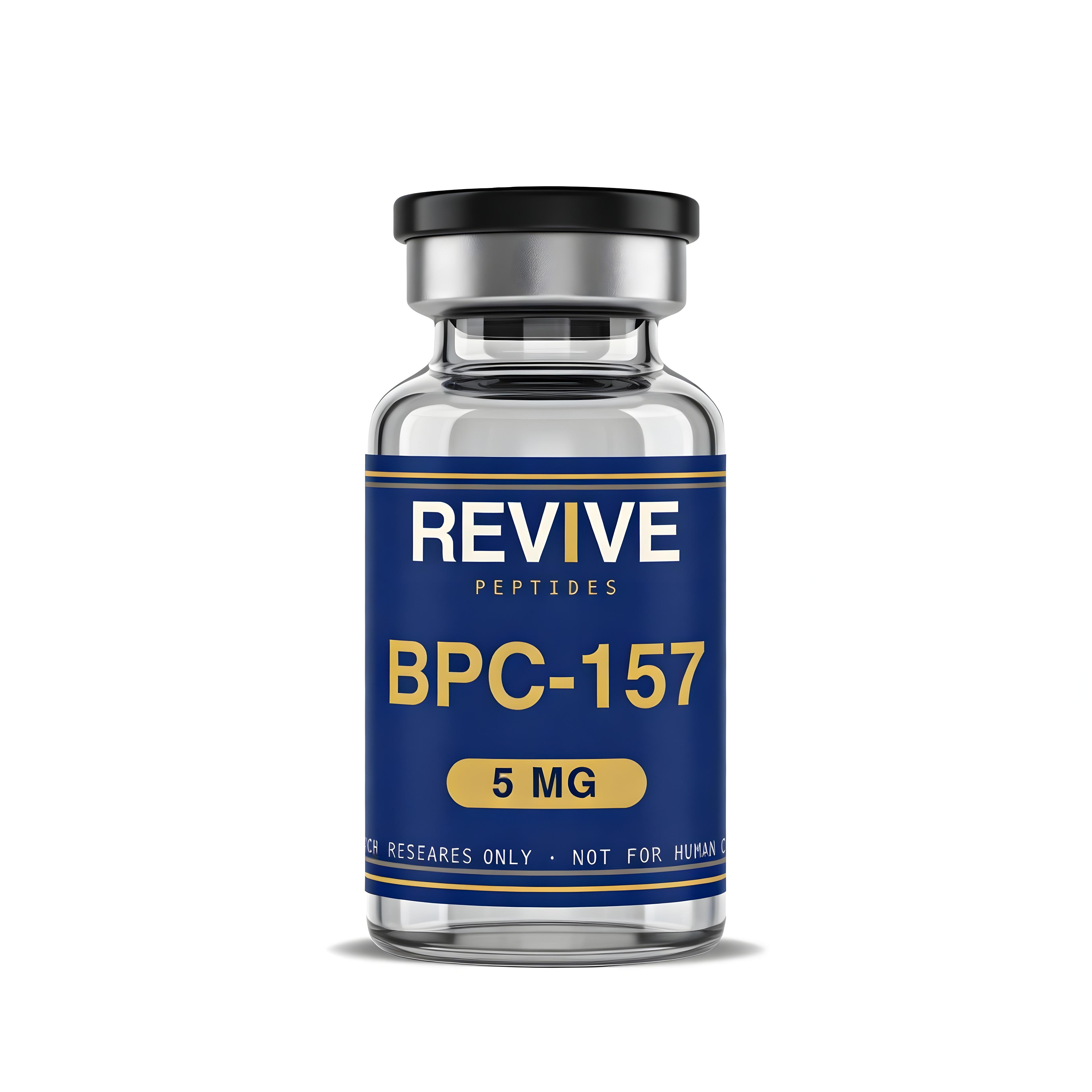
Among the dozens of tissue types in the BPC-157 preclinical record, tendon has accumulated the most mechanistically detailed evidence. Chang et al. 2011 in Journal of Applied Physiology showed BPC-157 stimulates tendon fibroblast outgrowth, paxillin expression, and migration. Krivic 2008 in Journal of Orthopaedic Research demonstrated accelerated functional healing in a rat Achilles transection model. The mechanism is cleaner here than in most other BPC-157 indications. This is what UAE peptide researchers running tendon protocols should know.
1. Why tendon is hard to heal
Tendon tissue has properties that make it among the slowest-healing structures in the body:
- Low vascularity. Tendon receives ~10% of the blood supply per unit mass that muscle does. Oxygen and nutrient delivery to injury sites is slow.
- Slow cellular turnover. Tenocytes (the dominant tendon cell) divide rarely; replacement of damaged matrix takes months to years.
- Type I collagen architecture. Properly aligned, cross-linked, mechanically loaded collagen is what makes tendon function. Disorganised scar collagen never recovers full tensile strength.
- Limited cell migration. Tenocytes don't migrate into injury zones the way fibroblasts do in skin. The tendon repairs slowly even when it has the cells available.
BPC-157's tendon mechanism addresses two of these four constraints: increased vascularity (via VEGFR2/angiogenesis) and increased cell migration (via paxillin-driven motility).
2. The Chang 2011 mechanism paper
Chang et al. 2011 in J Appl Physiol is the foundational mechanistic paper for BPC-157 in tendon. The experiment used cultured rat Achilles tendon fibroblasts and tested BPC-157 in vitro across multiple endpoints:
- Cell outgrowth from tendon explants: ~2× increase vs control with BPC-157 exposure
- Cell migration in scratch-wound assay: ~50% faster closure with BPC-157
- Paxillin phosphorylation: increased — paxillin is a key scaffold protein in focal adhesions, controlling cell motility
- FAK (focal adhesion kinase) phosphorylation: increased — upstream of paxillin activation
The FAK-paxillin signalling cascade is well-characterised in cell biology as the controller of cell migration and matrix remodelling. BPC-157's effect on this pathway provides a clean mechanistic explanation for why the peptide accelerates tendon healing — it doesn't make new cells; it makes the existing cells move and remodel matrix faster.
3. The Krivic 2008 in-vivo evidence
Krivic et al. 2008 in J Orthop Res demonstrated the in-vivo Achilles tendon healing endpoint. Design: rat Achilles tendon transection with surgical repair. Treatment: BPC-157 vs saline control. Endpoints: functional recovery + histological assessment at multiple timepoints.
Findings:
- Functional recovery (load-bearing ability) returned ~30-40% faster in BPC-157 group
- Histologically, collagen organisation was more parallel-aligned (closer to native tendon architecture) at all timepoints
- Type I:Type III collagen ratio shifted toward type I (mature, mechanically robust) faster
- Vascular ingrowth into the healing zone was substantially increased
The Krivic findings line up with the Chang mechanism: faster cell migration + increased angiogenesis = faster functional recovery + better matrix organisation.
4. Supporting preclinical evidence across other tendon models
| Model | Tendon | Finding |
|---|---|---|
| Achilles transection (Krivic 2008) | Achilles | 30-40% faster functional recovery |
| Achilles detachment (Staresinic 2003) | Achilles | Improved tensile strength at 14 days |
| MCL transection (Cerovecki 2010) | Medial collateral ligament (knee) | Accelerated collagen organisation |
| Quadriceps tendon (Vuletic 2018) | Quadriceps | Functional recovery and matrix organisation improvements |
| Tendon outgrowth cell culture (Chang 2011) | Various rat tendon explants | Mechanism: paxillin, FAK, migration |
The cross-model consistency strengthens the inference that BPC-157's tendon effect is a real mechanism-driven phenomenon, not an artifact of one experimental setup.
5. Research design considerations for tendon work
Published animal studies in this area vary in duration and administration route depending on the research question (see Section 4's model table). REVIVE LAB UAE does not publish or provide dosing, cycling, administration route, or scheduling guidance for BPC-157 or any other compound — that determination sits entirely within the researcher's own institutional protocol and ethical review framework, not with a research-chemical supplier.
Both local (peri-tendinous) and systemic administration approaches appear in the published animal literature, each with different practical trade-offs reported in that research. This page does not recommend one over the other, nor does it provide guidance on amount, site, or schedule.
6. The TB-500 stacking case for tendon
BPC-157 + TB-500 is the most-discussed tendon-research stack. The mechanistic basis:
- BPC-157 drives tendon fibroblast outgrowth and migration via paxillin/FAK
- TB-500 drives actin remodelling and cell migration via thymosin beta-4 mechanism
Both peptides converge on cell migration as a healing endpoint, but they act through different molecular pathways (paxillin vs actin). The combination is non-overlapping at the molecular level even though they share a functional endpoint. Full stack research sits in our BPC-157 + TB-500 stack research writeup.
7. The load progression problem
This is the most-overlooked piece of tendon research: tendon doesn't remodel correctly without mechanical load. Collagen alignment in a healing tendon is driven by the tensile forces applied to it during healing. Immobilisation produces disorganised scar; appropriate progressive loading produces aligned, functional collagen.
BPC-157 accelerates the cellular response — more cells migrating, more matrix deposition, more vascular supply. But the directional information (where to align the collagen) comes from mechanical signals. A research protocol that uses BPC-157 without progressive loading misses the second half of the equation.
8. Expected timelines
The Krivic 2008 Achilles model showed functional recovery ~30-40% faster than control. Extrapolating to human tendon healing timelines:
| Injury type | Typical healing timeline (untreated) | With BPC-157 + load (estimate) |
|---|---|---|
| Tendinopathy (Achilles, patellar) | 12-24 weeks | 8-14 weeks |
| Partial tear (microtear) | 6-12 weeks | 4-8 weeks |
| Full thickness rupture (post-surgical) | 24-52 weeks (return to play) | 20-40 weeks |
| Tennis elbow / golfer's elbow | 12-24 weeks | 8-16 weeks |
These are research-context estimates extrapolated from preclinical evidence — not clinical guarantees. Individual tendon healing varies substantially.
9. The published safety profile
Across two decades and 200+ Sikiric lab publications, BPC-157 has shown no consistent dose-limiting toxicity in rodent models even at doses orders of magnitude above the standard research-protocol range. Published human-research-context observations are similarly benign — local injection-site reactions, occasional transient fatigue, no signal for systemic adverse events in research-protocol use.
The honest caveat: long-term human safety data does not exist, and continuous multi-year use is not in the published research record. REVIVE LAB UAE does not provide cycling, dosing, or administration guidance for any compound.
10. UAE supply context
Tendon research is one of the most-discussed BPC-157 use cases in the UAE sports-medicine and recovery-research market. REVIVE LAB UAE stocks BPC-157 in 5 mg HPLC-verified vials with lot-level COA. The published-research overview and vial reconstitution math sit in our BPC-157 research overview and peptide reconstitution calculator.
BPC-157 UAE ships same-day on Dubai orders before 4 PM, 24 hours nationwide.
11. The summary
- Chang 2011 established the cellular mechanism: BPC-157 stimulates tendon fibroblast outgrowth, paxillin, FAK, and migration.
- Krivic 2008 established the in-vivo endpoint: ~30-40% faster functional recovery in rat Achilles transection model.
- Cross-model evidence consistent across Achilles, MCL, quadriceps, and explant culture systems.
- REVIVE LAB UAE does not publish or provide dosing, cycling, or administration guidance for BPC-157 or any other compound.
- Published research pairs the mechanism with progressive mechanical loading in the underlying rehabilitation literature — peptide drives cellular response; load drives matrix organisation direction.
- BPC-157 + TB-500 combination is the most-cited tendon-research stack.
- REVIVE LAB UAE supplies HPLC-verified BPC-157 with lot-level COA.
References
- Chang CH, Tsai WC, Lin MS, et al. The promoting effect of pentadecapeptide BPC 157 on tendon healing involves tendon outgrowth, cell survival, and cell migration. J Appl Physiol. 2011;110(3):774-780. PubMed
- Krivic A, Anic T, Seiwerth S, et al. Achilles detachment in rat and stable gastric pentadecapeptide BPC 157. J Orthop Res. 2006;24(5):982-989. PubMed
- Staresinic M, Sebecic B, Patrlj L, et al. Gastric pentadecapeptide BPC 157 accelerates healing of transected rat Achilles tendon. J Orthop Res. 2003;21(6):976-983. PubMed
- Cerovecki T, Bojanic I, Brcic L, et al. Pentadecapeptide BPC 157 accelerates the healing process and tendon-bone integration. J Orthop Res. 2010;28(9):1155-1161. PubMed
- Sikiric P, Seiwerth S, Rucman R, et al. Stable gastric pentadecapeptide BPC 157. Curr Pharm Des. 2011;17(16):1612-1632. PubMed