BPC-157 Dubai Research Guide 2026: Mechanisms, Literature and Same-Day Access
What BPC-157 Actually Is
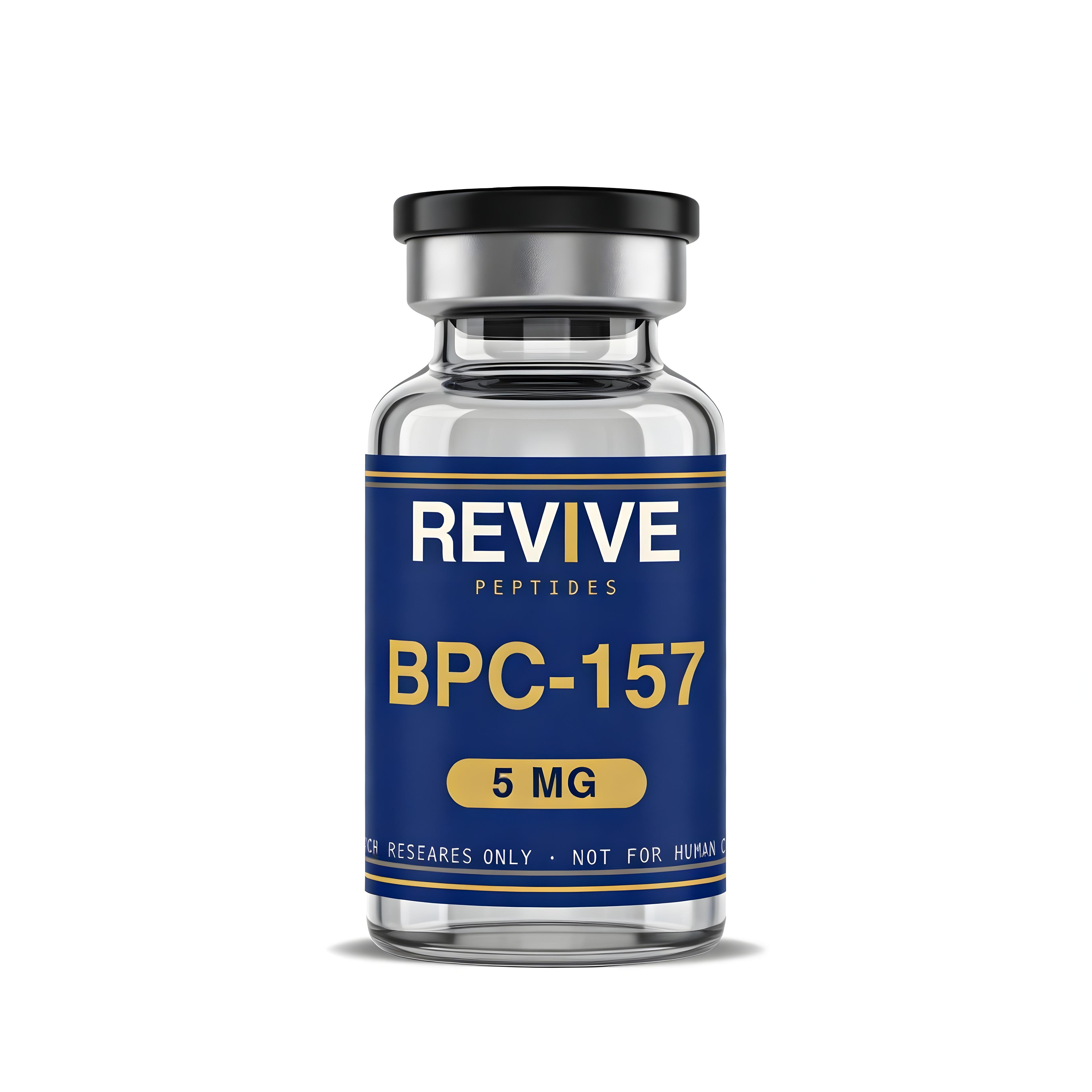
BPC-157 stands for "body protection compound-157" — a synthetic pentadecapeptide, meaning a 15-amino-acid chain, with a molecular weight of approximately 1419 Da. It's derived from a partial sequence identified in human gastric juice, which is exactly why the gastric-protection research angle dominates the literature. REVIVE supplies it as a white lyophilised powder at 5 mg per vial, HPLC-verified to 99.2% purity or higher, with a lot-specific certificate of analysis on every order.
The compound's research profile is broader than most people expect walking in. It's not a single-mechanism molecule — the published work spans gut-lining protection, tissue and tendon repair models, and angiogenesis (new blood-vessel formation) research, which is part of why it stays one of the most frequently requested peptides among Dubai's growing research and formulation community.
The Research Base: Three Pillars
1. Gastric and gut-protection research
This is BPC-157's home turf in the literature. Predrag Sikiric and colleagues have published an extensive body of work examining the peptide in gastric-protection and gastrointestinal tract models — looking at mucosal defence, ulcer models, and gut-lining integrity under experimentally induced stress. This research line is the deepest and most cited of the three pillars, and it's the reason BPC-157 is often described in the literature as a "gastric pentadecapeptide."
2. Tissue and tendon repair models
A second major thread in the Sikiric group's published research — and work from other labs building on it — looks at BPC-157 in tissue-repair contexts, including tendon, ligament, and muscle injury models. Researchers studying soft-tissue recovery pathways frequently cite this body of work when framing angiogenesis and fibroblast-activity questions.
3. Angiogenesis and vascular research
The third pillar — and the one that connects BPC-157 conceptually to peptides like TB-500 — is angiogenesis research: how the compound influences new blood-vessel formation in injury and repair models. This is an active area of ongoing published research rather than a settled question, which is exactly why it keeps showing up in research protocols.
Together, these three pillars explain why BPC-157 sits at the center of so many UAE research programs that touch gut health, soft-tissue biology, or vascular research — it's one compound with legitimate literature support across all three.
Same-Day Access for Dubai Research Teams
None of that research matters if the compound isn't on your bench when the protocol is ready to run. REVIVE built its Dubai supply chain around that exact problem — in-house stock, same-day dispatch for any Dubai address, and a strict 4 PM cutoff that Dubai and Abu Dhabi researchers can plan around with confidence.
| Zone | Delivery window | Cut-off time |
|---|---|---|
| Dubai (all zones) | Same-day | 4 PM |
| Abu Dhabi | Same-day | 4 PM |
| Sharjah / Ajman | 24h | 4 PM |
| Northern Emirates | 1–2 business days | 4 PM |
REVIVE stocks BPC-157 5 mg lyophilised vials with HPLC certificates, dispatched same-day anywhere in Dubai.
Buy BPC-157 → BPC-157 UAE Page →
BPC-157 Vial Specifications at REVIVE
| Spec | Detail |
|---|---|
| Strength | 5 mg vial |
| Price | AED 490 |
| Purity (HPLC) | ≥99.2% |
| Molecular weight | ≈1419 Da |
| Sequence | Pentadecapeptide (15 amino acids) |
| Form | White lyophilised powder |
| Storage | −20°C, desiccated |
| Reconstitution | Bacteriostatic water, 2–3 mL |
Reconstitution Notes for Lab Prep
Once the vial arrives, standard lab-prep practice applies:
- Reconstitute with bacteriostatic water — typically 2–3 mL added slowly along the vial wall.
- Swirl gently, do not shake. Aggressive agitation risks denaturing the peptide structure.
- Refrigerate immediately once reconstituted, at 2–8°C.
- Do not freeze the reconstituted solution — repeated freeze-thaw cycles degrade stability.
- Use within 28 days of reconstitution for research-grade stability.
Why Dubai Is Becoming a Regional Peptide Research Hub
The concentration of formulation labs, aesthetic-medicine research groups, and university-affiliated projects in Dubai has made same-day compound access a genuine competitive advantage — teams that can start a protocol the same afternoon they conceive it move faster than teams waiting on cross-border shipping. REVIVE's Dubai facility exists specifically to close that gap for the local research community.
Frequently Asked Questions
Does REVIVE provide a certificate of analysis with every BPC-157 vial?
Yes — every vial ships with a lot-specific HPLC certificate of analysis documenting purity and batch data.
Can I order BPC-157 alongside TB-500 for combined protocols?
Yes, co-ordering is common and both ship together in the same delivery window.
Is the research literature on BPC-157 mostly preclinical?
Yes — the published body of work, including Sikiric's research, is predominantly preclinical and mechanistic in nature.