MOTS-c as an Exercise Mimetic: What the Research Shows (UAE 2026)
The Discovery — Lee 2015
Lee et al. 2015 (Cell Metabolism) identified MOTS-c — a peptide encoded within the mitochondrial 12S rRNA gene. Unlike the thousands of proteins encoded by nuclear DNA, MOTS-c originates inside the mitochondria themselves, marking it as one of a small but growing class of "mitochondrial-derived peptides" (MDPs).
The mouse data was striking. MOTS-c-treated mice fed a high-fat diet maintained insulin sensitivity and glucose tolerance comparable to standard-diet controls. The treated mice did not lose body weight in the conventional sense — they maintained metabolic flexibility despite caloric and dietary stress.
The AMPK Connection
MOTS-c activates AMPK (AMP-activated protein kinase), the cellular energy sensor that:
- Promotes glucose uptake into muscle
- Drives mitochondrial biogenesis via PGC-1α
- Switches metabolism from fat storage to fat oxidation
- Improves insulin sensitivity
AMPK is also the pathway exercise activates — which is why MOTS-c earned the "exercise mimetic" label. Metformin works through AMPK too; resveratrol and berberine target the same axis indirectly.
Reynolds 2021 — Human Exercise Data
Reynolds et al. 2021 measured MOTS-c plasma levels in humans before and after exercise:
- Acute exercise raised circulating MOTS-c
- Younger individuals had higher baseline MOTS-c than older
- The exercise-induced MOTS-c spike was blunted in older subjects
This positioned MOTS-c as a biomarker of mitochondrial fitness — and the age-related decline mirrors the age-related decline in metabolic flexibility. It's the first plausible mechanistic link between mitochondrial aging and the loss of training response in older athletes.
What MOTS-c Mimics (and What It Doesn't)
| Exercise adaptation | MOTS-c mimics? |
|---|---|
| Improved insulin sensitivity | Yes (Lee 2015) |
| Mitochondrial biogenesis | Yes (AMPK pathway) |
| Fat oxidation | Yes |
| Cardiovascular fitness (VO2max) | No |
| Muscle hypertrophy | No |
| Neurological / cognitive gains | No |
| Bone density | No |
MOTS-c is narrower than exercise. It hits the metabolic and mitochondrial side hard but does nothing for cardiovascular structure, muscle mass, bone loading, or cognitive plasticity — all of which exercise delivers. The realistic positioning for research: an adjunct that captures the metabolic third of exercise benefits when paired with actual training.
MOTS-c vs Metformin — Both Hit AMPK
Metformin is the most-prescribed AMPK activator on the planet (~250 million people), used primarily for type 2 diabetes. Both metformin and MOTS-c activate AMPK, but the routes and side-effect profiles differ:
For research focused on mitochondrial biology specifically, MOTS-c offers a more targeted intervention. For broad-spectrum AMPK activation with safety record, metformin wins on data depth.
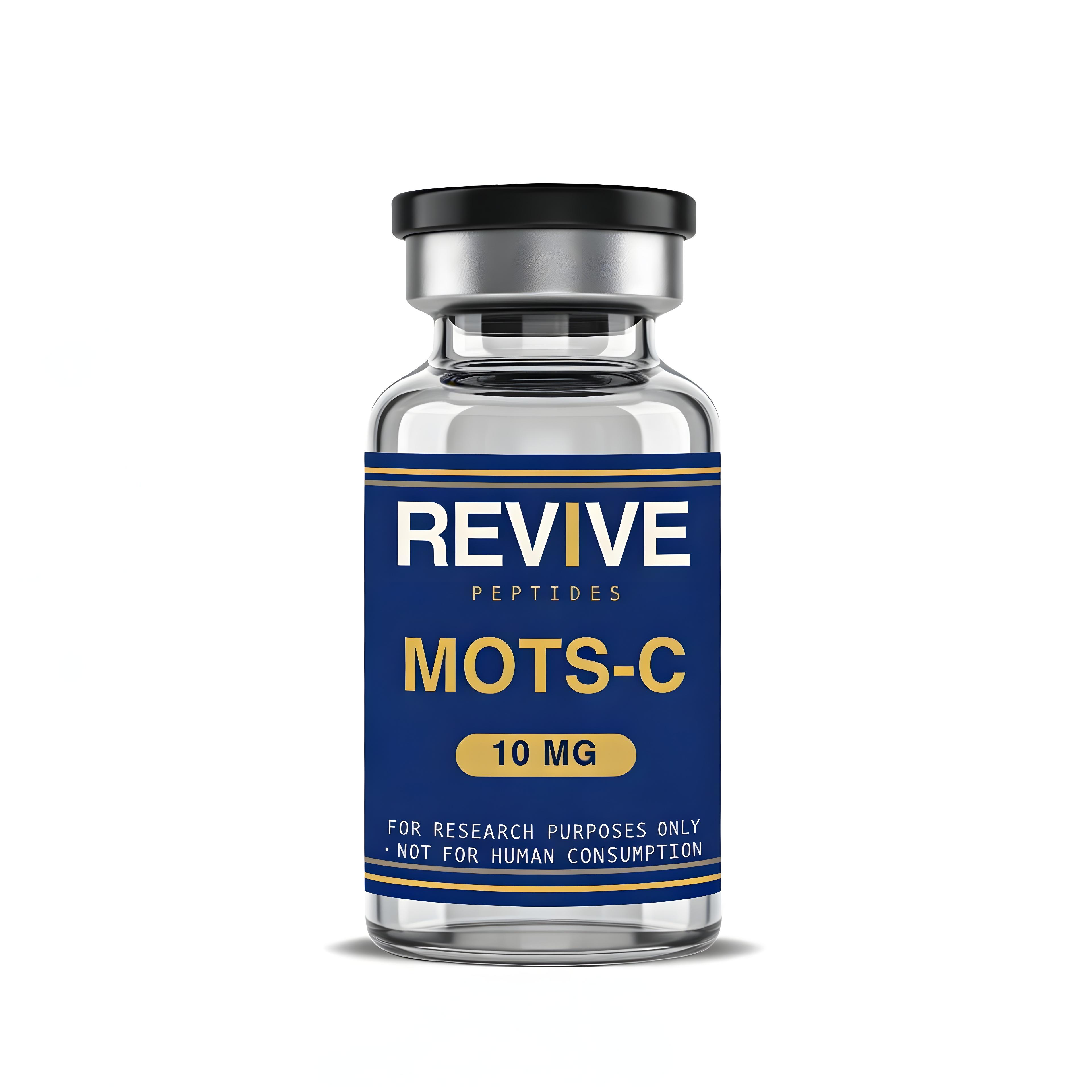
REVIVE supplies MOTS-c 10 mg vials with HPLC certificates and cold-chain delivery.
View MOTS-c 10 mg →
Practical Implications for UAE Researchers
- Pair MOTS-c with training, not as a replacement for it. The mitochondrial-side benefits compound when AMPK is activated through multiple inputs.
- Use post-workout timing for maximum overlap with endogenous MOTS-c rise (Reynolds 2021).
- Pair with insulin-sensitivity research. The Lee 2015 mechanism makes MOTS-c interesting for metabolic syndrome research models.
- Refrigerate immediately. MOTS-c is moderately stable but UAE summer heat degrades it — see our storage guide.
References
- Lee C, Zeng J, Drew BG, et al. The mitochondrial-derived peptide MOTS-c promotes metabolic homeostasis and reduces obesity and insulin resistance. Cell Metab. 2015;21(3):443–454.
- Reynolds JC, Lai RW, Woodhead JST, et al. MOTS-c is an exercise-induced mitochondrial-encoded regulator of age-dependent physical decline and muscle homeostasis. Nat Commun. 2021;12(1):470.
- Kim SJ, Mehta HH, Wan J, et al. Mitochondrial peptides modulate mitochondrial function during cellular senescence. Aging (Albany NY). 2018;10(6):1239–1256.
- Yoshino J, Baur JA, Imai SI. NAD+ intermediates: the biology and therapeutic potential of NMN and NR. Cell Metab. 2018;27(3):513–528.
- Lu H, Tang S, Xue C, et al. Mitochondrial-derived peptide MOTS-c increases adipose thermogenic activation to promote cold adaptation. Int J Mol Sci. 2019;20(10):2456.