NAD+ vs NMN vs NR — Bioavailability, RCT Data, and What's Different
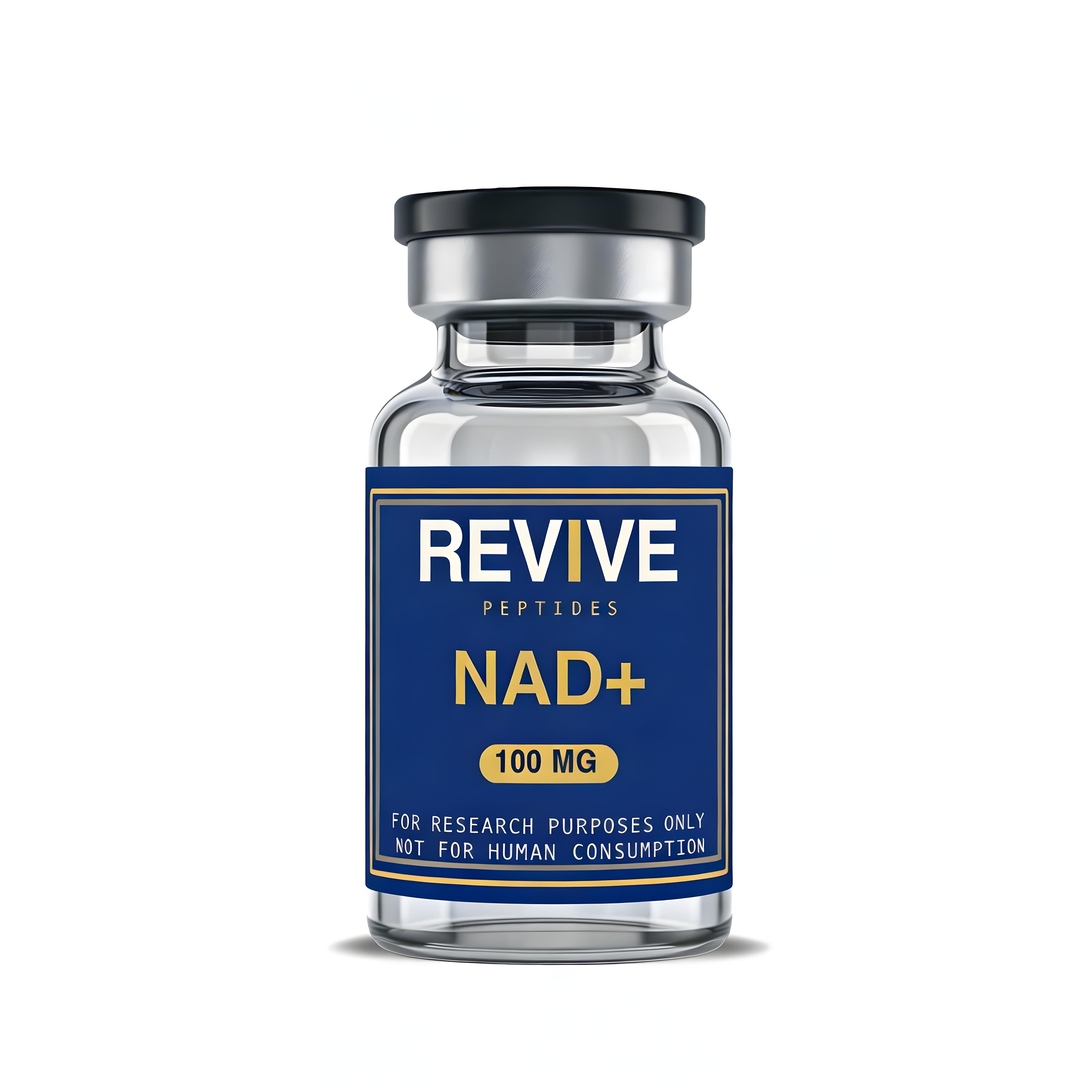
"NAD+ research" in popular content almost always refers to research on NMN or NR — the precursors — not direct NAD+ supplementation. The three molecules get conflated constantly because they end up at the same intracellular endpoint. They are not interchangeable. They differ in cell-entry mechanism, conversion steps, bioavailability, and — crucially — the human RCT evidence base. Here's the comparison, properly sorted.
1. The three molecules — what each one is
| NAD+ | NMN | NR | |
|---|---|---|---|
| Full name | Nicotinamide adenine dinucleotide | Nicotinamide mononucleotide | Nicotinamide riboside |
| Role | Active coenzyme | Direct NAD+ precursor | Two-step NAD+ precursor |
| Molecular weight | 663 Da | 334 Da | 255 Da |
| Pathway position | Endpoint | One step upstream (via NMNAT) | Two steps upstream (via NRK → NMN → NMNAT) |
| Body-internal source | De novo synthesis + salvage pathway | Salvage pathway intermediate | Salvage pathway intermediate |
All three lead to intracellular NAD+. The difference is in how they get there.
2. Cell entry — the bioavailability story
This is where the three molecules diverge most.
NAD+ — the contested transport
Whether intact NAD+ crosses cell plasma membranes is one of the longest-running debates in the field. Some research suggests direct uptake via Connexin-43 hemichannels and the Slc25a51 mitochondrial transporter. The majority view as of the 2024-2025 literature: most administered NAD+ is hydrolysed extracellularly (largely by CD38 and CD73) into nicotinamide, NMN, or NR, which then enter cells through their respective transporters and are reassembled to NAD+ intracellularly.
Practical implication: "direct NAD+" administration probably acts partly through precursor regeneration anyway. Schultz & Sinclair (2016, Cell Metab) review this carefully.
NMN — the Slc12a8 question
NMN's intestinal absorption was thought to require dephosphorylation to NR first, then re-phosphorylation intracellularly. The Grozio 2019 paper (Nature Metabolism) identified Slc12a8 as a direct intestinal NMN transporter — meaning intact NMN can enter intestinal cells. Whether this transporter is widely expressed in other tissues remains an active question.
NR — the simplest case
NR enters cells via equilibrative nucleoside transporters (ENTs) — a well-characterised mechanism. NR is then converted to NMN by nicotinamide riboside kinases (NRK1/NRK2), and from NMN to NAD+ by NMNAT enzymes. Two intracellular enzymatic steps to the endpoint.
3. Human RCT data — sorted by strength
NMN: the Yoshino 2021 anchor
Yoshino M et al. (Science, 2021) is the single strongest piece of human evidence for any NAD+-pathway intervention to date:
- 25 prediabetic, postmenopausal women
- 250 mg oral NMN daily for 10 weeks
- Primary endpoint: muscle insulin sensitivity (hyperinsulinemic-euglycemic clamp)
- Result: significant improvement in muscle insulin signalling vs placebo
The Irie 2020 paper (Endocr J) demonstrated NMN safety and pharmacokinetics in healthy men at doses up to 500 mg. The Yamaguchi 2024 follow-up extended the safety profile.
NR: the Trammell 2016 anchor + cumulative phase 1/2
NR has more cumulative human studies, though smaller individual effect sizes:
- Trammell SA et al. (Nat Commun, 2016) established NR's oral bioavailability and demonstrated dose-dependent increases in blood NAD+.
- Martens CR et al. (Nat Commun, 2018): 500 mg NR twice daily for 6 weeks in healthy middle-aged adults — raised blood NAD+, modest reduction in systolic blood pressure.
- Conze D et al. (Sci Rep, 2019): chronic NR safety and NAD+ elevation in healthy older adults.
- Dollerup OL et al. (Am J Clin Nutr, 2018) and follow-ups: NR did not improve insulin sensitivity in obese, insulin-resistant men — important null result.
NAD+ (direct): limited published RCT base
Most direct NAD+ supplementation is via IV infusion in clinical settings, with case-series and observational data dominating the literature. The Grant et al. (2019, Front Aging Neurosci) study examined IV NAD+ pharmacokinetics but was small and uncontrolled. The Conlon et al. 2024 review summarises the field: direct NAD+ has the weakest published human RCT base of the three, despite being the most marketed.
4. Mouse longevity data — the Mills 2016 paper
For animal-model long-term outcomes, the foundational paper is Mills KF et al. (Cell Metab, 2016) — 12 months of NMN in drinking water, started in middle-aged mice. Reduced age-associated decline in insulin sensitivity, eye function, bone density, energy expenditure. NR animal data is comparable in direction; head-to-head NR vs NMN long-term outcome data is sparse.
5. The honest comparison — which to research
| Property | NAD+ | NMN | NR |
|---|---|---|---|
| Oral bioavailability (human) | Poorly characterised | Yoshino 2021 + Irie 2020 → demonstrated | Trammell 2016 → well-documented |
| Strongest human RCT | None to date | Yoshino 2021 (muscle insulin sensitivity) | Martens 2018 (blood pressure modest) |
| Total human studies | Few | Growing — ~12 published RCTs | Most — 20+ published RCTs |
| Mouse longevity data | Limited | Mills 2016 (strong) | Multiple, comparable |
| Cost per active mg | Variable | Higher (newer market) | Lower (mature market) |
| Pharmacology certainty | Partial — transport contested | Improving — Slc12a8 identified | Highest — ENT/NRK pathway clear |
The case for each:
- NAD+ direct: Researchers studying acute IV NAD+ pharmacokinetics, or co-administration models where intracellular reassembly time is a confound. Available in 100 mg lyophilised vials via REVIVE LAB UAE for parenteral research.
- NMN: Strongest single RCT result — useful for replication studies of the Yoshino insulin-sensitivity finding, or follow-up muscle and metabolic-tissue work.
- NR: Deepest cumulative human-safety record; useful baseline for any new NAD+-precursor protocol where pharmacology certainty matters.
6. Where the marketing oversells
- "NAD+ reverses aging." → No published human RCT supports this.
- "NMN works because it bypasses NR." → Slc12a8 is in intestine; tissue-level kinetics differ from oral.
- "NAD+ IV drips are the most effective form." → Plasma NAD+ rises, intracellular delivery is less certain.
- "NR doesn't work because Dollerup 2018 was null." → It worked for blood-pressure (Martens 2018) but not insulin sensitivity in obese men. Different endpoints.
- "Take NMN + NR for synergy." → No RCT tests the combination; the pathway position makes synergy unlikely (both feed the same downstream).
7. UAE supply context
REVIVE LAB UAE stocks direct NAD+ as 100 mg lyophilised vials. The 100 mg vial size suits researchers running short-duration acute pharmacokinetic protocols. Reconstitution math:
| Vial | Bac water added | Concentration | 50 mg dose | 100 mg dose |
|---|---|---|---|---|
| 100 mg NAD+ | 1 mL | 100 mg/mL | 0.5 mL | 1.0 mL |
| 100 mg NAD+ | 2 mL | 50 mg/mL | 1.0 mL | 2.0 mL |
Same-day dispatch on orders placed before 4 PM Dubai time, 24-hour delivery across the seven emirates. Lot-level HPLC certificate of analysis on every vial. See our NAD+ research guide for the deeper mechanism background.
8. The summary
- NAD+ = active coenzyme. NMN = one step upstream. NR = two steps upstream.
- NMN has the strongest single human RCT (Yoshino 2021).
- NR has the deepest cumulative phase 1/2 record (Trammell, Martens, Conze, Dollerup).
- Direct NAD+ supplementation has the weakest published RCT base of the three.
- All three converge on intracellular NAD+ — pharmacology differs in route, not endpoint.
- UAE researchers: NAD+ as 100 mg vials via REVIVE LAB UAE.
References
- Yoshino M, Yoshino J, Kayser BD, et al. Nicotinamide mononucleotide increases muscle insulin sensitivity in prediabetic women. Science. 2021;372(6547):1224-1229. PubMed
- Trammell SA, Schmidt MS, Weidemann BJ, et al. Nicotinamide riboside is uniquely and orally bioavailable in mice and humans. Nat Commun. 2016;7:12948. PubMed
- Martens CR, Denman BA, Mazzo MR, et al. Chronic nicotinamide riboside supplementation is well-tolerated and elevates NAD+ in healthy middle-aged and older adults. Nat Commun. 2018;9(1):1286. PubMed
- Grozio A, Mills KF, Yoshino J, et al. Slc12a8 is a nicotinamide mononucleotide transporter. Nat Metab. 2019;1(1):47-57. PubMed
- Mills KF, Yoshida S, Stein LR, et al. Long-Term Administration of Nicotinamide Mononucleotide Mitigates Age-Associated Physiological Decline in Mice. Cell Metab. 2016;24(6):795-806. PubMed
- Schultz MB, Sinclair DA. Why NAD(+) Declines during Aging: It's Destroyed. Cell Metab. 2016;23(6):965-966. PubMed