TB-500 & ACL Recovery: What the Thymosin Beta-4 Research Says — And Where to Buy TB-500 in the UAE
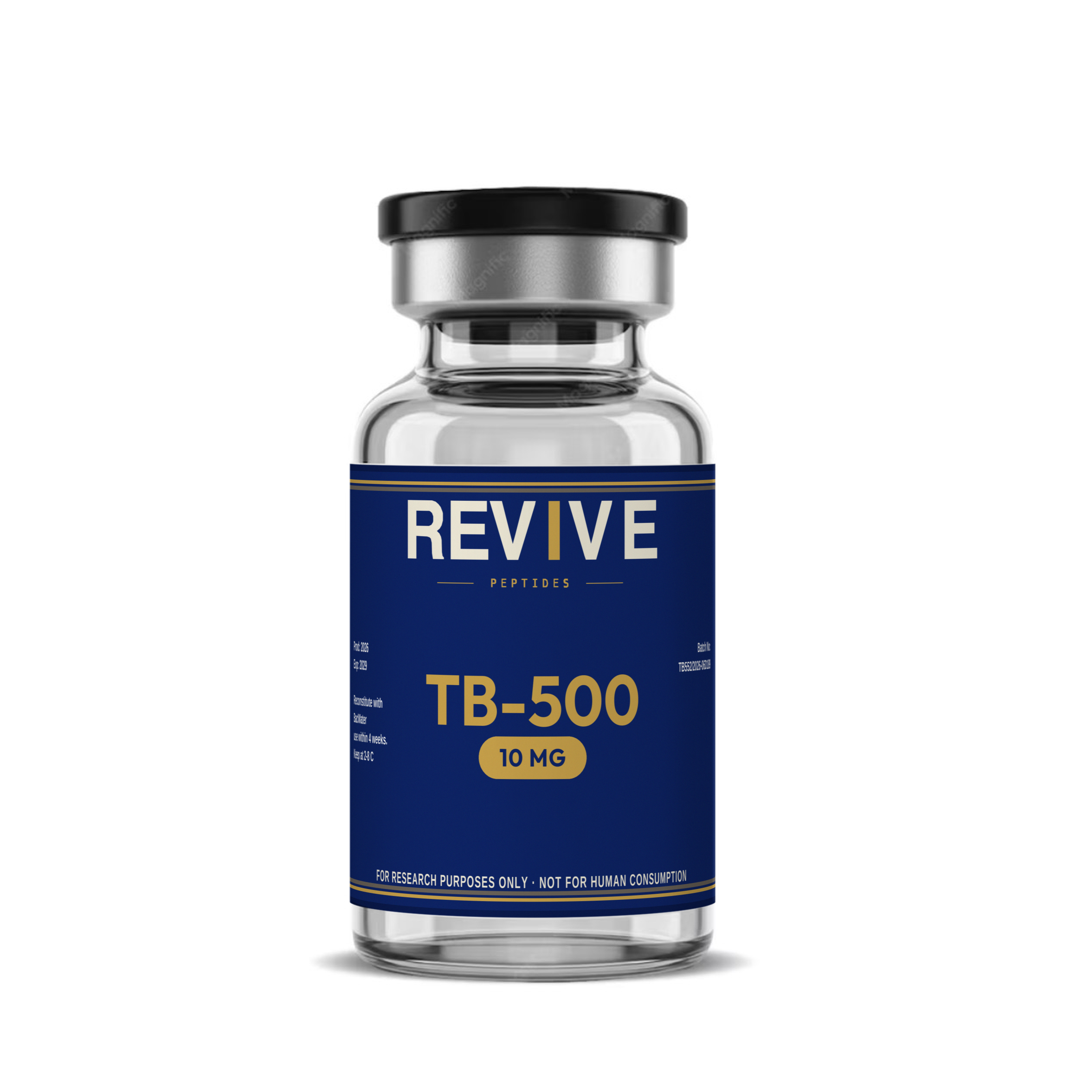
The ACL does not heal well on its own. That is not a research opinion — it is physiology. The anterior cruciate ligament exists in a synovial bath that floods torn tissue with plasmin and other fibrinolytic enzymes, actively degrading the fibrin scaffold that would otherwise begin repair. Add to that the ligament's limited intrinsic vascularity, its mechanical stress environment, and the slow turnover rate of type-I collagen, and you have a structure that biology practically designed to need surgical reconstruction rather than biological restoration. This is precisely why investigators studying connective-tissue repair peptides have turned attention to thymosin beta-4 — and why buy TB-500 UAE queries from sports-science researchers in Dubai and Abu Dhabi have been climbing steadily throughout 2025-2026.
This post is a research review. It covers what the published thymosin beta-4 literature actually says about the mechanisms most relevant to ligament tissue, what the research-context loading protocol looks like for TB-500 5 mg vials, and where investigators in the UAE can source HPLC-verified material from REVIVE LAB UAE with TB-500 Dubai 24h delivery and full lot-COA documentation.
What Is TB-500? Mechanism From First Principles
TB-500 is a synthetic peptide corresponding to amino acids 17–23 of thymosin beta-4 (Tβ4), a 43-amino-acid protein that is one of the most abundant intracellular peptides in mammalian tissue. Its primary biochemical function is G-actin sequestration: Tβ4 binds monomeric actin (G-actin) at a roughly 1:1 ratio, preventing it from polymerising into F-actin filaments and thereby regulating the cytoskeletal dynamics that govern cell shape, motility, and division. That one upstream function has surprisingly broad downstream consequences for tissue repair.
Goldstein et al. 2012, in their comprehensive review of thymosin beta-4 biology, map out the cascade that matters most for regenerative research contexts:
- Angiogenesis: Tβ4 upregulates VEGF and promotes endothelial cell migration and tube formation, accelerating capillary ingrowth into hypovascular tissue — exactly the deficit that makes the ACL a poor natural healer.
- Fibroblast and stem-cell recruitment: The peptide promotes migration of cardiac progenitor cells, dermal fibroblasts, and connective-tissue precursors to sites of injury, increasing the cellular substrate available for matrix synthesis.
- Collagen deposition: Research models show increased type-I and type-III collagen production in Tβ4-treated wound environments, with better-organized extracellular matrix architecture compared to untreated controls.
- Anti-inflammatory modulation: Tβ4 downregulates NF-kB signaling and reduces pro-inflammatory cytokine output (IL-1β, TNF-α), which in connective-tissue contexts translates to less enzymatic degradation of nascent collagen.
Crockford et al. 2010, writing in the Annals of the New York Academy of Sciences, situate these mechanisms within a broader clinical and preclinical landscape, noting that thymosin beta-4 had by that point been investigated across cardiac injury, corneal wound healing, dermal repair, and neurological contexts — each sharing the common thread of neovascularization and fibroblast-driven matrix remodeling.
Buy TB-500 UAE — Order Now →
Why ACL Tissue Is a Logical Research Target for Thymosin Beta-4
The ACL's failure to self-repair is multi-factorial, but the literature consistently points to three deficits: inadequate vascularization, insufficient fibroblast density at the injury site, and a synovial environment that degrades provisional scaffolds faster than they can consolidate. Each of these maps directly onto a documented Tβ4 mechanism:
| ACL Repair Deficit | Relevant Tβ4 Mechanism (Goldstein 2012; Crockford 2010) |
|---|---|
| Poor intrinsic vascularity — limits oxygen and growth-factor delivery to torn site | Angiogenic promotion via VEGF upregulation and endothelial cell migration |
| Low fibroblast density at synovial wound site | Fibroblast and progenitor-cell recruitment and directed migration toward injury signals |
| Fibrinolytic synovial environment degrades provisional matrix | Anti-inflammatory modulation reduces enzymatic activity; promotes organized collagen deposition |
| Slow collagen maturation rate (type-I collagen turnover weeks to months) | Increased collagen synthesis and improved ECM organization in preclinical wound models |
The actin-sequestering action deserves particular attention in the ligament context. Fibroblast migration — the process by which repair cells travel from the periligamentous tissue toward the tear — is directly actin-dependent. A cell cannot migrate without coordinated cytoskeletal polymerization and depolymerization at its leading edge. By modulating the G-actin pool available for this process, Tβ4 effectively acts as a rheostat for cellular motility in the repair microenvironment. This is not a peripheral effect. It is the molecular engine of the migration cascade that Goldstein and colleagues describe as central to Tβ4's pro-repair phenotype.
The Vascular Ingrowth Problem in ACL Research
One of the more under-discussed aspects of ACL biology is that the ligament's vascularity is not simply absent — it is spatially asymmetric. The proximal (femoral) end of the ACL is better vascularized than the distal (tibial) end, which partially explains why proximal tears in animal models show better spontaneous repair than mid-substance or distal ruptures. When investigators examine thymosin beta-4's angiogenic profile, this spatial gradient matters: the question is not merely whether new vessels form, but whether they form in the right location and with sufficient density to sustain collagen-producing fibroblasts. Crockford et al. 2010 note that in corneal and cardiac models, Tβ4 promoted targeted rather than diffuse angiogenesis — a distinction that makes the molecule potentially meaningful for ligament research applications where vascular precision matters.
Anti-Inflammatory Timing in Connective-Tissue Repair
The inflammatory phase of ligament healing is not uniformly bad — acute inflammation is required to clear debris and recruit the first wave of repair cells. The problem is prolonged or excessive inflammation, which prevents transition from the proliferative phase (matrix deposition) to the remodeling phase (collagen maturation and cross-linking). Tβ4's NF-kB inhibition appears, based on the Goldstein 2012 review, to operate most significantly in the later stages of inflammation, potentially shortening the window between injury and productive matrix synthesis without blunting the acute immune response entirely. This temporal specificity is one reason investigators consider Tβ4-derived peptides more nuanced research tools than broad anti-inflammatory agents.
Vial Reconstitution Reference
Single-vial format eliminates partial-use storage ambiguity: one vial, one administration. For research teams managing multi-subject protocols, REVIVE LAB UAE offers quantity ordering with consistent lot-COA batch documentation across the full order — important for any application where inter-vial consistency needs to be documented.
Investigators sourcing TB-500 in the UAE should note that REVIVE LAB UAE's cold-chain dispatch maintains 2–8°C integrity from warehouse to doorstep — a non-trivial detail when ambient temperatures in Dubai regularly exceed 40°C in summer months.
Order TB-500 UAE — View Stock →
Sourcing TB-500 in the UAE: What Researchers Need to Know
The UAE research peptide market has grown substantially over the past three years, and with that growth has come the predictable problem: inconsistent quality. The two failure modes investigators encounter most often are peptide content below labelled specification (a purity or synthesis problem) and cold-chain failures during last-mile delivery (a logistics problem). REVIVE LAB UAE addresses both systematically.
Quality Documentation
Every TB-500 batch supplied by REVIVE LAB UAE carries:
- HPLC purity confirmation ≥98%
- Lot-specific certificate of analysis (COA) available on request
- Mass spectrometry identity verification
- Endotoxin testing results
For serious research applications, this documentation chain matters as much as the molecule itself. An unverified peptide is not a research tool — it is an unknown variable.
Delivery Across All 7 Emirates
REVIVE LAB UAE supplies HPLC-verified, lot-COA, cold-chain dispatched TB-500 across all 7 emirates. Whether the research address is in Dubai Marina, Business Bay, JVC, DIFC, Jumeirah, Abu Dhabi, Sharjah, RAK, Fujairah, UAQ, or Al Ain — the delivery network covers it.
| Location | Delivery Window | Cash on Delivery |
|---|---|---|
| Dubai (all districts) | Same-day, 4–8 hours | Yes |
| Abu Dhabi | Next-day, 18–24 hours | Yes |
| Sharjah | Same-day / next-day, 8–18 hours | Yes |
| Ajman | Next-day, 18–24 hours | Yes |
| Ras Al Khaimah | Next-day, 18–24 hours | Yes |
| Fujairah | Next-day, 24 hours | Yes |
| Umm Al Quwain | Next-day, 18–24 hours | Yes |
Payment options include cash on delivery across all emirates, bank transfer, and — for researchers who prefer digital settlement — USDT (TRC20) via Binance Pay with a 5% pre-pay discount applied at checkout. Packaging is plain and unbranded as standard. TB-500 same day Dubai orders placed before the daily cut-off are dispatched same morning with cold-pack insulation rated for UAE summer ambient temperatures.
What the Research Does Not Say: Limitations and Context
A credible research review includes what the literature has not yet established. A few important boundaries:
- Human ACL-specific trials are absent. The mechanistic data reviewed by Goldstein et al. 2012 and Crockford et al. 2010 comes predominantly from cardiac, dermal, corneal, and neurological preclinical models. Extrapolation to human ACL is hypothesis-generating, not confirmatory.
- Dose-response in ligament contexts is uncharacterized. The research-context loading protocol described above is derived from the broader Tβ4 literature; it has not been validated in ACL-specific preclinical work.
- Mechanism does not equal outcome. The fact that Tβ4 promotes angiogenesis and fibroblast migration in model systems does not establish that these effects are sufficient, in isolation, to meaningfully alter ACL repair timelines in vivo.
This context is not a reason to dismiss TB-500 as a research tool — it is a reason to frame it correctly. The mechanistic rationale is solid and well-reviewed. The clinical translation remains an open research question, which is precisely why investigators continue to work in this space.
FAQ
Where can I buy TB-500 in the UAE with same-day delivery?
REVIVE LAB UAE stocks TB-500 in stock UAE — specifically 5 mg lyophilized vials — and offers same-day delivery in Dubai and 24h delivery across all seven emirates. Orders placed before the daily cut-off are dispatched cold-chain with HPLC-verified COA documentation. Cash on delivery is available at every emirate, and researchers can also pay via USDT crypto (Binance Pay, TRC20) with a 5% pre-pay discount applied automatically.
Is TB-500 the same as thymosin beta-4, and how does it relate to ACL repair research?
TB-500 is a synthetic peptide corresponding to the active actin-binding region of thymosin beta-4 (Tβ4), a naturally occurring 43-amino-acid protein. Goldstein et al. 2012 and Crockford et al. 2010 (Ann NY Acad Sci) review Tβ4's roles in angiogenesis, fibroblast recruitment, and collagen deposition — biological processes directly relevant to connective-tissue repair research. The ACL's documented deficits in vascularization and fibroblast density at injury sites make it a logical research model for thymosin beta-4 mechanism studies, though human-specific ACL trial data remains an open area of investigation.
Buy TB-500 UAE — Same-Day Dubai →
- Goldstein AL, Hannappel E, Sosne G, Kleinman HK. Thymosin β4: a multi-functional regenerative peptide. Basic properties and clinical applications. Expert Opin Biol Ther. 2012;12(1):37-51.
- Crockford D, Turjman N, Allan C, Angel J. Thymosin beta4: structure, function, and biological properties supporting current and future clinical applications. Ann NY Acad Sci. 2010;1194:179-189.