MOTS-c Research Literature Review: Lee's Characterization and the Mitochondrial Peptide Field (2026)
Why MOTS-c Became a Distinct Research Category
Most peptides studied in laboratory research are encoded by nuclear DNA. MOTS-c is different — it is one of a small class of peptides encoded within the mitochondrial genome itself, specifically within the region overlapping the 12S rRNA gene. That origin is the reason MOTS-c occupies its own niche in peptide research literature: it represented a previously under-explored category of "mitochondrial-derived peptides" (MDPs) at the time of its identification.
Changhan Lee and colleagues first characterized MOTS-c around 2015, and that characterization is widely regarded as a foundational moment for the mitochondrial-derived-peptide research field. Lee's published work established MOTS-c as a peptide of interest for researchers studying cellular metabolism and mitochondrial-to-nuclear communication — the idea that mitochondria are not just energy-producing organelles but can also generate signaling molecules that influence broader cellular and metabolic pathways.
The Shape of the Literature — By Research Theme, Not By Outcome Claims
Consistent with REVIVE LAB UAE's research-only compliance posture, this review deliberately avoids citing specific study outcome percentages. Instead, the published MOTS-c literature is better understood by research theme:
- Mitochondrial-derived peptide biology. The foundational theme — establishing that mitochondrial DNA encodes functional signaling peptides beyond the electron-transport-chain proteins classically associated with mitochondrial genes.
- AMPK pathway activation. A major research direction examining how MOTS-c relates to AMP-activated protein kinase, a central cellular energy-sensing pathway studied broadly in metabolic research.
- Metabolic signaling. Building on the AMPK connection, a body of research explores how MOTS-c fits into broader metabolic-regulation signaling networks studied in cell and laboratory-animal models.
- Mitochondrial-nuclear communication. A more conceptual research theme examining how a mitochondrially-encoded peptide might participate in signaling back to nuclear gene expression — a research direction that continues to be explored.
This thematic structure — not any specific numeric outcome — is what a responsible literature review of MOTS-c research conveys. Researchers evaluating MOTS-c as a laboratory reference compound should consult primary sources directly for methodology and results.
Why Lee's 2015 Characterization Still Anchors the Field
Lee's 2015 published characterization of MOTS-c remains the anchor reference point cited across the subsequent literature, in large part because it established the peptide's identity, origin and initial research context so clearly. Later research building on that foundation has continued to explore MOTS-c's relationship to AMPK signaling and cellular metabolism, but the initial characterization work is what defined MOTS-c as a distinct research subject in the first place — comparable to how a novel compound's first published isolation anchors decades of subsequent peptide research in other fields.
Why the mitochondrial-DNA origin matters for research design
Because MOTS-c is mitochondrially encoded, researchers studying it are often specifically interested in mitochondrial biology questions — how mitochondrial health, mitochondrial DNA variation, or mitochondrial signaling capacity might relate to broader physiological research questions. This is a meaningfully different research angle than most nuclear-DNA-encoded peptides, and it is part of why MOTS-c continues to attract dedicated research attention as a reference compound.
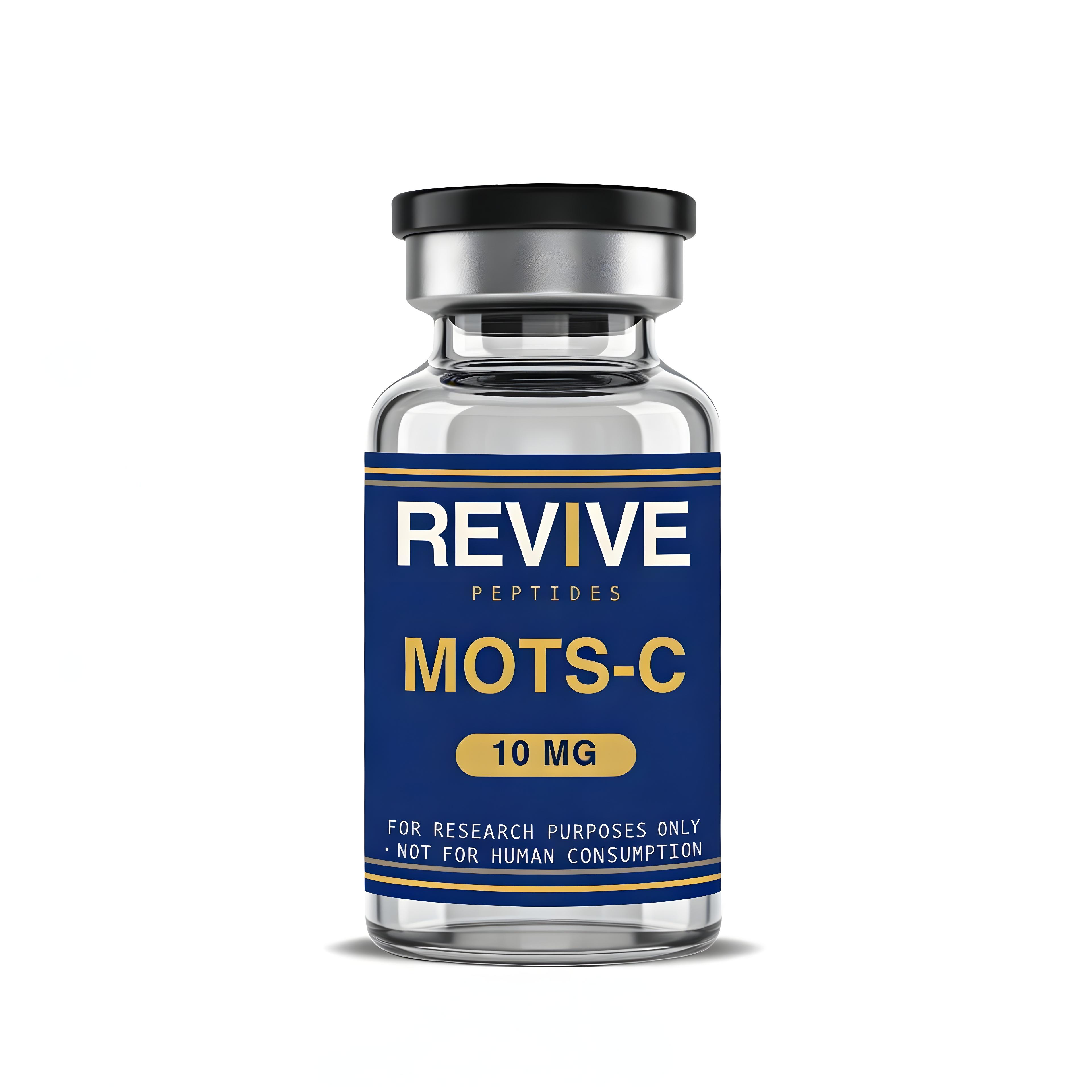
MOTS-c Vial Specifications at REVIVE LAB UAE
| Spec | MOTS-c 10 mg vial |
|---|---|
| Form | Lyophilised powder |
| Sequence | Mitochondrial-derived peptide, 16 amino acids |
| Molecular weight | ≈2174 Da |
| Purity (HPLC) | ≥98.0% |
| Reconstitution | Bacteriostatic water, 2–3 mL |
| Storage (lyophilised) | −20°C, desiccated |
| Labelling | Research Use Only — not for human or veterinary use |
| Price | AED 750 |
HPLC-verified, ≥98.0% purity, 16-amino-acid mitochondrial-derived peptide. Sold strictly as a laboratory research reference material.
View MOTS-c product page →
Reading the Literature Responsibly — A Note for UAE Researchers
REVIVE LAB UAE's editorial position on this topic is deliberately conservative. We describe the existence, general mechanism and research direction of published MOTS-c work without citing dose-linked outcome figures, because doing so would misrepresent laboratory-stage research as validated real-world results — and because MOTS-c sold through this site is not evaluated or approved for human or veterinary use of any kind. Any researcher building a study protocol should go directly to primary published sources and treat secondary summaries — including this one — as an orientation layer only.
What this means practically
- No mg-per-day or dosing schedule information appears anywhere on REVIVE LAB UAE, including this article.
- No specific study outcome percentages tied to particular doses are cited here.
- Reconstitution guidance describes laboratory sample preparation only — mixing lyophilised powder with bacteriostatic water into a solution for research use — not administration of any kind.
References
- Lee C, and colleagues. Initial characterization of MOTS-c, a mitochondrial-derived peptide, circa 2015 — mitochondrial-nuclear communication and AMPK-pathway research relevance. General attribution; researchers should consult primary published sources directly for full citation details.
- Lee C, Zeng J, Drew BG, et al. Research on mitochondrial-derived peptides and metabolic regulation.