MOTS-c Research FAQ: Purity, Legality and Storage Questions Answered for UAE Buyers (2026)
What Is MOTS-c?
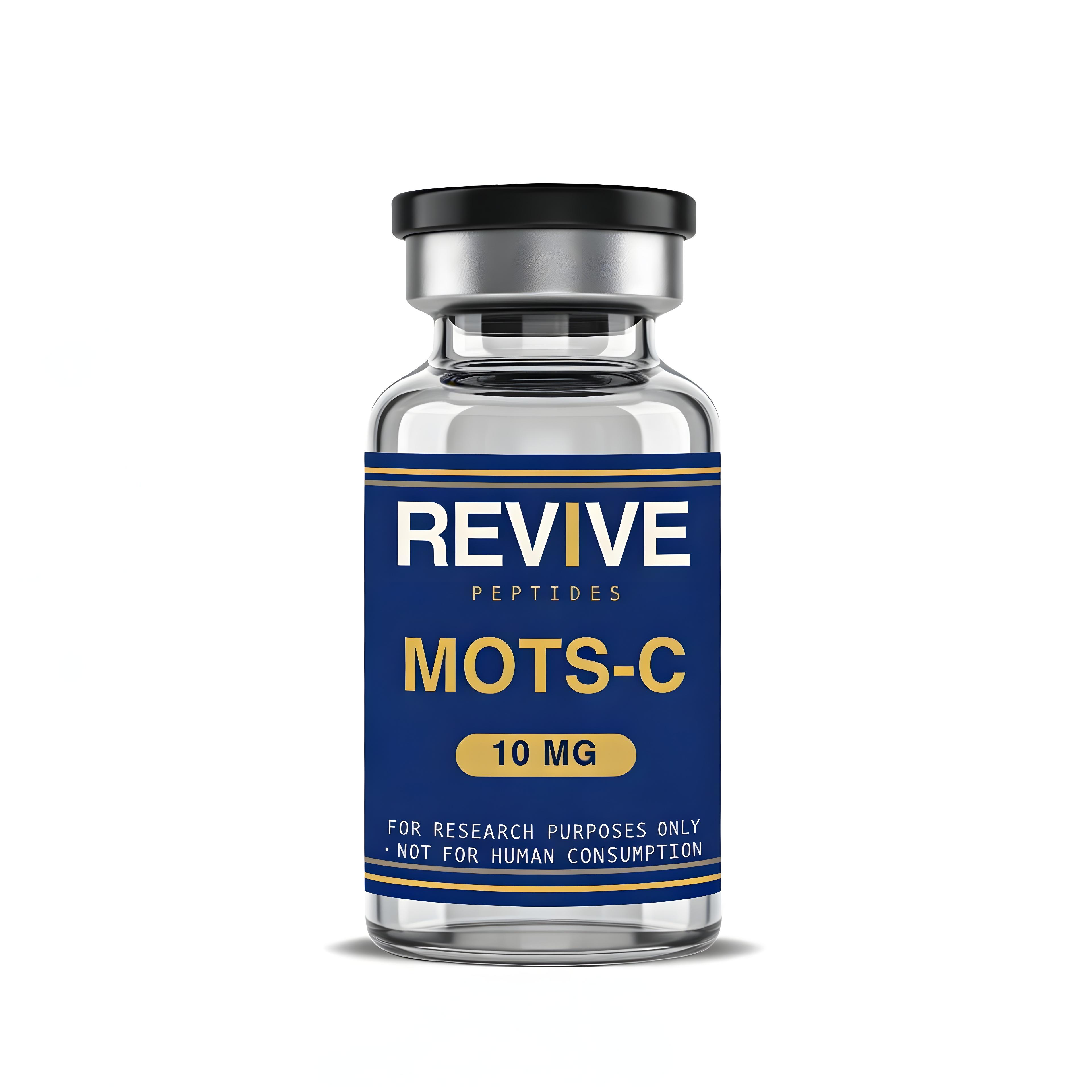
MOTS-c is a synthetic peptide, 16 amino acids in length, corresponding to a mitochondrial-derived peptide first characterized by Changhan Lee and colleagues around 2015. It is encoded within mitochondrial DNA rather than nuclear DNA, and published research has focused heavily on its relationship to AMPK pathway activation and cellular metabolic signaling. MOTS-c, as sold by REVIVE LAB UAE, is a laboratory research reference material — it is not a clinical drug product, and it is not intended for human or veterinary use of any kind.
Purity and Verification Questions
How does REVIVE LAB UAE verify MOTS-c purity?
Every batch of MOTS-c stocked by REVIVE LAB UAE is verified using HPLC (high-performance liquid chromatography), the standard analytical method for confirming peptide purity and identity. REVIVE's MOTS-c 10 mg vials carry a purity specification of ≥98.0%, with a certificate of analysis (COA) available per batch documenting purity percentage, molecular weight and batch-specific identifiers.
What does the certificate of analysis include?
A COA typically documents the HPLC purity result, the batch or lot number, the manufacture date, and confirmation of the compound's identity via mass spectrometry or comparable analytical method. This documentation exists to give researchers confidence in the reference material they're working with — not as any form of clinical or regulatory approval, since none applies to a research-only compound.
Why does purity matter for a research reference compound?
In any laboratory setting, contamination or degradation in a reference peptide introduces confounding variables into experimental results. Verified purity — documented per batch rather than asserted generically — is a basic quality-control expectation for any research reagent, and MOTS-c is treated no differently by REVIVE LAB UAE's sourcing and testing process.
Legal and Regulatory Questions
Is it legal to buy MOTS-c as a research chemical in the UAE?
REVIVE LAB UAE sells MOTS-c exclusively as a laboratory research reference material, labelled Research Use Only and explicitly not for human or veterinary consumption. It is positioned in the same regulatory category as other lyophilised research peptides sold to laboratories, universities and research-oriented buyers. Buyers are responsible for ensuring that their specific purchase, storage, handling and end use complies with their own institution's research protocols and with applicable UAE regulations governing research chemicals.
Does REVIVE LAB UAE make any medical or therapeutic claims about MOTS-c?
No. Nothing published by REVIVE LAB UAE — including this FAQ — constitutes medical advice, a therapeutic claim, or guidance for human or veterinary use. All content describes MOTS-c strictly in the context of laboratory research and the published scientific literature surrounding mitochondrial-derived peptides.
Storage Questions
How should MOTS-c be stored before reconstitution?
Lyophilised MOTS-c should be kept desiccated at −20°C until it is ready to be reconstituted for laboratory use. This is standard practice for lyophilised research peptides generally — cold, dry storage preserves the integrity of the freeze-dried powder over extended periods.
What does reconstitution involve?
Reconstitution is a laboratory sample-preparation step: lyophilised MOTS-c powder is dissolved into solution using bacteriostatic water, typically in a 2–3 mL volume for the 10 mg vial. This describes preparing a research solution, not administering anything — REVIVE LAB UAE does not provide dosing or injection guidance of any kind on this or any page.
How should reconstituted MOTS-c be handled?
Once reconstituted, standard laboratory peptide-handling practice applies: keep the solution refrigerated, avoid repeated freeze-thaw cycles, and use it within the timeframe appropriate for a bacteriostatic-preserved solution. Researchers should follow their institution's specific handling protocols rather than relying solely on general guidance.
MOTS-c Vial Specifications at REVIVE LAB UAE
| Spec | MOTS-c 10 mg vial |
|---|---|
| Form | Lyophilised powder |
| Sequence | Mitochondrial-derived peptide, 16 amino acids |
| Molecular weight | ≈2174 Da |
| Purity (HPLC) | ≥98.0% |
| Reconstitution | Bacteriostatic water, 2–3 mL |
| Storage (lyophilised) | −20°C, desiccated |
| Labelling | Research Use Only — not for human or veterinary use |
| Price | AED 750 |
HPLC-verified, ≥98.0% purity, 16-amino-acid mitochondrial-derived peptide. Sold strictly as a laboratory research reference material.
View MOTS-c product page →
A Note on What This FAQ Does Not Cover
By design, this FAQ does not address dosing, injection frequency, administration schedules, or any question implying human or veterinary use. REVIVE LAB UAE does not publish that content anywhere on the site because MOTS-c is sold strictly as a Research Use Only laboratory reference material. Researchers with protocol-design questions should consult primary published literature and their institution's research oversight body directly.
References
- Lee C, and colleagues. Initial characterization of MOTS-c, a mitochondrial-derived peptide, circa 2015 — mitochondrial-nuclear communication and AMPK-pathway research relevance. General attribution; researchers should consult primary published sources directly for full citation details.
- Lee C, Zeng J, Drew BG, et al. Research on mitochondrial-derived peptides and metabolic regulation.