TB-500 HPLC Purity Testing & COA Verification: Confirming Fragment Identity, Not Just Purity
Why Fragment Identity Is the First Question for TB-500
TB-500 refers specifically to a synthetic 17-amino-acid fragment built around the LKKTETQ active-site motif found in Thymosin Beta-4, a naturally occurring 43-amino-acid protein. Because "TB-500" is a name used across the research-peptide market for what is meant to be this specific defined fragment, identity confirmation matters just as much as purity confirmation. A sample could technically be a highly pure peptide and still not be the correct 17-amino-acid TB-500 fragment if the synthesis targeted the wrong sequence or length.
This is precisely why HPLC testing on TB-500 needs to establish two things together: that the detected peak matches the expected retention time and molecular weight for the 17-amino-acid fragment (~1880 Da), and that the purity of that correctly identified fragment meets the stated threshold. Testing purity alone, without confirming identity first, doesn't answer the question a research buyer actually needs answered.
What HPLC Testing Actually Measures
Identity first, then purity
Reverse-phase HPLC separates the components of a dissolved sample as they pass through a column, with each component eluting at a characteristic retention time recorded as a peak. For TB-500, the analyst first checks that the dominant peak's retention time and mass are consistent with the 17-amino-acid LKKTETQ-motif fragment, then calculates purity as the percentage of total peak area belonging to that correctly identified peak.
What "≥98.8% purity" means for a confirmed fragment
A stated purity of ≥98.8% means that, once the fragment's identity has been confirmed for that lot, at least 98.8% of the detected material corresponds to the correctly assembled TB-500 sequence, with the remainder made up of related synthesis impurities. It's a measurement specific to that batch's analytical run.
What a Real Certificate of Analysis Should Contain
A genuine, lot-specific TB-500 COA should include:
- Product name and specification, clearly identifying the 17-amino-acid fragment
- Lot or batch number for that manufacturing run
- Test date
- Testing method (HPLC)
- Measured purity percentage for that lot
- Molecular weight confirmation
- Appearance / identity description
- Storage recommendations
- Research-use-only statement
Given the naming ambiguity that exists across the broader market between TB-500 the defined fragment and Thymosin Beta-4 the full protein, a COA that doesn't reference a specific, verifiable molecular weight is not doing its job.
The Real Risk of Buying Without a COA
Because TB-500 sits in a category where naming and fragment length can be inconsistent across suppliers, buying without independent verification carries a compounded risk — not just underdosed or impure material, but potentially the wrong fragment entirely. Watch for:
- No COA provided, or one that doesn't specify molecular weight or fragment identity.
- Prices significantly below the UAE market range.
- No verifiable UAE business address.
- Only untraceable payment channels, with no order documentation.
How REVIVE LAB UAE Verifies TB-500
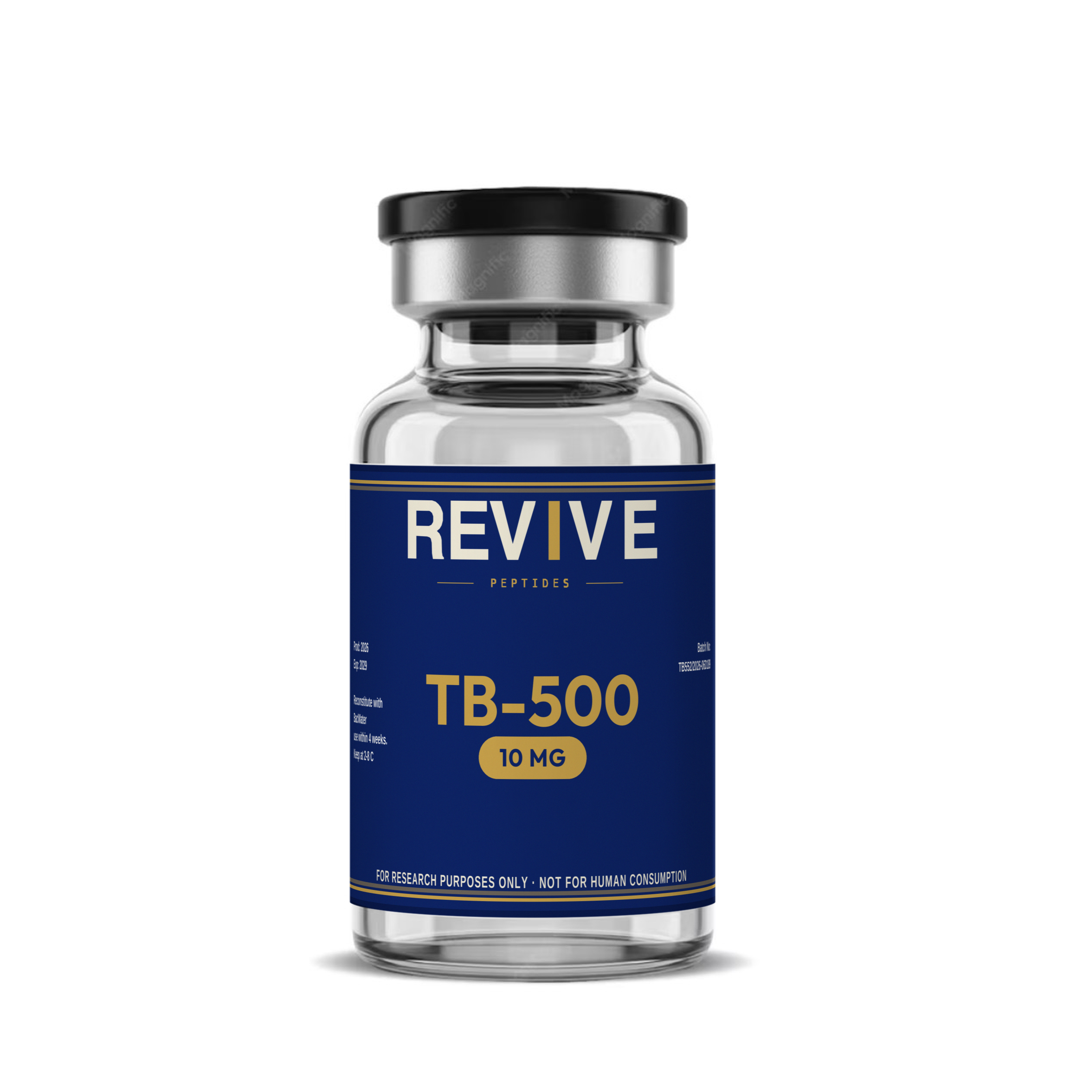
| Spec | TB-500 10 mg vial |
|---|---|
| Price | AED 640 |
| Molecular weight | ≈1880 Da |
| Purity (HPLC) | ≥98.8% |
| Class | Thymosin Beta-4 fragment, 17 amino acids (LKKTETQ motif) |
| Documentation | Lot-specific HPLC Certificate of Analysis with every order |
| Form | Lyophilised powder, research use only |
A Practical Checklist for UAE Research Buyers
- Confirm the COA specifies the fragment's molecular weight, not just a purity percentage.
- Match the lot number on the COA to the vial you receive.
- Check the test date is current relative to the batch.
- Be cautious of pricing well below the UAE market average.
- Verify the supplier has a real, checkable UAE business presence.
Frequently Asked Questions
What does HPLC testing verify for TB-500?
It confirms the sample matches the 17-amino-acid LKKTETQ-motif fragment (not the full-length protein or an unrelated sequence) and measures what percentage of the sample is the correctly assembled fragment.
What should a Certificate of Analysis for TB-500 include?
Product name, lot number, test date, testing method, measured purity, molecular weight confirmation, appearance description, storage recommendation, and a research-use-only statement.
Why does fragment identity matter specifically for TB-500?
TB-500 is a defined 17-amino-acid fragment, not the full 43-amino-acid Thymosin Beta-4 protein — HPLC testing needs to confirm the sample is actually this fragment before purity figures are meaningful.
Does REVIVE LAB UAE provide a COA with every TB-500 order?
Yes — every batch is HPLC-tested to ≥98.8% purity with a matching lot-specific COA shipped with the vial.
REVIVE LAB UAE ships TB-500 10 mg vials with a lot-specific Certificate of Analysis on every order.
Buy TB-500 UAE →
References
- United States Pharmacopeia. General Chapter <621> Chromatography. USP-NF.
- International Council for Harmonisation. ICH Q6B: Specifications for Biotechnological/Biological Products.
- Snyder LR, Kirkland JJ, Dolan JW. Introduction to Modern Liquid Chromatography. 3rd ed. Wiley; 2010.
- Goldstein AL, Hannappel E, Kleinman HK. Thymosin β4: actin-sequestering protein moonlights to repair injured tissues. Trends Mol Med. 2005;11(10):421–429.