TB-500 and thymosin β4: the distinction that matters
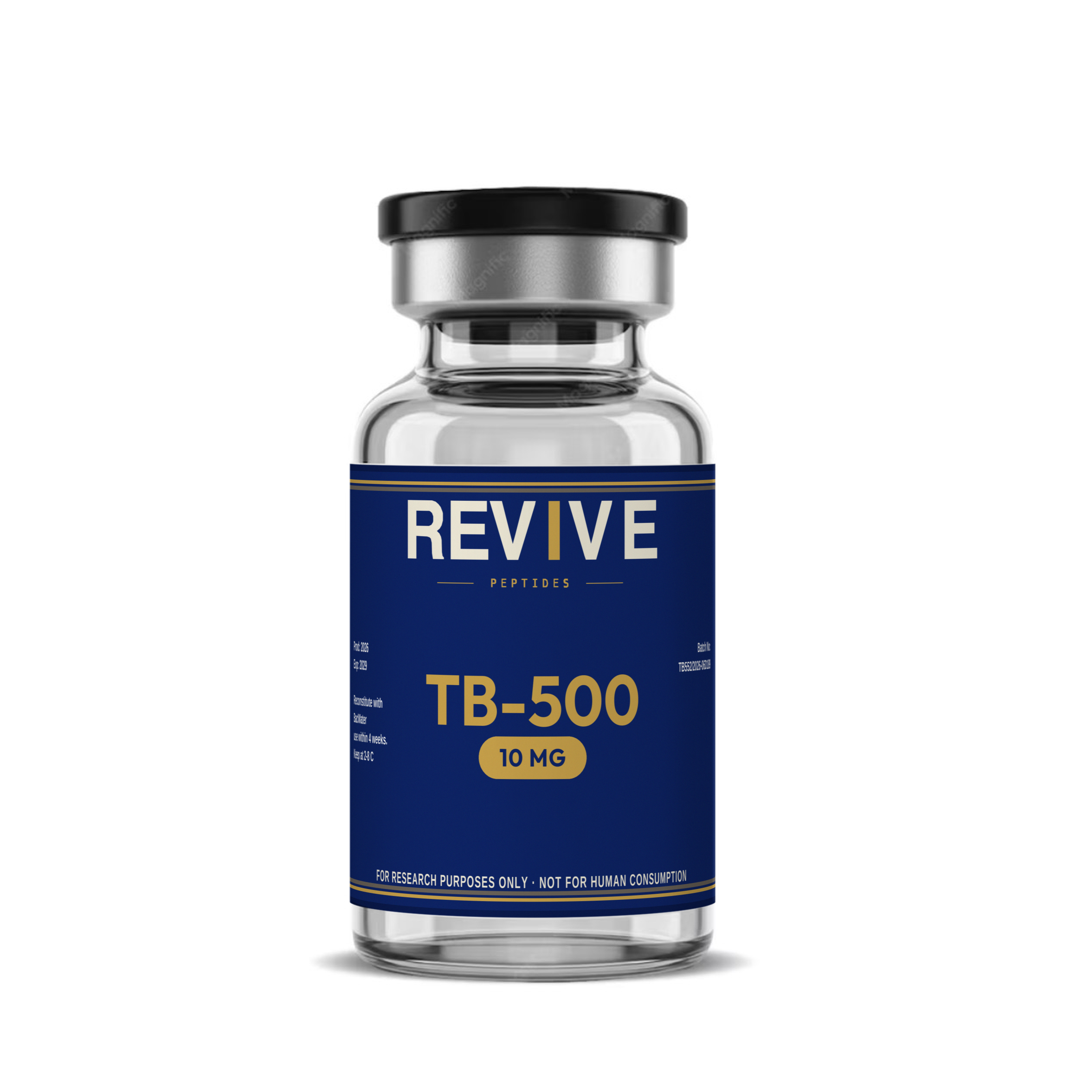
The distinction
Thymosin β4 (Tβ4) is a naturally occurring 43-amino-acid protein, best known as an actin-sequestering molecule. TB-500 is a shorter synthetic peptide corresponding to the actin-binding region of Tβ4 — not the whole protein.
This matters when reading the literature, because the substantial body of published research concerns Tβ4 itself. Evidence generated with a 43-residue protein does not automatically transfer to a short fragment, and papers on one are routinely cited as though they were about the other.
What the thymosin β4 literature reports
Tβ4's primary described function is binding monomeric actin and regulating its polymerisation, which places it in cytoskeletal dynamics, cell migration and wound repair. Goldstein, Hannappel and Kleinman's review in Trends in Molecular Medicine is a useful overview of how that role was characterised.
Malinda and colleagues reported accelerated wound healing in a dermal model. In cardiac work, Bock-Marquette and colleagues reported that Tβ4 activated integrin-linked kinase and promoted cardiac cell migration and survival, published in Nature; Smart and colleagues later reported epicardial progenitor mobilisation.
How to read it carefully
The Tβ4 findings are real published results, largely in cell and animal models. The open question for anyone evaluating TB-500 specifically is how much of that biology the fragment reproduces — and that question has far less direct evidence behind it than the Tβ4 literature itself.
The catalogue name reflects this honestly rather than blurring it: the product is listed as thymosin β4 acetate, and the item specification is what should be read, not the informal trade name.
Regulatory and anti-doping status
TB-500 appears on the World Anti-Doping Agency Prohibited List in the growth factors class. Athletes under anti-doping rules should treat it as prohibited at all times.
It is supplied strictly as a laboratory reference material, and nothing here constitutes a dose, a route or a protocol.
Catalogue item
| Item | TB500 (Thymosin B4 Acetate) |
|---|---|
| Strength | 10 mg |
| Purity | ≥ 98.8% (HPLC) |
| Price | AED 640 |
| Delivery | Same-day Dubai dispatch before 4 PM, 24-hour delivery across all seven emirates. |
References
- Goldstein AL, Hannappel E, Kleinman HK. Thymosin β4: actin-sequestering protein moonlights to repair injured tissues. Trends Mol Med. 2005;11(9):421–429.
- Malinda KM, Sidhu GS, Mani H, et al. Thymosin β4 accelerates wound healing. J Invest Dermatol. 1999;113(3):364–368.
- Bock-Marquette I, Saxena A, White MD, Dimaio JM, Srivastava D. Thymosin β4 activates integrin-linked kinase and promotes cardiac cell migration, survival and cardiac repair. Nature. 2004;432(7016):466–472.
- Smart N, Risebro CA, Melville AAD, et al. Thymosin β4 induces adult epicardial progenitor mobilization and neovascularization. Nature. 2007;445(7124):177–182.
- World Anti-Doping Agency. Prohibited List — S2 Peptide Hormones, Growth Factors, Related Substances and Mimetics.