TB-500 / Thymosin Beta-4: Complete UAE Research Deep Dive 2026
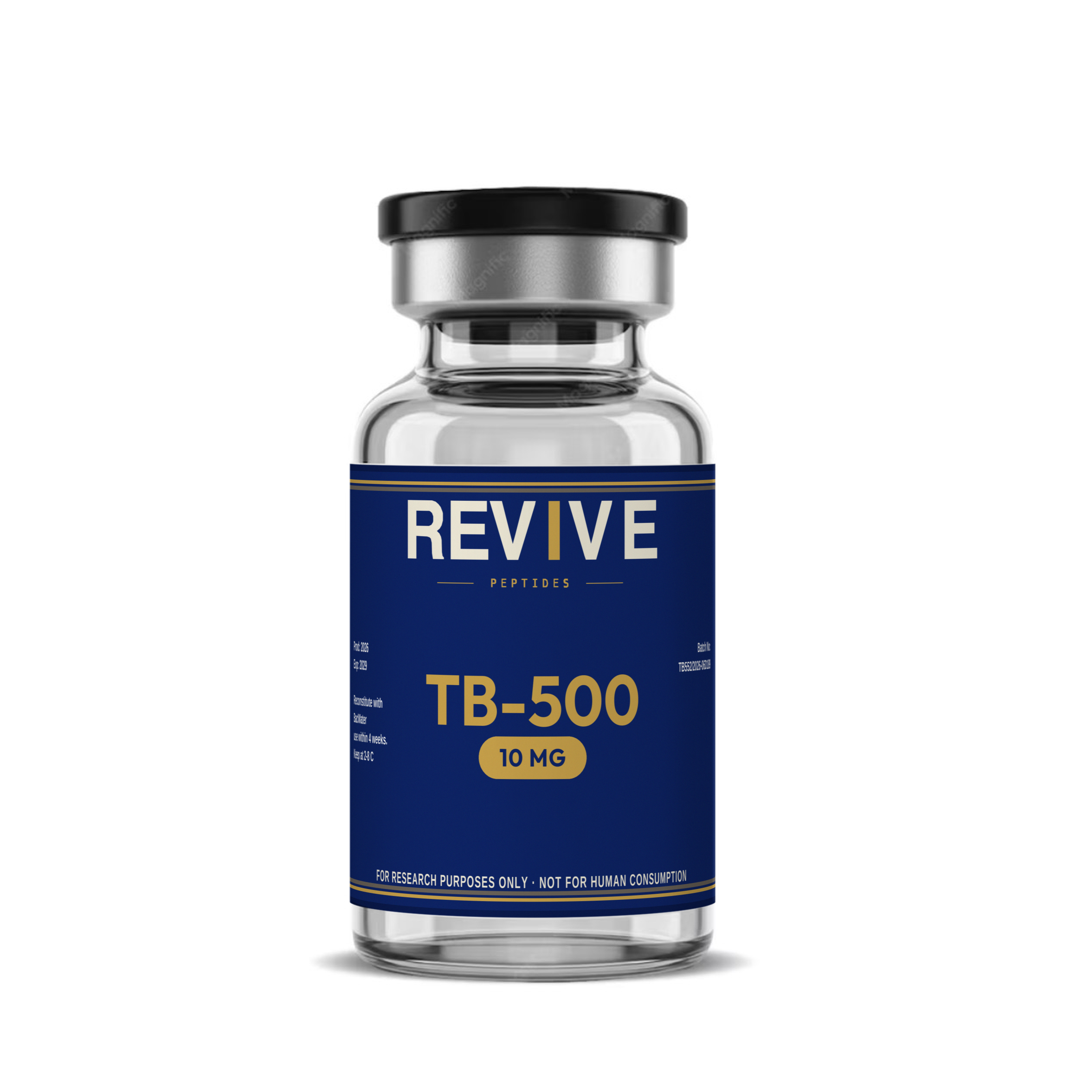
What Is Thymosin Beta-4?
Thymosin beta-4 (Tβ4) is a 43-amino-acid intracellular protein, ubiquitous across mammalian tissues. It is the primary actin-sequestering molecule in human cells — by binding monomeric G-actin and preventing premature polymerisation, it controls when and where cells extend, divide, and migrate.
"TB-500" refers to a synthetic 17-amino-acid fragment containing the active actin-binding region of Tβ4. In research literature the names are used somewhat interchangeably, but commercially the term TB-500 refers to the fragment supplied for research use.
Mechanism of Action
| Action | How it works | Reference |
|---|---|---|
| Actin sequestration | Binds G-actin 1:1, regulates polymerisation | Safer 1991 |
| Angiogenesis | Upregulates VEGF, promotes endothelial migration | Grant 1999 |
| Anti-inflammatory | Suppresses NF-κB pathway | Sosne 2007 |
| Stem cell recruitment | Mobilises progenitor cells to injury sites | Smart 2007 |
| Anti-apoptotic | Protects cells from ischemic death | Bock-Marquette 2004 |
Key Clinical Trials
Crockford 2010 — Cardiac Repair Post-MI
Crockford et al. 2010 reviewed thymosin beta-4 cardiac trials, including phase 1 work in post-myocardial-infarction patients. IV Tβ4 at 42, 140, or 420 mg single doses showed acceptable safety; phase 2 cardiac repair trials followed. Animal model work (Bock-Marquette 2004) had previously shown Tβ4 could activate epicardial progenitor cells to regenerate heart muscle.
Sosne 2010 — Corneal Wound Healing
Sosne et al. tested topical Tβ4 (0.1% solution) for corneal wound healing in human patients. Results showed accelerated re-epithelialisation vs vehicle. The corneal indication remains one of the most clinically advanced Tβ4 applications.
Goldstein 2005 — The Mechanism Foundation
Goldstein's 2005 review consolidated the wound-healing mechanism work in animals — diabetic skin wounds, corneal burns, cardiac ischemia — showing consistent acceleration of healing across tissue types.
What Research Doses Look Like
| Application | Typical research dose | Frequency |
|---|---|---|
| General healing research | 2–5 mg SC weekly | Loading 4 weeks, then taper |
| Tendon/ligament protocols | 5 mg SC twice weekly | 4–6 weeks |
| Topical corneal (Sosne 2010) | 0.1% solution drops | 4x daily |
| IV cardiac trials (Crockford) | 42–420 mg single dose | Phase 1 dose-finding |
REVIVE supplies TB-500 as 5 mg vials. See our reconstitution calculator for the math.
TB-500 vs BPC-157 — Different Tools
The two peptides are often stacked or compared. The differences:
| Property | TB-500 | BPC-157 |
|---|---|---|
| Primary mechanism | Actin sequestration + angiogenesis | Cytoprotection + angiogenesis (VEGFR2) |
| Best evidence for | Cardiac repair, corneal healing | GI tract, tendon, muscle |
| Human RCTs published | Yes (cardiac, corneal) | None published |
| Half-life | Long (days) | Short (hours) |
| Frequency | Weekly or twice-weekly | Daily |
See our dedicated comparison: BPC-157 vs TB-500.
REVIVE supplies TB-500 5 mg vials with HPLC certificates and cold-chain delivery.
View TB-500 vials →
What's Still Missing
- No published musculoskeletal RCTs. Despite widespread research use for tendon/ligament repair, peer-reviewed human trials in that indication don't exist.
- Cancer concerns remain theoretical. Because Tβ4 upregulates VEGF and angiogenesis, theoretical concern exists about pro-tumour effects. Goldstein 2017 reviewed this and concluded current evidence does not support a cancer risk in healthy tissue, but the question stays open.
- Optimal dose and frequency are not standardised. Research protocols vary widely.
References
- Goldstein AL, Hannappel E, Kleinman HK. Thymosin beta4: actin-sequestering protein moonlights to repair injured tissues. Trends Mol Med. 2005;11(9):421–429.
- Crockford D, Turjman N, Allan C, Angel J. Thymosin beta4: structure, function, and biological properties supporting current and future clinical applications. Ann N Y Acad Sci. 2010;1194:179–189.
- Sosne G, Qiu P, Christopherson PL, Wheater MK. Thymosin beta 4 suppression of corneal NFκB: a potential anti-inflammatory pathway. Exp Eye Res. 2007;84(4):663–669.
- Bock-Marquette I, Saxena A, White MD, et al. Thymosin beta4 activates integrin-linked kinase and promotes cardiac cell migration, survival and cardiac repair. Nature. 2004;432(7016):466–472.
- Smart N, Risebro CA, Melville AA, et al. Thymosin beta4 induces adult epicardial progenitor mobilization and neovascularization. Nature. 2007;445(7124):177–182.