TB-500 Research Literature Review: What the Published Thymosin Beta-4 Body of Work Covers (2026)
Why TB-500 Draws Sustained Research Interest
Thymosin Beta-4 is one of the more extensively catalogued regulatory peptides in cell-biology literature, and TB-500 — the synthetic fragment built around its active LKKTETQ actin-binding motif — has become a common laboratory reference compound for researchers studying that same biological territory. The sustained interest traces back to a straightforward observation: Thymosin Beta-4 is one of the most abundant intracellular actin-binding peptides in mammalian cells, present across nearly every tissue type examined. That ubiquity is exactly why it attracted early attention from cell biologists trying to understand actin dynamics, and why the resulting literature base grew as wide as it did.
Allan L. Goldstein is the researcher most closely associated with this body of work. Goldstein and colleagues' published research on Thymosin Beta-4 spans several decades and multiple research directions — actin sequestration and polymerization regulation, angiogenic signaling pathways, and cell-migration mechanisms relevant to tissue-repair biology. That published work forms the scientific backdrop against which TB-500, as a synthetic fragment reference material, is studied by contemporary laboratories.
The Shape of the Literature — By Research Theme, Not By Outcome Claims
Rather than citing specific trial outcome percentages — which this article deliberately avoids, consistent with REVIVE LAB UAE's research-only compliance posture — it is more useful to describe the literature by the research themes it covers. Four themes recur across the published Thymosin Beta-4 body of work:
- Actin regulation. The foundational biochemical theme. Thymosin Beta-4 binds monomeric G-actin, and Goldstein's early published work characterized this sequestration behavior as central to how cells regulate the pool of polymerization-ready actin.
- Angiogenesis signaling. A substantial portion of the published literature examines how Thymosin Beta-4-related signaling intersects with pathways involved in new blood vessel formation — a research area of interest to laboratories studying vascular biology.
- Cell migration. Because actin dynamics underlie how cells physically move, migration assays are a recurring experimental model across the published research, informing how laboratories design in-vitro cell-motility studies.
- Tissue-repair signaling. The broadest theme, tying actin regulation and angiogenesis together into a systems-level picture of how repair-related signaling cascades are studied in laboratory models.
This thematic structure — rather than any specific numeric outcome — is what a literature review of Thymosin Beta-4 research responsibly conveys. Researchers evaluating TB-500 as a laboratory reference compound are encouraged to consult primary sources directly rather than rely on secondary summaries for methodology or results.
How TB-500 Relates to the Full-Length Protein Studied in the Literature
It is important for researchers to understand precisely what TB-500 is in relation to the published literature. Thymosin Beta-4 as studied by Goldstein and colleagues is a 43-amino-acid protein. TB-500 is not that full-length protein — it is a synthetic 17-amino-acid fragment built around the LKKTETQ actin-binding motif, the region of the full protein most directly implicated in the actin-regulation mechanism described in the published research. This distinction matters for any researcher designing a study protocol: TB-500 is a fragment reference material intended to model a specific, well-characterized region of a much larger and more extensively studied molecule.
Why the fragment approach is common in peptide research
Working with a shorter, stable synthetic fragment rather than the full native protein is a standard approach in peptide research generally — it simplifies synthesis, improves batch-to-batch consistency, and lets researchers isolate the specific structural motif of interest. For TB-500, that motif is the actin-binding LKKTETQ sequence central to the mechanism described throughout the Goldstein literature.
TB-500 Vial Specifications at REVIVE LAB UAE
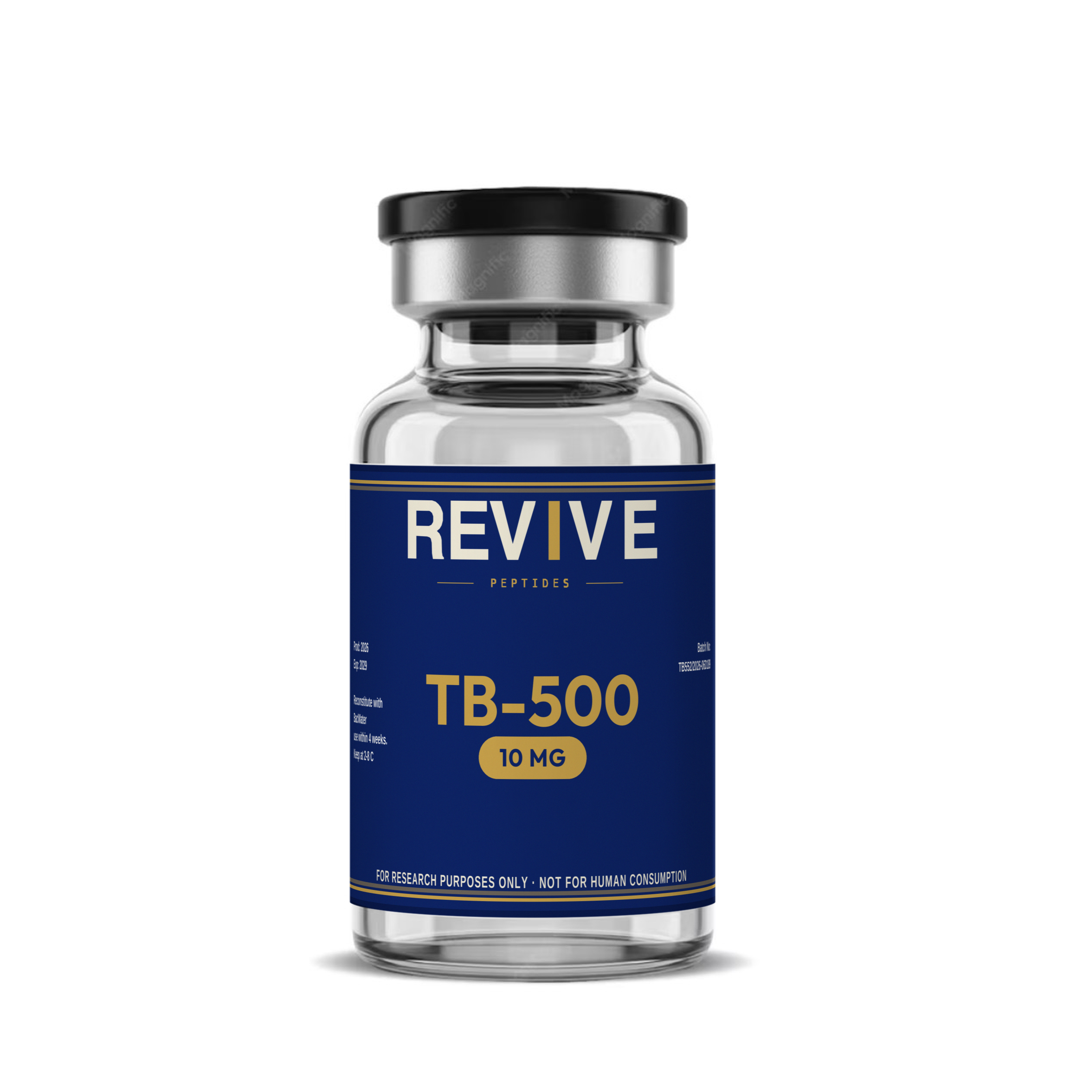
| Spec | TB-500 10 mg vial |
|---|---|
| Form | Lyophilised powder |
| Sequence | Thymosin Beta-4 fragment, 17 amino acids (LKKTETQ actin-binding motif) |
| Molecular weight | ≈1880 Da |
| Purity (HPLC) | ≥98.8% |
| Reconstitution | Bacteriostatic water, 2–3 mL |
| Storage (lyophilised) | −20°C, desiccated |
| Labelling | Research Use Only — not for human or veterinary use |
| Price | AED 640 |
HPLC-verified, ≥98.8% purity, 17-amino-acid Thymosin Beta-4 fragment. Sold strictly as a laboratory research reference material.
View TB-500 product page →
Reading the Literature Responsibly — A Note for UAE Researchers
REVIVE LAB UAE's editorial position on this topic is deliberately conservative. We describe the existence, general mechanism and research direction of published Thymosin Beta-4 work without citing dose-linked outcome figures, because doing so would misrepresent laboratory-stage research as validated real-world results — and because TB-500 sold through this site is not evaluated or approved for human or veterinary use of any kind. Any researcher building a study protocol should go directly to primary published sources, review methodology in full, and treat secondary summaries — including this one — as an orientation layer only, never a substitute for the original literature.
What this means practically
- No mg-per-day or dosing schedule information appears anywhere on REVIVE LAB UAE, including this article.
- No specific study outcome percentages tied to particular doses are cited here.
- Reconstitution guidance describes laboratory sample preparation only — mixing lyophilised powder with bacteriostatic water into a solution for research use — not administration of any kind.
References
- Goldstein AL, and colleagues. Published research on Thymosin Beta-4 — actin regulation, angiogenesis and tissue-repair signaling. General attribution; researchers should consult primary published sources directly for full citation details.
- Low TL, Goldstein AL. Chemical characterization of Thymosin Beta-4, a thymic peptide isolated from calf thymosin fraction.