TB-500 Mechanism of Action: How Actin Binding and Angiogenesis Signaling Are Studied (2026)
Starting Point: What "Mechanism of Action" Means for a Research Peptide
When researchers describe the mechanism of action of a peptide like TB-500, they are describing the molecular-level interactions it is understood to participate in in laboratory models — which proteins it binds, which pathways that binding is thought to influence, and which downstream cellular behaviors have been observed in published research. This is fundamentally different from a therapeutic claim. A mechanism describes what happens at the cell-biology level in a research setting; it does not describe an outcome in a human being, and REVIVE LAB UAE does not present it as one. TB-500 is sold strictly as a laboratory research reference material.
G-Actin Binding — The Core Interaction
The cytoskeleton of virtually every eukaryotic cell depends on actin, which exists in two forms: monomeric G-actin (globular) and polymerized F-actin (filamentous). The balance between these two pools governs cell shape, motility and structural integrity. Thymosin Beta-4 — and by extension the TB-500 fragment built around its active motif — is studied for its ability to bind G-actin and sequester it, effectively holding a portion of the cellular actin pool in reserve rather than allowing it to polymerize immediately.
This sequestration function is the foundational mechanism described across the published Thymosin Beta-4 literature associated with Allan L. Goldstein and colleagues. The LKKTETQ sequence — the specific seven-residue motif that TB-500's 17-amino-acid structure is built around — is the region of the molecule most directly implicated in this G-actin interaction in published structural and biochemical studies.
Why actin sequestration matters to researchers
A cell that can rapidly shift actin between the monomeric and polymerized pools can rapidly reshape itself — extending or retracting structures, changing surface geometry, or migrating across a substrate. Because TB-500 research models this exact regulatory step, it has become a common reference compound for laboratories building in-vitro models of cytoskeletal dynamics, independent of any specific therapeutic claim.
Actin Polymerization Regulation
Beyond simple sequestration, published research on the Thymosin Beta-4 actin-binding mechanism describes a more nuanced regulatory role: by controlling how much free G-actin is available at any given moment, the peptide indirectly shapes the rate and location of actin polymerization within the cell. Polymerization — the assembly of G-actin monomers into F-actin filaments — is the physical process underlying processes like cell-shape change and lamellipodial extension (the leading-edge structures cells use to move).
Laboratories studying this regulatory layer typically use in-vitro polymerization assays, tracking how the presence of a Thymosin Beta-4-derived peptide shifts the kinetics of filament assembly compared to actin alone. This is squarely a cell-biology research context, not a clinical or therapeutic one.
Angiogenesis-Related Signaling
A second major theme in the published Thymosin Beta-4 literature concerns angiogenesis — the biological process by which new blood vessels form from existing vasculature. Because actin dynamics underlie the migration and reorganization behavior of endothelial cells (the cells lining blood vessels), and because Thymosin Beta-4-related signaling has been studied in connection with endothelial cell behavior, TB-500 as a research fragment is frequently used in laboratory models exploring this angiogenic signaling territory.
This research area intersects with the actin-binding mechanism described above: endothelial cells forming new vascular structures must reorganize their cytoskeleton extensively, and the actin-regulation mechanism central to Thymosin Beta-4 research provides a plausible mechanistic link that laboratories continue to investigate.
Cell-Migration Signaling
The third recurring research theme is cell migration more broadly — not limited to endothelial cells. Because actin polymerization at the leading edge of a migrating cell is the physical engine of movement, any peptide that regulates the G-actin/F-actin balance is mechanistically relevant to migration research. TB-500 is used in laboratory migration assays (such as scratch-wound or transwell migration models) as a tool for studying how actin-regulatory peptides influence observed migration rates in cultured cells.
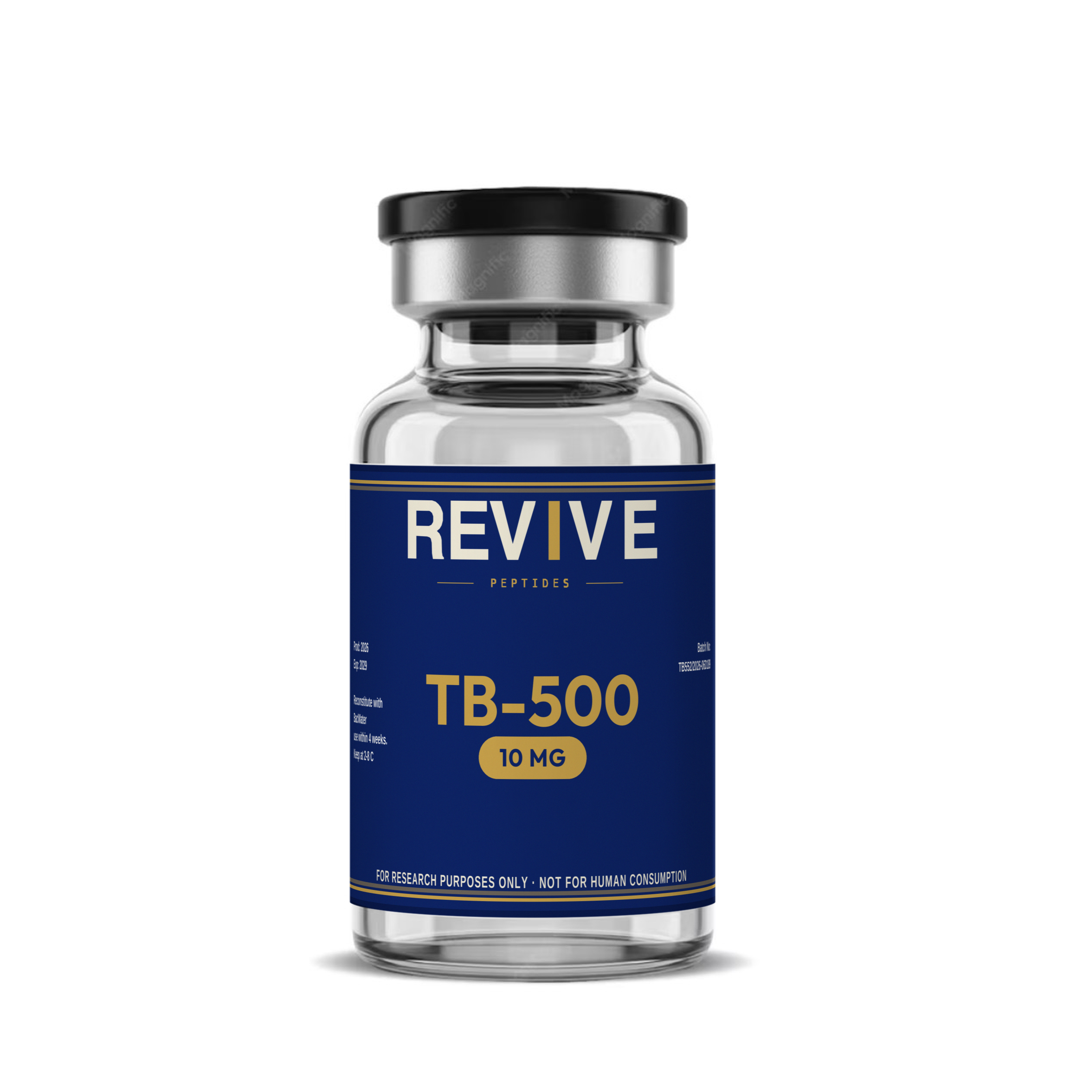
TB-500 Vial Specifications at REVIVE LAB UAE
| Spec | TB-500 10 mg vial |
|---|---|
| Form | Lyophilised powder |
| Sequence | Thymosin Beta-4 fragment, 17 amino acids (LKKTETQ actin-binding motif) |
| Molecular weight | ≈1880 Da |
| Purity (HPLC) | ≥98.8% |
| Reconstitution | Bacteriostatic water, 2–3 mL |
| Storage (lyophilised) | −20°C, desiccated |
| Labelling | Research Use Only — not for human or veterinary use |
| Price | AED 640 |
HPLC-verified, ≥98.8% purity, 17-amino-acid Thymosin Beta-4 fragment. Sold strictly as a laboratory research reference material.
View TB-500 product page →
Why Mechanism Research Does Not Translate Into Usage Guidance
It is worth being explicit about a boundary REVIVE LAB UAE maintains deliberately: understanding a molecular mechanism in a laboratory model is not the same as understanding a safe or effective way to administer a compound to a living organism. This article, like every research piece on this site, stops at describing cellular and molecular biology. It does not, and will not, provide dosing amounts, injection frequency, or any other administration guidance — because TB-500 sold here is not evaluated, approved or intended for that purpose.
What researchers should take from this
- Mechanism research describes molecular interactions observed in laboratory models, not outcomes in living organisms.
- TB-500 is a research reference compound — reconstitution instructions describe laboratory sample preparation only.
- Any research protocol design should be built directly from primary published literature and institutional review, not from marketing or blog content.
References
- Goldstein AL, and colleagues. Published research on Thymosin Beta-4 — actin regulation, angiogenesis and tissue-repair signaling. General attribution; researchers should consult primary published sources directly for full citation details.
- Low TL, Goldstein AL. Chemical characterization of Thymosin Beta-4, a thymic peptide isolated from calf thymosin fraction.